
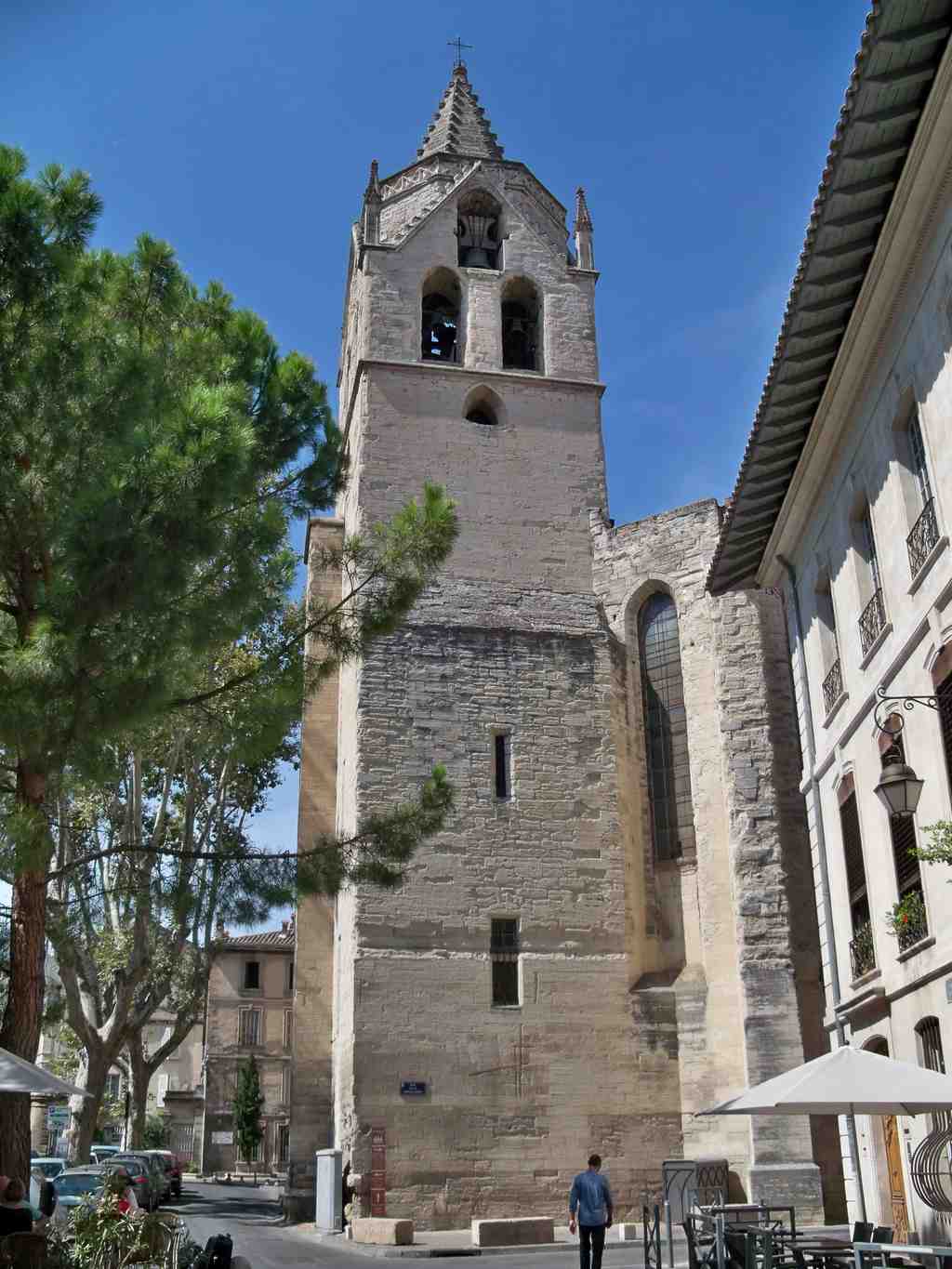
Straight ahead, you’ll spot a tall, pale stone bell tower with pointed arches and a sharply angled roof-and if that sunlight makes you squint, you’re looking right at the Collegiate Church of Saint-Didier!
Now, take a moment to soak in this striking bit of Avignon-it might seem calm today, but this spot has seen centuries of drama, devotion, and, believe it or not, a bit of medieval paperwork. In the middle of the 1300s, Avignon was the center of the Catholic universe, with popes in residence and plenty of ambition in the air. So, what do you do when you’re a cardinal with a grand legacy in mind? You put in your will that your heirs must build a church, of course! That’s exactly what Cardinal Bertrand de Deaux did. And, like any great story, it took a papal seal of approval-Pope Innocent VI stamped the deal in 1355. Medieval lawyers would have had a field day.
The church you see took just over three years to construct, with a team of talented stoneworkers (or lapicides, if you’re feeling fancy today). Imagine the clatter of chisels, the anxious shouts as builders juggled both profits and risks. Jean Postier from Salon-de-Provence was a real heavyweight in that crew-he’d already worked on the famous Palais des Papes! Another local legend, Jaume Alasaud, kept the team in line. He was the master mason behind several of Avignon’s most important monuments. On September 20, 1359, everyone in Avignon must have been craning their necks in excitement (and probably checking their watches) when the church was finally consecrated. People would have gossiped that it was the finest example of Avignon's take on Gothic style-and to be honest, they weren’t wrong.
But there’s more to Saint-Didier than just its stony walls. Step inside and you’ll find art treasures like two works by Simon de Châlons and a Renaissance relief, The Carrying of the Cross, commissioned by none other than King René in 1478. That piece alone might make you want to dust off your art history books! Through centuries, this spot transformed from a legendary 7th-century chapel site to the bustling heart of the city-a little drama, a dash of creativity, and a whole lot of stone. Who says history can’t be stylish?
Eager to learn more about the first saint-didier church, gothic church or the furniture? Simply drop your inquiries in the chat section and I'll provide the details you need.




