
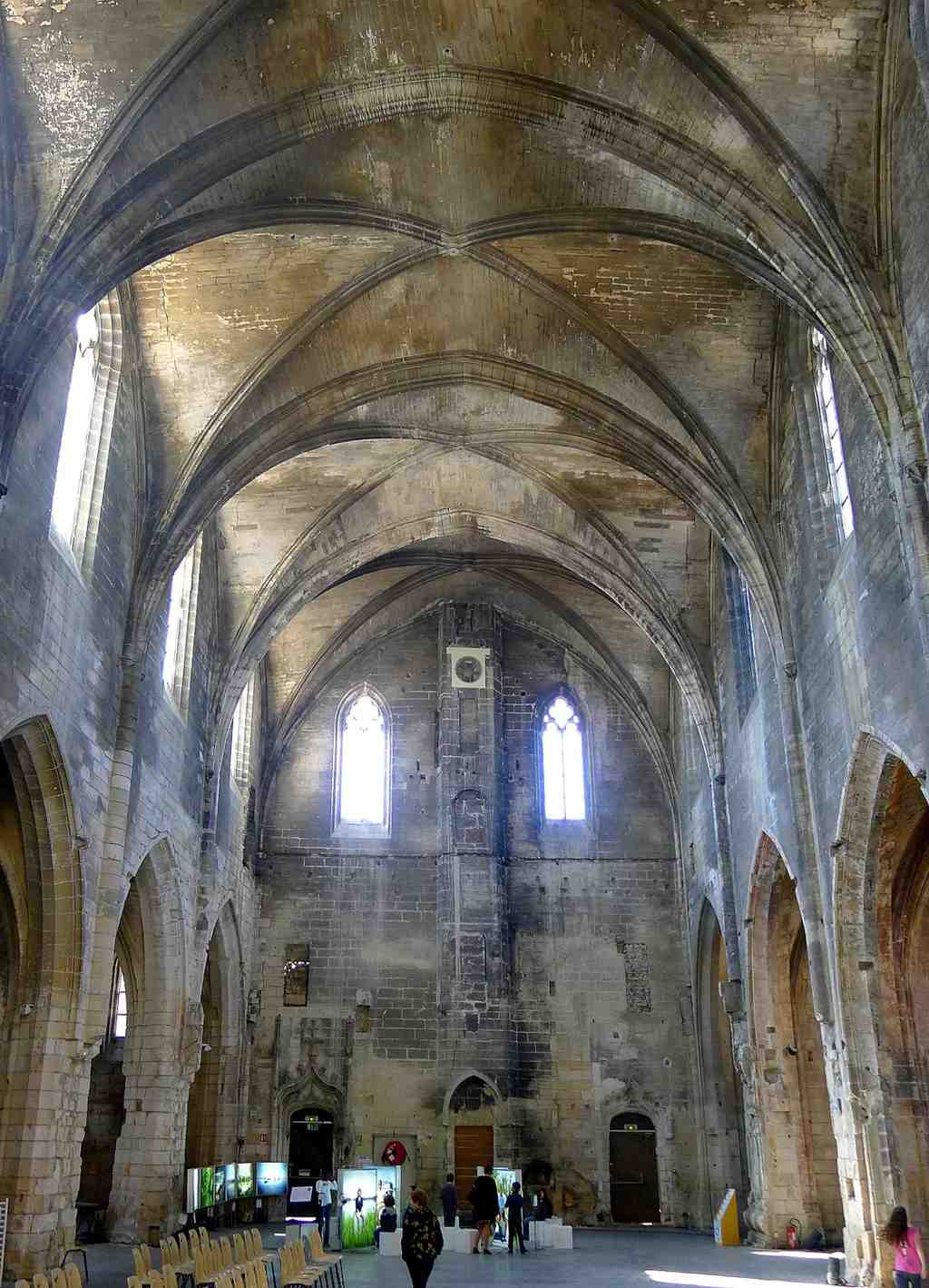
You’re standing before the vast, soaring nave of the Church of the Dominicans of Arles-just look up and ahead for those dramatic pointed arches and the tall, sun-streamed windows that give away this immense Gothic landmark, wedged tightly among the city’s old streets.
Now, imagine the year is 1448, and a crowd has gathered for the grand ceremony of laying the cornerstone. The “good King René” himself is on hand, probably trying not to trip on his robe. The air is full of promise and a little bit of construction dust, if we’re being honest! This church was born out of necessity: after a series of unfortunate events involving being too snug against the city’s synagogue and then having their previous home outside the walls demolished by invading armies, the Dominican friars thought, “Why not go bigger, bolder, and maybe less flammable?”
They picked this spot by the Rhône in what was the Jewish quarter, wanting more elbow room and, possibly, fewer dramatic neighbors. What they built is still the largest Gothic church in all of Arles, with a vaulted single nave that stretches above you and side chapels tucked in like secret pockets; the northern side was split into five separate chapels, and the southern just one-unless, of course, you count the oversized chapel built in honor of Saint Dominic by a particularly enthusiastic local family in 1469. They didn’t mess around.
The centuries were not always kind to such grandeur. After the French Revolution, this church went through some truly awkward phases-imagine trying to fit a sacred altar where someone wants to park a cart, or keeping holy silence in a room full of barrels and crates. At one point, they even squeezed in a hydraulic factory. The neighboring cloister? Bulldozed. Thankfully, its north wall and a bit of the old gothic entrance held firm, now pressed up against the surrounding houses as if hoping to eavesdrop on some modern gossip.
By the early 1900s, there were ideas to bring the building back to life. It basically had a “makeover montage,” only very, very slow. In 1921, the government at last protected it as a historic monument, but it took decades-long after World War II-till Arles could finally claim the whole battered structure for itself. Since then, careful work has revealed beautiful century-old sculptures and brought back the strength of those old stones.
Look up at those light-filled windows: they’re not just pretty, they’re practical too, letting sunshine battle back the shadows that fill this enormous space. The west façade is divided by a surprisingly fancy six-sided stair tower. Historically, there were even separate doors: one for the public, one for the brothers-because we all know, sometimes you just need your own entrance!
If it feels especially ancient, you’re not wrong. Archaeological digs show the massive stone pillars actually rest on even older Roman walls, so you’re walking among the footprints of not one, but many lost ages stacked on top of each other. For a building no longer used for worship, it still inspires awe. Now that’s what I call a heavenly fixer-upper!




