
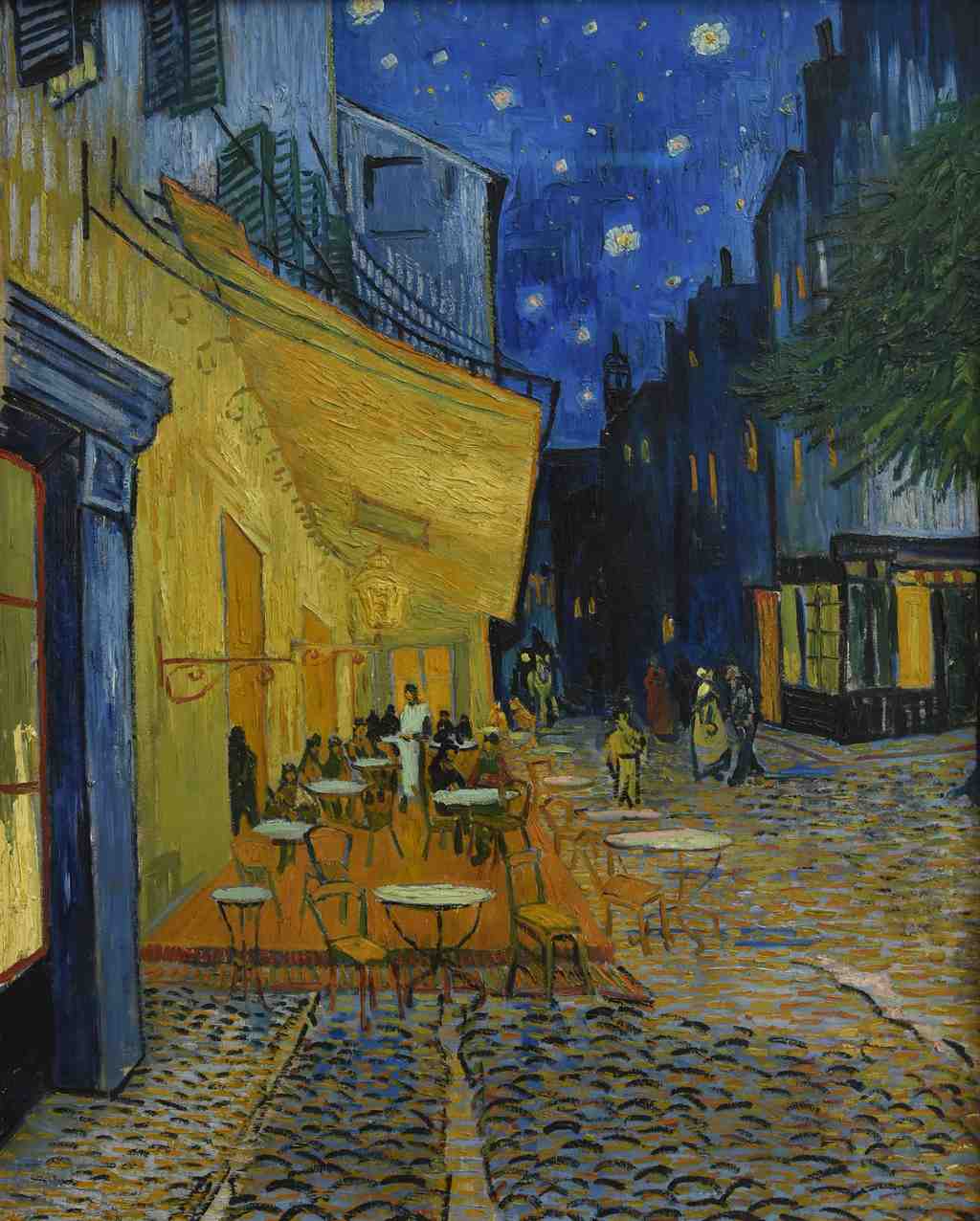
To spot Café Terrace at Night, look for a yellow-awning café with small tables spilling out onto cobbled stones, set beneath a star-studded blue sky right at the north-east corner of the Place du Forum-just imagine Van Gogh himself painting under those very stars.
Alright adventurer, let’s turn back the clock to a breezy September night in 1888. You’re standing exactly where Vincent van Gogh placed his easel, ready to immortalize one of the most enchanting evenings Arles ever saw. It’s not just any night-this is where colors dance beneath a sky pricked with stars, and where a simple café terrace becomes a theater for light and mystery.
Picture it: the café’s golden glow pours onto the square, making the world feel warmer and more alive. Sparks of laughter and the gentle clang of glasses float through the southern air. But while the terrace itself is painted like a lantern, just a few steps away lurk the deep violet shadows of the rue du Palais-Van Gogh’s brush was brave enough to dive straight into those mysteries, never using black, only dreamy blues and purples. And if you peek behind him, somewhere in the canvas, is the silhouette of an old church tower, now transformed into the Musée Lapidaire.
Now, Van Gogh wasn’t content to paint by daylight like most artists-oh no, he thrived on the electric thrill of painting straight from life, under starlight. He described to his sister the sheer joy of working outside, lanterns flickering over cobblestones turned violet and rose-imagine his paintbrush picking up colors by moonlight, maybe mixing up a lilac for a green after a long day, and thinking, “Oh well… Let’s see what magic happens!” When he wrote to his brother Theo, he confessed his “terrible need for religion,” and found wonder-if not answers-right here among painted stars and bustling townsfolk.
If you look closely at his painting, you’ll see figures huddled, sipping drinks under that bold yellow canopy-a place illuminated so brightly it almost glows against the blue night. And here’s a bit of a fun riddle: some art historians claim Van Gogh hid a secret Last Supper in this scene, painting twelve star-haloed diners around a glowing server at the heart of it all. That’s right, a little Da Vinci code, Van Gogh style! Whether intentional or just the magic of storytelling, it’s a theory that’s kept art fans guessing for decades.
But there’s no denying Vincent’s thoughts were swirling with inspiration, both ancient and modern. He was fascinated by the writings of Guy de Maupassant, whose novels described starry boulevards sparkling with life. And in the very same month, he painted more celestial night scenes, like Starry Night Over the Rhône-not to mention the world-famous The Starry Night, which would come a year later.
And what about the colors? Van Gogh wanted this scene to feel like a night without darkness. Instead of making the shadows black, he filled them with blue and green, while the café and pavement glowed pale yellow and lemon green. It’s no wonder this painting-known earlier as “Coffeehouse, in the evening”-became a legend, leaping from the streets of Arles into films like Lust for Life, episodes of Doctor Who, and even making the cut as one of the BBC’s 100 Great Paintings.
So as you stand here, listen to echoes of laughter drifting from inside, maybe the gentle clink of a cup set onto a table. Imagine you’re stepping right into that glowing square yourself, feeling the violet night all around you, and sharing a drink with Van Gogh-just another traveler, searching for the beauty hidden in the ordinary.
And there you have it-Café Terrace at Night, as alive tonight as it was for Vincent all those years ago. Let’s keep wandering, who knows what other colors are waiting just around the next corner.
Want to explore the genesis, night effects or the in popular culture in more depth? Join me in the chat section for a detailed discussion.




