
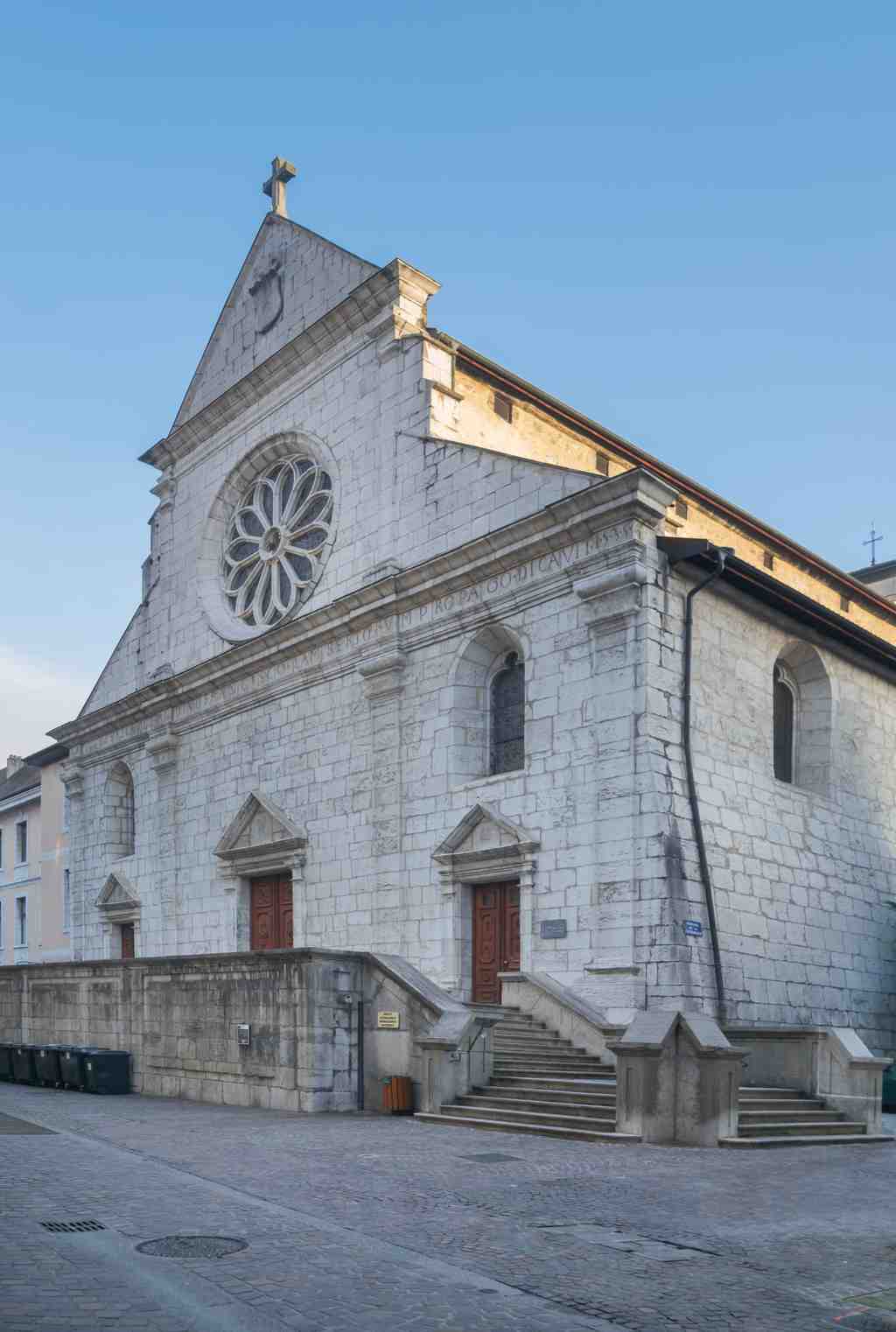
To spot the Cathedral Saint-Pierre d’Annecy, look straight ahead for a striking white stone facade with a tall triangular top, a beautiful circular rose window above three wooden doors, and wide stone steps rising from the street.
Imagine yourself standing here in the early morning chill of Annecy, the stones of the Cathedral Saint-Pierre-aux-Liens glowing pale against the sky. This building has not just watched over history - it has survived it. Long ago, before the cathedral rose, monks from the Celestine order built a quiet convent here, setting a foundation that would quietly change over the centuries. Close your eyes and feel the echo of footsteps as builders under Jacques Rossel hurried to finish the first church by 1526, a place of worship used just a few years later.
But change came quickly. By 1534, the Celestines were replaced by the Cordeliers, and the facade you see was only completed in 1535, its Renaissance design inspired by Roman elegance but hiding the soul of a gothic basilica. The church became more than a peaceful refuge: in 1538, it sheltered the chapter from Saint-Pierre of Geneva, seeking safety from turmoil. Listen and imagine the heavy wooden doors closing behind them, sealing in secrets and hope.
The centuries rolled on. By the 1600s, Saint François de Sales - a gentle soul and bishop - would walk these halls, his footsteps mixing with whispered prayers. After the convent closed in 1771, the place found new life as an episcopal seat, bracing for the chaos of the French Revolution. In those wild days, this sacred place was turned into a temple for the goddess Reason, a bold act that stripped away old symbols and even took down part of the bell tower in 1794. Hear the ring of stones falling, and the mournful silence that followed. Only decades later, in 1828, was the bell tower rebuilt and dignity restored, as the church was raised to cathedral status in 1822.
Over time, the inside grew lavishly decorated, but between 1933 and 1936, it was carefully restored and simplified, letting the building’s true spirit shine.
Step close now and look up at the facade: the rhythm of Tuscan pilasters, the triangular pediments, and that rose window - all whispers of Renaissance dreams, even as they echo the grand Gothic tradition. If bells ring out from the little tower at the back, know that the largest weighs three tons, cast to fill the air with deep, comforting sound.
Inside, the grand organ waits, its pipes quiet now but once roaring with music since the 1800s, restored again and again, each key a memory.
This cathedral is more than stone. It’s a survivor, a symbol, and a silent storyteller holding tight to Annecy’s wild and wonderful journey.




