
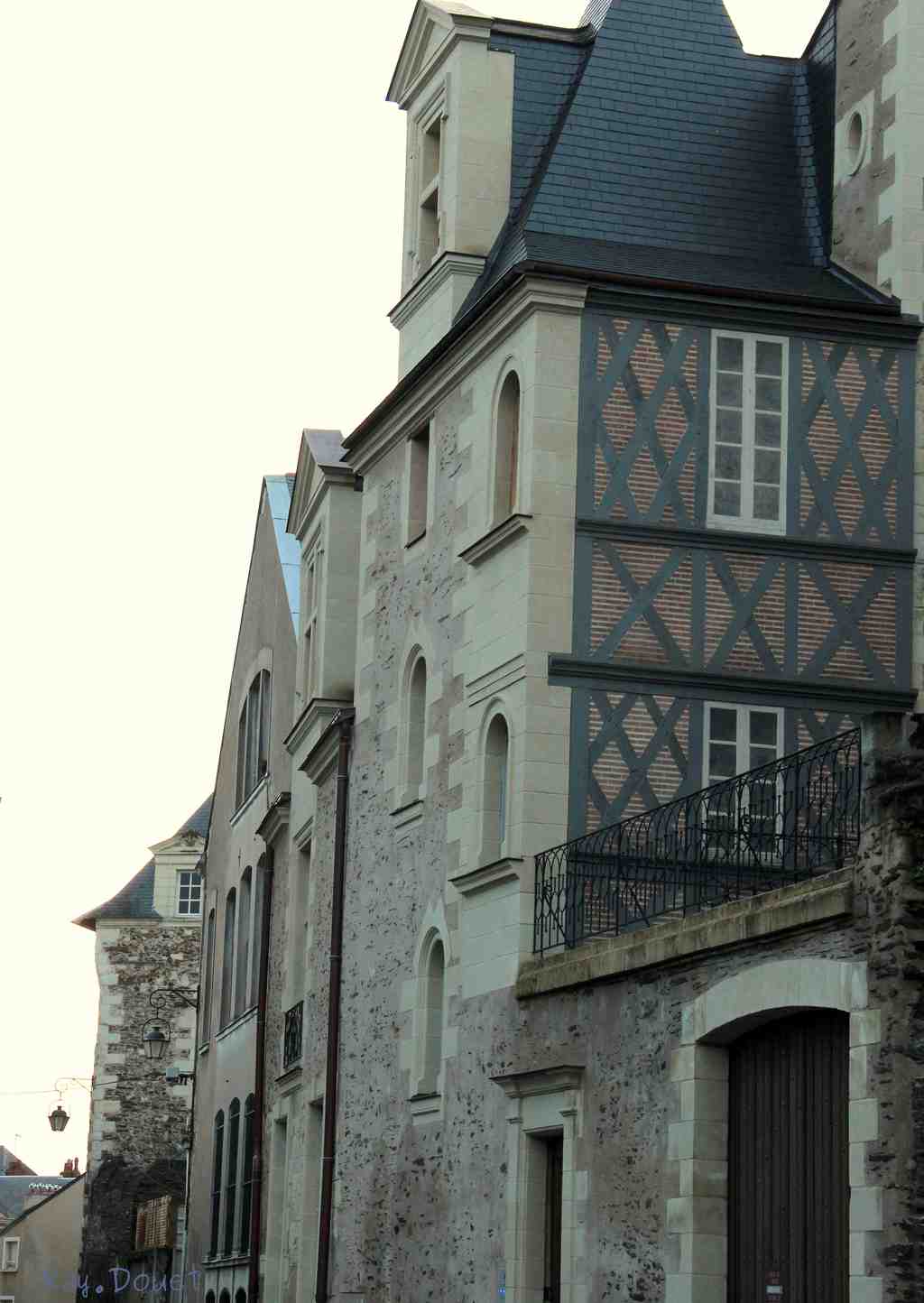
On your right is Hotel rue de l'Hommeau, easily spotted by its rough stone lower walls, the smooth pale blocks outlining the arched windows, and that striking section of half-timbering with a crisscross brick pattern jutting out over a black iron balcony.
It might look somewhat unified at first glance, but structurally, it is a Frankenstein monster of renovations spanning the twelfth to the eighteenth centuries. At its core sits a twelfth-century medieval manor tower. Originally, it boasted a soaring vertical profile, but later owners literally chopped the top off to fit their newer designs.
This place is essentially a historical monument to architectural ambition crashing hard into financial reality. Throughout the fifteen hundreds and sixteen hundreds, wealthy families like the Gohiers bought this home, dreaming of a grand mansion. They launched massive construction projects. They planned a sprawling third floor and a large new wing. But they ran out of money. The third floor sat totally incomplete, and the new wing was simply abandoned. A century later, the Pinson family bought the property and tried another grand courtyard expansion. They ran out of money, too.
However, the most spectacular addition came in the late fifteen hundreds. Those owners actually managed to finish a majestic spiral staircase made of tuffeau, which is the soft, pale limestone native to the region, along with that wooden gallery you see up there.
And here is the best part. On the street-facing side of that timber gallery, the owner carved a public warning into the wood. In old French, it translates to: Beware of falling into financial trouble, for few remain your friends when your fortune reverses.
It is a brilliant piece of cynical advice. And considering how many owners of this exact house went completely broke trying to renovate it, they really should have read their own walls. In nineteen sixty-three, the government protected the facade, officially preserving this magnificent, half-finished monument to bad budgeting.
It is a beautiful piece of design and a very relatable piece of history. Take all the time you need here, and whenever you feel like continuing, we can take a short walk to our next stop.




