
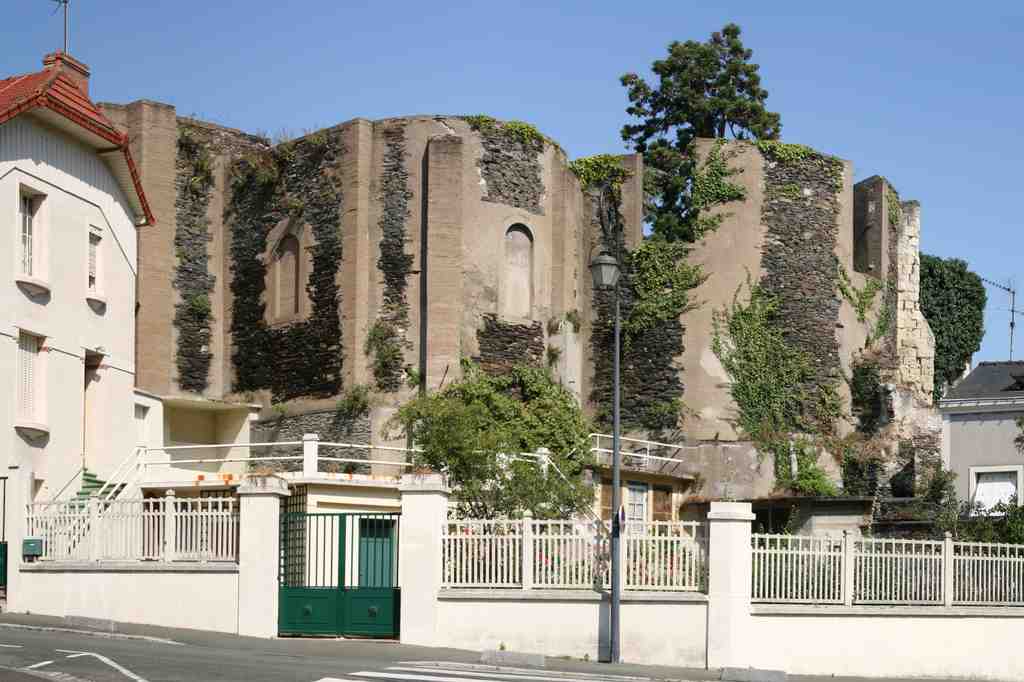
Look for the imposing, curved structure made of rough-hewn stone and dark slate, featuring distinctive filled-in archways rising behind a white fence and a green metal gate. If you are thinking this looks suspiciously like an ancient Christian church rather than a traditional synagogue, your architectural instincts are spot on.
This is the Synagogue of Angers, but it began its life in ten seventy-three as the Church of Saint-Laurent. It has had a wildly turbulent resume. By fifteen seventy-six, the church was already a ruin. Over the centuries, locals used the nave as a barn for fodder, scavengers treated the site as a demolition quarry, and, up until twenty twelve, the city used it as a storage unit for municipal cleaning supplies. Take a look at the photo on your screen to see the ivy-choked, roofless shell it was back in two thousand and nine.
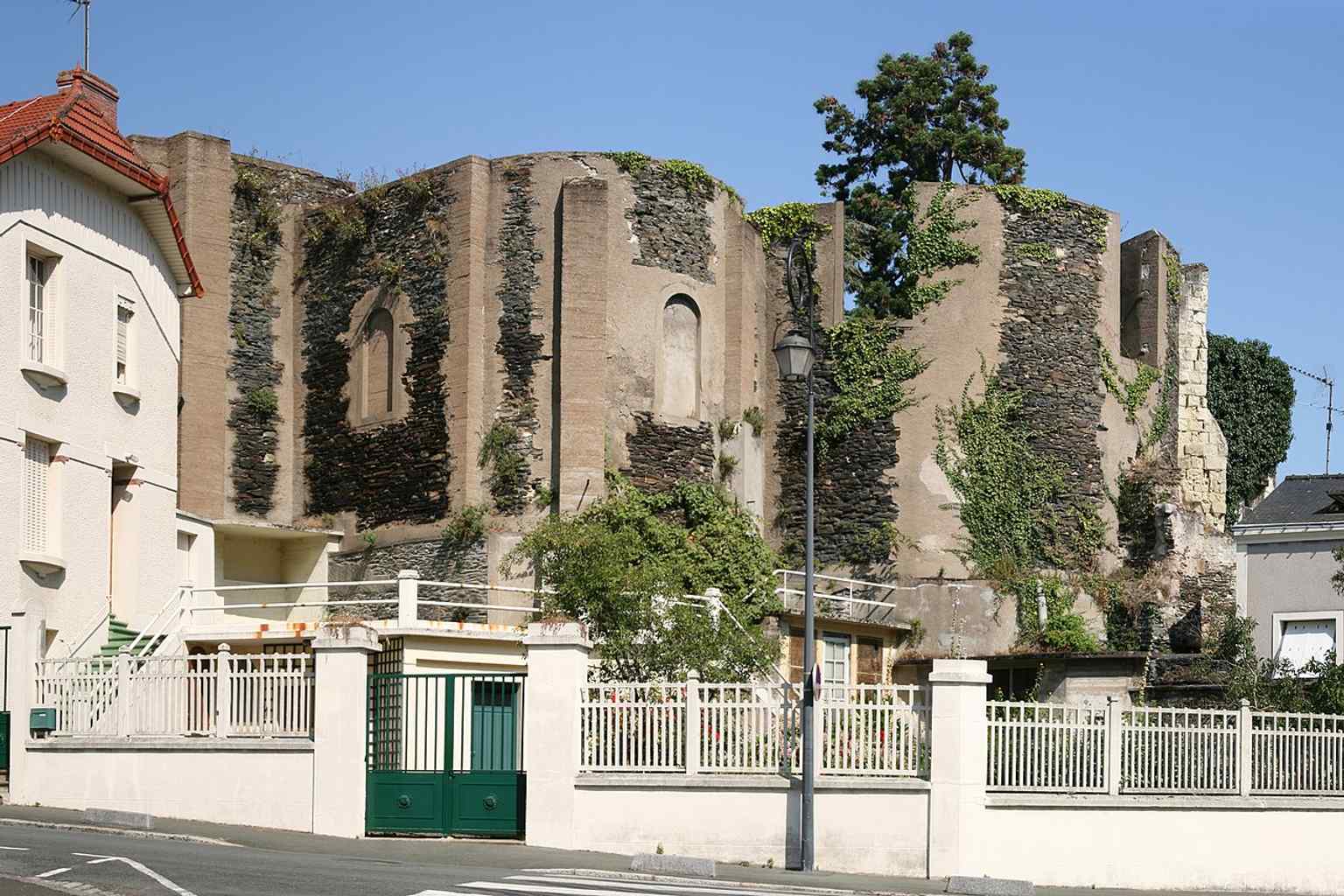
The local Jewish community, whose roots in Angers actually stretch all the way back to the eleventh century, desperately needed a new home. Their old building was falling apart. So, the city stepped in, and architect François Terrien orchestrated a clever structural resurrection. He preserved the rugged Romanesque shell and lined the modern interior with local slate, a nod to the region's historic wealth. To complete the fusion of heritages, the community imported all the seating and furniture directly from Kibbutz Lavi in Israel.
But there is a heavy weight anchored to these ancient walls. On the exterior, a memorial stone lists the names of three hundred and twenty local Jewish residents whom the Nazis deported during the Second World War. Armed guards forced them onto Convoy number eight on July twentieth, nineteen forty-two. Under the zealous orders of a local Nazi police commander named Hans-Dietrich Ernst, this specific train bypassed typical transit camps and went directly to Auschwitz. Ernst blatantly ignored agreements to spare French citizens and children, arresting anyone he could find. The youngest victim from Angers, Henriette Josefowicz, was not even two years old when she was murdered.
Yet, history here also recorded incredible resilience. A teenager named Léo Bergoffen was deported on a later train and managed the near impossible feat of surviving Auschwitz. When he returned to Angers after the war, he met and married Odette Blanchet, a local Resistance fighter whom officials later recognized as Righteous Among the Nations for risking her own life to hide Jewish families.
It is a building that holds centuries of collapse, horror, and profound rebirth. Take your time to reflect on the layers of history here, and whenever you are ready, we can walk to our next stop.





