
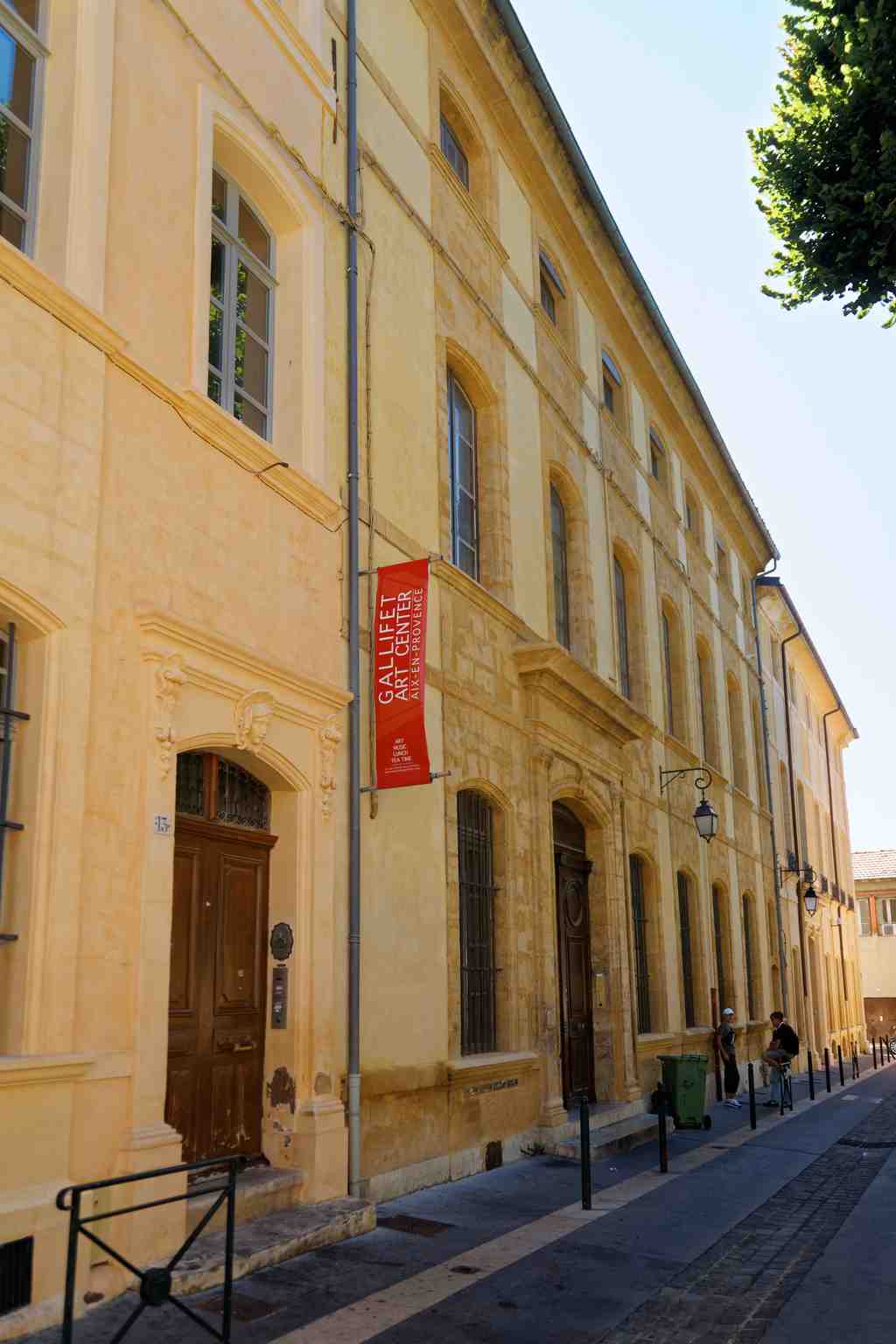
In front of you, you’ll spot the Gallifet Hotel-a long, pale ochre mansion with tall arched windows and an elegant wooden doorway, marked by a bright red flag that reads “Gallifet Art Center” so just look for that flash of color along the quiet, narrow street.
Imagine you’re standing in a secret pocket of time: sunlight bounces off the ochre stone, the same golden hue that’s witnessed centuries of drama, elegant soirées, and even whispered secrets of survival. This grand house, built in the eighteenth century, was once the jewel of Jean-Léon Leotard, a lord from the nearby mountains. But he wasn’t just building for himself. In a clever move worthy of a soap opera, he gifted it to the powerful Gallifet family as a wedding dowry-imagine that, a house as a wedding gift! Madeleine de Léotard d’Entrages married Simon Alexandre Jean de Galliffet, and so began the saga of this noble residence.
The Gallifet family lived and thrived here for generations, building a reputation that was as solid as these walls. Their motto-“Do well and let them bark”-basically means “just do your thing and ignore the critics.” They produced presidents of parliament, military officers galore, and basically helped run the region. Let’s be honest: you’d have wanted them on your trivia team!
Fast-forward a bit and the house had its share of history’s shadows. The Gallifet dynasty passed the keys to the Crémieux family in the mid-1800s, a prominent Jewish family who lived here until the ominous days of World War II. During those dark years, German officers took over the mansion, forcing the Crémieux family to flee for their lives. But here’s the twist: the Crémieux were “Jews of the Pope,” a special protected status dating back to centuries-old Papal edicts. Thanks to this, some members escaped the horrors of deportation-a glimmer of hope in the midst of turmoil.
After the war, the house found itself in gentler hands: those of Maurice and Marguerite Mazet, who years later celebrated their tenth wedding anniversary by adding a grand colonnade-ten pillars for ten years of love. This wasn’t just for show; they and their descendants cherished the space as a place where art and life could thrive together.
And so we jump to more recent times, when their grandson, Nicolas Mazet, opened the doors of Gallifet as a contemporary art center in 2010. Now, instead of stuffy silence, the ground floor and its shaded courtyard hum with creativity. You’ll find wild contemporary art, mysterious sculptures, concerts, and workshops. The garden is a dreamy escape, with the sound of a fountain trickling from a mascaron crowned with vines, and a colonnade that sparkles with memories. Take a moment-can you hear the echo of jazz from last summer’s Arty Jazz festival? Or imagine the surreal sight of a giant, red sculpture by Diadji Diop, as if a wise, multicultural figure was swimming right through the gravel at your feet.
Every year, Gallifet hosts exhibitions that challenge tradition, spark conversation, and bring together artists from around the world-from enormous, vibrant prints to experimental street art. The doors out front might still bear traces left by famed French street artist Miss.Tic-yes, it’s a canvas as well as a door! Even the colors are inspired by the lush village garden behind these very walls. The building’s motto comes alive here, with artists daring to do something new, critics or no critics.
So as you stand here, breathe in the mingled scent of lime blossoms, sun-warmed stone, and maybe, just maybe, the gentle hint of fresh paint from the latest exhibit. The Gallifet Hotel has survived weddings, wars, and wild ideas-and still, its message is clear: art and history aren’t just for looking at, they’re meant to be lived.
Fascinated by the historical, art and culture or the the garden? Let's chat about it




