
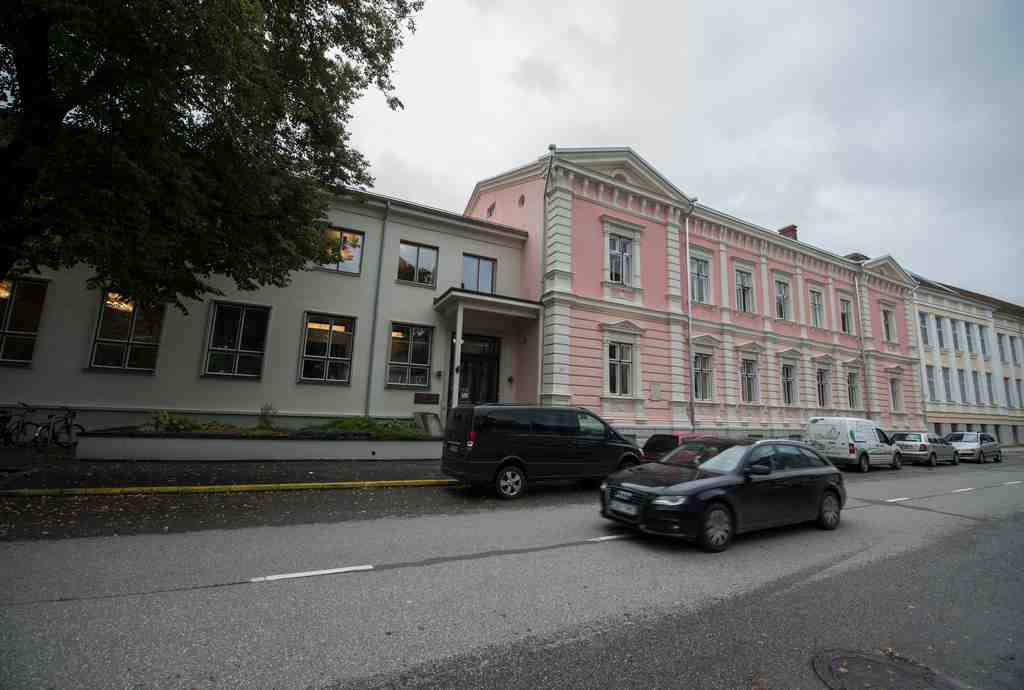
Look ahead for a light-yellow building with tall windows and a quietly official presence; you’ll spot it near the heart of Tartu’s academic district, surrounded by leafy trees and with the buzz of students passing by.
Take a slow breath as you stand outside the Estonian Folklore Archives, wrapped in the gentle hush of history. Imagine that, inside these walls, more than a million pages whisper of songs, riddles, legends, and stories, carefully gathered over a century and a half. The archives began their journey in 1927, when a group of determined scholars wanted to collect and protect the living memories of Estonia - the old tales sung by grandmothers at the fireside, jokes whispered in fields, and the mysterious songs of distant villages. It all started with Jakob Hurt, a pastor who loved stories so much he convinced thousands across Estonia to write down their traditions and send them in. These manuscripts, some scrawled on yellowing pages, others beautifully inked by schoolteachers and farmers, slowly made their way here after Hurt’s death, first to Helsinki, and finally home to Tartu.
But the story of these archives isn’t peaceful. Picture this: the world growing darker in the 1940s, the rumble of tanks in the streets, orders barked in foreign tongues. The archives have survived not one, but two ferocious occupations-first by the Soviets, then the Nazi Germans. Imagine the staff in the middle of the chaos, frantically rushing out into cold winter nights to hide their treasures from bombs and censors, stuffing fragile papers into suitcases and hiding them in country homes. In their haste, they knew that every riddle or folk song carried in those bundles might be lost forever. During the Soviet years, these rooms saw an even quieter battle. Censors pored over every tale and song, blacking out the laughter of blue jokes, ripping out pages of sly satire and anti-Soviet whispers. Some things were smeared in ink, others lost to scissors and glue. For years, the very names of great collectors like Oskar Loorits were blotted from catalogs, and staff mapped out new, official ways to hide stories outside the party line.
Yet the spirit of the Estonian people proved too stubborn. Even when all seemed lost, archivists smuggled odd jokes and forbidden legends into hidden folders, tips of rebellion under the noses of watchful censors. Fieldwork continued, as groups of folklorists piled into muddy buses each spring and autumn to gather tales in distant villages, their boots thick with the scent of pine and earth, tape recorders hissing as the next song began. When technology finally broke through in the 1990s, shelves were lined not only with boxes but with tiny memory cards and growing digital files. The once-quiet rooms now click with the sound of computer keyboards, as students and researchers hunt down runic songs, ghost stories, and even PowerPoint presentations about magic mushrooms.
What makes this place truly remarkable is its embrace of all voices: not just Estonian, but the folklore of Russians, Swedes, Baltic Germans, Jews, Latvians, and Romani people. Some of the earliest folklore came from Baltic Germans, curious academics jotting down Estonian tales for fun, while later, schoolchildren and volunteers-sometimes more than 1,400 people-collected tales from their own families and neighbors. If you walk through the corridors, you might imagine finding a Jewish Yiddish lullaby next to a rough-handwritten Romani fable about the stars, or a set of haunting Baltic-German ghost stories pressed between neat Estonian manuscripts.
All of these treasures have now leapt into the digital age, stored in Kivike-the “Virtual Cellar”-where you can read, listen, or even watch the traditions once again. Whether it’s a wax recording of an old folk song, a blurry black-and-white photo of a village festival, or a rare film reel showing children chasing spirits through spring meadows, these bits of heritage all live on, open to anyone curious enough to look.
So as you stand here, under Tartu’s sky, imagine the laughter, anxiety, and hope bottled up in the archives. Every creak of the door, every whisper of air, is the sound of thousands of voices who refused to let their stories fade.
Fascinated by the collections, collections of ethnic minorities or the web-based databases of the estonian folklore archives? Let's chat about it




