
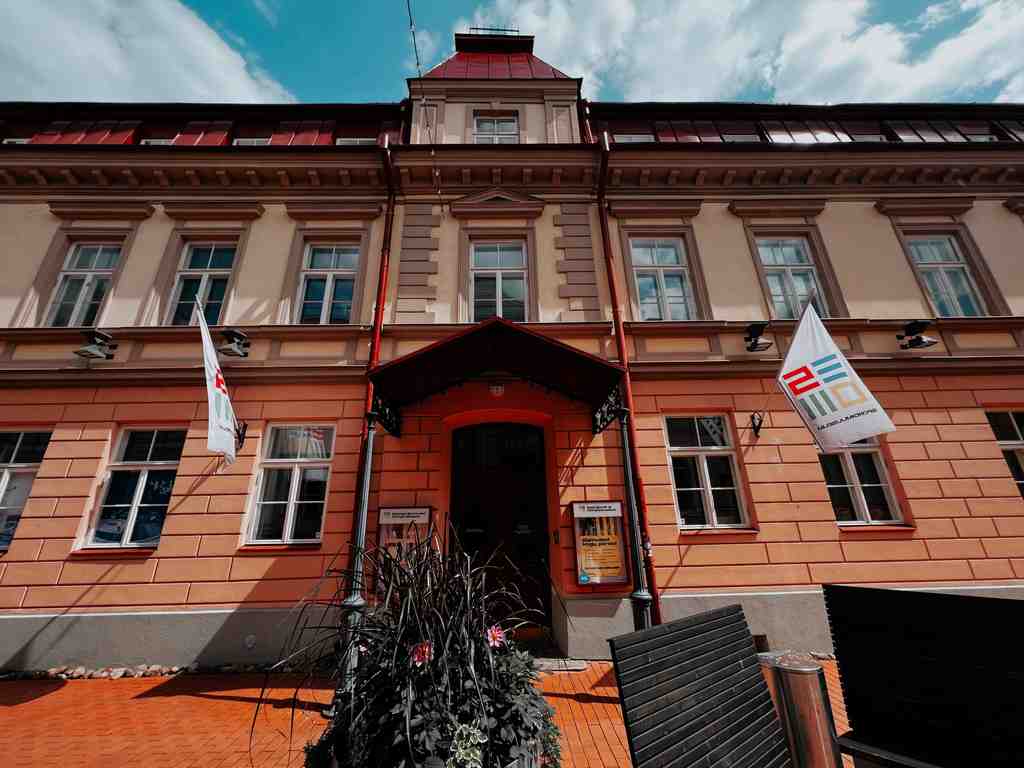
Look for a grand, cream-and-orange building right on Rüütli street, with crisp white flags flanking a red-roofed entrance-if you see bright banners and a welcoming doorway, you’ve found the Estonian Sports and Olympic Museum.
Now, let’s step closer and imagine the air around you buzzing with the thrill of competition and victory. This isn’t just any ordinary building-these old walls, touched by the sun and swept by Estonian winds, hold the excitement, heartbreak, and glory of more than a century of sporting dreams. Picture the scene at the start of the 20th century, when in smoky club rooms of the Kalev society in Tallinn, newsboys, teachers, and even a few wrestlers whispered about something daring: a museum just for sport. Unthinkable! Museums were for paintings or old bones, not for men and women sweating and striving, chasing dreams on muddy fields or icy lakes.
And yet this idea grew. By the roaring 1920s, talk of celebrating Estonia’s sporting spirit became official business. Imagine the spark in the eyes of Tõnu Võimula, a former wrestler, as he began to collect battered gloves, medals heavy with memories, photos, and stories-every object telling of a race won or lost, a leap or throw that made history. But time, as you know, is relentless. War rolled across Estonia, dreams and collections tucked away, almost lost. Yet Tõnu, in a final act as dramatic as any finish line dash, entrusted his treasures and his vision to Johannes Laidvere, a sports historian at Tartu State University.
The dream flickered but never died, and in the hopeful air of 1963, a committee led by the energetic Aksel Tiik finally brought the museum to life. It was humble at first, run by enthusiasts after work, surviving on dedication and love for the game. But word spread! Soon, a national museum was created with official blessing, and under Olaf Langsepp’s guidance, the collection bloomed-sports cups stacked high, photographs crackling with history, stories echoing through the halls.
By the 1990s, the collection had simply outgrown its old church wing. The solution was as bold as a winning sprint: the old Tartu post office on Rüütli Street, a building whose stone bones reach back to the Middle Ages. Workers unearthed secrets in its cellars, medieval walls left exposed like veins in a distance runner’s leg. They shored up the foundations and fitted new spaces filled with light and promise. In 2001, just as the world spun into a new millennium, the museum opened its doors here, where you stand now, the smell of fresh paint still lingering in the stairwells.
Time marched on. New directors came and went, each adding something unique, like layers of muscle on an athlete in training. The museum’s collections exploded in size-by 2002, there were over a hundred thousand objects! But more than trophies, the museum gathered stories: of children training in snowy fields, of Olympic heroes returning home to parades, of quiet defeats and roaring crowds.
In 2020, after a modern transformation, the museum revealed its greatest gift: "The Story of Estonian Sport." This isn’t just an exhibit, but a journey-imagine stepping into a rally car simulator, your heart pounding with every turn, or standing in the Hall of Fame among giants. Fifty legends gaze down at you from illuminated screens, their stories told in golden reels and glittering plates. There are relics from the past, medals shining, jerseys stained with honest effort, and even grim reminders-moments of foul play, heartbreak, and recovery.
There’s always something new behind these doors. One year it might be a wild ride through extreme sports-parkour, skateboarding, skydiving, and the wild courage that tempts gravity. Another year, you might find the tale of "Tartu is on Fire!", a nod to the great blaze of 1775 that started next door, as if recalling the energy that built both sport and city. Each exhibition is alive-filled with unexpected treasures, like a cyclist’s odd memorabilia, or autographs from champion athletes, or even old photographs that smell of rain, snow, and dusty fields.
Today, the museum is a living, growing archive not just of sport, but of the beating, striving heart of Estonia itself. As you linger here, perhaps you can hear in the rush of wind or distant echo of a crowd, the voices and cheers of generations who believed in something bigger: the love of fair play, the joy of movement, and the thrill of the chase. The Estonian Sports and Olympic Museum isn’t just about sport-it’s the story of a nation leaping toward its dreams, again and again.




