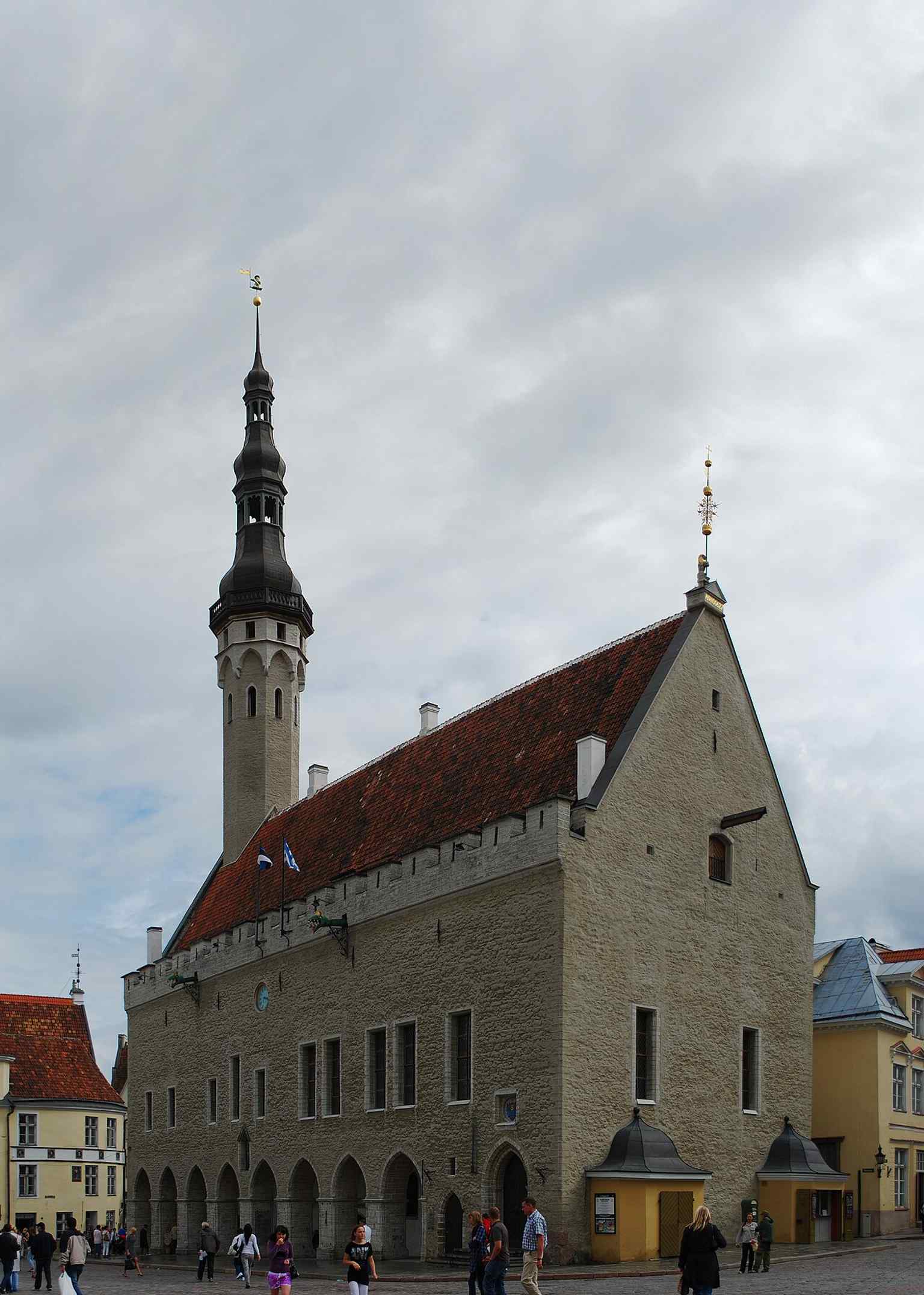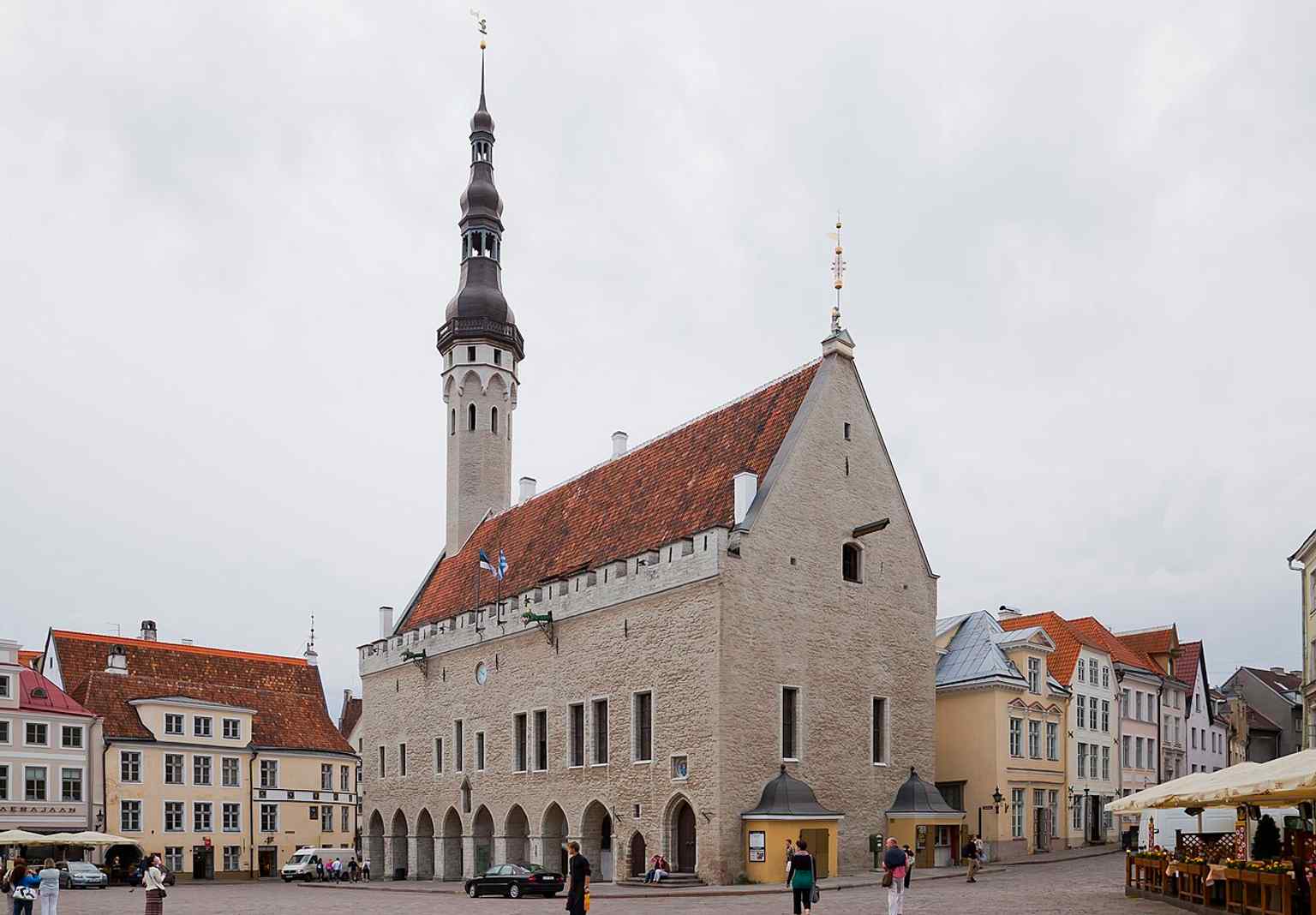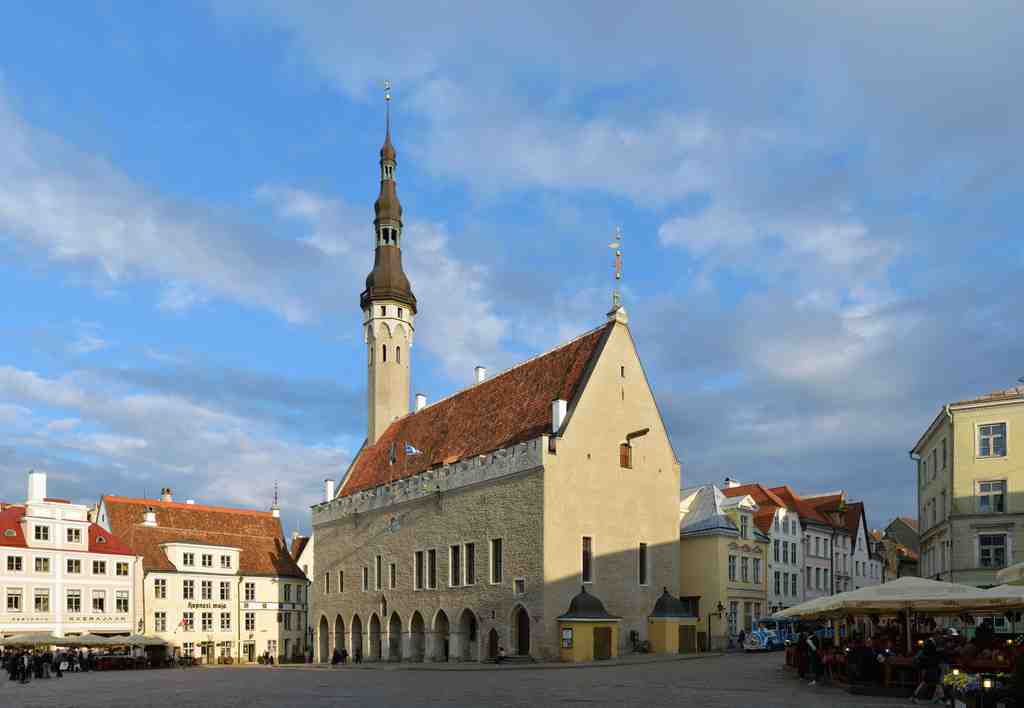
On your left stands a pale limestone hall with a long pointed arcade and a slender tower, crowned by the little weather-vane guard called Old Thomas.
This is Tallinn Town Hall, the medieval city’s public face: not a castle, not a cathedral, not a monastery, but the place where merchants turned wealth into rules. It is among the best-preserved medieval town halls in Northern Europe, and a rare surviving Gothic example in this region. In twenty twenty-four, it turned six hundred and twenty years old... which is a respectable age for any institution, especially one devoted to taxes.
The first written mention came in thirteen twenty-two, when this was a simpler limestone building. Then Reval grew rich through Hanseatic trade, and the town enlarged its ambitions. Between fourteen oh two and fourteen oh four, builders extended the front into this open arcade, added grand rooms above, and raised the representative tower. The message was clear: power did not live only up on Toompea Hill. It also sat here in the square, where trade, law, and reputation met in public.
That arcade mattered. Merchants sheltered here, but so did shame. One column still carries an iron neck collar, a “neck iron,” where cheats and quarrelsome townspeople were chained for public ridicule. Medieval urban policy could be very direct.
Look at your screen for the original Old Thomas figure. Since fifteen thirty, that watchman has stood for the city. Legend says a peasant boy named Toomas won a crossbow contest by knocking a wooden parrot off a pole, embarrassing the noble competitors. He could not claim the grand prize, so the city gave him a job as a guard instead. People later said he handed sweets to children in the square. It’s a very Tallinn sort of hero: useful, modest, and permanently on duty.
High on the building, the dragon-headed waterspouts show off the city’s confidence. The metalworker Daniel Pöppel made them in sixteen twenty-seven. You can see one up close in the app. Even the gutters here had civic swagger.
Inside, the magistrates governed by Lübeck law, the legal system many Hanseatic towns used. They handled taxes, trade, and even clothing rules - who could wear what. Their great hall also served as a courtroom. Justice could move with alarming speed. In sixteen ninety-five, Pastor Panike, furious over a bad omelet - or, in another version, warm beer - killed an inn servant with a tankard. The magistrate judged him at once and had him beheaded right here on the square. Civic authority did not always bother with subtlety.
Bombing in nineteen forty-four burned the spire, but the building survived, and restorers later reopened the arcade that the nineteenth century had sealed shut. City government worked here until nineteen seventy. It still hosts ceremonies and concerts, which feels right.
We began with strongholds and sacred ground. We end here, in the square, where a city argued with itself in public and learned to live with many masters. That may be Tallinn’s oldest talent: not one voice, but a durable bargain among several.