
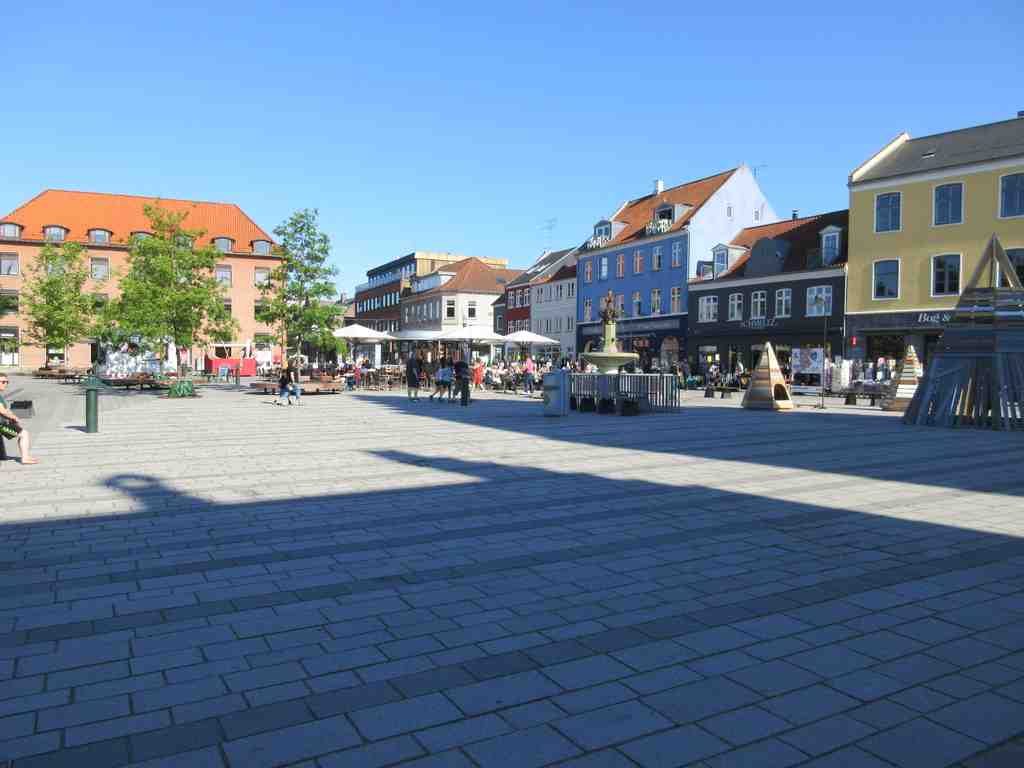
You are standing at Stændertorvet, a wide, open plaza paved in distinct grey stone blocks, bordered by brightly painted, multi-story brick buildings and anchored by a classic stone fountain. This space actually owes its existence to the Reformation, the massive sixteenth-century religious shift when Denmark officially broke away from the Catholic Church. Before that, a huge church and graveyard sat right where you are standing. But when the city demolished the church, suddenly, Roskilde had room for a proper central square!
Over the centuries, mayors expanded the area by tearing down old buildings to open it up. In nineteen twenty-one, Mayor I-C Sørensen officially named it Stændertorvet, honoring the provincial estates, which were early regional advisory councils that used to meet right next door in the Yellow Palace.
You can tell the locals really cared about this space. In nineteen thirty-three, a local businessman named Carl Andersen passed away and left twenty thousand kroner in his will, which is roughly one hundred and fifteen thousand dollars today. He left those funds specifically to build a respectable bronze monument of Roskilde's legendary founders, the brothers Roar and Helge. The sculptor Johan Galster won the design contest, and his proud monument still stands in the northern end of the square today. Down at the southern end, you will find Schmeltz's fountain, which the architect V-J Mørk-Hansen designed in eighteen ninety-five.
It is amazing how centuries of local pride beautifully layer together in one central gathering spot. Appreciate the square's vibrant atmosphere, and when you are ready, we can head to the next stop.




