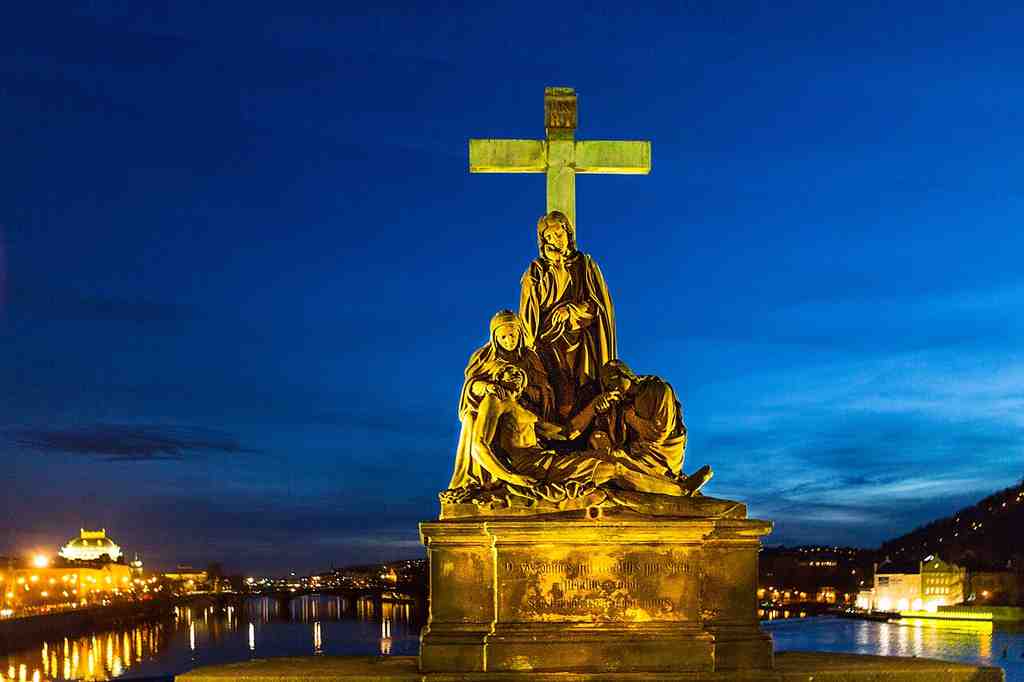
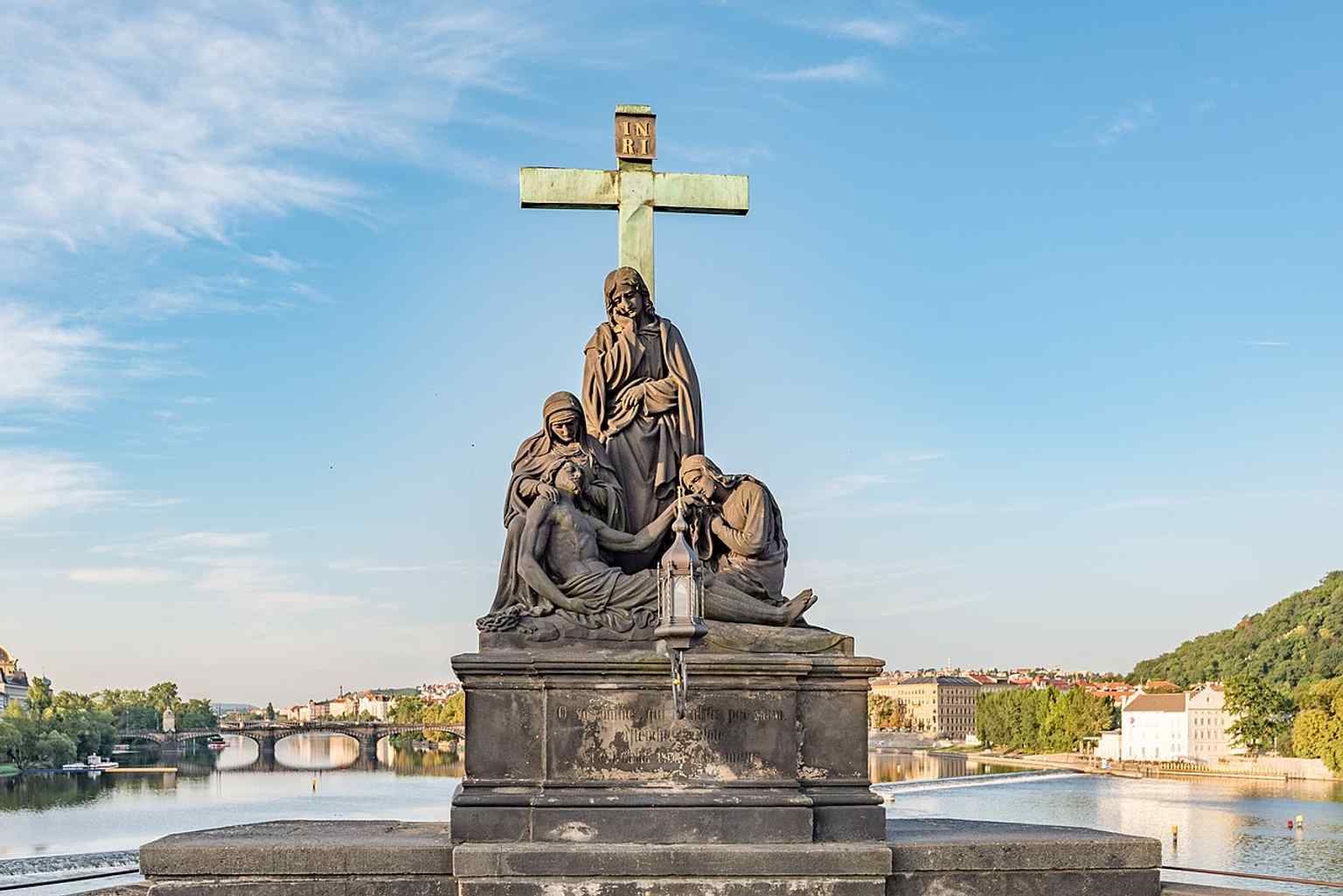
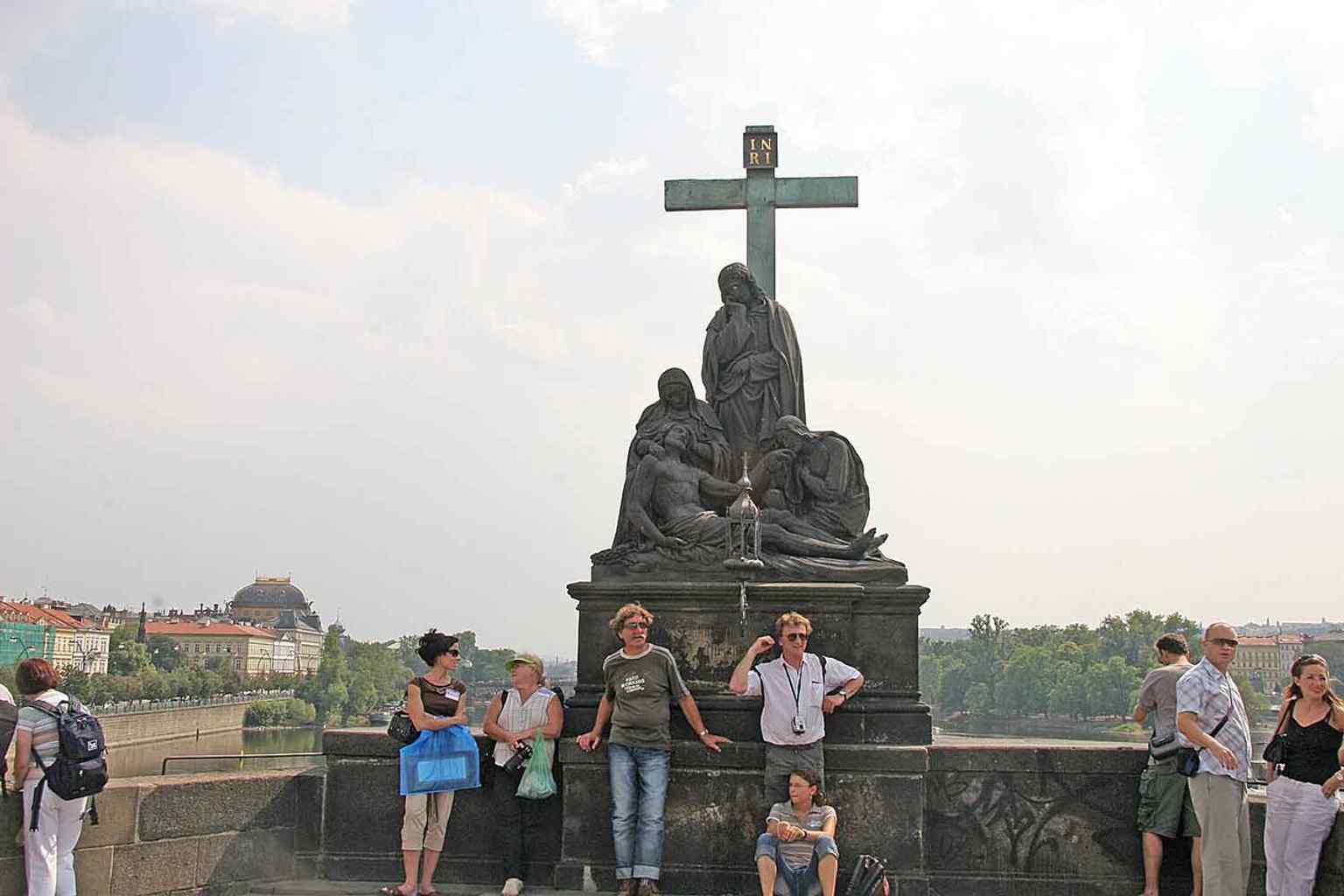
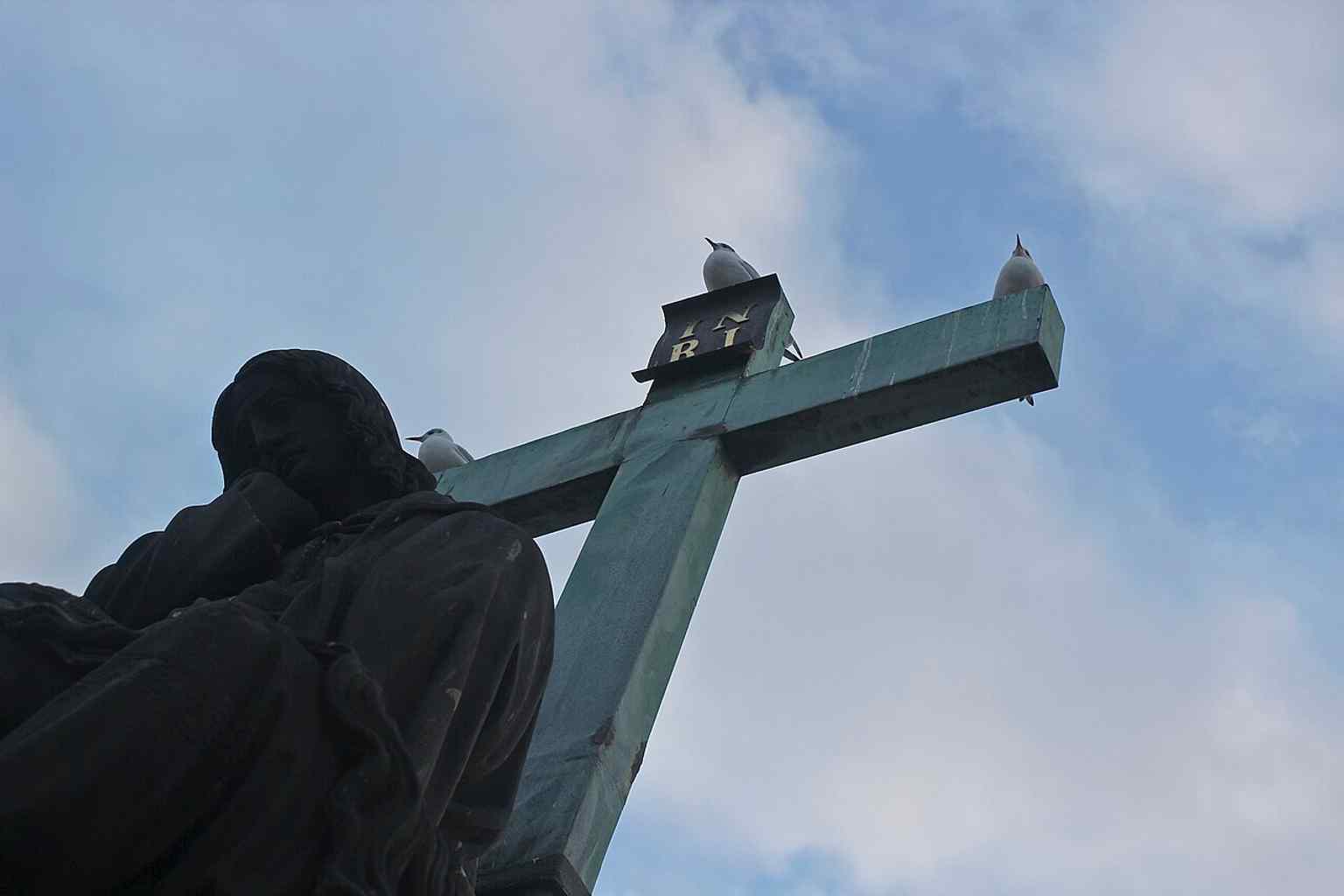
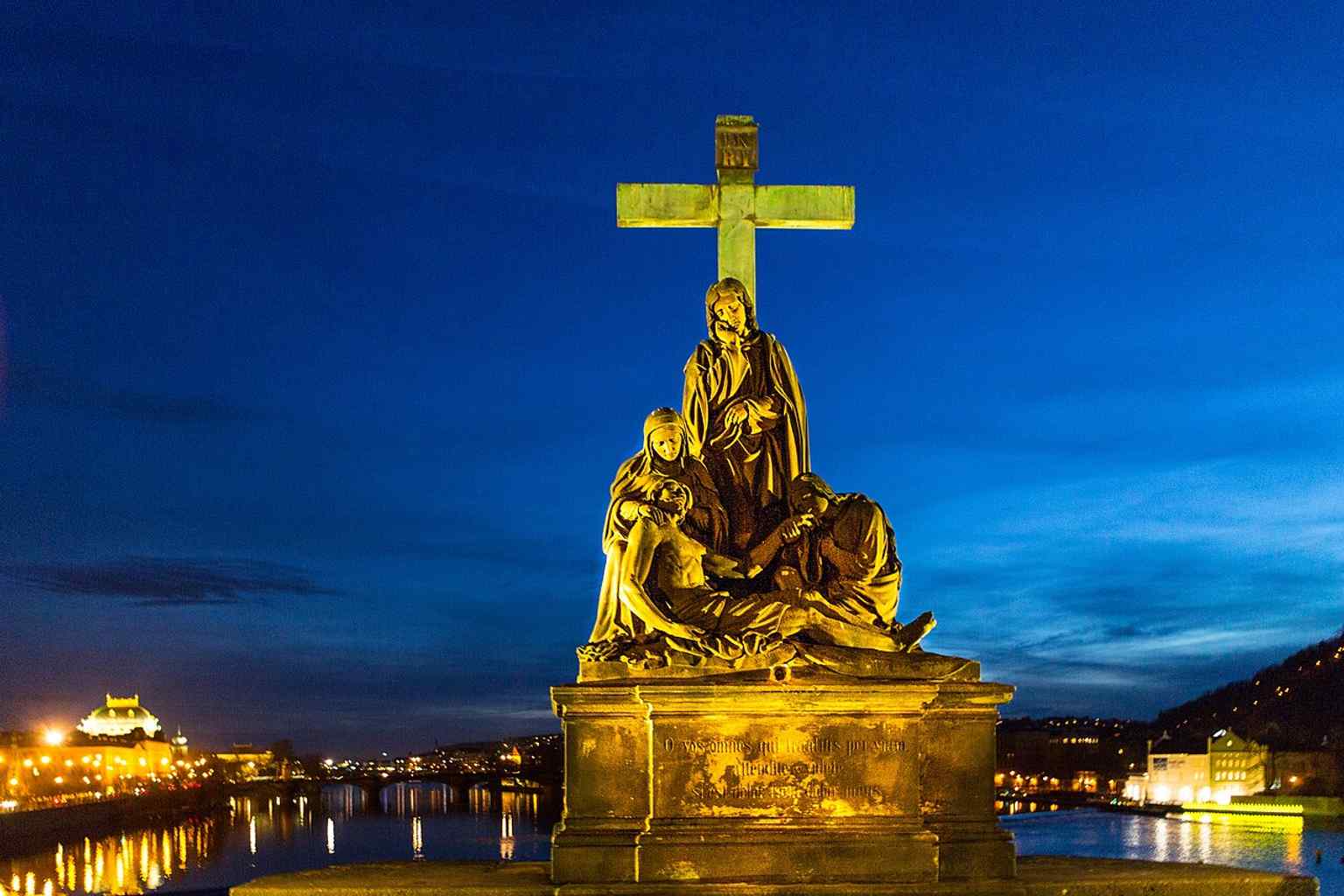
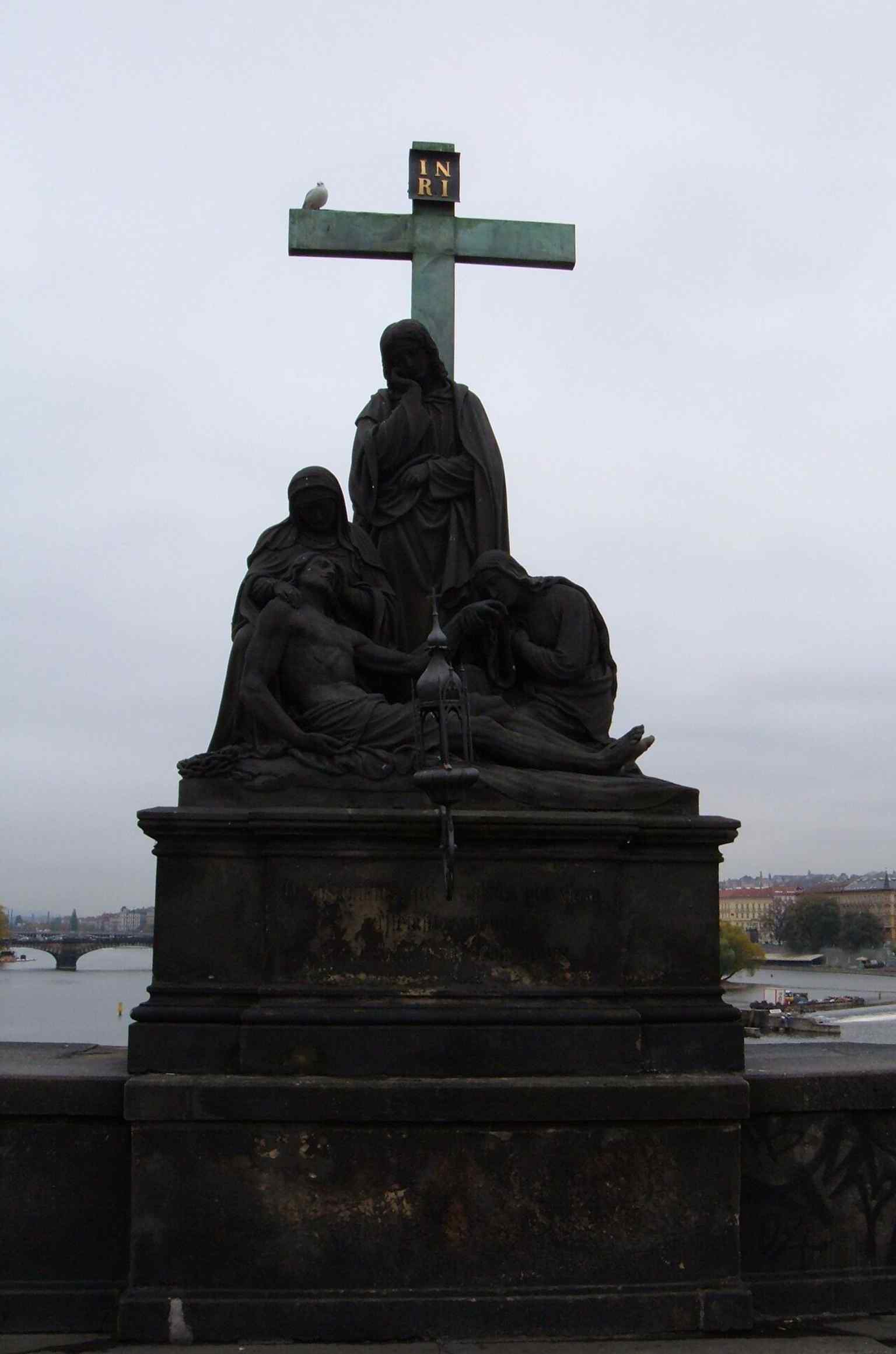
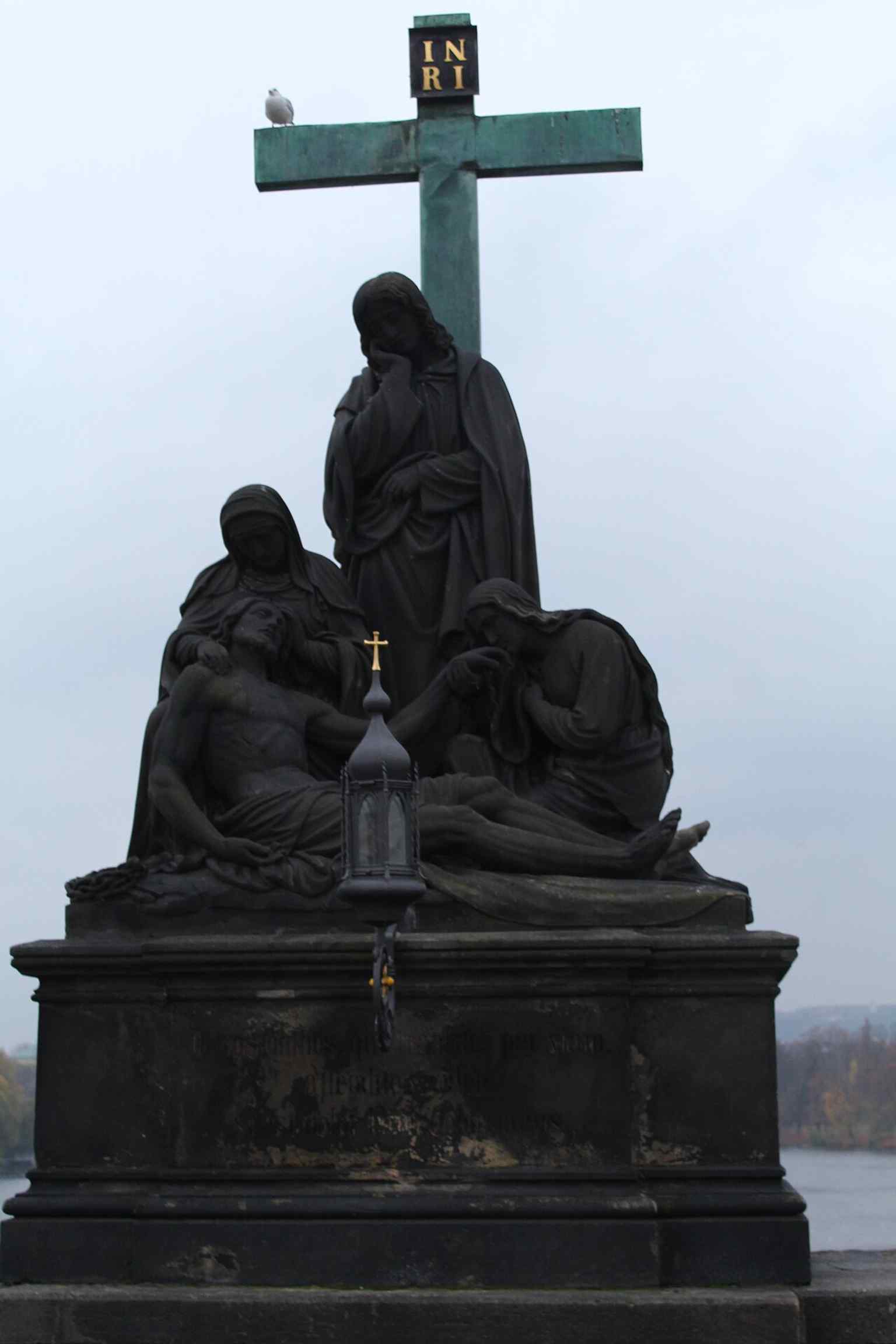
Look to your right at this fine-grained sandstone sculpture, where the seated figure of the Virgin Mary forms a triangular shape holding the body of Christ beneath a prominent, copper-covered wooden cross.
This third pillar of the bridge has always been something of a cursed spot, historically vulnerable to the raging river below. A catastrophic flood in fourteen ninety-six completely swept away a simple wooden crucifix that first marked this location.
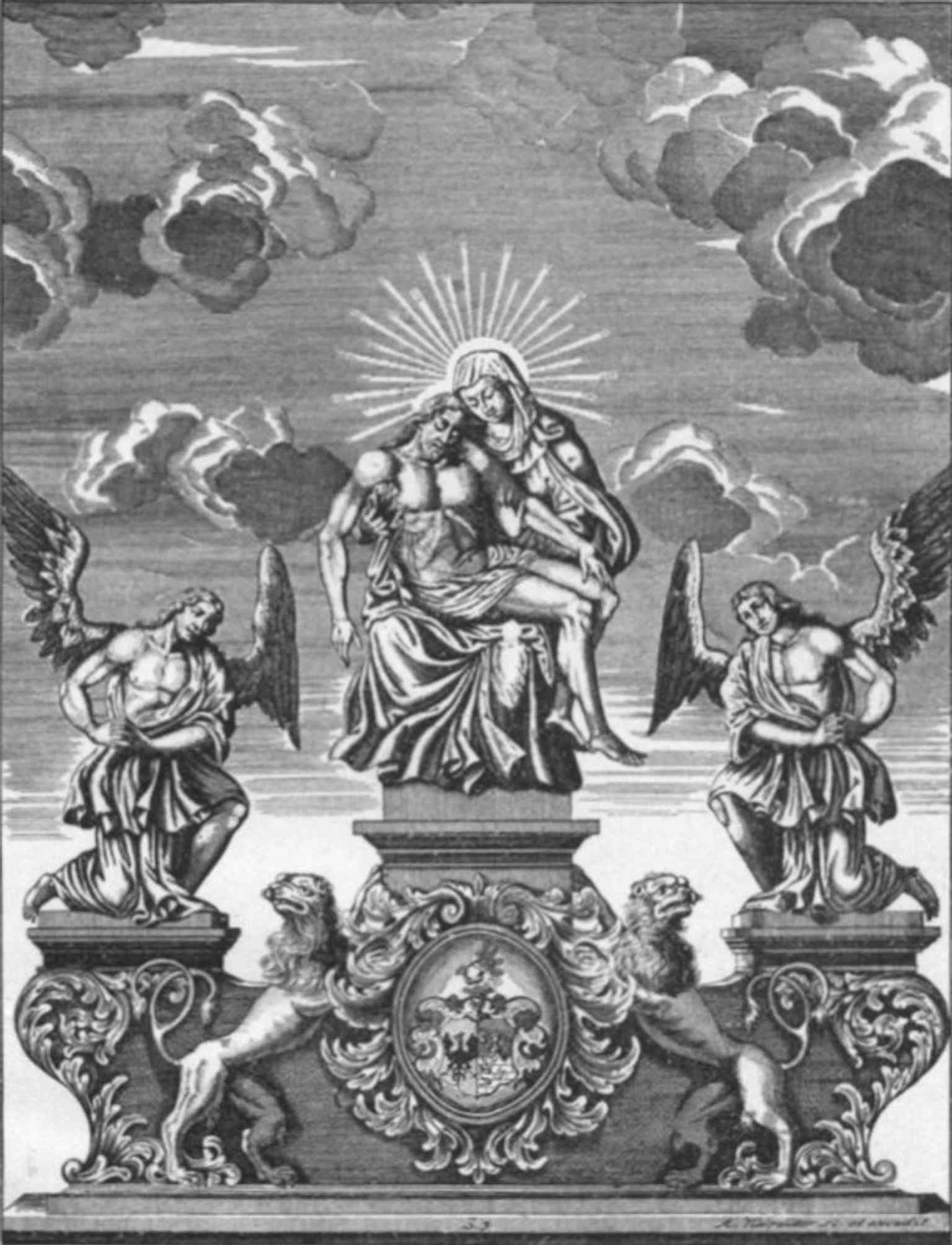
For nearly two centuries, the pillar sat empty until a dramatic Baroque Pietà was installed in sixteen ninety-five. But that sculpture's reign ended violently during the eighteen forty-eight Revolution. As barricades went up across Prague, the bridge was caught in the crossfire, and the artwork was heavily damaged by cannon balls and musket shots. Take a glance at your screen to see a historical drawing of that lost original.
This historical artwork depicts the Baroque Pietà created by Jan Brokoff in 1695, which stood on Charles Bridge for over 150 years before being severely damaged in the 1848 Revolution.Photo: Augustin Neureuter (Neuräutter) (1685-1719), Wikimedia Commons, Public domain. Cropped & resized.
The story of what happened next involves a rather convenient expert opinion. Sculptor Josef Max was asked if the ruined piece should be restored. He strongly recommended removing it entirely, which, by a pure coincidence I am sure, paved the way for his brother, Emanuel Max, to win the new commission.
But Emanuel Max's eighteen fifty-nine replacement marked a meaningful shift in the city's history. While older statues were bankrolled by wealthy aristocrats, this restrained Neoclassic piece was funded entirely through a public collection. It was a true project of the people.
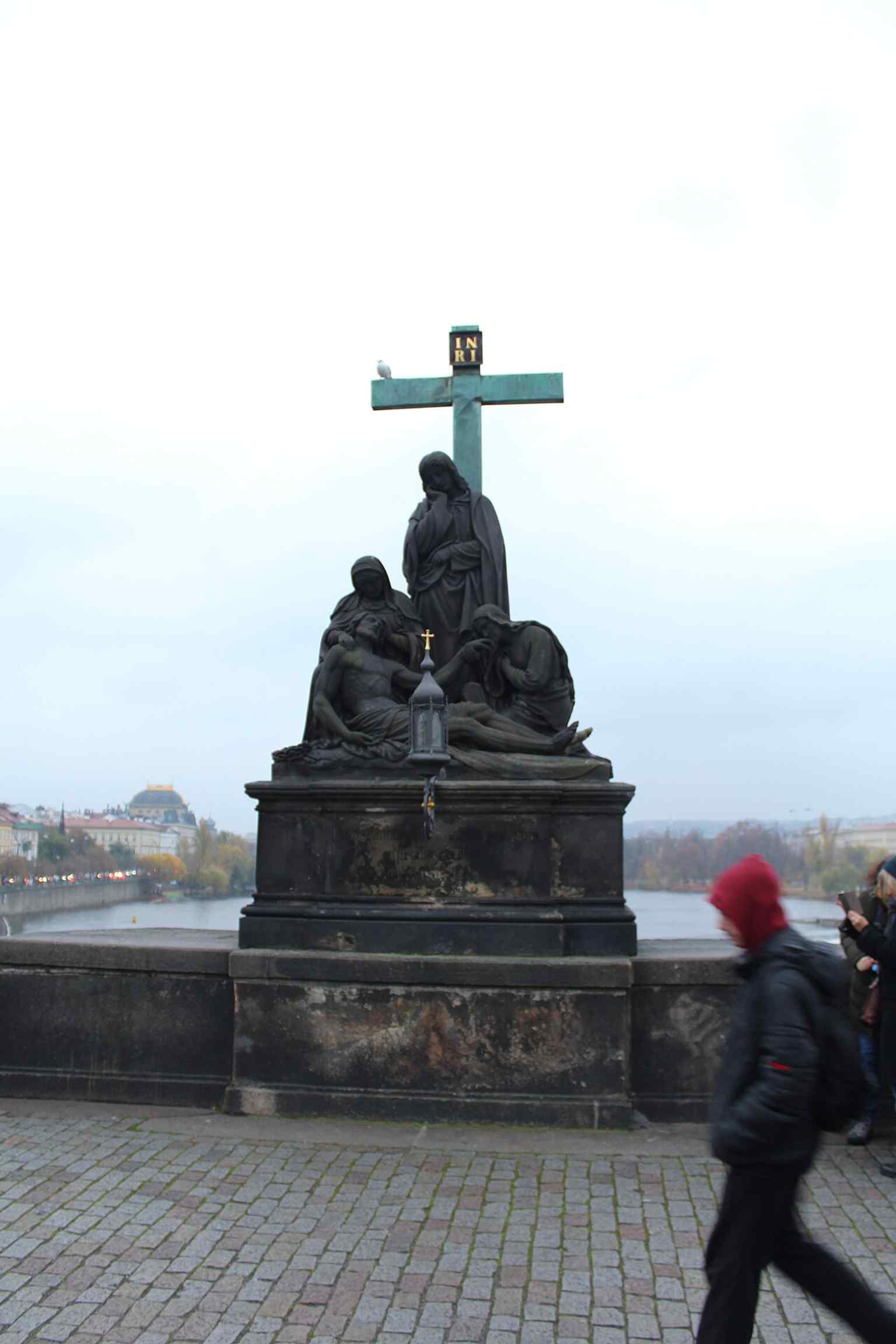
The figures form a deeply intimate scene. Mary Magdalene kneels to kiss Christ's hand, while Saint John stands in mourning. Keeping this people's monument intact requires a continuous cycle of destruction and rebirth. Between two thousand and twenty-two and two thousand and twenty-three, restorer Miroslav Žán led a major intervention to remove thick sulfate crusts and biological colonization, which is really just a polite scientific term for decades of stubborn moss and algae eating into the stone.
Step over to see a tender scene born from the ashes of revolution, then we will transition to the Statue of Saint Joseph right next door. And in case you were wondering, the bridge is open twenty-four hours a day, all week long.
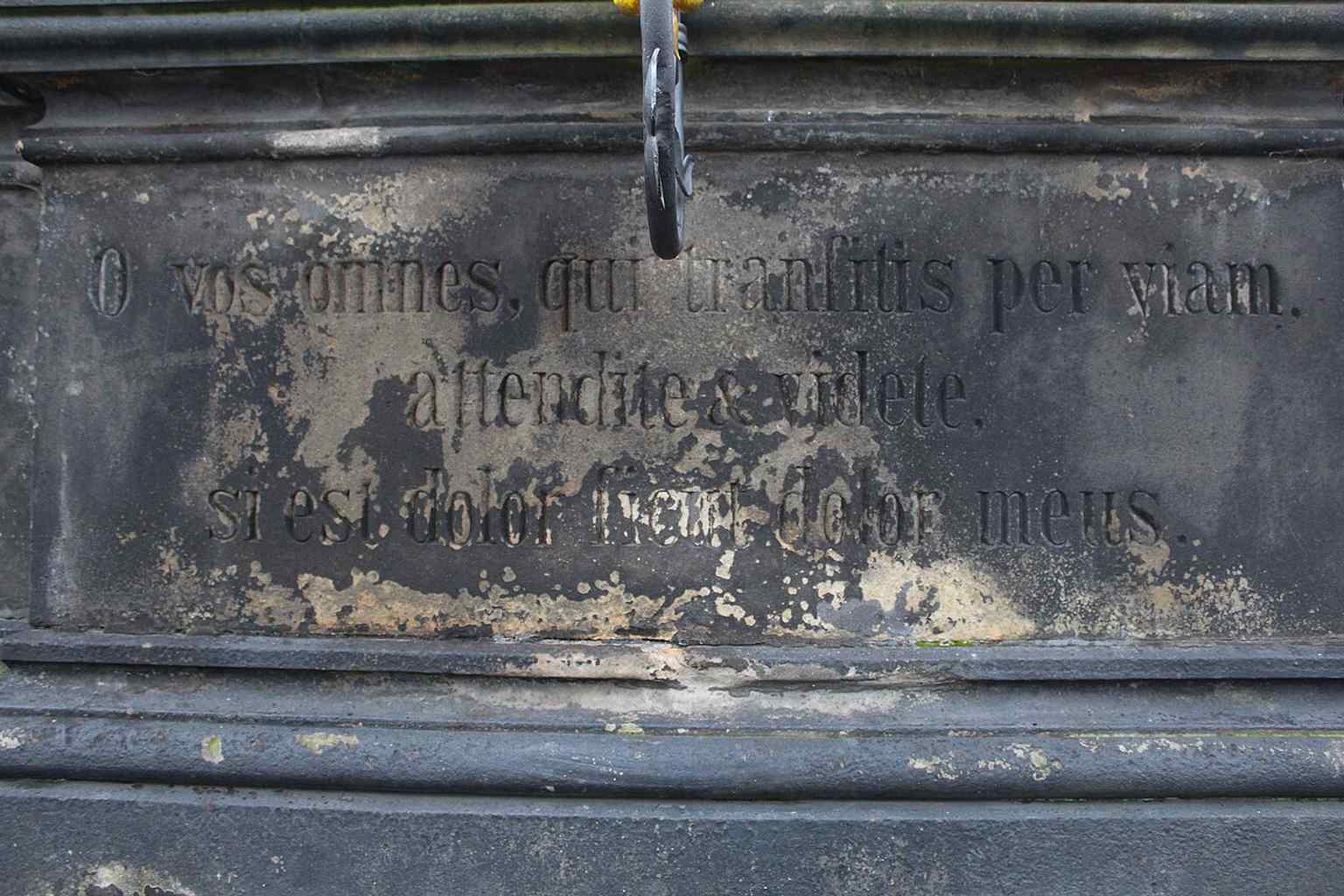
This image shows Emanuel Max's Pietà, commissioned by the Prague municipality in 1859, a project notably funded through a public collection.Photo: Tilman2007, Wikimedia Commons, CC BY-SA 4.0. Cropped & resized.A close look at Emanuel Max's Neoclassic Pietà reveals the Virgin Mary cradling Christ, with Mary Magdalene kneeling to kiss his hand and St. John the Evangelist standing in mourning.Photo: Chabe01, Wikimedia Commons, CC BY-SA 4.0. Cropped & resized.The Pietà stands on the south side of the Charles Bridge, marking the third pillar—a spot that has held religious markers since a wooden crucifix was destroyed by a catastrophic flood in 1496.Photo: The original uploader was Zp at Czech Wikipedia., Wikimedia Commons, CC BY-SA 3.0. Cropped & resized.The Pietà statue stands resiliently on Charles Bridge, here seen amidst snowy conditions, reflecting its history of surviving natural elements and historical events.Photo: Sarah Wattouat, Wikimedia Commons, CC BY-SA 3.0. Cropped & resized.This daytime view showcases the restrained, Neoclassic style of Emanuel Max's sculpture, a deliberate contrast to the dramatic Baroque energy of its predecessor.Photo: Sebaso, Wikimedia Commons, CC BY-SA 3.0. Cropped & resized.This wider view emphasizes the Pietà's integration into the historic row of statues along the Charles Bridge, a landmark frequently exposed to the elements and millions of tourists.Photo: Chabe01, Wikimedia Commons, CC BY-SA 4.0. Cropped & resized.A detailed view captures the emotional depth of the sculpture, portraying the profound grief of the Virgin Mary holding the deceased Christ.Photo: BrokenSphere, Wikimedia Commons, CC BY-SA 3.0. Cropped & resized.This close-up highlights the intricate sandstone work and details of the figures, which required extensive care in recent years to combat erosion and 'biological colonization'.Photo: Chabe01, Wikimedia Commons, CC BY-SA 4.0. Cropped & resized.arrow_back Back to Prague Audio Tour: Charles Bridge Statues
Loved by travellers
Thousands of tours started. Plenty of opinions.
4.8 across the App Store and Google Play. Here's a few we keep coming back to.
starstarstarstarstar
This tour was such a great way to see the city. The stories were interesting without feeling too scripted, and I loved being able to explore at my own pace.
Started this tour with a croissant in one hand and zero expectations. The app just vibes with you, no pressure, just you, your headphones, and some cool stories.







%2020170810%20001.jpg)


.jpeg)


