
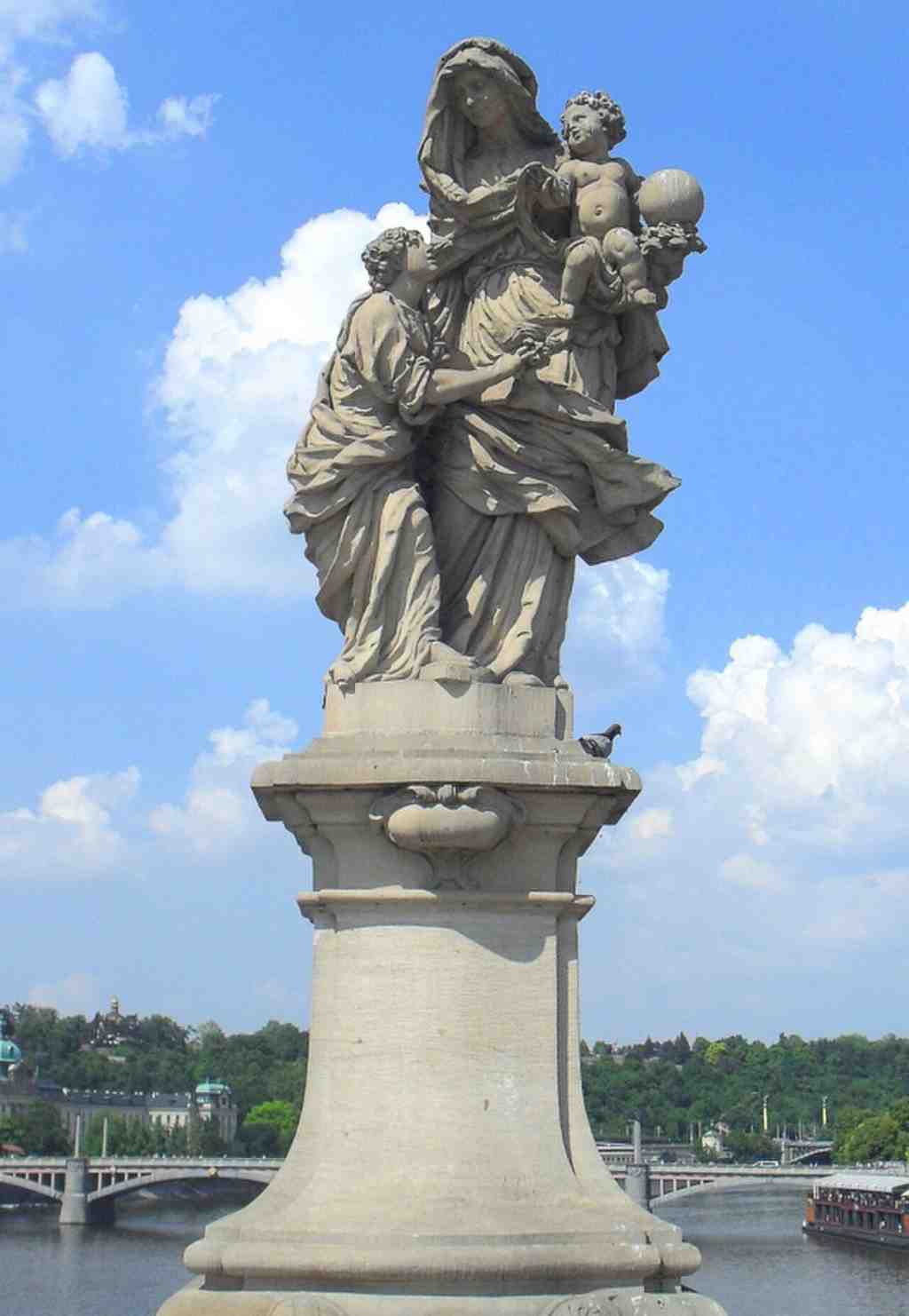
Look to your right for a pale sandstone sculpture group where a central matriarch cradles an infant, while a younger girl stands at her feet offering a carved bouquet of roses. This is Saint Anne, created in seventeen oh seven by the sculptor Matěj Václav Jäckel.
The monument was bankrolled by Count Rudolf of Lisov, a powerful official in the Prague administration. For eighteenth-century nobles, sponsoring religious art here was the ultimate status symbol, essentially a Baroque billboard of piety and wealth.
Jäckel designed a Holy Kinship scene. Saint Anne holds her grandson, the infant Jesus, who grasps a globus cruciger, a globe topped with a cross symbolizing worldly dominion. Below them, a young Virgin Mary offers her mother those roses, balancing immense cosmic power with simple domestic affection.
While an aristocrat paid for the stone, the city's working-class millers claimed its soul. They adopted Saint Anne as their patron, seeking her divine protection against the devastating river floods that threatened their vital grain trade.
Over centuries, relentless weather and urban pollution slowly dissolved the soft stone. Refusing to let history be washed away, the city moved the original statue indoors to safety, installing this faithful replica in nineteen ninety-nine. Since the bridge is open twenty-four hours a day, she remains a constant presence.
Why do you think the city's working-class millers felt such a strong connection to this specific maternal figure?
Let that linger as we move straight ahead to the statue of Francis Xavier, where we will uncover one of the bridge's most dramatic tales of destruction.




