
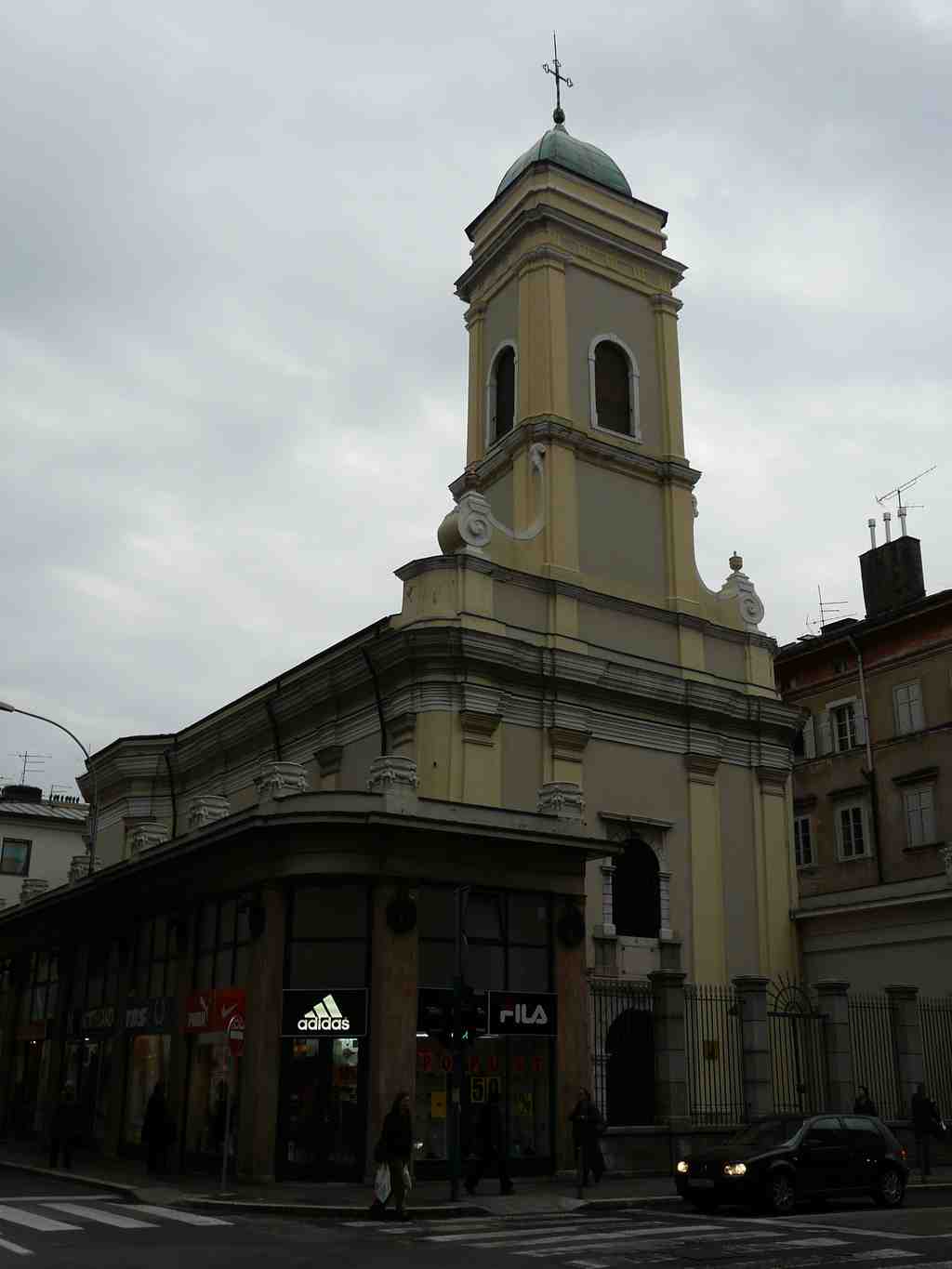
You’ll spot the Church of St. Nicholas straight ahead by its pale yellow facade and elegant, square bell tower topped with a greenish dome, just above some modern shop signs at the street corner.
Imagine it’s the late 1700s and the streets around you are buzzing not with car engines and shoppers, but with whispers and cautious excitement. Serbian Orthodox families, who fled tough times in the Ottoman Empire, have settled right here in Rijeka, hoping to make a new start. They come together to fund this church-brave, determined, and resourceful-while some local politicians try to stall them at every corner. Designed by Ignazio Hencke in 1787, it took three years of negotiations, hard work, and probably a few stubbed toes, before the Church of St. Nicholas finally opened its doors in 1790. Inside, treasures from far-off monasteries in Bosnia and Vojvodina find a safe haven, their golden icons glinting in candlelight. Over generations, the church becomes a heart for Rijeka’s Serbian community-a symbol of hope and belonging in a city that has always danced to its own beat. Even today, with Adidas and Fila across the street, St. Nicholas stands as a witness to stories of migration, faith, and a whole lot of perseverance (and maybe a little bit of stubbornness, too).


