
Look to your right at the massive Neoclassical structure dominated by tall, light-colored columns and a grand triangular pediment. This is the Metropolitan Cathedral, the heart of the Archdiocese of San José.
This isn't just a house of prayer. It is a battlefield where the war for Costa Rica's soul was fought. We have seen how buildings in this city shift from sites of power to places of the people, and this Cathedral is the ultimate example of that tug-of-war.
The story here begins with a serious clash. Back in the 1850s, the relationship between the Church and the government was... explosive. The very first bishop, Anselmo Llorente y La Fuente, found himself in a showdown with President Juan Rafael Mora Porras. Now, Mora Porras is a national hero for fighting off foreign invaders, but he also demanded the church pay taxes to fund hospitals. Bishop Llorente refused.
The President didn’t hesitate. He gave the Bishop twenty-four hours to leave the country. Imagine that... the head of the church, expelled by the head of state, spending a year in exile in Nicaragua.
It happened again a few decades later. Bishop Bernardo Augusto Thiel, a German priest who famously trekked through deep jungles to reach indigenous tribes, opposed new laws that made education secular. The government accused him of political interference and banished him to Europe. For years, this building stood as a symbol of resistance against the state's liberal reforms.
But then, the script flipped.
In the 1940s, Archbishop Víctor Manuel Sanabria Martínez did something historically wild. He formed an alliance with the Communist party. Sanabria publicly declared that Catholics could join the communist Vanguardia Popular party "without sin," as long as they supported social guarantees. This created a strange, powerful trio-the Catholic Church, the Government, and the Communists-working together. That unlikely coalition laid the foundation for the social security system Costa Rica uses today.
The history here is not all heroic, though. In the late 1970s, Archbishop Rodríguez Quirós faced severe financial instability, leading the Vatican to effectively force him out of office.
More recently, the Archdiocese has faced a painful reckoning. In 2022, a landmark court ruling ordered the church to pay damages to victims of sexual abuse by priests, rejecting the defense that the institution wasn't liable. It was a moment that transformed this space from one of unquestionable authority to one of legal accountability.
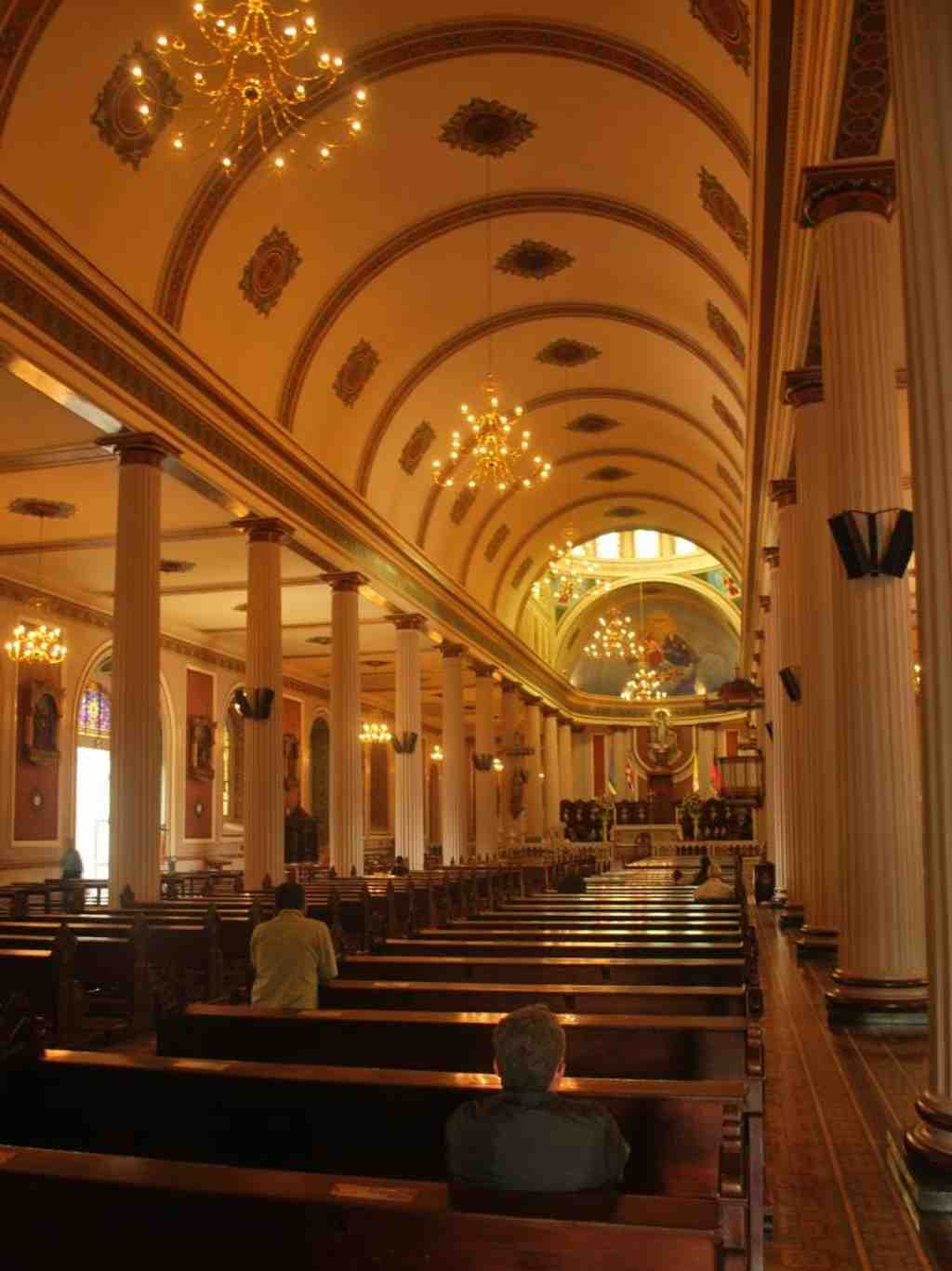
If you were to step inside, you would see a "flying pulpit"-a wooden structure suspended from a column with no visible support from below. And in the crypt, you would find rival enemies buried in the same ground. Liberal dictators sleep next to the bishops they once exiled.
Just outside, take a look around. You might spot a statue of Anne Frank, standing just meters away from a monument to Pope John Paul II. A Jewish girl and a Catholic Pope, sharing the same sanctuary. It is a perfect symbol of how this space has evolved from a fortress of exclusion into a complex, shared public square.
Now, let’s leave the spiritual center and head toward the cultural heart of the city. We are walking toward the crown jewel of liberal design, the National Theater.




