AudaTours logoAudaTours

Buenos Aires Audio Tour: Paths of Art and History in Palermo

Audio guide14 stops

Under the golden light of Palermo, every facade hides a story waiting to be revealed. Buenos Aires doesn't just charm with its cafes and parks; it whispers secrets in the halls of the Argentine Academy of Letters, behind the sculpted doors of the National Museum of Decorative Arts, and beneath the dazzling modernity of the Latin American Art Museum. Embark on a self-guided audio journey through the city's beating heart and uncover stories most visitors miss. What passionate debates shook the Academy during a night of cultural crisis? Why did certain display cases at the Museum of Decorative Arts remain closed to the public for decades? Who used a room at MALBA to host a secret meeting about the future of Argentine art? Wander through the corridors of artistic struggles, past political whispers, and capture the beauty of hidden moments on every street corner. Press play and open the door to the unexpected.

Tour preview

map

About this tour

  • schedule
    Duration 40–60 minsGo at your own pace
  • straighten
    3.0 km walking routeFollow the guided path
  • location_on
  • wifi_off
    Works offlineDownload once, use anywhere
  • all_inclusive
    Lifetime accessReplay anytime, forever
  • location_on
    Starts at Tour de Bellini

Stops on this tour

  1. To spot the Tour de Bellini, look up above the trees in the distance; search for the tall, elegant tower with a white and glass facade that seems to pierce the Palermo sky,…Read moreShow less

    To spot the Tour de Bellini, look up above the trees in the distance; search for the tall, elegant tower with a white and glass facade that seems to pierce the Palermo sky, standing a bit isolated from other large buildings. So, ready to travel back in time? Imagine yourself in the heart of Palermo, where currently the rustling of leaves and the scent of gardens mingle with the wind from the Río de la Plata. The Tour de Bellini, this grand building standing proudly before you, isn't just another structure; it's one of the city's giants! Built when Buenos Aires aspired to reach beyond the clouds, the tower quickly climbed the ranks of the capital's tallest buildings. It's said that from the top, you can almost feel the tango dancing in the air... or get dizzy, depending on your perspective! This corner of Palermo was once primarily known for its green spaces and peaceful atmosphere. Today, with Bellini, residents literally live 'with their heads in the clouds.' Who knows? Maybe one day, swings will be installed on the roof... but for now, just enjoy the view and imagine the stories sleeping behind each illuminated window!

    Open dedicated page →
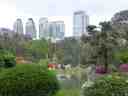
  2. Before you, the Dr. Juan A. Fernández Hospital is easy to spot: a modern, white building with large bay windows and black letters proudly displaying its name above the main…Read moreShow less

    Before you, the Dr. Juan A. Fernández Hospital is easy to spot: a modern, white building with large bay windows and black letters proudly displaying its name above the main entrance, flanked by a ramp and steps where healthcare workers in white coats circulate. Imagine yourself in late 19th-century Palermo: no honking cars yet, just dusty streets with willows hovering over vacant lots and scattered houses, quite far from the city center. A mysterious, somewhat forgotten place where what would become the Fernández Hospital was established. In 1889, it wasn't yet called that, but 'Dispensario de Salubridad y Sifilicomio Municipal' - admit it, it's a mouthful, but it made sense! It primarily dealt with contagious diseases at a time when syphilis was rampant in Buenos Aires. Here, it wasn't about gentleness, but rather caution and a touch of fear. It seems that back then, this institution was 'flat and dark,' quite the opposite of what you see today! Over the years, the neighborhood transformed. In 1893, under Mayor Miguel Cané, the place was renamed 'Hôpital du Nord' (North Hospital) and specialized in housing homeless women, 'victims of abominable contagions.' Let's just say its reputation wasn't stellar! Then in 1904, the hospital received a new name and a new ambition, honoring an exceptional man: Dr. Juan Antonio Fernández, nicknamed 'the Argentine Hippocrates.' This pioneer was a professor, surgeon, founder of the first national academy of medicine, and even dean of the faculty. From 1907 to 1910, jackhammers went wild: new surgical rooms, a maternity ward, childcare, and then X-rays, which at the time were scarier than a horror movie. Later, in 1937, it was déjà vu: a full-fledged reconstruction was decided upon. The work stretched until 1943, the date of an inauguration worthy of the grandest celebrations, and for good measure, the hospital nearly tripled its specialties between 1948 and 1953. And, you know what? The Fernández Hospital never stops: children's clinics, dreaded (but admired) emergency services, divisions for toxicology, infectiology, traumatology. And it's here that generations of doctors are trained, thanks to its partnership with the university. In 2018, the Konex Prize recognized all this work, the cherry on top of the medical cake! So, the next time you pass by, think of all the sighs, hopes, cries of life, and stories that circulate here, between the white walls and the windows looking out onto today's Palermo!

    Open dedicated page →
  3. Before you, look for the slender silhouette of a modern tower, all glass and steel, which stands out sharply on the skyline above the peaceful trees and gardens. Come closer,…Read moreShow less

    Before you, look for the slender silhouette of a modern tower, all glass and steel, which stands out sharply on the skyline above the peaceful trees and gardens. Come closer, because here is the famous Tour Bulnes, perched in the heart of Palermo like an urban lighthouse! Imagine the hustle and bustle of Buenos Aires a few decades ago, when soaring into the sky was almost a crazy gamble. This tower is a bit like the star of a high-rise movie... But no cape, just its elegant facade defying time and the city's wind. It's said that at night, the lights from its windows tell different stories on each floor, little neighborhood intrigues or grand dreams nestled in the heights. It's funny to imagine it sharing the podium with other giants on the list of Buenos Aires' tallest buildings: a kind of secret competition where no skyscraper wants to stay in the shadows! But the Tour Bulnes always holds its head high, proud and serene, offering a spectacular view of the park's green spaces and the neighborhood's bustling life. So, let your imagination climb to the top, and who knows, maybe you'll hear the whisper of the wind telling its secrets up there...

    Open dedicated page →
Show 11 more stopsShow fewer stopsexpand_moreexpand_less
  1. To spot the José Hernández Popular Art Museum, look for this beautiful small cream-colored hotel with rounded shutters, flanked by large blue MAP banners, just behind the iron…Read moreShow less

    To spot the José Hernández Popular Art Museum, look for this beautiful small cream-colored hotel with rounded shutters, flanked by large blue MAP banners, just behind the iron gate at the corner of the shaded streets. Let me take you on an adventure into the heart of Argentine traditions! You are now in front of a building that seems to have traveled through time, blending the elegance of French and Italian residences with the warmth of popular art... Close your eyes for a moment and imagine: in the late 19th century, this peaceful neighborhood echoed with the hushed footsteps of elite families and the rustling of leaves in the gardens. The house belonged to Félix Bunge, who had the whimsical generosity - or foresight? - to request in his will that his home become a museum dedicated to traditional Argentine art. When the municipality accepted this donation, a whole new adventure began... But don't expect a dusty museum! Here, the entire soul of the Argentine people comes alive through everyday objects, patiently woven multicolored Mapuche textiles, silver tableware shimmering in the light, or old horse saddles carrying the scent of leather and the songs of the pampas. You'll even find sabers, firearms, and musical instruments. Each piece tells the story of an artisan, whether indigenous, gaucho, or European immigrant. In fact, if you listen closely, you might still hear the echo of joyful voices from a ball or a Corrientes carnival, thanks to the festive costumes and colorful masks on display! Did you know that initially, the display cases were filled with weapons and Mapuche ponchos, donated by Bunge? Then, over time and with different directors, the museum was enriched with precious donations, such as that of Carlos G. Daws, an enthusiast who had gathered, just for pleasure, 2,600 objects from the rural world. Rare pieces were also acquired during trips to the Argentine Northwest; sometimes, objects arrived on their own, driven by the passion of collectors or... the curiosity of visitors! One of the jewels is the work of Hermógenes Cayo, an artist from the Puna, a master image-maker and weaver, for whom each creation was a poem of wool and resistance against the Andean winds. The MAP has never stopped evolving, and even today, it exhibits neoartesanía: innovative craftsmanship, where tradition blends with design, modern materials, and even... recycling! Some artisans would be capable of transforming an empty can into a masterpiece. Well, maybe not into a mate gourd, but the result is just as surprising. Over the decades, this place has been a melting pot of ideas: fiery debates about what popular art is, films screened for children in schools, dances under the arbor, and - listen closely - the gentle rustling of pages in its library, one of the most renowned on Argentine folklore, with over 14,500 works and a collection of old vinyl records, remnants of voices from the past. And even when the dictatorship tried to erase 'popular' from the museum's name, artisans, researchers, and... neighbors never stopped defending this universe where every object, from the most modest basket to the most sumptuous poncho, carries the memory and pride of the Argentine people. So, the next time you encounter someone with a beautiful leather bag or a hand-woven sweater, ask yourself: what if that object had a story worthy of entering this museum? Well, don't try to discreetly slip it into your bag - creativity, yes, but theft, no! Intrigued by the collections, the gallery, or its beginnings

    Open dedicated page →
  2. To spot the Latin American Art Museum of Buenos Aires before you, look for a modern building with large blocks of light stone, bold geometric volumes, and a glass facade to the…Read moreShow less

    To spot the Latin American Art Museum of Buenos Aires before you, look for a modern building with large blocks of light stone, bold geometric volumes, and a glass facade to the left, which captures sunlight at every hour. Ah, MALBA is a bit like the treasure chest of Latin American art, but without the dust or Indiana Jones traps! Imagine yourself for a moment in September 2001, the city buzzing with curiosity: a brand new museum opens its doors, conceived not to put its visitors to sleep, but to show them the diversity, modernity, and above all, the passion of art from an entire continent. It was the Costantini Foundation, guided by a deep love for art, that decided to create this temple of creativity. Its objective? To gather, protect, and above all, share the wonders from the 20th century to today. You won't find dusty canvases or sad, abandoned statues here. No, MALBA is brimming with life! Its collection is a true Latin world tour, with 400 works by 160 artists from Argentina, Brazil, Mexico, and many other countries. Did I mention it's an entirely private, non-profit institution? They don't exhibit banknotes, but rather works of genius! Outside, the building commands respect with its volumes of Spanish limestone and its large green glass wall, like a polygonal jewel box straight out of an architect's dream. No wonder world-renowned architects, like Norman Foster, participated in choosing the project! The interior doesn't disappoint either: a side entrance, escalators running alongside the large glass pane, ascending between light and reflections, like an invitation to unsuspected worlds... They even expanded its foundations under Plaza Perú with a 'mission impossible' plan by Carlos Ott: a transparent glass floor to admire the exhibitions from the square... and to bring some natural light into the museum. Shoes creak, visitors whisper, everyone looks down: 'Hey, is it just me, or does this museum have a sci-fi vibe?' But let's get back to the essentials: what there is to see! MALBA is home to magnificent works like Tarsila do Amaral's 'Abaporu,' Frida Kahlo's famous 'Diego and I,' or even a portrait of the mysterious Ramón Gómez de la Serna by Diego Rivera. Here, it's all about diversity: painting, sculpture, collage, photography, video, installations... Some corners of the museum seem straight out of a dream, where politics rubs shoulders with art, abstraction dances with pop, and surrealism makes a getaway around a corner. The museum doesn't just exhibit; it lives and breathes to the rhythm of temporary exhibitions, independent film cycles, literary gatherings, design workshops, and festivals of all colors (ah, Filba, that literature fair that shakes up Buenos Aires every year!). It also welcomes all audiences: children, families, seniors, people with disabilities... Here, everyone has their place to discover, escape, or just dream a little. Did you know that MALBA has established itself as a true cultural reference? In 2007, it was declared a Site of Cultural Interest by the city, and it even received the prestigious Konex Platinum Award. Frankly, this museum deserves a humor award for the surprise its works provoke, or a medal for making contemporary art loved by those who thought they hated it. So, ready to enter and be surprised by the magic of MALBA? Let yourself be captivated by the light, the forms, and open your eyes wide... Latin American modernity awaits you behind these walls of stone and dreams! Would you like to delve deeper into the building, the permanent collection, or the exhibitions and programs? Join me in the discussion section for an insightful conversation.

    Open dedicated page →
  3. Before you, the Palermo neighborhood stretches out like a jewel box of greenery and elegance, nestled in the northern corner of the map, between the bustling city and green spaces…Read moreShow less

    Before you, the Palermo neighborhood stretches out like a jewel box of greenery and elegance, nestled in the northern corner of the map, between the bustling city and green spaces where trees form a lush canopy. Welcome to Palermo Chico, or Barrio Parque! Imagine yourself here, in a luxurious oasis, quite different from the urban hustle and bustle Buenos Aires usually offers. Cobblestone streets discreetly wind through shaded alleys, and if you listen closely, you won't hear much... except perhaps the gentle rustling of leaves or the hushed footsteps of a billionaire stroller! It's such a quiet and chic neighborhood that you might think cars here drive in slippers, just to avoid waking the magnolias. But this corner wasn't always so peaceful and worldly. In 1848, this land, believe it or not, belonged to Juan Manuel de Rosas, a pivotal figure in Argentine history. He elegantly gave it to his faithful right-hand man, Nicolás Mariño. After a few real estate twists and turns, several families succeeded each other, each leaving their mark. Imagine horses galloping where splendid residences now stand, because at one time, thoroughbreds were raised here for major races! The shouts of jockeys were quietly replaced by... the sweet silence of a dream neighborhood. Everything changed in 1912, when a man with a poet's flair arrived: Carlos Thays, a famous landscape architect, a visionary with a certain fondness for curves and diagonals. His mission? To forget straight lines and offer Buenos Aires a neighborhood where every street corner would be a surprise - a bit like looking for butter in a well-stocked fridge! Thanks to him, native trees flourished, and avenues like Libertador or Figueroa Alcorta welcomed sumptuous residences of varied styles: from small hotels to monumental palaces. In the 1940s, the transformation continued: luxurious villas sometimes gave way to modern buildings, but always enveloped in greenery and maintaining the exclusive spirit of the neighborhood. Today, famous artists, politicians, and renowned athletes live here, all this high society peacefully coexisting between an embassy and a fountain. Speaking of embassies: almost every street corner is flanked by a diplomatic residence, from Spain to Sweden, from Morocco to Indonesia. It's a real 'VIP neighborhood,' almost a life-sized Monopoly game, where flags joyfully wave in the Argentine wind. Right next door, don't miss the famous Plaza Alemania, adorned with a monumental fountain offered by the German community, a testament to the friendship between peoples and the diversity that enlivens Buenos Aires. And if, while strolling through these quiet, flowery streets, the beauty and calm make you feel like you've hit the real estate lottery jackpot, rest assured: that's the Palermo effect! But beware, just a stone's throw away, social reality quickly takes over: on the other side of the train tracks, the famous Villa 31 reminds us that the city has many faces, between opulence and challenges. So, wanderer, savor every moment here, where history, luxury, and nature blend in a simply enchanting atmosphere.

    Open dedicated page →
  4. Before you, look for a brightly colored coat of arms: a blue and red circle adorned with a golden sun, surrounded by crossed swords and golden flames - that's the symbol you'll…Read moreShow less

    Before you, look for a brightly colored coat of arms: a blue and red circle adorned with a golden sun, surrounded by crossed swords and golden flames - that's the symbol you'll see on the facade. Welcome to the National San Martín Institute, the beating heart of the memory of the great liberator of Argentina, Chile, and Peru. Imagine Buenos Aires in 1933 for a moment: the streets still echo with the memory of battles, and a history enthusiast, Dr. José Pacífico Otero, decides to found this institute... a bit like creating a fan club, but for a hero of independence! He chose April 5th, precisely the anniversary of the Battle of Maipú, that great moment when Chile's freedom (and Argentina's future) shifted. Enthusiastic, Otero directed the institute until 1937. After his death, his wife showed generosity: she offered an endowment so that this place could finally have a real home. And then, surprise! Architects decided to build a replica of San Martín's modest home in Le Grand-Bourg, France, where the general lived in exile. One can almost imagine San Martín in the morning, enjoying his coffee - well, his mate! - while gazing at the French countryside, forced to leave Argentina due to the not-so-fair political games of the time. In 1944, with historical flair, the Argentine president placed this house under the protection of the Ministry of War, and very quickly, the inauguration arrived: the institute opened its doors in 1946, in full light. But wait, there's more! Under Perón, the center became essential: San Martín, who had had to leave his country in silence, found his place again in the hearts of Argentinians, and even his body returned to the country as a hero to rest in the famous Buenos Aires Cathedral. In 1950, it was the highlight: all of Argentina celebrated the 'Liberator.' In the nearby square, the statue 'The Eternal Grandfather' appeared, the only one showing San Martín as a wise old man - perhaps to remind us that even superheroes grow old. And since San Martín was never one to stay put, the institute has spread all over the world: Madrid, New York, Rome... A true global tour, enough to make any influencer green with envy! Today, this place is not just a museum; it inspires courses, research, and novels around one of South America's most mysterious figures. So, before this symbol, breathe in the history: it is still being written here, with a touch of panache and, who knows, a hint of Argentine mischief. Eager to learn more about the ENDS, the Prize, or the 'Jorge Luis Borges' Library? Simply drop your requests in the chat section, and I'll provide you with the details you need.

    Open dedicated page →
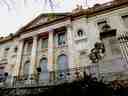
  5. Before you, the Plaza República de Chile opens like a green island; spot the large equestrian monument in the center, encircled by ancient trees and orange-hued paths. You've…Read moreShow less

    Before you, the Plaza República de Chile opens like a green island; spot the large equestrian monument in the center, encircled by ancient trees and orange-hued paths. You've arrived in this corner of Buenos Aires where Argentina and Chile seem to shake hands, right in the heart of Palermo! Imagine the scene: imposing trees, the smell of earth after rain, a carpet of orange gravel paths crunching under your feet... You might almost think you're in an adventure novel! But beware, here, every statue has its own little story ready to leap out of the past. Under the protective wing of nearby museums and the Chilean embassy - yes, look on Tagle Street, it watches over the square like a mother hen - this park tells the epic tale of South American independence. Look around you: everywhere, sculptures pay tribute to heroes, but also to friends. For instance, do you see the statue of Alejandro María Aguado? He was General San Martín's ultra-faithful companion during exile, a true secret mission sidekick! Not far away, other prestigious figures pose: Peruvian Marshal Ramón Castilla, or Martín de Güemes, nicknamed the 'Robin Hood of the great outdoors'. But the highlight of the show is this intrepid horseman in the center: Bernardo O'Higgins, one of Chile's 'fathers,' ready to gallop towards freedom. By his side, a great Lady watches over: the Virgen del Carmen de Cuyo, national star and official 'general' of the Army of the Andes. If you're looking for a nod to friendship, listen closely: the work 'Amistad' by Chilean sculptor Francisca Cerda symbolizes the fraternity between two neighboring countries, more united than two meat empanadas. Finally, a small dose of emotion: a plaque honors Salvador Allende, installed precisely for the centenary of his birth. This square is therefore a bit like a giant photo album where each statue whispers an anecdote... or a secret of friendship between Argentina and Chile!

    Open dedicated page →
  6. Before you stands a vast building of light stone with large vertical windows, occupying an entire city block; to not miss it, look towards Avenida del Libertador, where yellow…Read moreShow less

    Before you stands a vast building of light stone with large vertical windows, occupying an entire city block; to not miss it, look towards Avenida del Libertador, where yellow banners and the Argentine flag proudly wave at the top. Ah, the Argentine Automobile Club, or Automóvil Club Argentino for those in the know! Imagine yourself in 1942, in the heart of a chic neighborhood surrounded by architectural 'peaks,' feeling the tension rise during the inauguration of this modern behemoth - the result of the genius of a battalion of architects passionate about speed... and elegance. In its place once resonated the music of a famous cabaret, Armenonville, where prominent figures came to dance until dawn. Now, it's here that engines roar. Well, figuratively speaking, because at the ACA, it's all serious business! Imagine the scene: in 1904, a group of 'driving enthusiasts' - bankers, aristocrats, Argentine pioneers, and even a certain Horacio Anasagasti, already bitten by the mechanics bug - decided to found a club to tame the new beast: the automobile! They organized, they got excited (the horn hadn't yet been invented for impatient drivers in traffic jams), and from the start, they dreamed of roads as smooth as dulce de leche... and of enforcing the rules of the automotive game. Today, the ACA is not just about flair: the building houses an arsenal of services for the modern driver - travel assistance, breakdown recovery, maps, a hotel, and even advice to avoid turning a simple drive into a memorable rally, 'lost in the middle of the Pampa' style. But shhh... here, it all began with a passion for the road. Before you, see this rectangular colossus, modern with an Argentine touch: eleven floors, a facade clad in dolomitic stone, endless windows, and a grand double-height hall where the echo of conversations resonates - imagine the hurried footsteps of drivers and enthusiasts from yesterday and today. The walls are decorated with friezes and frescoes by famous artists, because here, style matters almost as much as horsepower. On the first floor, you'll find an incredible museum: vintage cars, gleaming trophies, helmets of legendary racers, including that of the iconic Juan Manuel Fangio, multiple world champion and revered like a demigod within these walls. Each room breathes engine oil and tells the exploits of Argentine speedsters, from the dust of the first rallies to the futuristic cars of the 70s. If you're the logbook type, head to the fourth floor: a library with over 20,000 books on cars, technology, races, travel... In short, enough to shine during a retro-car quiz at the next family dinner. The ACA is credited with creating the country's first driving school - yes, it was here that the first 'check your mirrors, not your neighbor' lessons were learned. The club also pushed for the adoption of the national road viability law and even launched a legendary magazine: Autoclub, awarded for its impactful articles and covers worthy of a 'Fast & Furious' Buenos Aires edition. Listen, even the gas station behind it isn't 'ordinary': seven levels, including a ramp that would make Formula 1 circuits pale in comparison, where gas stations, mechanical workshops, parking lots, and even a hidden amphitheater for film screenings and secret meetings are active - to dream of race cars during Monday morning maintenance. The Automóvil Club Argentino has built 'tracks' and opened branches everywhere - from north to south, from the capital to the ends of Tierra del Fuego. They also organize all the biggest motorsport events, affiliated with the FIA and CODASUR, so that the legends of Argentine racing continue to roar on circuits. A little road joke: what does an ACA member say when their car won't start? 'No worries, we invented roadside assistance for that!' You're in good hands, in the heart of the Argentine temple for driving enthusiasts. Want to delve deeper into community contributions, national coverage, or the headquarters? Join me in the discussion section for a detailed discussion.

    Open dedicated page →
  7. Before you, you can't miss the imposing beige facade of the museum with its gigantic Corinthian columns and stone statues, visible just behind the gate and surrounded by plants -…Read moreShow less

    Before you, you can't miss the imposing beige facade of the museum with its gigantic Corinthian columns and stone statues, visible just behind the gate and surrounded by plants - look up, it's right there! Welcome to the National Museum of Decorative Arts, a true palace straight out of the imagination of a French architect and the dream of an Argentine couple... but not just any couple! Imagine, in 1897, Matías Errazúriz, a Chilean heir who became ambassador to France, and Josefina de Alvear, granddaughter of an Argentine independence hero, united their destinies - and their fortunes! They wanted a retreat fit for kings for Matías, so they called upon René Sergent, a brilliant architect already known in Paris. This masterpiece, a pure neoclassical gem, was built for them between 1911 and 1917, despite World War I which slightly delayed the project. To decorate this palace, only the crème de la crème of European artisans were hired! Wooden panels from the continent, marbles from France and Italy, mirrors, sumptuous frames. Each room was designed to impress - and you can bet that the number of banquets and balls held here made the heads of all high society spin! But in 1935, when Josefina died, Matías - a little overwhelmed by all these memories - bequeathed the house to the Argentine State, on the advice of his children, thinking that after all, it was better to share a little of the magic. The beating heart of the palace, the Grand Hall impresses with its double height and its star-patterned maple and walnut parquet floor - imagine the echoes during receptions, laughter bouncing under the coffers and crystal chandeliers! Then one would move into the ballroom, graceful, refined, all rococo curves and golden mirror effects; there, the light seems to dance, lighter than the waltzes played during unforgettable evenings. But this museum is also a labyrinth of magical salons! A Baroque dining room directly inspired by the Palace of Versailles, gardens designed by Achille Duchêne, a subtle winter lounge, luxurious private rooms, an Art Deco boudoir decorated by Josep Maria Sert... Each transports you to a different era, between memories of Marie Antoinette and Oriental inspirations in the master's study. Be careful not to get lost: even the faux-Paris stone staircases, the gallery of French and Flemish tapestries, everything seems ready to play tricks on you! The collection gathers over 4,000 works of art: El Greco, Fragonard, Manet, Rodin, sculptures, porcelains, Chinese vases, 18th-century furniture, and the most important American collection of miniatures! Imagine the tension, with each delivery of a treasure from Europe, if a Qianlong vase decided to play acrobat! Don't panic, everything is well protected today... But the objects still seem to whisper their stories to attentive ears. What's more, since 1944, the Argentine Academy of Letters has been located here... Culture is no laughing matter! To reward yourself after so many discoveries, take a stroll to Café Croque Madame in the gardens, perfect for playing the part of grand ladies and diplomats. Who knows, perhaps you'll hear the ghosts of former owners toasting your health, or maybe it's just the wind in the leaves... Here is a museum-palace that blends laughter, secrets, sparkling parties, and a hint of mystery in every corner. Before entering, breathe deeply, open your eyes wide... Ready to push open the door to centuries past?

    Open dedicated page →
  8. To recognize the National Museum of Decorative Art, look for an imposing French Neoclassical palace, all in light stone, with large windows, an ornate facade, and perched behind…Read moreShow less

    To recognize the National Museum of Decorative Art, look for an imposing French Neoclassical palace, all in light stone, with large windows, an ornate facade, and perched behind elegant trees directly in front of you on the avenue. Imagine yourself in front of this splendid building, with its majestic columns and statues that seem almost to watch over you. The museum was once the palace of Matías Errázuriz Ortúzar, a Chilean ambassador, and his wife Josefina de Alvear, two art lovers who traveled through early 20th-century Europe to the sound of rustling dresses and carriage wheels on cobblestones. Between 1911 and 1917, they had this marvel built by architect René Sergent, importing the best of French style. But wait... there's a plot twist worthy of a novel! In 1937, the Argentine State acquired the palace and the couple's fabulous collection: sumptuous furniture, precious tableware, secret miniatures, porcelains from Sèvres to Limoges... and, of course, paintings by Manet, El Greco, and even Cranach! Here, every mirror has undoubtedly heard some worldly secrets, every corridor still carries the discreet scent of lavish evenings. And that's not all! Today, the museum also exhibits a permanent collection of sculptures by Rodin or Bourdelle, brightly colored tapestries woven between the 15th and 18th centuries, and temporary exhibitions that create a dialogue between the past and contemporary creativity. So, ready to discover life from another century? Come in, and let yourself be carried away by the elegance... but be careful where you step: it's said that some furniture has a bad habit of moving on its own during the night!

    Open dedicated page →
  9. Look before you: you'll see the symbol of the Argentine Academy of Letters as in the image, a straight Ionic column, surrounded by the words 'Recta Sustenta,' a sign that here,…Read moreShow less

    Look before you: you'll see the symbol of the Argentine Academy of Letters as in the image, a straight Ionic column, surrounded by the words 'Recta Sustenta,' a sign that here, language stands firm - or at least behaves itself! Imagine yourself in Buenos Aires in 1931, a summer when the Spanish language decided to put on its finest attire. It was in this atmosphere of erudition and tango that the Argentine Academy of Letters was born, driven by a handful of enthusiasts ready to defend the subtleties of Castilian like others defend their football team, with arguments, sometimes in verse... and never short of debates! But beware, here, they don't just collect strange words like 'chamuyo' or 'quilombo'! No, the mission is serious: to advise on how Spanish is used with an Argentine flavor, but also to enrich the national literature - like a well-garnished milanesa, you can never have too much. But, wait! Let's step back a bit. As early as the 19th century, Buenos Aires scholars realized they needed to capture the avalanche of new words emerging on the banks of the Río de la Plata. Attempts were made to create a local dictionary, lists of colorful words heard in the streets and on dusty roads were compiled... but the task proved titanic, and due to debates and small rivalries, the first attempt fell through. Thousands of collected words ended up in drawers - proof that bureaucracy isn't a new invention! Finally, in 1931, under a president determined to leave his mark, the true Academy was born. But there was no question of being just a distant cousin of the prestigious Real Academia Española in Madrid! Here, the goal was for writers, poets, playwrights, and translators to make the Argentine soul shine, and also for each chair to bear the name of a great author of the country. I wonder if one could negotiate a 'Gardel' chair for beautifully sung phrases... The library, let's talk about it! It proudly bears the name of Jorge Luis Borges and today overflows with over 130,000 volumes: from literature to linguistics, poetry, theater, not to mention treasures of Egyptology and incredible rare 19th-century editions. It's said that here, diving into the shelves is a bit like going on an Indiana Jones expedition... but with more grammar! The Academy also acts as an arbiter: it ensures that advertisements, the press, or official speeches don't invent overly outlandish barbarisms. Writing 'zapato' with two 'p's is a no-go! But, they also reward! Each year, prizes are awarded to young graduates and brilliant authors from the Argentine literary world, in both prose and poetry. Through the decades, despite political storms, the 1955 dictatorship that thinned its ranks, and then the return to calm, the Academy holds on. Its emblem? That straight column, haloed by its literary sun as you see it before you - a symbol of a language that doesn't let itself be jostled, but stands firm. Remember, even the greatest argued about the best way to speak Argentine Spanish, but in the end, everyone agrees on one thing: language is cherished, debated, and sometimes... reinvented! So, tell me, do you say 'vos' or 'tú'? Eager to learn more about the ENDS, the Prize, or the 'Jorge Luis Borges' Library? Simply drop your requests in the chat section, and I'll provide you with the details you need.

    Open dedicated page →

  10. Imagine, it's 2003. Argentina is just beginning to emerge from a terrible crisis. The streets buzz with hope, but also with echoes of caution. And here, Eduardo Costantini, a…Read moreShow less

    Imagine, it's 2003. Argentina is just beginning to emerge from a terrible crisis. The streets buzz with hope, but also with echoes of caution. And here, Eduardo Costantini, a visionary entrepreneur who had just made a splash with the MALBA museum, announces a new project: Tour Grand Bourg, a luxury building on Figueroa Alcorta Avenue. Selling price? $2800 per square meter! It makes you think twice before breaking the piggy bank for an apartment here. But, as they say, luxury doesn't wait: in just one week, all the apartments were sold. Now, take a deep breath. You'll notice these details: a majestic entrance with an arcaded gallery, a hall adorned with black and white marble, 14 elegant floors topped with a mansard roof, and even a swimming pool and a vast garden behind. But behind the apparent calm, a storm is brewing among architects! Because Costantini, after building the city's most contemporary museum, chose a very classic French style here... with a 21st-century twist. And that's where anarchy erupted in the specialized press. Luis Grossman, a sharp-penned architecture critic, attacked in the newspaper La Nación. According to him, the Grand Bourg is a 'schizophrenic' mix of old French chic and cutting-edge technology. Others cried scandal: how can one want to live in a building 'disguised' as old, when everyone is looking for the very best in cars and smartphones? It's said that an architect even suggested that if Philip the Fair returned, he would settle here - provided there was room for his servants! But wait, not everyone shared this indignation. Some, in other newspapers, raised their glasses to this defiance of architectural dogmas, celebrating freedom of style. With all this fuss, the president of the Central Society of Architects tried to calm things down: 'It's not my way of doing things, but let others do theirs...' Ah, wisdom! By the way, did you know that the 21 apartments here are at least 260 m²? With a gym, party room, 56 underground parking spaces, and a large wooded garden on the Juez Estrada side. The kind of place where you could easily imagine bumping into a ghost from the Roaring Twenties... or perhaps just a neighbor in a bathrobe coming out of the spa. The debate quickly spread: heritage specialists found some details 'Disneyland-like,' while others recalled that in 1929, an exactly opposite controversy had erupted during the construction of a rationalist house right here. It just goes to show that in Buenos Aires, a building never achieves unanimity... except perhaps among pigeons, who, for their part, have never given their opinion. Ultimately, society decided with enthusiasm: the apartments sold in a flash, Costantini even moved out, selling his top floor to another billionaire. And the controversy? It gave way to other priorities... But even today, Tour Grand Bourg embodies this delicate interplay between a prestigious past and a modern present. Observe the light playing on the facades, listen to the breath of the wind. Isn't that the whole charm of Buenos Aires? Ready to discover the rest of your visit?

    Open dedicated page →
  11. Before you stretches an immense avenue lined with bare trees, as wide as a river, where cars and yellow taxis constantly speed by, so look straight ahead, where the road opens up…Read moreShow less

    Before you stretches an immense avenue lined with bare trees, as wide as a river, where cars and yellow taxis constantly speed by, so look straight ahead, where the road opens up as far as the eye can see. Welcome to Presidente Figueroa Alcorta Avenue, the grand boulevard that crosses a large part of Buenos Aires, much like an elegant scarf draped over the city's shoulder. Do you feel that breath of air coming from the nearby parks? That throng of cars roaring, the cyclists, the joggers with their rhythmic steps? Here, modernity blends with history with a distinctly porteño charm, and it all begins, or ends, depending on your perspective, with the name of one man: José Figueroa Alcorta. He was a true jack-of-all-trades - he served as President of the Nation, President of the Senate, and then Supreme Court Justice, as if he enjoyed collecting all the badges of power in a sticker album. But before cars rumbled on this asphalt, in the 19th century, there were train tracks here leading to San Fernando. Imagine the metallic noise, the steam, and those wagons running along the banks of the Río de la Plata. Then, little by little, the tracks gave way to ambition: the coast was filled in, the train was moved, and a majestic avenue was dreamed of, one that would guide the elite and families towards the great Tres de Febrero Park, Buenos Aires' green lung. In 1910, for the centenary of the May Revolution, the brand new avenue was inaugurated, first named Avenida Centenario, like a child dressed up for a birthday. But it never stopped changing its attire: it quickly received the name of a dictator (José Félix Uriburu, for a very short period), before definitively adopting the name Figueroa Alcorta, its current mantle. Throughout its journey, it offers a festival of contrasts and surprises. It originates in Recoleta, winding between monuments and museums - here the National Museum of Fine Arts, there the gigantic Floralis Genérica opening like a steel flower. You'll cross the famous curved concrete bridge, imagined by an architect in 1960, moved, destroyed, then rebuilt... This bridge has more twists and turns than an Argentine telenovela. We move forward, and suddenly, it's Palermo, the chic neighborhood designed by Carlos Thays with his vision of a French garden: he wanted the aristocracy to stroll there without getting their shoes dirty in the mud. The villas of prominent families, sometimes replaced by modern buildings (because even palaces don't escape the harsh law of real estate), now host embassies and diplomats. Oh, and Tour Grand Bourg? A luxurious building whose style, bristling with French details, divided architects: some applauded, others rolled their eyes, muttering 'anachronistic!' On the west side, you'll find the Alcorta Palace: guess what? It even hosted a circular Chrysler car test track on its roof! Car enthusiasts dreamed of it, and those who didn't like engines found solace at the Latin American Art Museum (MALBA), now a star of the cultural world. To the north, greenery stretches out: the Planetarium, the Japanese Garden, the Mounted Police, equestrian clubs, and that mysterious Babylonian column offered by the Shah of Iran - a little touch of the Arabian Nights on the banks of the Río de la Plata. And then, the road opens further, crossing brick bridges, flirting with English rails, caressing the lawns of the Club de Gimnasia y Esgrima, running alongside Plaza Armenia where swans swim... Which goes to show that here, even elegant birds enjoy a stroll. And there you have it, you've walked, driven, and glided through time and space along one of Buenos Aires' most vibrant and surprising avenues. This is the end of our stroll! But rest assured, on Figueroa Alcorta, there's always something moving, growing, leaping towards the future... Perhaps even a next yellow taxi to catch, if you're in a hurry to tell everyone about it!

    Open dedicated page →

Frequently asked questions

How do I start the tour?

After purchase, download the AudaTours app and enter your redemption code. The tour will be ready to start immediately - just tap play and follow the GPS-guided route.

Do I need internet during the tour?

No! Download the tour before you start and enjoy it fully offline. Only the chat feature requires internet. We recommend downloading on WiFi to save mobile data.

Is this a guided group tour?

No - this is a self-guided audio tour. You explore independently at your own pace, with audio narration playing through your phone. No tour guide, no group, no schedule.

How long does the tour take?

Most tours take 60–90 minutes to complete, but you control the pace entirely. Pause, skip stops, or take breaks whenever you want.

What if I can't finish the tour today?

No problem! Tours have lifetime access. Pause and resume whenever you like - tomorrow, next week, or next year. Your progress is saved.

What languages are available?

All tours are available in 50+ languages. Select your preferred language when redeeming your code. Note: language cannot be changed after tour generation.

Where do I access the tour after purchase?

Download the free AudaTours app from the App Store or Google Play. Enter your redemption code (sent via email) and the tour will appear in your library, ready to download and start.

verified_user
Satisfaction guaranteed

If you don't enjoy the tour, we'll refund your purchase. Contact us at [email protected]

Checkout securely with

Apple PayGoogle PayVisaMastercardPayPal

AudaTours: Audio Tours

Entertaining, budget-friendly, self-guided walking tours

Try the app arrow_forward

Loved by travelers worldwide

format_quote This tour was such a great way to see the city. The stories were interesting without feeling too scripted, and I loved being able to explore at my own pace.
Jess
Jess
starstarstarstarstar
Tbilisi Tour arrow_forward
format_quote This was a solid way to get to know Brighton without feeling like a tourist. The narration had depth and context, but didn't overdo it.
Christoph
Christoph
starstarstarstarstar
Brighton Tour arrow_forward
format_quote Started this tour with a croissant in one hand and zero expectations. The app just vibes with you, no pressure, just you, your headphones, and some cool stories.
John
John
starstarstarstarstar
Marseille Tour arrow_forward

Unlimited Audio Tours

Unlock access to EVERY tour worldwide

0 tours·0 cities·0 countries
all_inclusive Explore Unlimited

