
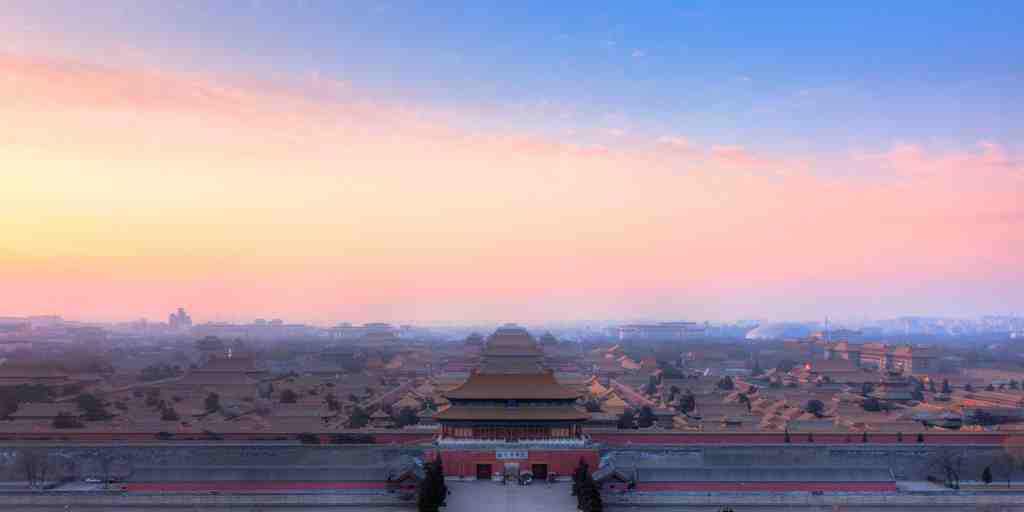
Look ahead for an endless sea of golden rooftops stretching into the distance, all enclosed by imposing gray walls and a wide moat-if you see a sprawling, symmetrical palace complex rising in layers before you, you’re gazing at the mighty Forbidden City!
Welcome to the legendary Forbidden City, a place once so secret that if you’d tried to wander in back in the day, you’d have gotten yourself into much more than just a little trouble-immediate execution was on the line! But now, lucky for us, we can stroll right up and marvel at what’s probably the most famous palace in Chinese history. Built from 1406 to 1420 by more than a million workers, this vast complex served as home to 24 emperors and their families across the Ming and Qing dynasties and stood as the center of Chinese power for over 500 years. Imagine standing here in the freezing Beijing winter as golden-brick flagstones crunch under your feet, with the aroma of incense and the distant thunder of ceremonial drums.
Back in those days, the Forbidden City buzzed with ceremonies, secrets, and maybe a little palace drama-after all, with almost 9,000 rooms and hundreds of concubines, courtiers, musicians, and guards, there was always something happening behind these red walls. And about those walls! They reach nearly 8 meters high and are surrounded by a deep, wide moat-pretty good security against nosy neighbors or surprise guests. Look for the dramatic gates-Meridian Gate to the south and the beautifully named Gate of Divine Prowess to the north-which only the emperor could walk through on the Imperial Way, unless you were about to become empress or had just aced your imperial exams!
Yellow tiles gleam atop every roof, a royal color reserved just for emperors. And let’s not forget the ornate corner towers at each corner-these are topped with 72 decorative ridges, and legend has it that even the emperor’s best craftsmen struggled to rebuild them during the Qing dynasty. At the heart of the city stands the towering Hall of Supreme Harmony, China’s largest surviving wooden structure, where emperors were crowned, married, and sometimes caught a cold draft while preparing for grand ceremonies.
But don’t think the Forbidden City was all fancy robes and banquets! In 1644, rebels stormed in, the emperor barely escaped, and part of the palace was set ablaze. Later, foreign armies occupied it during the Opium Wars, and in 1924, the last emperor, Puyi, got the royal boot from these imperial chambers-ending over five centuries of imperial rule. Talk about a rollercoaster history!
Yet, even as dynasties crumbled, the Forbidden City survived-thanks to a bit of luck, some quick-thinking leaders (Zhou Enlai even sent soldiers during the Cultural Revolution to defend it!), and massive restoration projects that today allow us to walk the very same marble ramps and gaze at intricate dragon carvings and dazzling courtyards. Now, nearly 15 million visitors come here every year, exploring treasures that once filled secret armories and libraries: priceless porcelain, shimmering jade, ancient scrolls, and clocks that tell time with a flourish.
Legend claims there are 9,999 rooms here, but surveyors have counted a "mere" 8,886-so if you’re thinking of playing hide-and-seek, you might want to bring snacks. Mystical meaning runs through it all: the palace name "Zijincheng" is a nod to the North Star, believed to be the residence of the celestial Jade Emperor. Down on earth, this palace was said to be its mirror image, linking heaven and China’s rulers in a hug of stone, wood, and golden tile.
So as you gaze upon this sea of rooftops glowing in the sunset, remember: you’re at the real crossroads of ancient power and modern wonder, where emperors once ruled and where millions now come chasing history’s whispers. Enjoy your walk through this palace of legends, just… don’t try to count all the rooms. That’s one imperial examination you’re guaranteed to fail!
Fascinated by the etymology, structure or the architecture? Let's chat about it




