
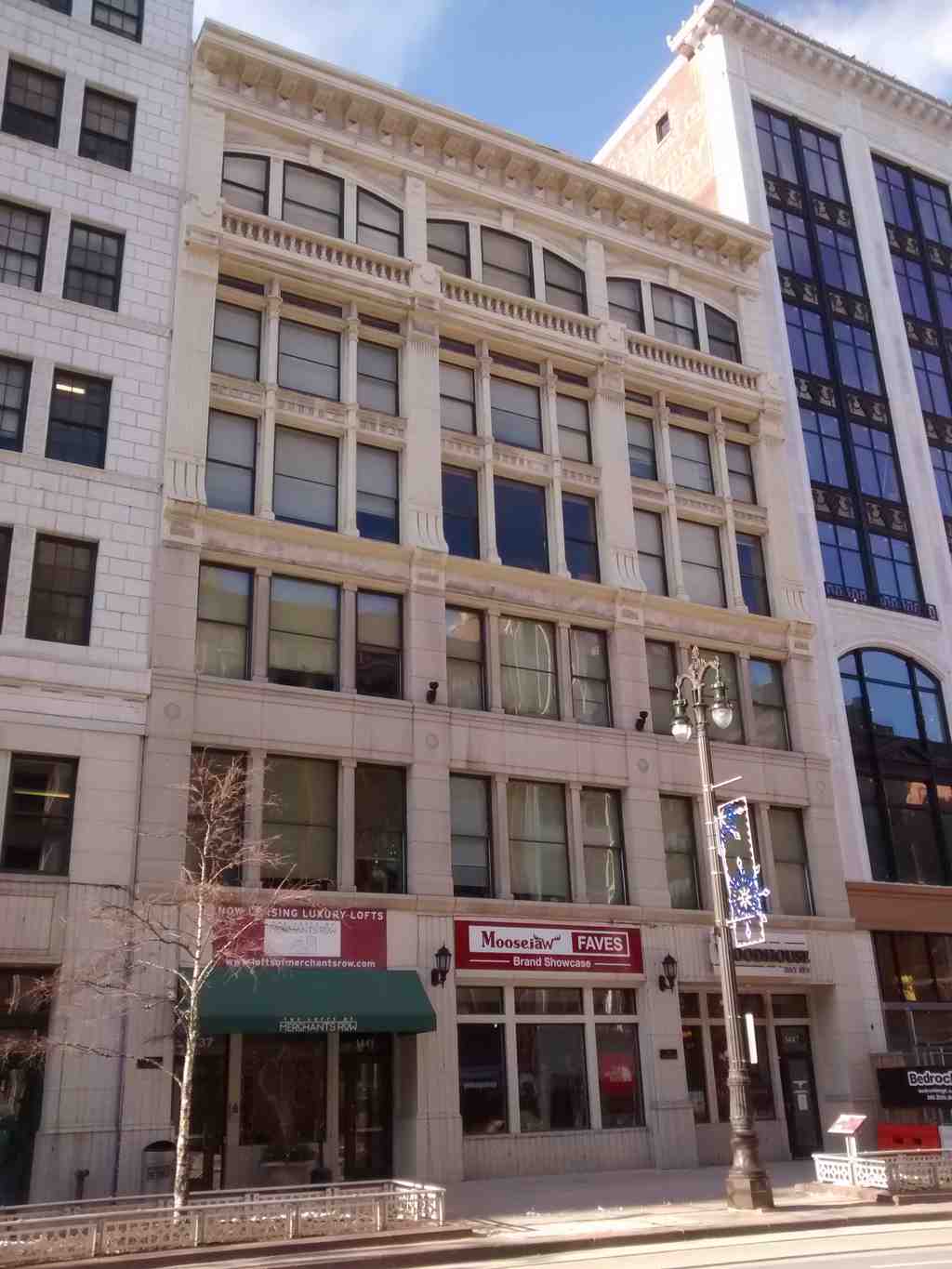
You’re looking for a cream-colored, six-story building with big rectangular windows and intricate ironwork details above, right across from the street with signs for Moosejaw and Lofts of Merchants Row at street level-just lift your gaze above the shop awnings and you’ll spot it!
Imagine yourself, right here on Woodward Avenue in 1891, standing in the shadow of what was then Detroit’s tallest building. The Frank & Seder Department Store rose above the city at six full stories and 41 meters, almost scraping the sky-or at least, as high as Victorian-era Detroit dared to reach! This wasn’t just a department store; it was the shopping palace of its day, with the latest fashions and bustling crowds milling about under the city’s very first cast iron façade-the last one of its kind still visible in Detroit.
Now, let’s set the scene: Isaac Seder and Jacob Frank, both Russian Jewish immigrants, began their journey in the early 1900s selling women’s wear wholesale, eventually opening their own retail store way over in Pittsburgh before the Detroit flagship arrived. But not before drama struck-they lost their Pittsburgh store to a fire in 1917, $600,000 up in smoke. Talk about a tough break! But did they let that stop them? Not for a second. By 1918 they’d rebuilt, and by 1921 right here in Detroit, their empire was growing so fast they kept adding on: that building beside you was part of the expansion-at one point they dreamed of twelve stories instead of just six!
Detroit’s Frank & Seder wasn’t alone-there were stores in New York and Philadelphia too, even occupying floors of the Marbridge Building near Herald Square. Frank & Seder was a place for both the city’s fashion-forward and bargain hunters. But here’s a twist: it wasn’t always just about shopping. In 1937, the store was the scene of a tense sit-down strike. Just picture it: eleven men slip inside as the doors close, and soon 550 employees are facing off in protest over harsh conditions. The event grew so notorious the police, Detroit’s mayor, and even Michigan’s governor showed up to break it up. Arrest warrants, hidden criminal records, and the dust of a rapidly changing era.
Over the years, Frank & Seder’s magic extended to kid-friendly afternoons in Philadelphia: free cartoons and movies so parents could shop in peace, and the store even sponsored a TV show called the TV Spelling B. Who knew shopping could spell so much excitement? But times change. Department stores everywhere were fading as new suburban shopping centers sprouted up. Detroit’s store closed in 1951, Pittsburgh’s followed suit seven years later, and Philadelphia’s flagship was ultimately demolished for a parking garage-ironically, to make room for the next wave of urban convenience.
Standing here, you can almost hear the clatter of shoppers, the ring of cash registers, and the bustle of a lost era-held together, still, by that stubbornly stylish cast iron skin up above you. Give it a wave: you’re eye to eye with Detroit’s own iron-clad slice of retail history!


