
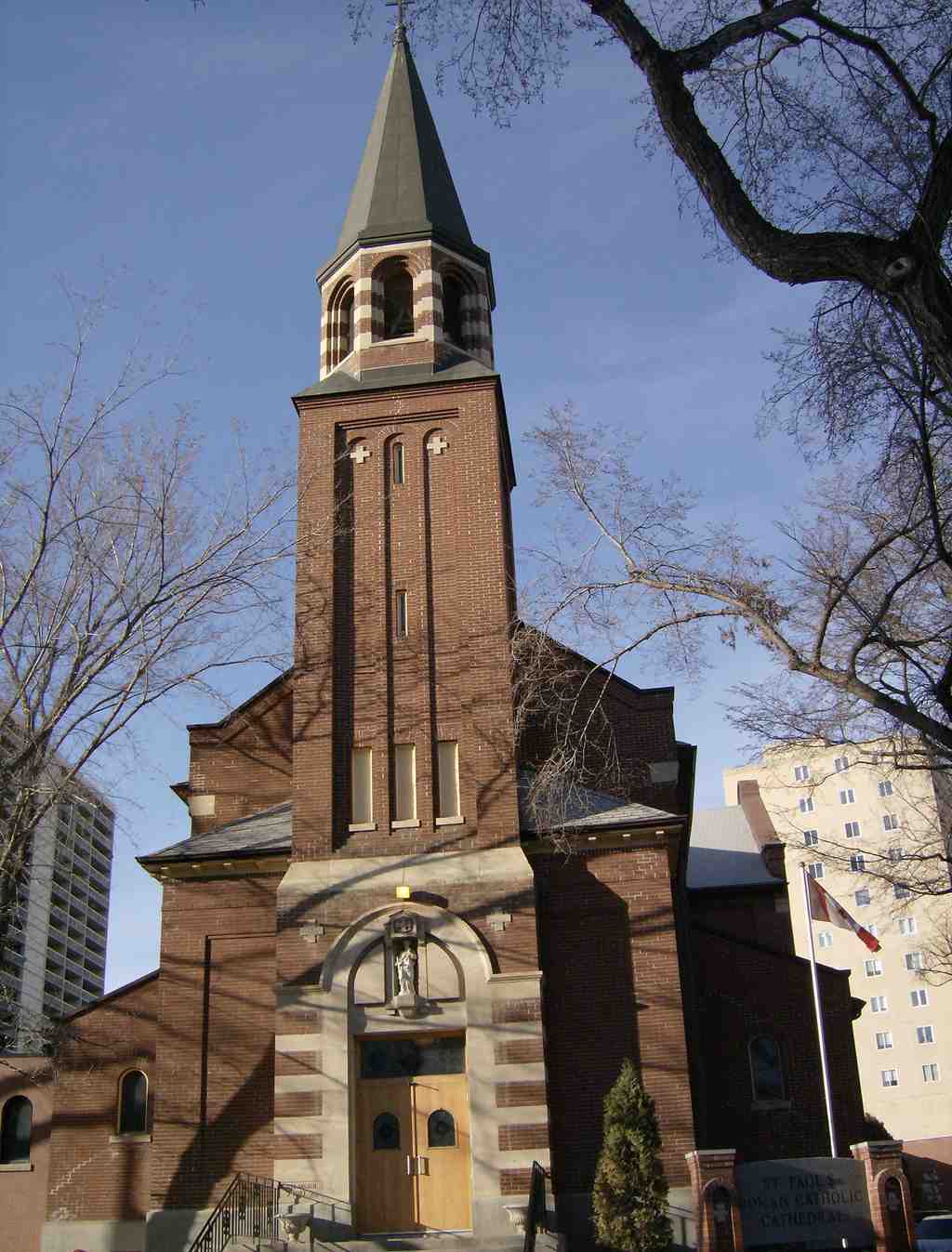
To spot St. Paul’s Cathedral, look for a tall, slender brick church with a striking striped bell tower and a pointy spire reaching toward the sky, right at the corner of 22nd Street East and Spadina Crescent.
Here you are, standing in front of one of Saskatoon’s oldest and most spirited landmarks-St. Paul’s Co-Cathedral, which technically is a cathedral, except...well, it’s a bit on the cozy side for that title. Close your eyes and imagine the year is 1910: people gather by the river, their shoes crunching on gravel as none other than Prime Minister Sir Wilfrid Laurier sets the first stone of this church in place, setting the stage for both grandeur and humble warmth in Saskatoon’s heart. Only a year later, Archbishop Adelard Langevin made it official-so you could say this little church came out swinging, or maybe singing, thanks to its famous Casavant organ installed in 1912.
St. Paul’s stained glass windows set the mood year-round, but they shimmer with especially moving stories: some panes memorialize those who bravely served in World War II, while others were added after a tragic fire in 1976, their colors casting a kaleidoscope of emotion across the pews. On June 29, the feast day of Saints Peter and Paul, you can even spot paintings by celebrated German artist Berthold Imhoff, proudly carried here all the way from Blaine Lake!
Not all stories here sparkle, though. In the summer of 2021, this cathedral-like many churches across Canada-became a site of protest and mourning as red handprints appeared on its walls, echoing discoveries of unmarked graves from residential schools. It was a moment that made the whole city pause and remember its responsibilities.
Today, St. Paul’s stands as both a sanctuary and a place of reckoning-smaller than some, but bursting with history, echoing music, and the sounds of voices still calling for justice and healing. Not bad for a little church that never meant to be a big cathedral, right?




