
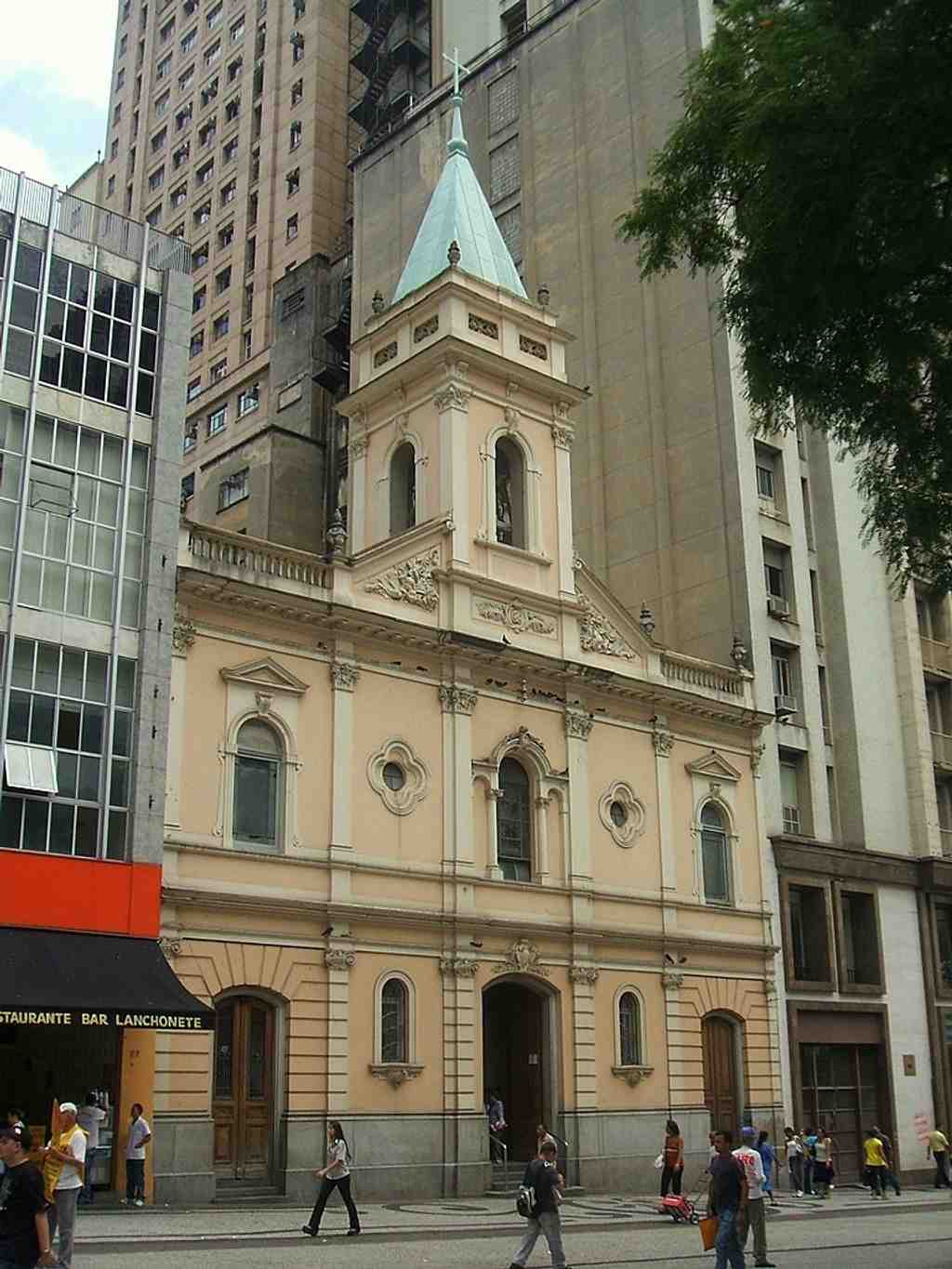
Look for a pale cream-colored building with a tall, pointed tower topped with a cross, nestled tightly between much taller modern structures-if you spot a church that looks like it’s squeezing in for a group photo, you’ve found the Igreja de Santo Antônio!
Now, let me sweep you back to the year 1592-imagine São Paulo as just a dusty village on the edge of the unknown, with thick forests all around and hardly a café in sight. Right here at the end of old Direita Street, a humble chapel to Saint Anthony first appeared, built by worshippers whose names got lost in the centuries like socks in a washing machine. As the centuries ticked by, the chapel grew and changed almost as much as São Paulo itself. Picture the 1600s, when bearded Franciscan friars stomped in from Rio de Janeiro, their sandals clapping on the chapel steps. They made this spot their spiritual home, even after building a big convent down at Largo São Francisco-loyal, or just unwilling to let go of a good real estate deal?
Through the 1700s, this chapel was more popular than the city’s best pastry shop. With the help of the bishop and local devotees, it was renovated and expanded so often you’d think the city’s main hobby was redecorating churches. The Brotherhood of Our Lady of the Rosary of the White Men came along, added their style to the facade, and made it their HQ-which is like giving your house a makeover every twenty years, but with a lot more incense.
Tragedy struck in 1891, when a fire in the neighborhood singed the church’s back and forced a dramatic facelift. Local nobles-the Baron of Tatuí and the Count of Prates-threw in their hats (and wallets) to rebuild the bell tower and front. Imagine scaffolds rising, workers shouting, the sound of hammers bouncing off stone, and by 1919, a grand new eclectic facade emerged, blending styles like a history teacher’s favorite smoothie.
Inside, this church has witnessed more drama than a soap opera. In 2005, while dusting off the high altar during restoration, workers uncovered hidden 16th-century mural paintings that had survived-not one, but two fires! Layers of paint peeled away to reveal a colorful cast of angels, sparkling with reds, yellows, and golds the way Baroque São Paulo always liked to party.
Today, it’s São Paulo’s oldest surviving church, and it’s so beloved it was officially protected in 1970. Recent restorations bring new life to everything from its foundation to its proud bell tower. So, next time you stare at this little cream church squeezed between the city’s giants, remember: it’s survived fire, facelifts, and centuries of urban hustle. That’s more resilience than most superheroes!




