
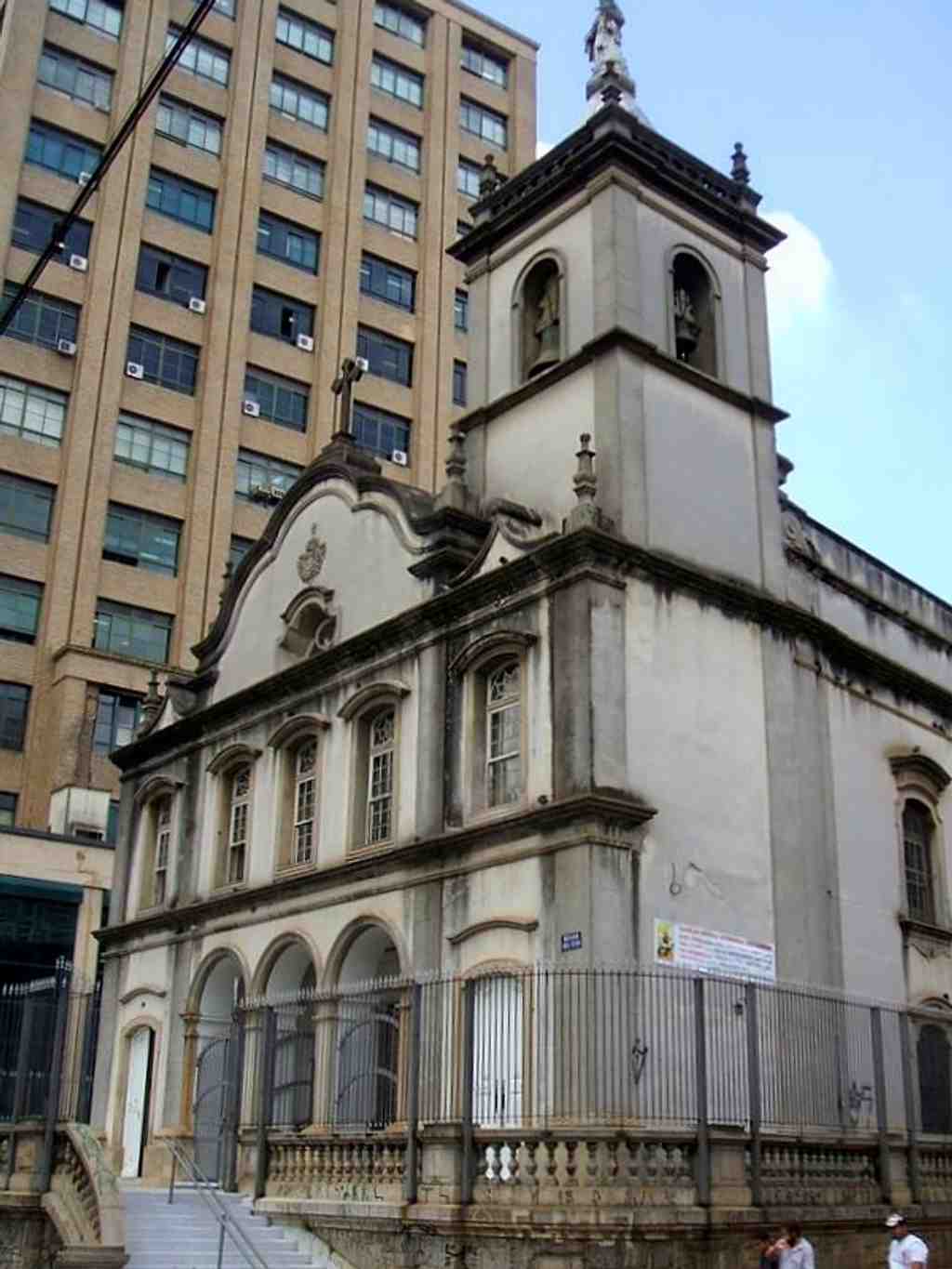
Look for a creamy-white church with elegant curved facades and arched windows, standing slightly raised and fenced off, with a compact bell tower and tall modern buildings towering behind it.
Right in front of you stands the Igreja da Ordem Terceira do Carmo, a place where São Paulo’s centuries-old stories seem to linger in the very air-a church that’s weathered every twist history could throw at it, and still manages to keep its head (and its bell tower) held high. Imagine yourself here nearly 350 years ago: instead of the office towers in the background, this part of the city was filled with the sounds of carts, the chatter of laypeople, and the hopes of a group who just wanted a place to call their spiritual home.
The story begins in the late 1600s when a band of determined layfolk-no monks’ robes or vows needed-started gathering coins and good will to build themselves a humble side chapel near the Carmelite convent, which had opened way back in 1592. Their first little temple grew up alongside the big convent church, but with time, ambition (and maybe a little rivalry), they decided their 'starter' chapel needed an upgrade. By 1747, with more coins and more ambition, they set to work building the structure you see today.
Picture craftspeople mixing earth and straw beneath the hot Brazilian sun to make the solid rammed-earth walls. It took over a decade before the facade and structure were finished-a true crowd-funded project even before crowdfunding was cool. Just as the dust settled, they hired a master carpenter (who doubled as one of their own brothers), Antonio Ludovico, to make a glorious altar. Gold leaf shimmered, side altars rose, and a painter named João Pereira da Silva brought color and sacred scenes to every corner he could reach.
By the late 1700s, São Paulo itself was changing-growing, flexing its muscles with new churches and bigger dreams. The Carmo chapel, determined not to be outshined, brought in Joaquim Pinto de Oliveira, nicknamed Tebas, a skilled architect who’d become something of a legend. Tebas was tasked to bring the church into the city’s new era, designing a grand new front with three striking stone arches. Imagine the sound of chisels and hammers echoing through narrow streets, as hopes for a truly impressive facade rose alongside the walls.
Of course, as any good saga goes, there was a hiccup: part of the renovation didn’t meet expectations, and poor stonemason Antonio Francisco de Lemos got an unwanted lesson in project management when his work was rejected. Tebas had to fix it and finish what he started, threading together brick, stone, and tradition into a harmonious whole. And the inside? That became a baroque wonderland, with dazzling altarpieces and paintings by Friar Jesuíno do Monte Carmelo-24 vivid panels telling stirring stories overhead, almost like the world’s first animated ceiling, minus the popcorn.
As the years passed, artistic flair mixed with gentler touches. In 1785, José Patrício da Silva Manso painted a vision of Our Lady and Saint Teresa on the sacristy ceiling-a visual prayer in colors and light. The church kept collecting layers of beauty, even as São Paulo’s skyline changed around it. There were later renovations, some paintings hidden under others and rediscovered centuries later, mysterious as hidden treasure-imagine curators peeling back dusty layers to reveal splendors lost and found beneath faded paint.
Don’t miss the sense of living memory here: the ornate altars, the flutter of candlelight, and nearly 124 holy relics, works of faith, artistry, and even a library. In 1928, just across the way, part of the original Carmo convent was abruptly demolished to make room for modern government, so don’t be surprised if the church seems to stand here with a determined glint, as if daring the city to try to erase it entirely!
Today, all this beauty and resilience is preserved by heritage organizations, who see in these walls far more than architecture-they see a symbol of Sao Paulo’s spirit: always changing, never giving up its heart. As you stand in front of it, you’re right at the crossroads where the city’s past and present hold each other tight. And hey, if you feel like whispering your own hopes toward those arched windows, you’ll be in good company-generations have done the same before you.
Curious about the architectural features, historical and cultural importance or the gallery? Don't hesitate to reach out in the chat section for additional details.




