
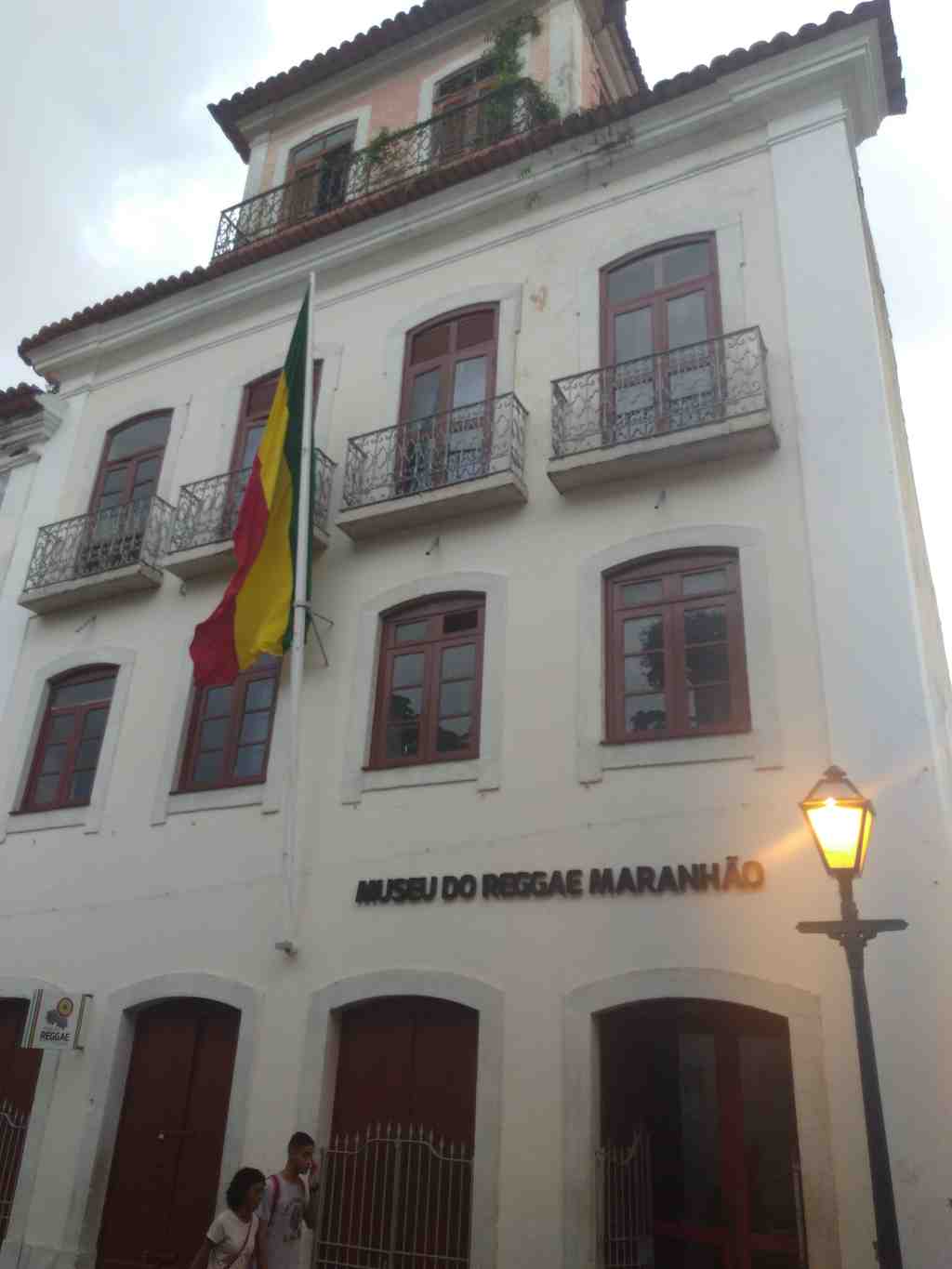
Look ahead for a tall, white colonial building with red-trimmed windows and balconies, a large flag in yellow, green, and red hanging by the entrance, and the name “Museu do Reggae Maranhão” clearly displayed above the doorway.
You are now standing at the threshold of a place where music pulses through the walls and memory dances through every room. This is the Reggae Maranhão Museum, the first reggae-themed museum outside Jamaica and only the second in the world. Its doors first opened in January 2018 with a purpose: to capture the heartbeat of reggae that echoes through São Luís like nowhere else in Brazil. Imagine, back in the 1970s, locals tuning their radios at night, hoping the sea breeze would carry crisp beats of Caribbean reggae from across the ocean. That thin wave of music did something remarkable-it made São Luís the “Brazilian Jamaica,” giving birth to a whole city with more than 200 massive sound teams, called radiolas, thundering their rhythms across the neighborhoods. In those days, sailors and travelers brought new vinyl records in their suitcases, and soon, beats were rolling out of the city’s port zone, swirling through the streets like the scent of evening rain.
Picture the 1980s and 90s here: reggae pouring out of nightclubs, makeshift stages glowing under string lights, couples swaying in the warm air, and DJs battling to be the loudest in the city. A television glowed in someone’s living room with “Conexão Jamaica” while the first local reggae legends, like the band Tribo de Jah, took the stage. Reggae here transformed, becoming more romantic and sensual than its island ancestor, shaped by the moves of local dancers and by the heartbeat of Maranhão’s own folk rhythms, like bumba-meu-boi and Tambor de Crioula. People even gave new names to hit songs-“melô” or “pedra,” meaning “stone,” if a track was solid and unbeatable.
The museum itself pays tribute to this whole journey. On the outside, you’ll see the unmistakable colors of yellow, green, and red-a nod to reggae’s Jamaican roots and the spirit of Bob Marley, the movement’s eternal icon. Inside, five different rooms tell stories of highs and lows, wild parties and quiet moments. There are rare vinyl records you can almost hear crackling, old photos filled with clubs and crowds, and testimony clips from the pioneers themselves. The Hall of Immortals honors Maranhão’s departed reggae heroes, while the other four galleries teleport you back to legendary clubs: Pop Som Club, Toque de Amor, União do BF, and Espaço Aberto, whose walls once shook with sound. Among the treasures: a battered guitar carried by Tribo de Jah through more than 20 countries and the iconic radiola “Voz de Ouro Canarinho,” one of the first to thunder reggae throughout Maranhão, its rumble still remembered by those who heard it.
To step inside is to enter a celebration-rare recordings spin, archives fill the Reggae Library for researchers, and the Roots Café invites you to linger. There are concerts and workshops, and sometimes even impromptu dance classes, so the music stays alive. As you stand here, imagine stepping through the door and feeling the rhythm as it passes from speaker to soul, making every visitor part of this living, unforgettable legacy.


