
Banja Luka Audio Tour: An Immersive Audio Journey
Banja Luka hides secrets behind stone walls that have survived centuries of fire, betrayal, and political upheaval. Beneath the surface of this green city lies a mosaic of clashing empires and whispered conspiracies. Experience this self-guided audio tour to unlock narratives ignored by typical guidebooks. You will wander between the silent ruins of Kastel Fortress and the serene prayer halls of Gazanferija Mosque to uncover the hidden pulse of the city. Why did the local clergy bury a dark scandal deep within the diocese archives? What silent rebellion occurred within the fortress walls when the guards looked away? Who truly lit the blaze that left the mosque in ashes decades ago? Traverse the shifting layers of time as you navigate historic streets and forgotten alleyways. Feel the weight of past battles and the thrill of raw discovery as the city transforms before your eyes. Start your journey and uncover the truth hidden in plain sight.
Tour preview
About this tour
- scheduleDuration 30–50 minsGo at your own pace
- straighten6.3 km walking routeFollow the guided path
- location_onLocationBanja Luka, Bosnia & Herzegovina
- wifi_offWorks offlineDownload once, use anywhere
- all_inclusiveLifetime accessReplay anytime, forever
- location_onStarts at Kastel Fortress
Stops on this tour
Standing right in front of you is a sprawling fortress defined by thick, chiseled stone walls tracing a jagged polygonal shape along the riverbank, anchored by distinct…Read moreShow less
Open dedicated page →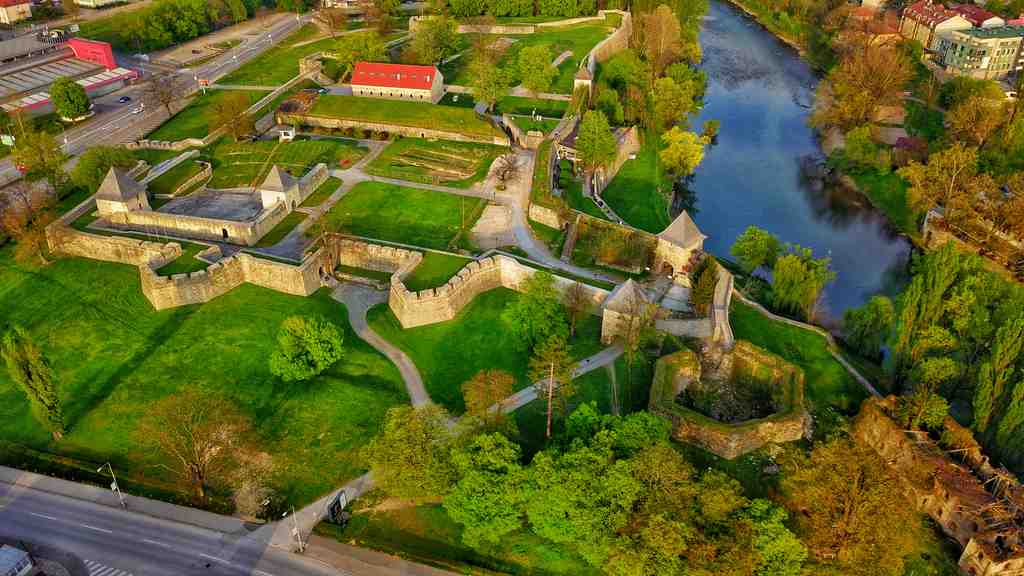
Kastel FortressPhoto: Tomas Damjanovic Banjaluka, Wikimedia Commons, CC BY-SA 4.0. Cropped & resized. Standing right in front of you is a sprawling fortress defined by thick, chiseled stone walls tracing a jagged polygonal shape along the riverbank, anchored by distinct watchtowers with sharp, pointed roofs.
Welcome to Kastel Fortress. This place is not just a bunch of old rocks. It is a massive timeline you can actually touch.
Let us go way back, past the Ottomans, past the Romans. Back to the Eneolith period, which is just a term archeologists use for the Copper Age, thousands of years before written history. People digging around here found something fascinating. They uncovered ancient ceramics decorated with bright white encrusting. Take a look at your screen to see the ancient foundation remnants hidden within these walls.
This image captures the ancient ruins and open areas within Kastel, illustrating its foundation on previous fortifications dating back to Roman and even pre-Roman periods, as evidenced by archaeological discoveries.Photo: Vasyatka1, Wikimedia Commons, CC BY-SA 4.0. Cropped & resized. That white decoration on the pottery was not just for show. Researchers link it to the first metalworkers in Europe and the ancient myth of Prometheus. You know, the guy who stole fire from the gods. The myth says he smuggled the flame inside the white, easily combustible core of a Mediterranean plant. The early people here likely used this white decorated pottery in deep, mystical rituals involving fire and the melting of metal. There is even a darker archaeological theory connecting these symbols to early firekeepers and the ritual sacrifice of innocents before building their massive melting ovens. It is wild to imagine those ancient fires burning right where you are standing.
Fast forward a few thousand years. The Romans arrived and built a thriving settlement here called Castra. They set up a military camp, a rest station for weary travelers, and a civilian town right along the banks of the Vrbas river.
Then, in 1527, the Ottoman Empire took over. A prominent leader named Gazi Ferhad Pasha Sokolović initiated a massive building boom. He constructed a large arsenal right here. Later on, leaders expanded the whole place using the Voban system, which is a style of star-shaped military architecture specifically designed to deflect and resist heavy cannon fire. If you glance at your app, you can see how those massive stone walls look from the water, making the fort look almost like an island.
The fortress walls beautifully reflected in the Vrbas river, emphasizing how the river served as a natural defensive barrier and made the fort seem almost like an island.Photo: Vasyatka1, Wikimedia Commons, CC BY-SA 4.0. Cropped & resized. The defenders here were incredibly clever. They dug two secret wells directly into the sandy beach of the river. The river water would naturally filter through layers of sand, giving the soldiers a hidden supply of fresh drinking water during long battles. They even carved masked doors and hidden steps into the walls to reach them without being seen by enemies. The military actually kept using this fortress all the way until 1959.
By the way, the gates here are open twenty four hours a day, seven days a week, so you can wander through the grounds whenever the mood strikes. It is pretty incredible to think about all the lives lived on this exact spot over millennia. Take a moment to soak this in. When you are ready, we can head to the next stop.
A broad view of the Kastel Fortress situated prominently on the left bank of the Vrbas river, highlighting its strategic location as one of Banja Luka's main attractions.Photo: Vasyatka1, Wikimedia Commons, CC BY-SA 4.0. Cropped & resized. 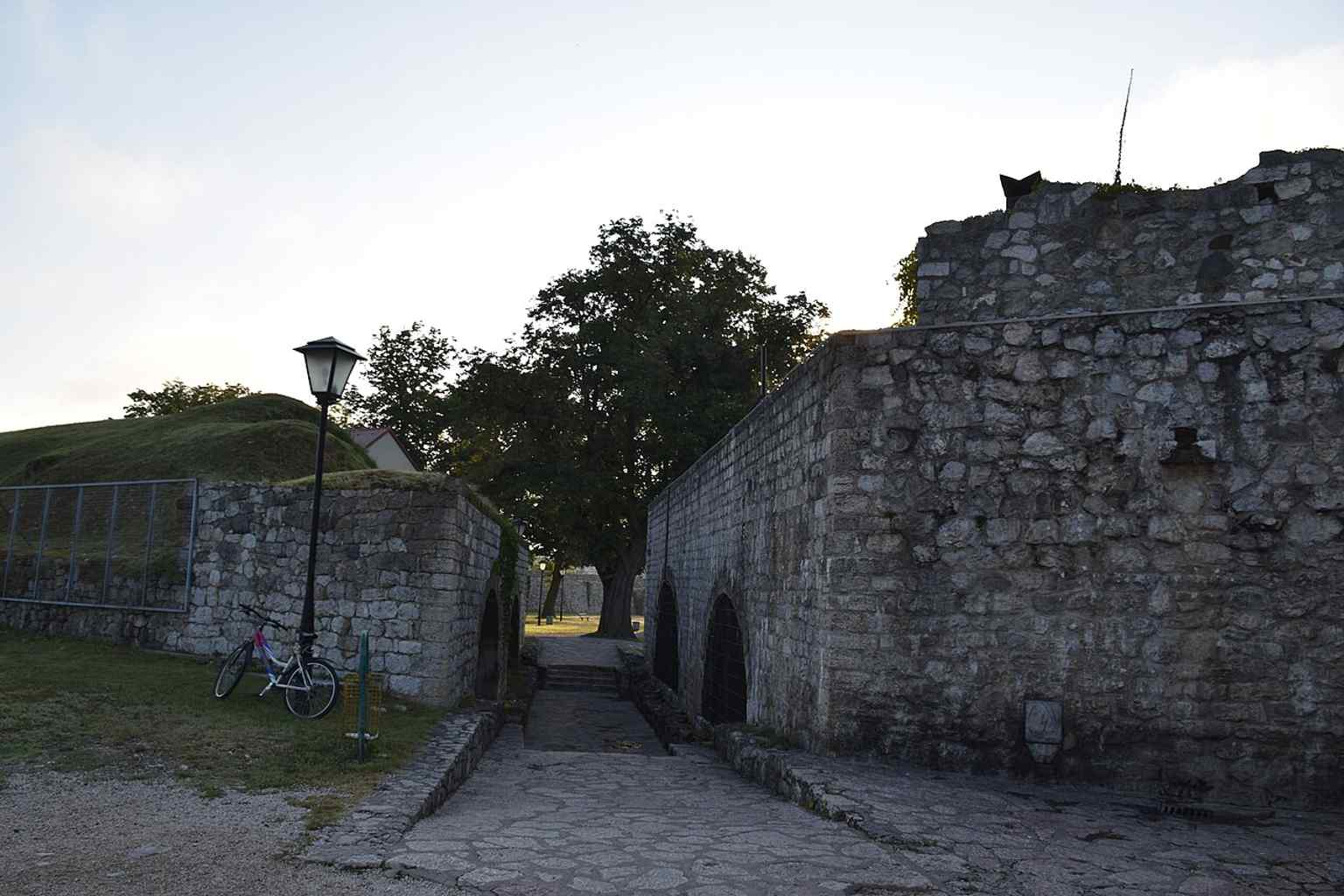
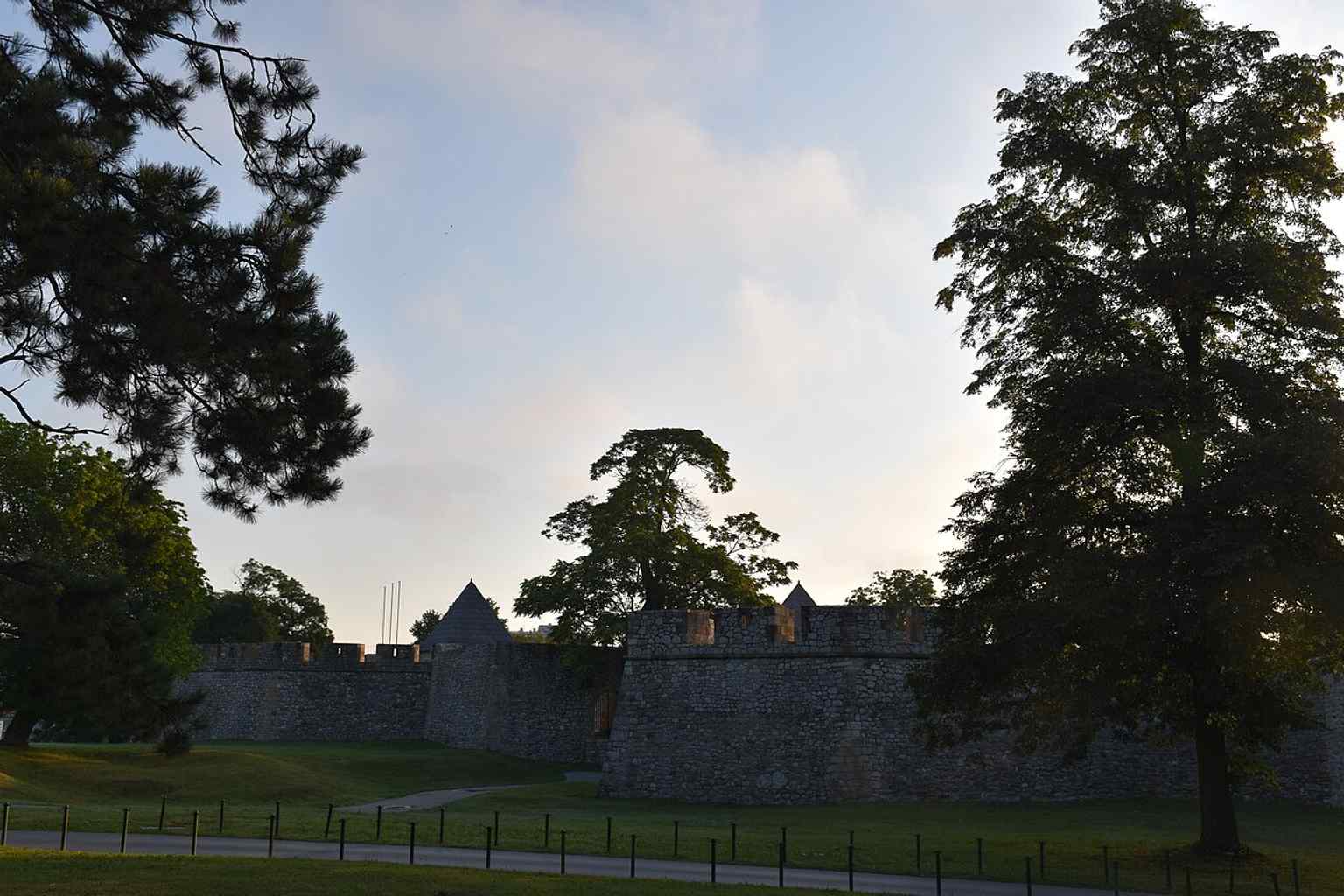
An exterior shot showcasing the extensive walls and polygonal foundation of the Kastel Fortress, which was expanded to its final dimensions during the restoration by Köprülüzade Numan Pasha.Photo: Vasyatka1, Wikimedia Commons, CC BY-SA 4.0. Cropped & resized. 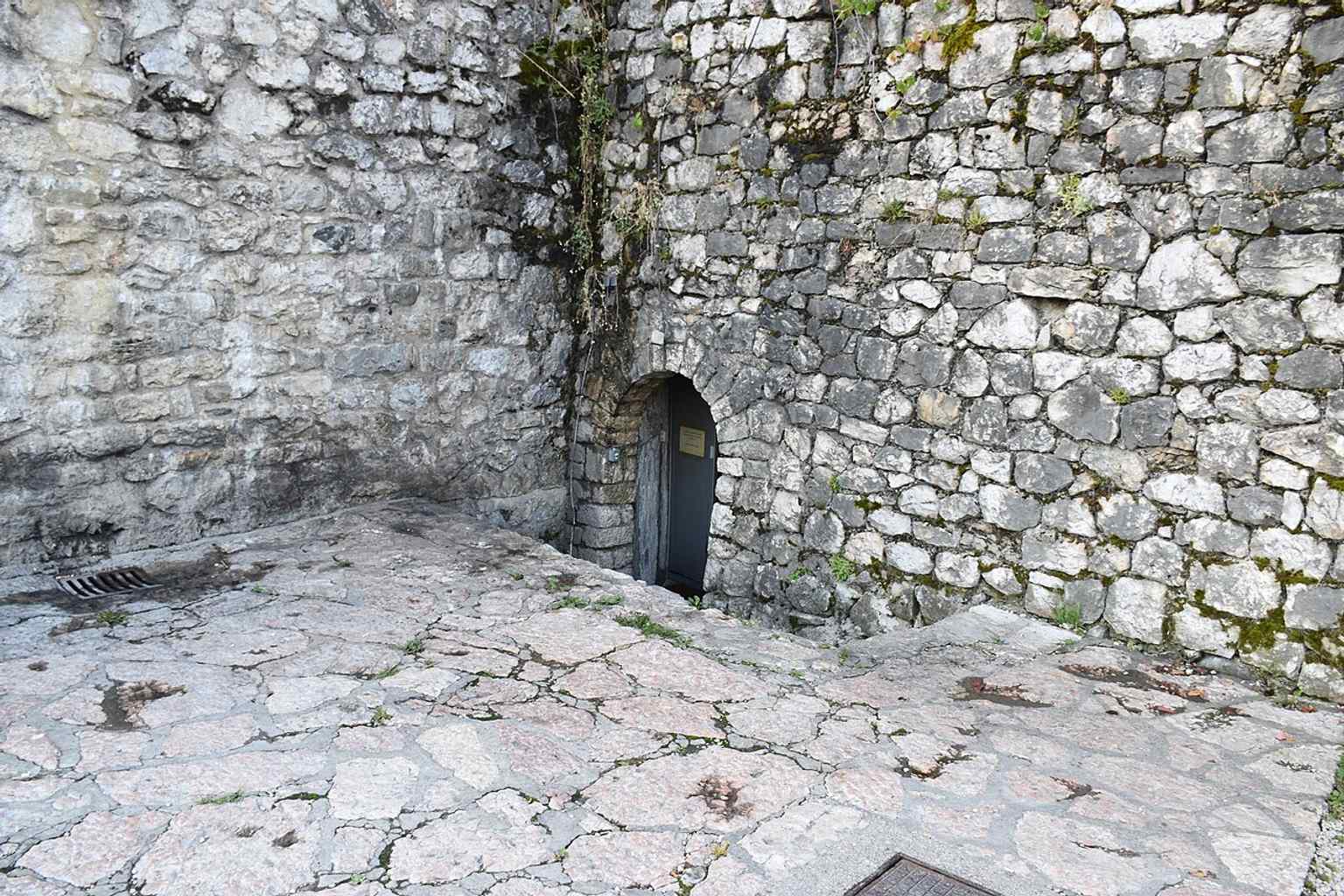
A closer look at one of the three tucked-in rectangular towers, part of the fortress's defensive system and architectural design.Photo: Vasyatka1, Wikimedia Commons, CC BY-SA 4.0. Cropped & resized. 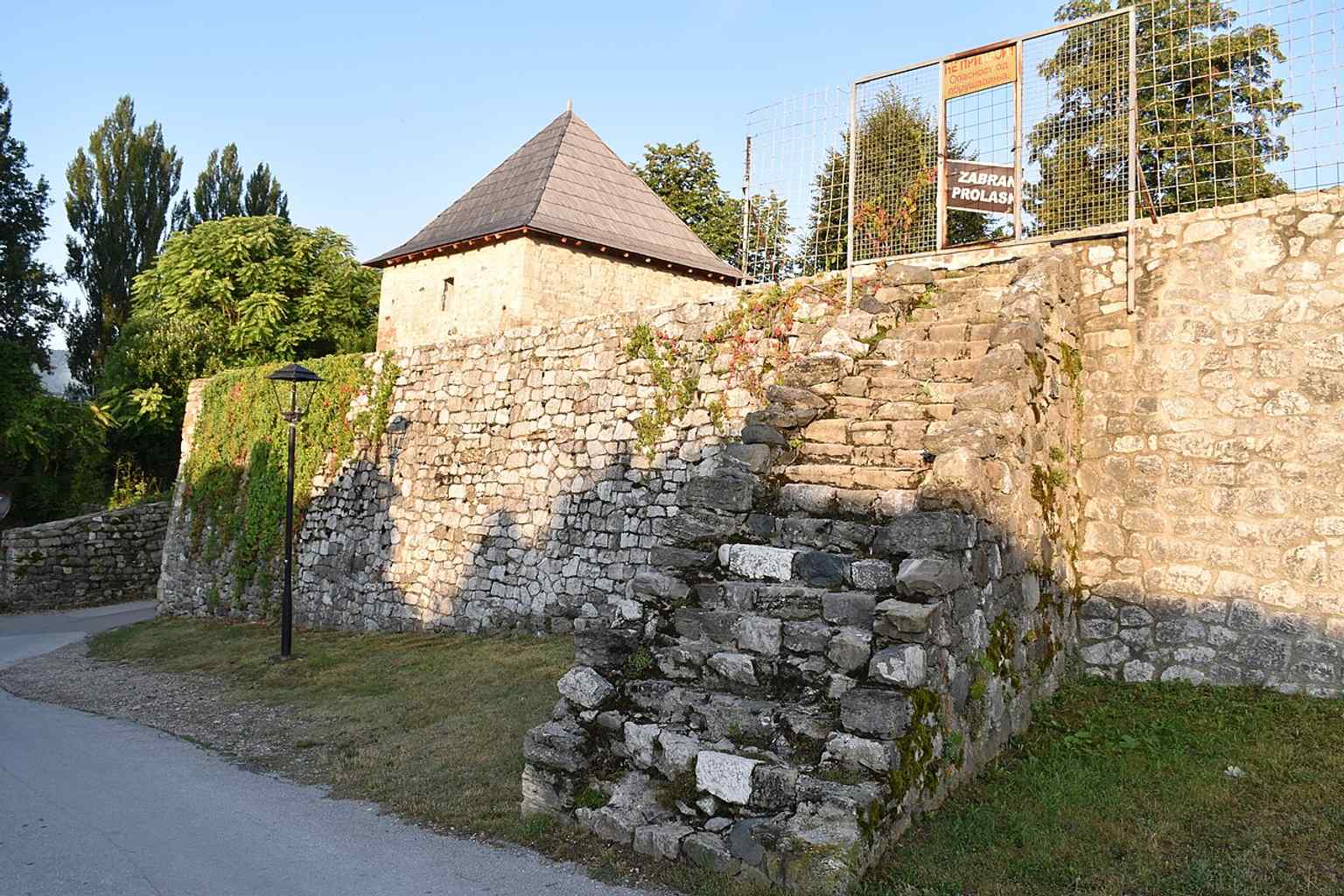
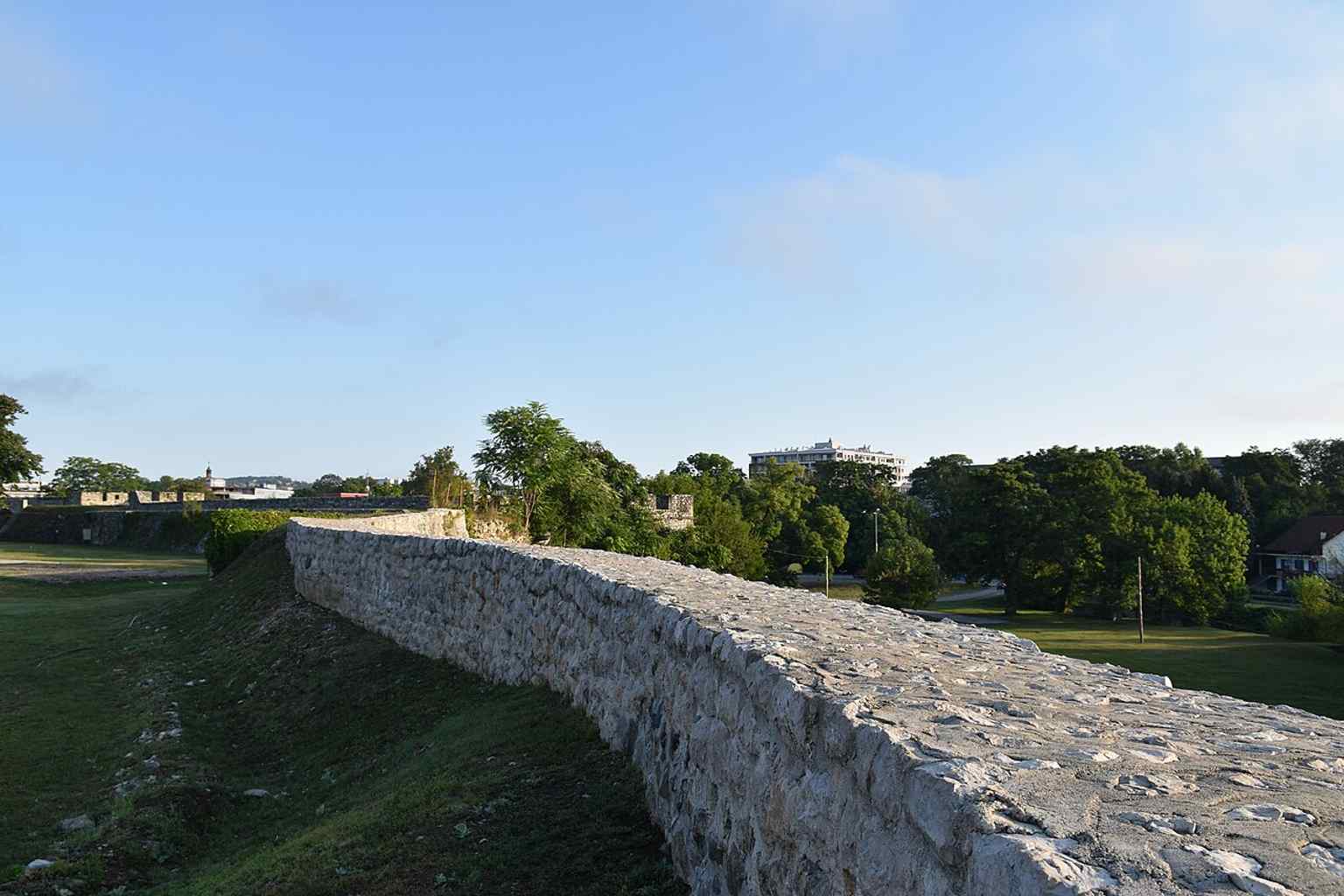
This image provides a detail of the fortress walls, built from rectangular chiseled stone set with mortar, a technique used across its medieval and Ottoman constructions.Photo: Vasyatka1, Wikimedia Commons, CC BY-SA 4.0. Cropped & resized. 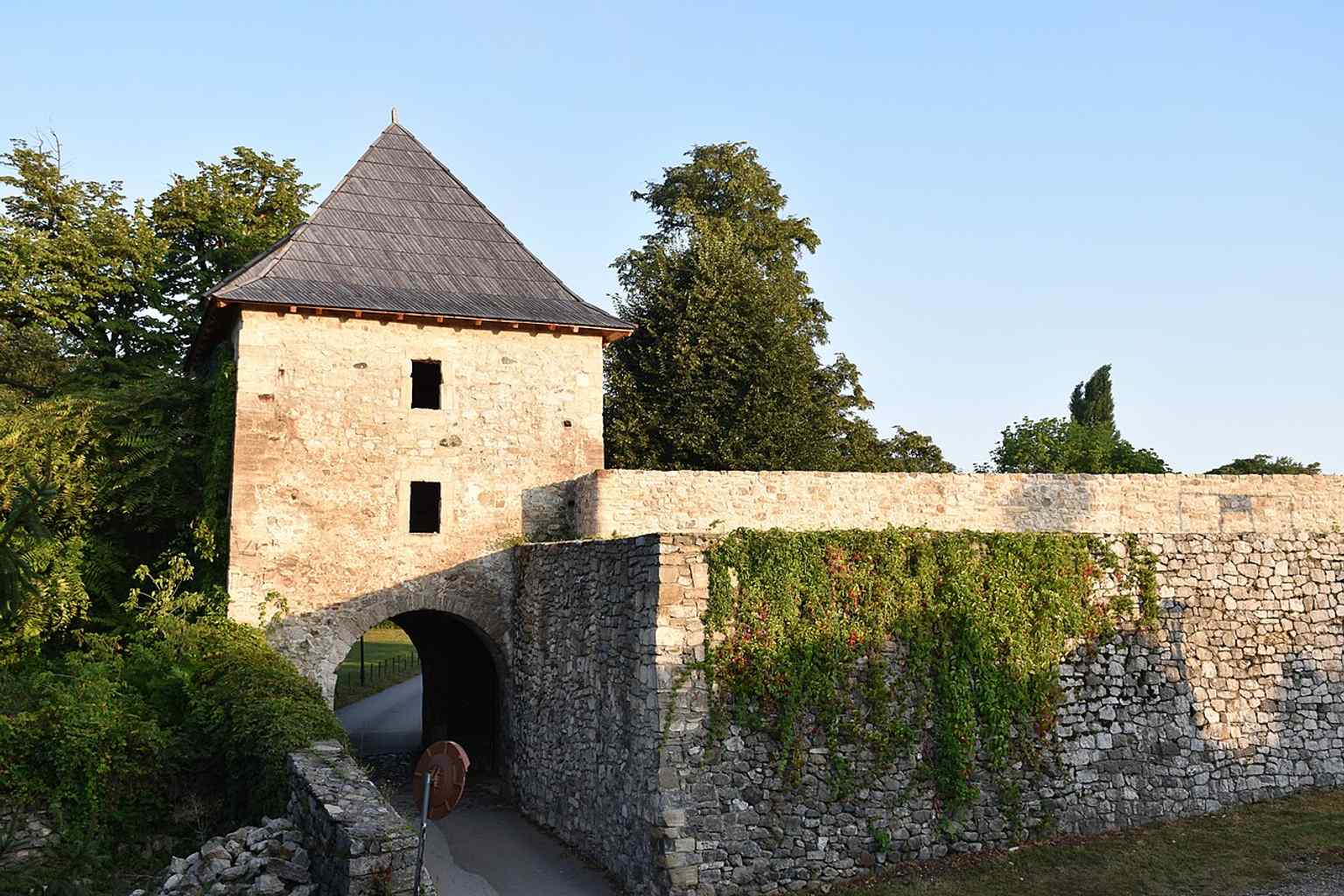
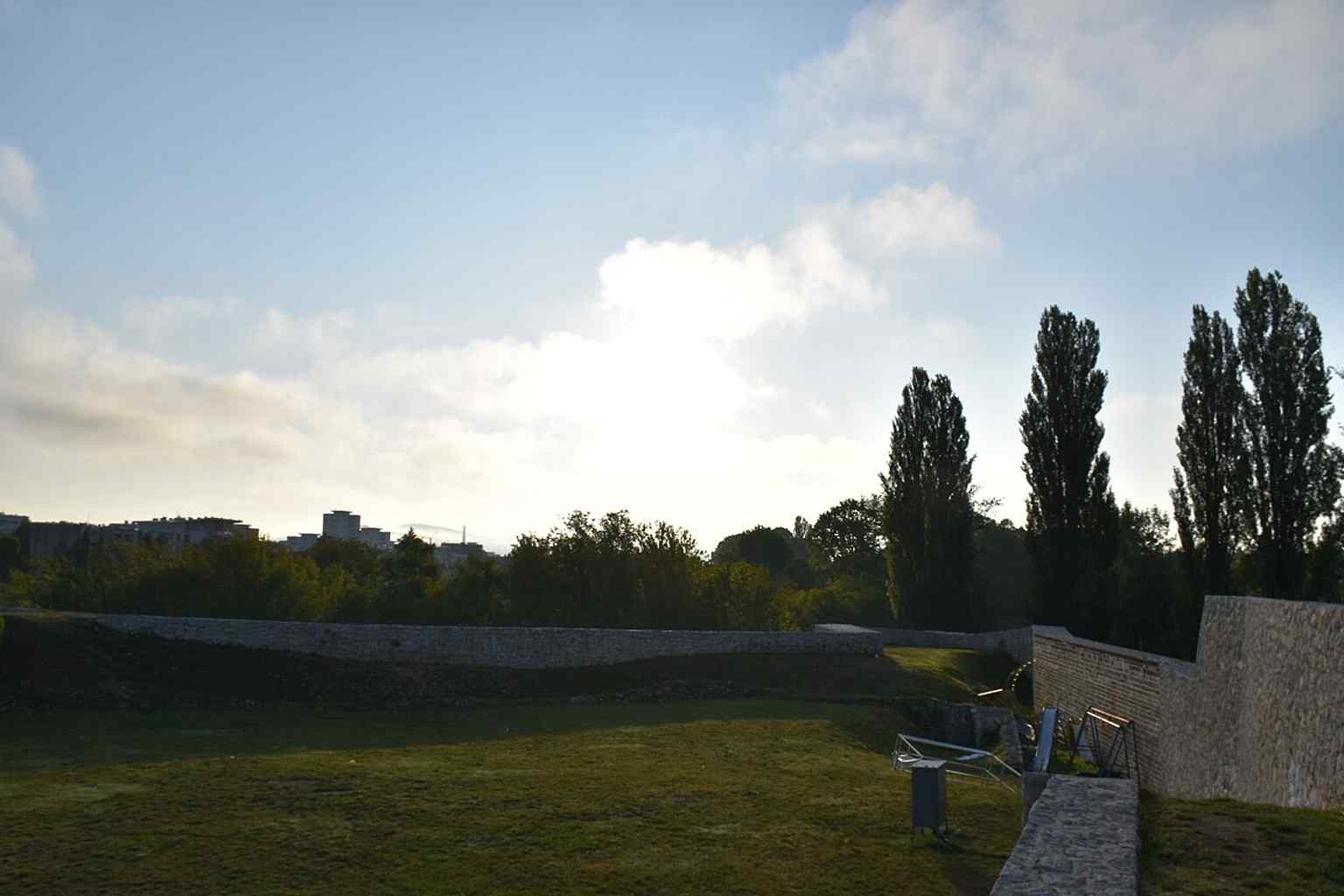
A view of the 'Chemins de ronde' or ramparts, where guards would patrol, part of the extensive fortifications developed according to Voban's system.Photo: Vasyatka1, Wikimedia Commons, CC BY-SA 4.0. Cropped & resized. 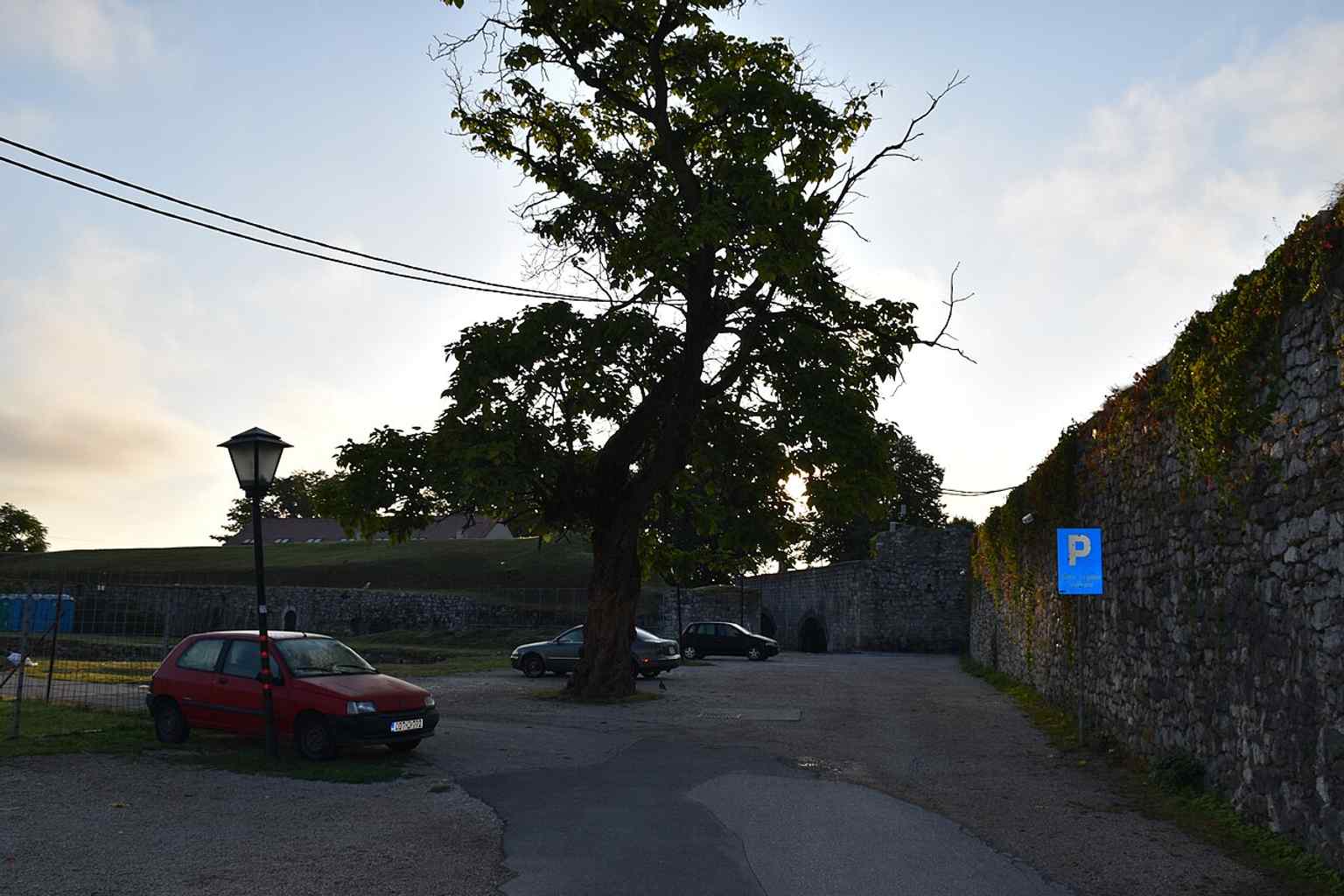
An impressive interior view of a vaulted space, likely one of the arsenals or the main casemate, which was described as 80 meters long and 15 meters wide.Photo: Vasyatka1, Wikimedia Commons, CC BY-SA 4.0. Cropped & resized. 
Interior walls and arches reveal the layered construction within the fortress, reflecting its long history as a site of successive fortifications from Roman to Ottoman times.Photo: Vasyatka1, Wikimedia Commons, CC BY-SA 4.0. Cropped & resized. 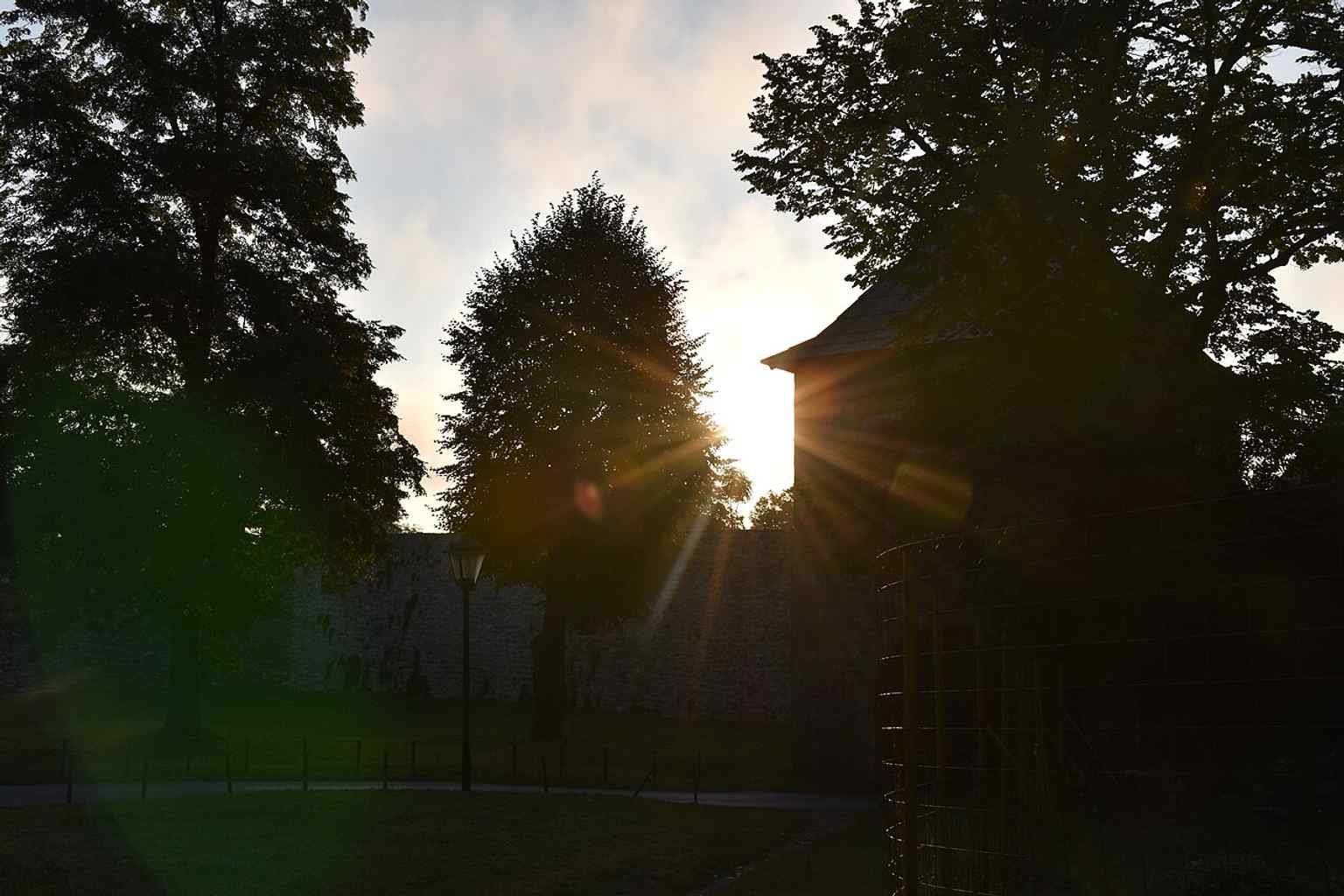
An arched passage within the fortress walls, offering a glimpse into the internal circulation and potentially hinting at the 'secret underground passages' that once existed.Photo: Vasyatka1, Wikimedia Commons, CC BY-SA 4.0. Cropped & resized. 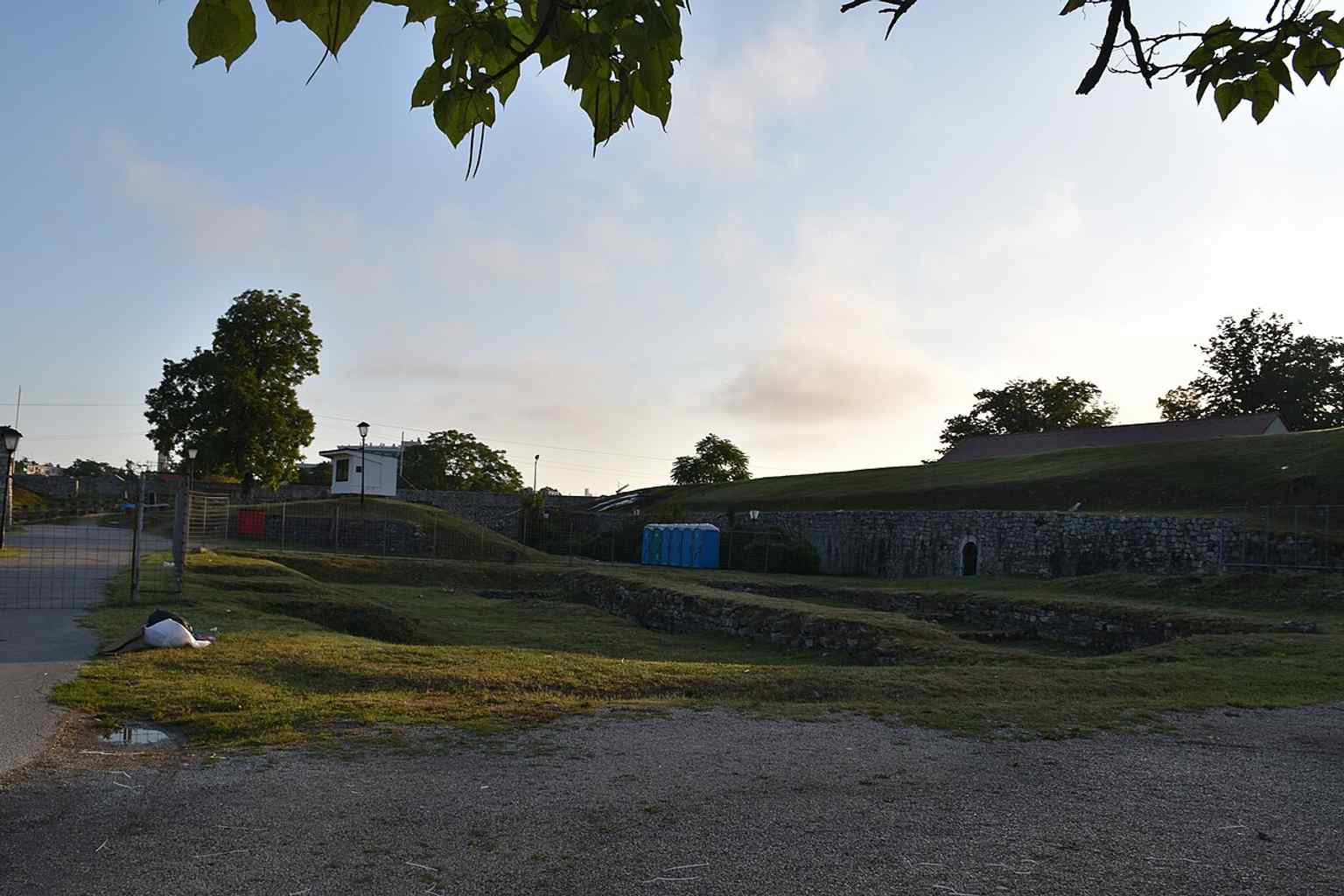
The main entrance to the Kastel Fortress, inviting visitors to explore one of Banja Luka's most significant historical monuments.Photo: Vasyatka1, Wikimedia Commons, CC BY-SA 4.0. Cropped & resized. 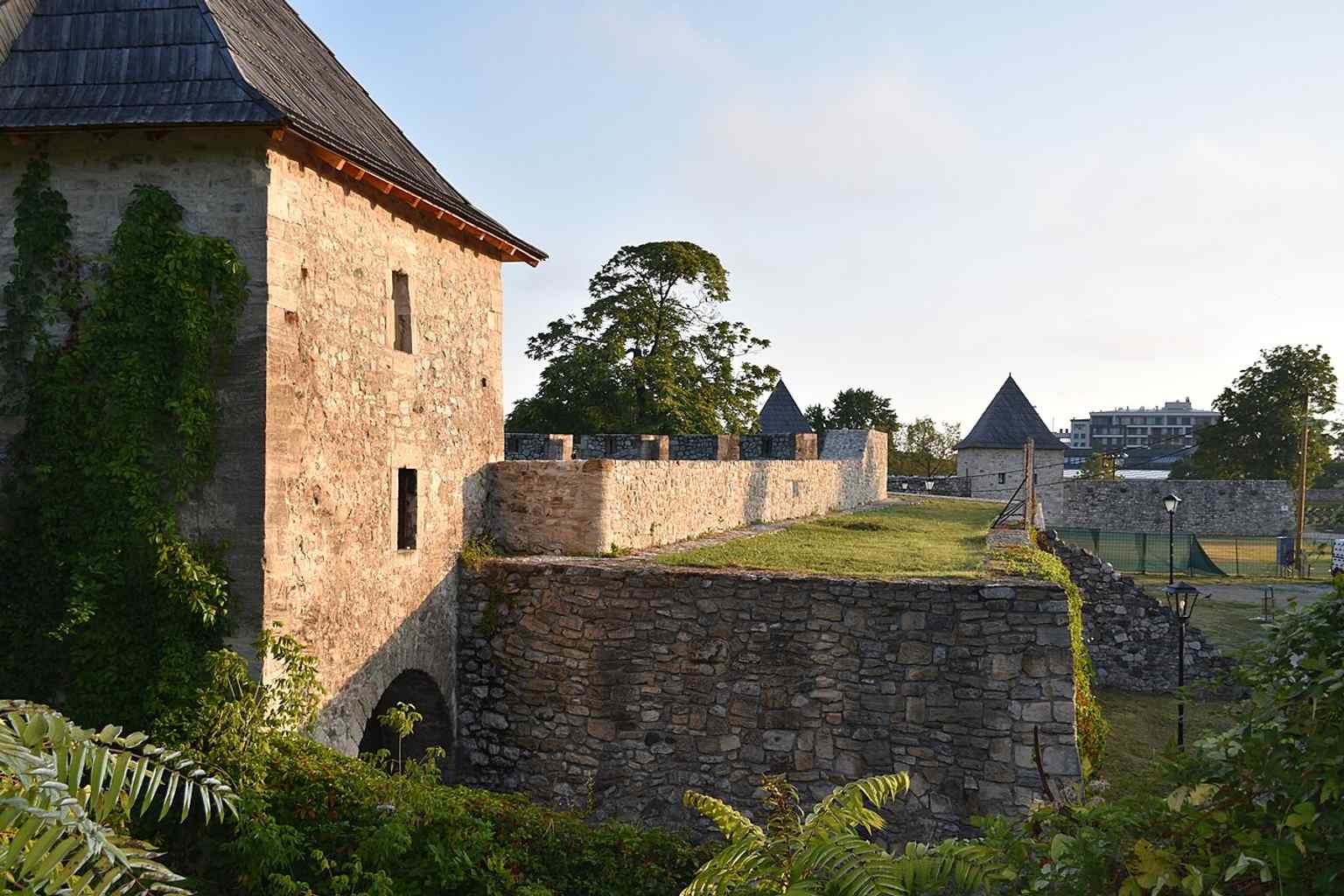
An interior view of the open space within the fortress, showing remnants of structures and evoking its continuous use for military and other purposes until 1959.Photo: Vasyatka1, Wikimedia Commons, CC BY-SA 4.0. Cropped & resized. On your left is the Potočka Mosque, a compact white square building with a brown tiled roof and a distinctive dark wooden minaret rising from the center. Back in 1630, a local guy…Read moreShow less
Open dedicated page →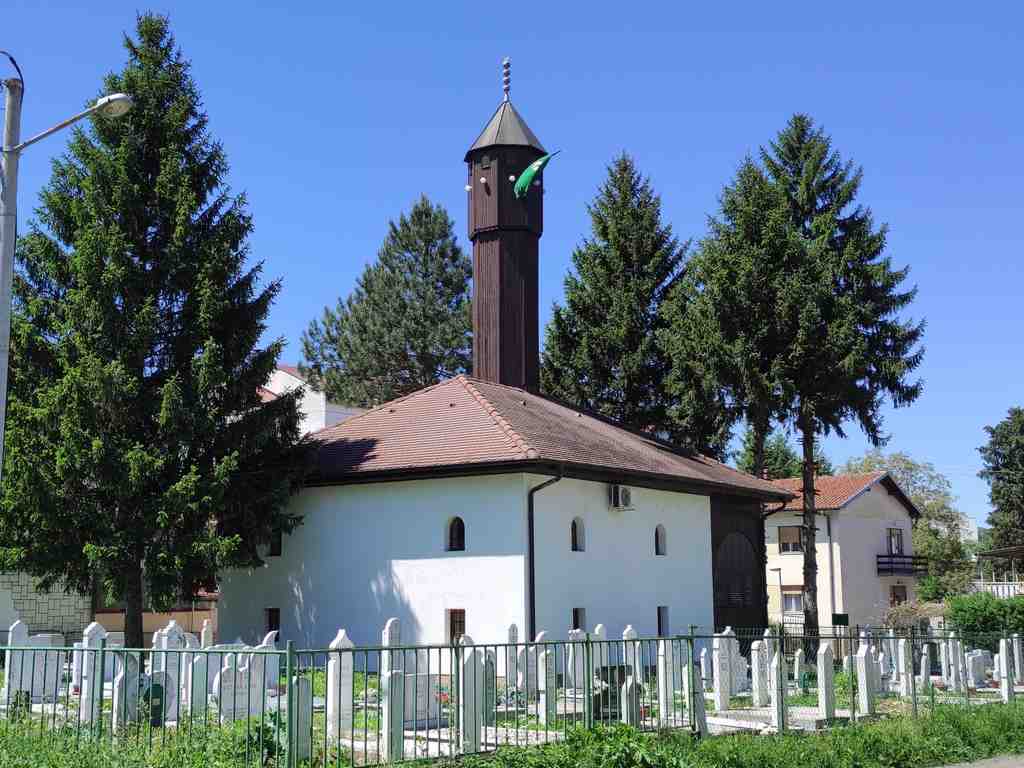
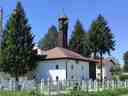
Potočka MosquePhoto: Srđan, Wikimedia Commons, CC BY-SA 4.0. Cropped & resized. On your left is the Potočka Mosque, a compact white square building with a brown tiled roof and a distinctive dark wooden minaret rising from the center. Back in 1630, a local guy named Hadži Perviz built this out on the empty edge of town. He even funded seven bazaar shops to pay for its upkeep. But history is funny... people started calling it Potočka Mosque because of a little stream, or potok, flowing nearby. His name just faded into the background. It was historically the smallest mosque in Banja Luka, measuring just seven by ten and a half meters. Look up at that wooden tower, the minaret, where the traditional Islamic call to prayer is announced. It sits peacefully alongside those carved white gravestones. But in September 1993, during the Bosnian War, this little building burned down. What stands before you is the 2011 restoration, rebuilt slightly larger but keeping its intimate charm. It is a quiet survivor, anchoring the neighborhood after four centuries. Enjoy the peaceful atmosphere here, and whenever you are set, just continue along the path.
Look to your left for a smooth white building featuring a prominent dark central dome, anchored by a tall, slender minaret with a sharp, cone-shaped peak. This is the Gazanferija…Read moreShow less
Open dedicated page →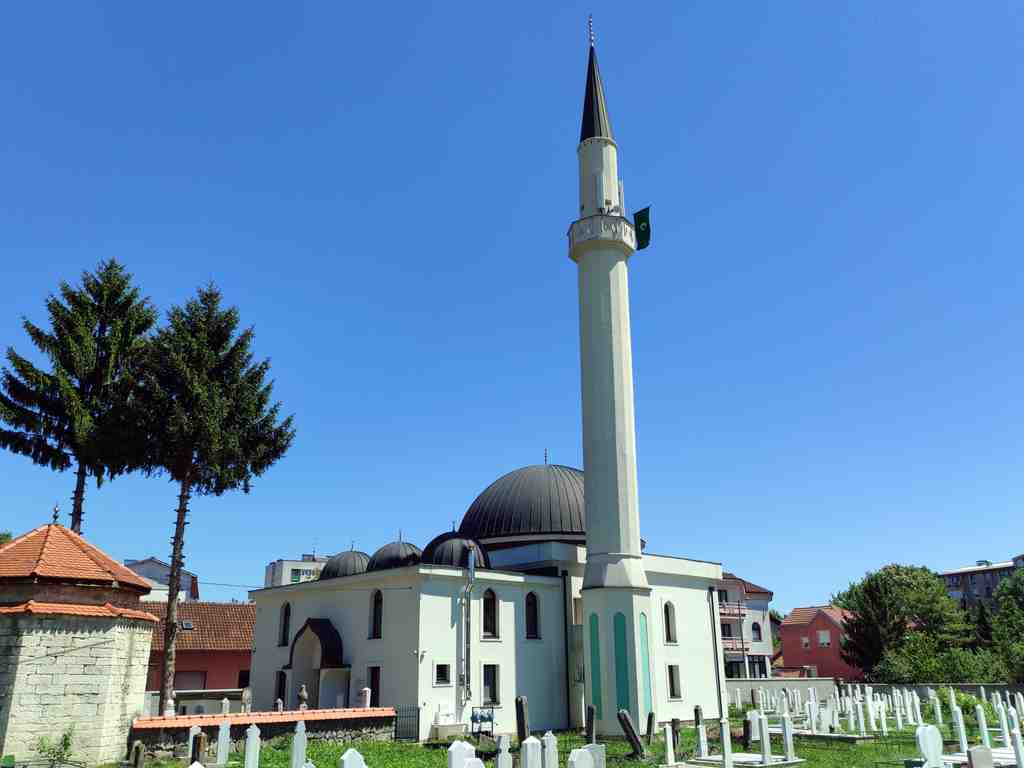
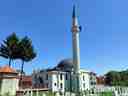
Gazanferija MosquePhoto: Srđan, Wikimedia Commons, CC BY-SA 4.0. Cropped & resized. Look to your left for a smooth white building featuring a prominent dark central dome, anchored by a tall, slender minaret with a sharp, cone-shaped peak. This is the Gazanferija Mosque. I always love how places like this have a way of blending completely different chapters of history into one structure.
It was originally built way back in the late sixteenth century by Gazanfer-beg. He was a zaim, which was essentially a feudal knight and military leader in the Ottoman Empire. To make sure this place lasted, the builders made the stone walls nearly two and a half feet thick. For a long time, the entrance had an open, breezy porch supported by wooden pillars. But in the nineteenth century, a local estate manager named Hadži Feslija decided he needed more indoor space. He just walled the whole porch up with bricks, completely changing the vibe from an open pavilion to a solid, closed-off sanctuary.
The inside used to hold a pretty massive surprise. Instead of a heavy stone ceiling, it had a sprawling wooden dome covered in beautiful painted arabesques. During the Austro-Hungarian era, they painted a giant floral rosette in the center with sixteen decorative bands stretching down to the edges. And here is my favorite part. At the end of those painted bands, they actually installed tiny electric lightbulbs. Banja Luka got its first electric lighting from a nearby monastery's power plant, and this mosque was one of the early adopters. It beautifully blended centuries-old Islamic art with brand new electric light. It must have looked like a starry night sky indoors.
You will also notice those small stone structures with the tiled roofs out front. Those are turbeta, or mausoleums. They flank the entrance almost like little guard towers, giving the courtyard the feel of a tiny fortress. They were built from a specific local stone called ice tufa. According to the stories, Gazanfer rests in the one on the left, and his two sons are buried in the one on the right.
This mosque has had a rough ride over the centuries. Because it sits right on the bank of the Vrbas River, the ground shifted over time, and the massive stone minaret actually started leaning after the First World War. Then, tragically, the entire mosque was dynamited and destroyed on July fourth, 1993, during the Bosnian War. Only those two stone mausoleums barely survived the blast, though their roofs caved in.
But what you are looking at now is a true resurrection. The site was declared a national monument and carefully rebuilt to reclaim its historic spot on the riverbank. It stands today as a quiet survivor, pieced back together for a new era. Whenever you are ready to keep walking, we will head over to the Museum of Contemporary Art.
Show 6 more stopsShow fewer stopsexpand_moreexpand_less
Direct your attention to the striking yellow building on your left, featuring three large arched doorways and a classic circular clock set directly into the roofline. It almost…Read moreShow less
Open dedicated page →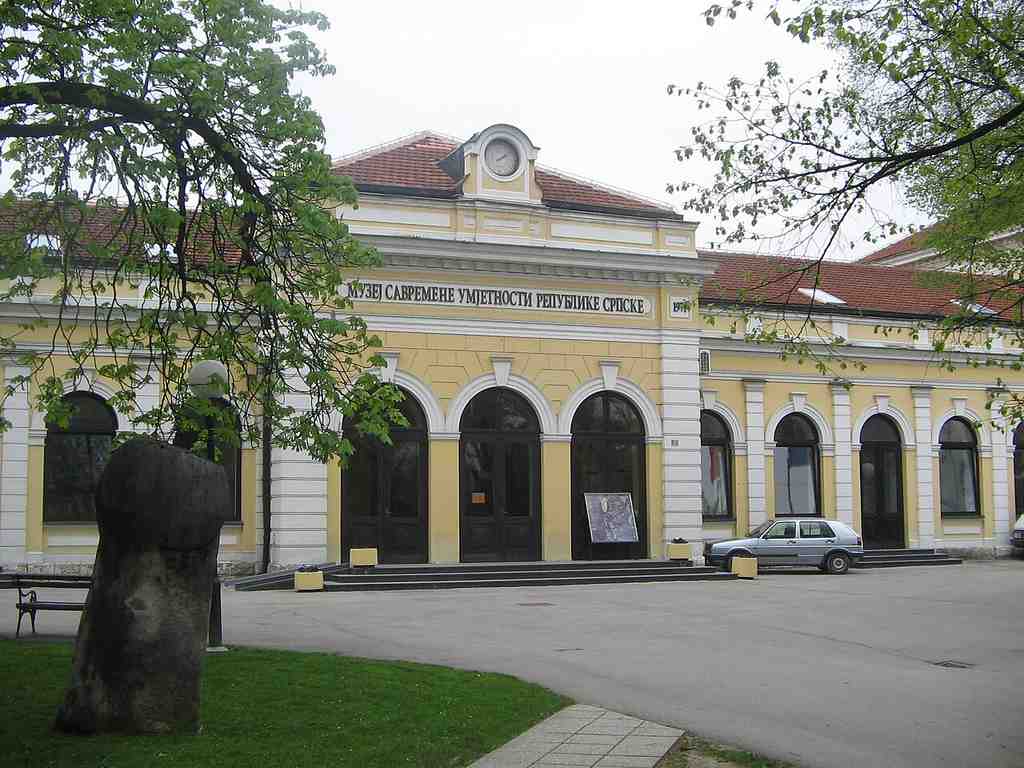
Museum of Contemporary Art of the Republic of SrpskaPhoto: Тonka, Wikimedia Commons, CC BY-SA 4.0. Cropped & resized. Direct your attention to the striking yellow building on your left, featuring three large arched doorways and a classic circular clock set directly into the roofline. It almost looks like it is waiting for a train to arrive, which makes perfect sense. This was originally Banja Luka's old railway station, built in the late nineteenth century during the Austro-Hungarian period. Check out the image on your screen to imagine steam trains pulling in back when this was a bustling transport hub. Over the past two decades, the plaza surrounding the building has been gently modernized to better serve visitors, which you can see by checking the before and after comparison in your app.
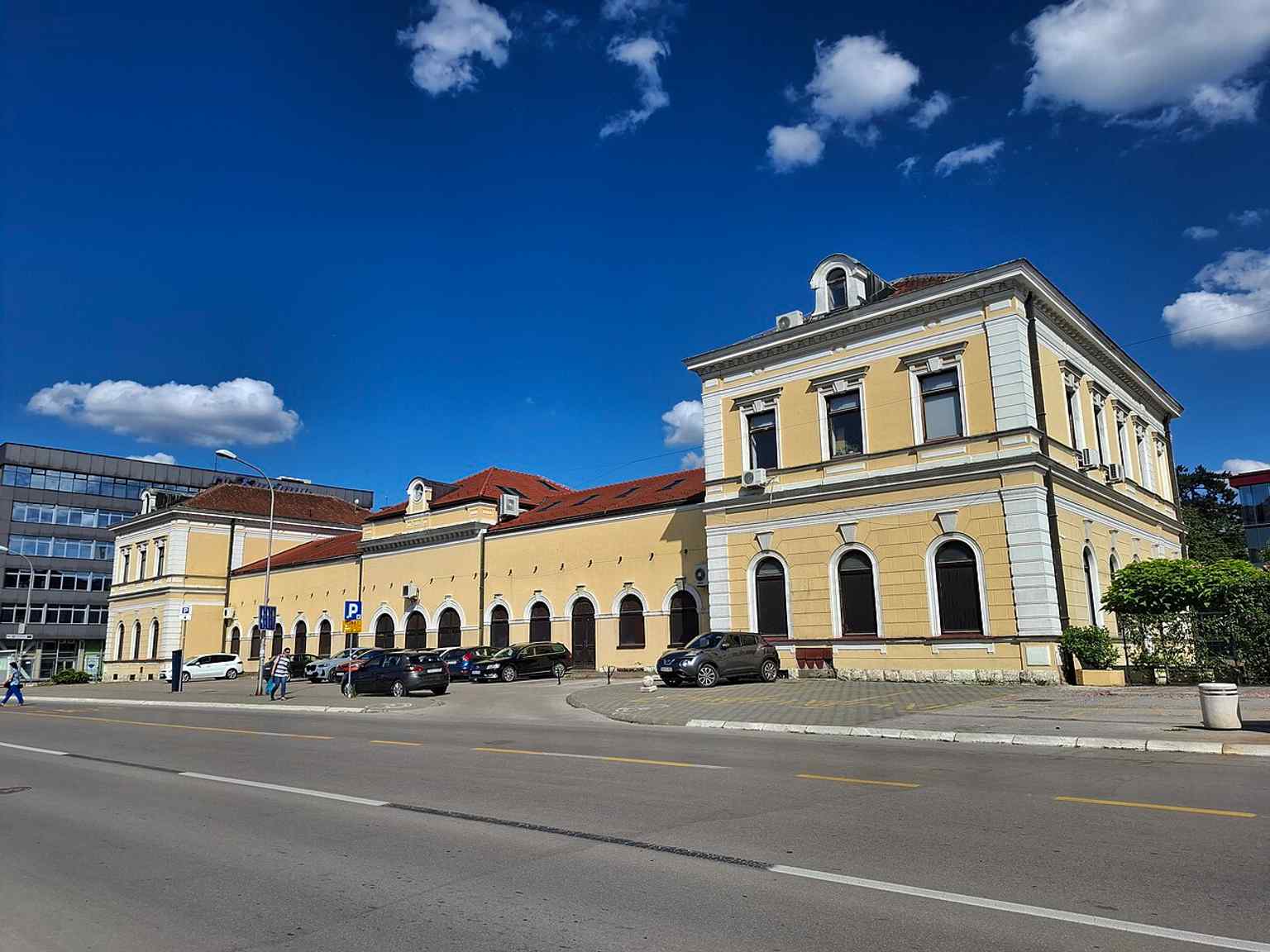
This building, now home to the museum, was originally the old Banja Luka railway station, built in the late 19th century during the Austro-Hungarian period and is now a national monument.Photo: ArhistefoBL, Wikimedia Commons, CC0. Cropped & resized. Nowadays, instead of passengers, this national monument houses the Museum of Contemporary Art of the Republic of Srpska. The museum dates back to 1971 and went through a few identity changes before landing on its current name in 2004. Inside, you will find about thirteen hundred pieces, mostly from the late twentieth century. They have works by international masters, but the true soul of the collection is the incredible lineup of creators from the former Yugoslavia, including local Banja Luka talents like Muhamed Ćejvan. You will even find a postal art installation by Irish artist Gary Farrelly, which is an exhibit built entirely from creative works sent through the mail.
If you want to explore, the museum is open from ten in the morning to ten at night every day of the week. Take your time soaking up the artistic energy here. Whenever you feel ready, we can wander over to the next stop.
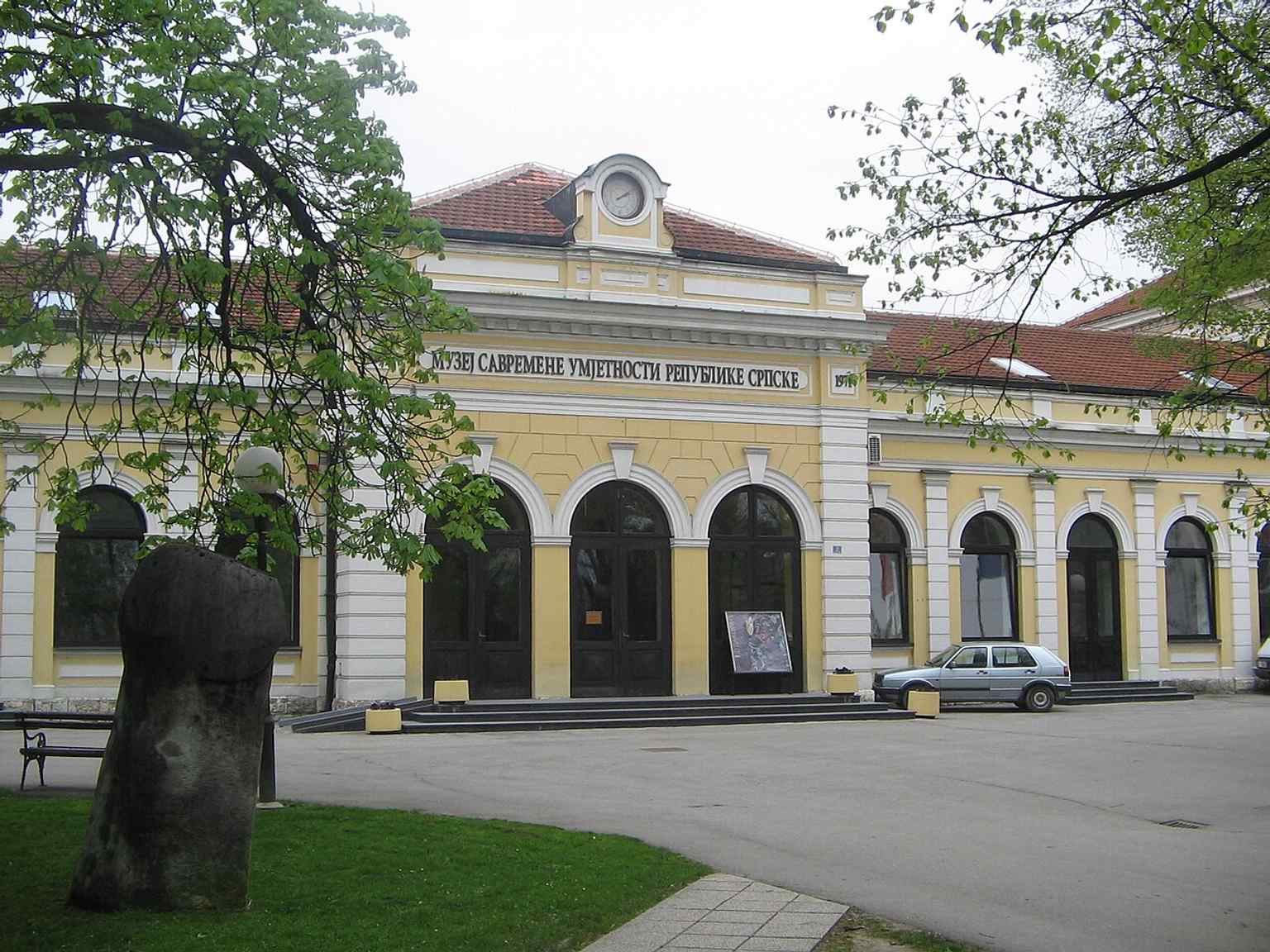
Observe the Museum of Contemporary Art of the Republic of Srpska, which received its current name by a government decision on February 10, 2004.Photo: Rade Nagraisalović (a.k.a. Тonka), Wikimedia Commons, CC BY-SA 4.0. Cropped & resized. Right in front of you stands the Cathedral of Saint Bonaventure, instantly recognizable by its sweeping tent-like roof, the tall central glass panel framing the entrance, and that…Read moreShow less
Open dedicated page →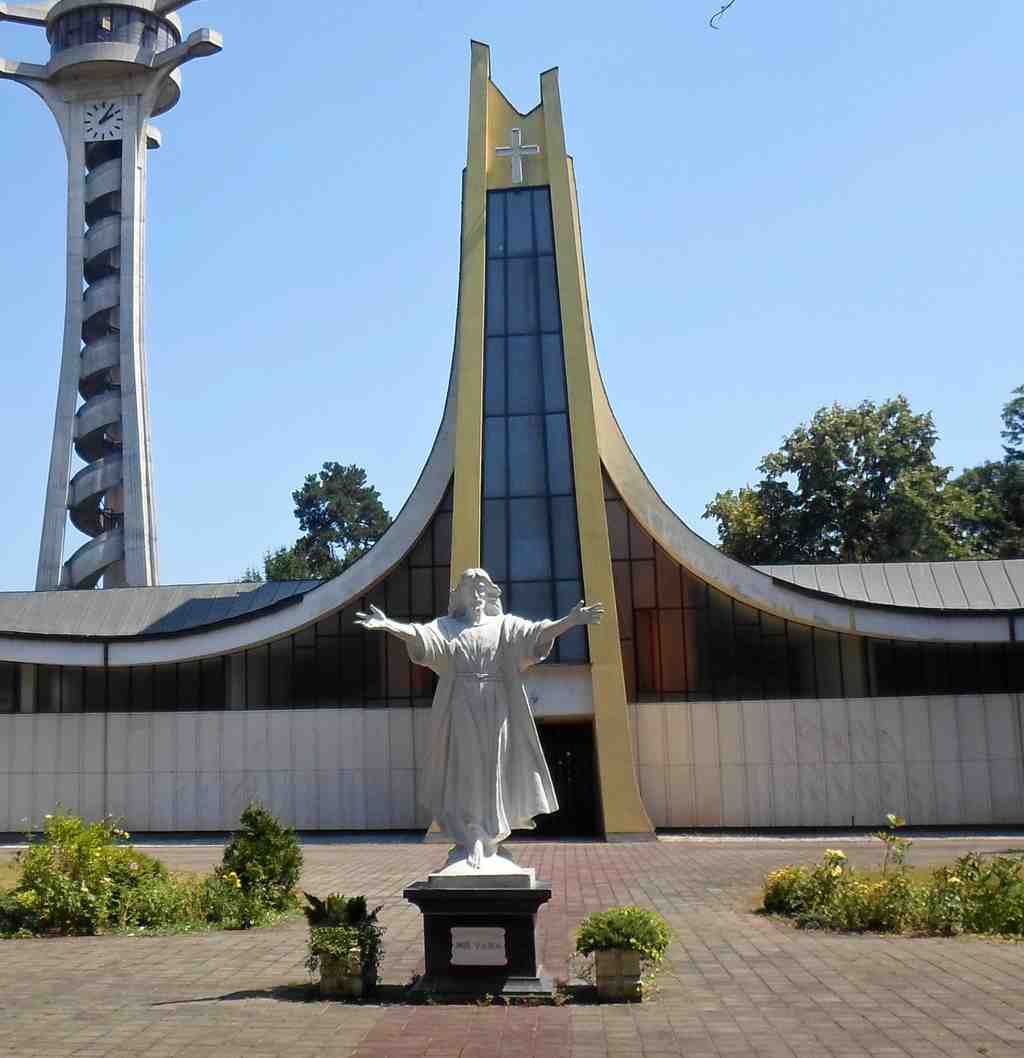
Roman Catholic Diocese of Banja LukaPhoto: NinaEkvador, Wikimedia Commons, CC BY-SA 4.0. Cropped & resized. Right in front of you stands the Cathedral of Saint Bonaventure, instantly recognizable by its sweeping tent-like roof, the tall central glass panel framing the entrance, and that striking freestanding spiral concrete bell tower next to it.
It definitely doesn't look like your typical traditional church, does it? There is a very intense reason for that. Back in 1881, Pope Leo XIII set up this whole Catholic diocese, which is basically a regional administrative district for the church in western Bosnia. A few years later, in 1887, they built the original cathedral right on this spot. If you pull up your screen, you can see a map showing the vast spread of this district across the region.
For decades, the old cathedral stood firm. But in 1969, a massive earthquake rolled through Banja Luka. It completely leveled the original building. Instead of trying to recreate the past, the city decided to look forward. By 1974, they finished the modern marvel you are looking at now. You can check out another angle of this 1974 rebuild on your app.
The tent shape isn't just an architect trying to be edgy. In religious symbolism, a tent represents a pilgrim church, a community always moving, resilient and adaptable. And this diocese has absolutely needed that resilience. During and after the Second World War, they lost a third of all their parishes. It was a dark era, so much so that in 2014, the church began the beatification process, which is the official first step to declaring someone a saint, for four priests who lost their lives during the war, including a man named Waldemar Maximilian Nestor.
The doors here are open every day from seven in the morning to seven in the evening if you want to explore the interior. This modern structure stands as a bold reminder of what it means to rebuild. Feel free to linger as long as you like. We will catch up at the stadium when you are ready.
Over on your right, you will spot an expansive oval arena framed by towering lattice-steel floodlights and sweeping banks of bright red seating. This is the Banja Luka City…Read moreShow less
Open dedicated page →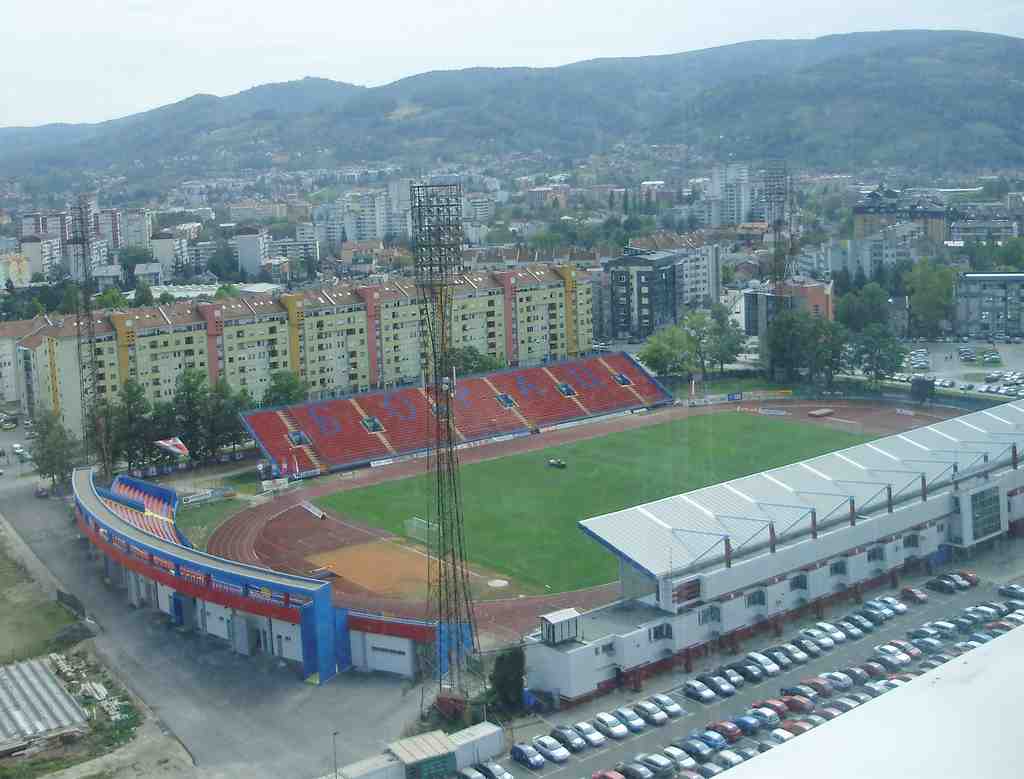
Banja Luka City StadiumPhoto: NektarBL, Wikimedia Commons, CC BY-SA 3.0. Cropped & resized. Over on your right, you will spot an expansive oval arena framed by towering lattice-steel floodlights and sweeping banks of bright red seating. This is the Banja Luka City Stadium, and it is basically the city's pulse cast in concrete.
The story of this place kicks off back in the nineteen thirties. Football was getting huge here, and the main city club, Krajišnik, was just too good for their old makeshift pitch. They qualified for the national championship, so local officials decided they needed a proper stage. Architect Žarko Malić drew up the plans, and in nineteen thirty-seven, this place officially opened its doors. Originally, it was named after one of its big donors, alongside the local ban, which was the title for a regional governor back then.
In those early days, it was not just about football. The stadium hosted massive events for the Sokol society. Think of Sokol as a massive, patriotic gymnastics and physical fitness movement that was sweeping through the Slavic world at the time.
But things shifted after the Second World War. The new authorities disbanded the Krajišnik club entirely. FK Borac Banja Luka moved in, the stadium got its current straightforward name, and it has been Borac territory ever since. The east stand, built in nineteen eighty-one, is home to the most hardcore fans, known as the Lešinari. Check your screen for a glimpse of the sheer, raw energy these loyal fans bring to a match.
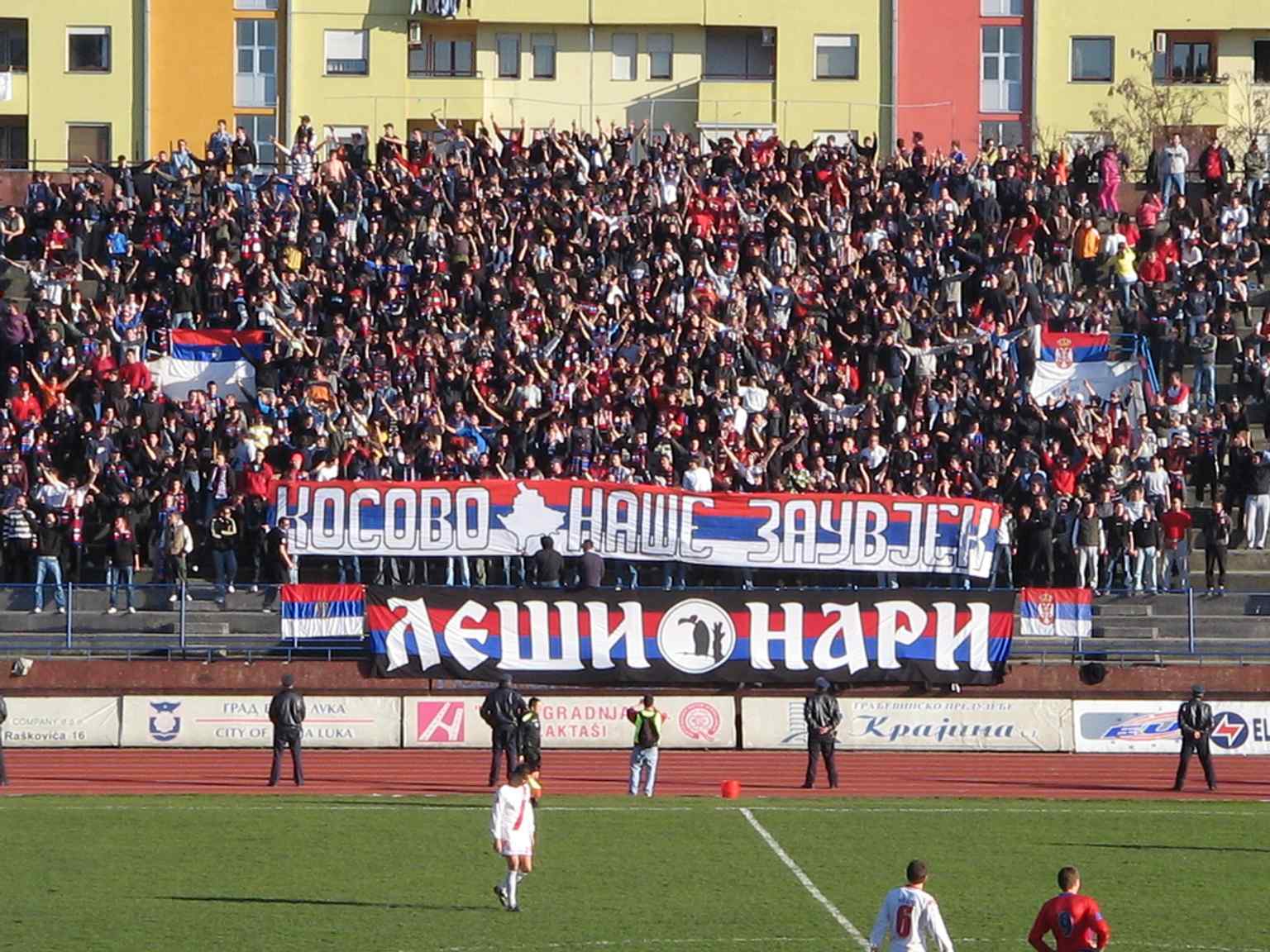
This image captures a football match in progress at the stadium, showcasing the energetic atmosphere generated by the loyal Lešinari fans.Photo: Rade Nagraisalovic (a.k.a. Tonka), Wikimedia Commons, CC BY-SA 3.0. Cropped & resized. The stadium has seen some intense history, too. In nineteen eighty-nine, an unbelievable thirty thousand people crammed into these stands. A few years later, in December nineteen ninety-two, it hosted a very unique match. It was the first and only game for the self-proclaimed Republika Srpska official football team, playing against the Republic of Serbian Krajina. The result was a one to one draw.
Over the years, the venue has constantly evolved. In two thousand ten, they completely renovated the space, installing new seats and upgrading the lighting. Take a glance at your app to see the massive new north stand being constructed back in two thousand twelve. That addition pushed the capacity up to around ten thousand seated spectators. And it is not just sports, either. Everyone from regional pop legends to rock icons like Lenny Kravitz have played on this turf.
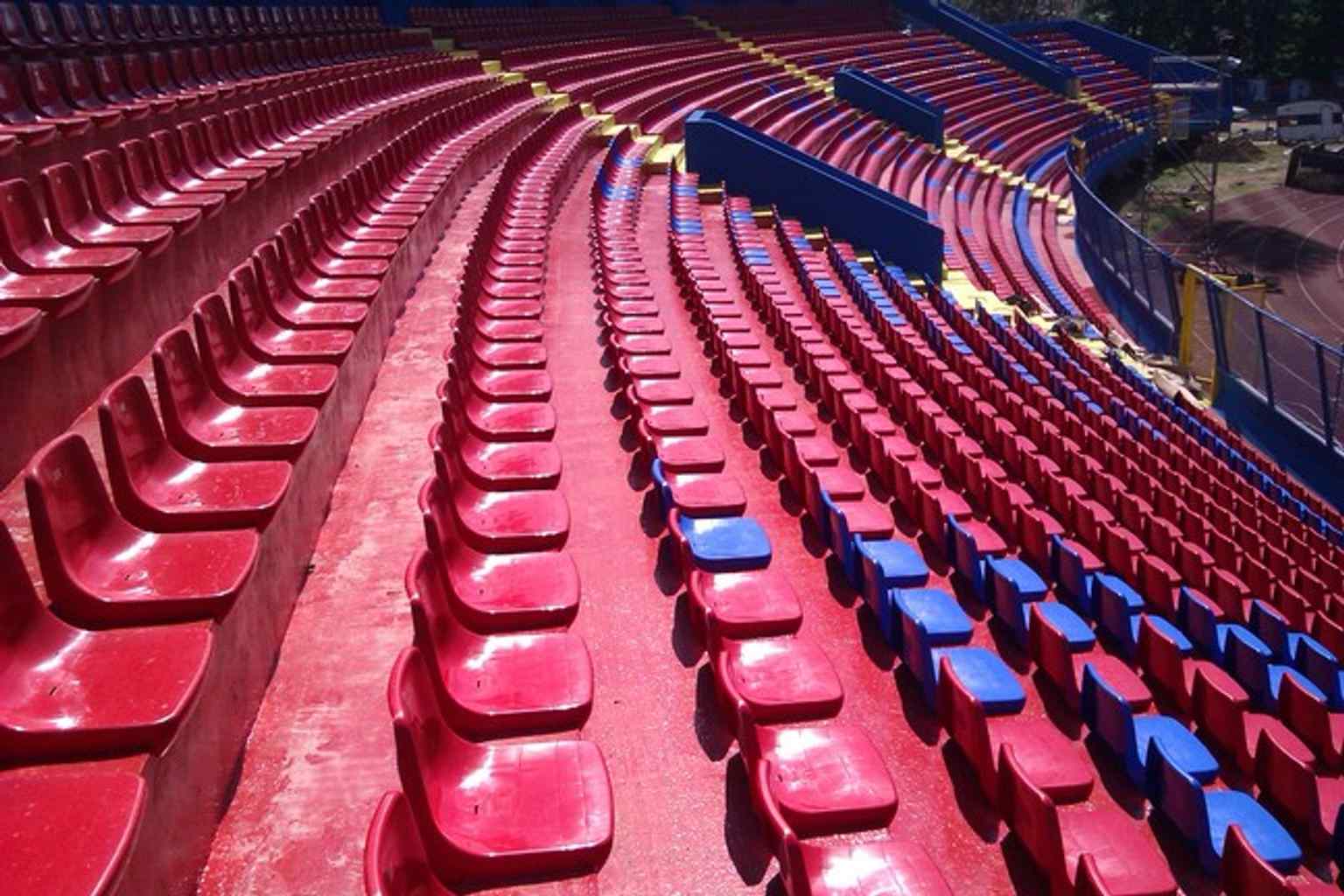
Construction progresses on the new north stand in 2012, a significant expansion that added 2,492 seats to the stadium's total capacity.Photo: Borac Banja Luka, Wikimedia Commons, CC BY-SA 3.0. Cropped & resized. Someday, there are grand plans for a massive fifty million euro complex to replace it. This classic arena still stands proud, holding generations of local memories. Whenever you are ready to keep moving, we can wander toward our next stop.
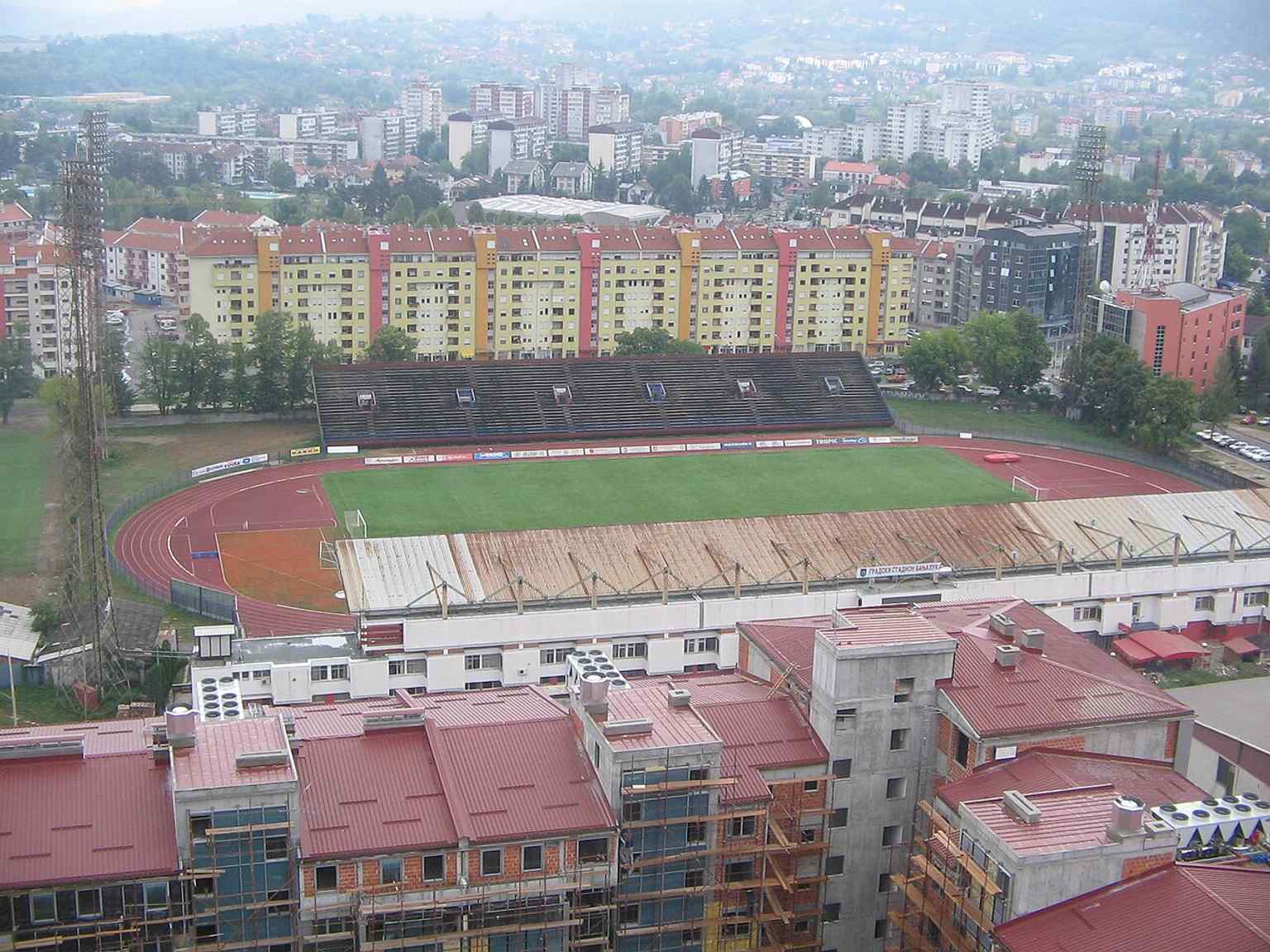
This general exterior view presents the Banja Luka City Stadium, originally inaugurated in 1937 and later renamed after World War II.Photo: Rade Nagraisalović (a.k.a. Тonka), Wikimedia Commons, CC BY-SA 4.0. Cropped & resized. 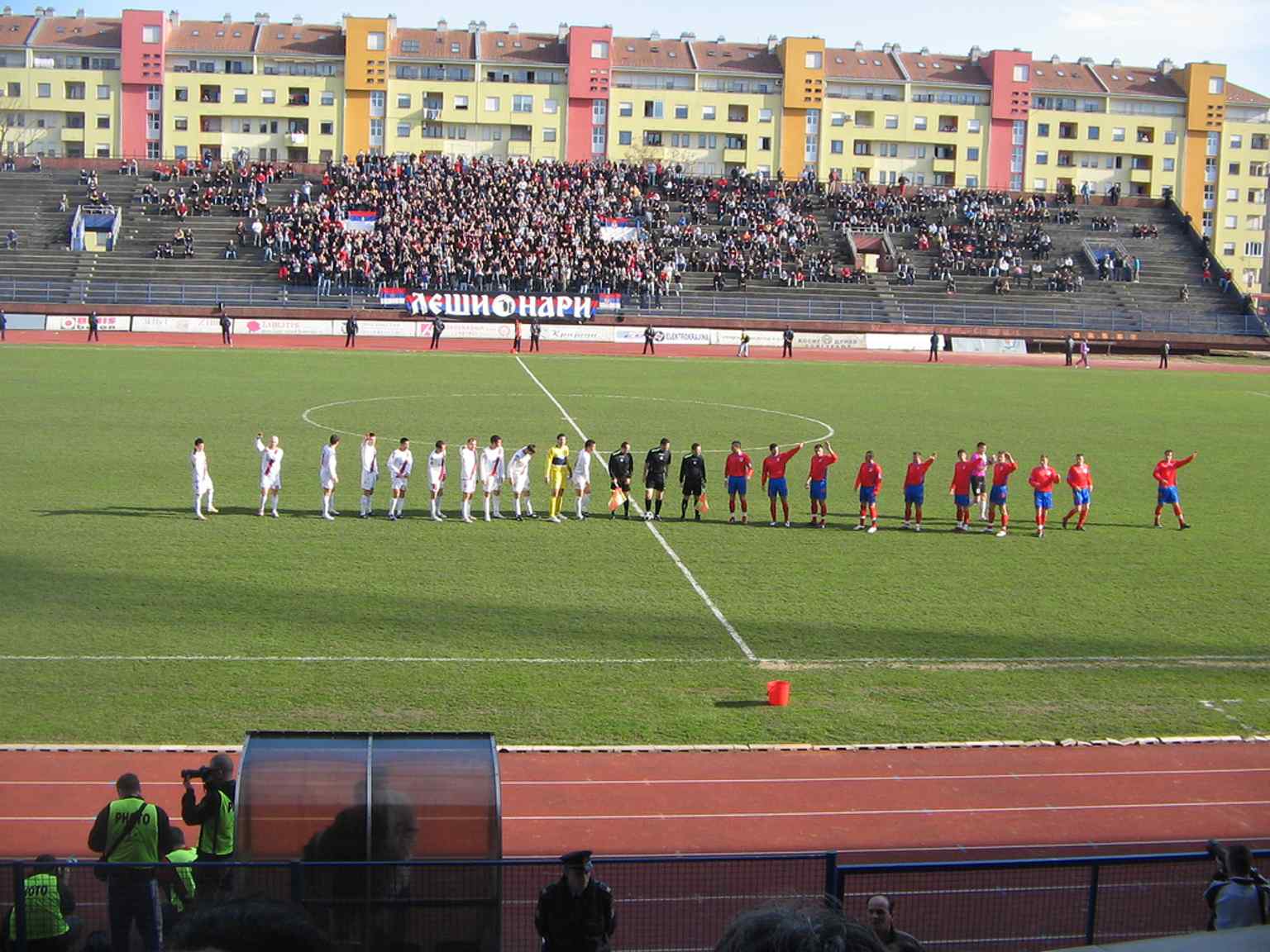
Spectators fill the stands during a football match at the Banja Luka City Stadium, which has a capacity to hold over 10,000 seated spectators.Photo: Rade Nagraisalovic (a.k.a. Tonka), Wikimedia Commons, CC BY-SA 3.0. Cropped & resized. 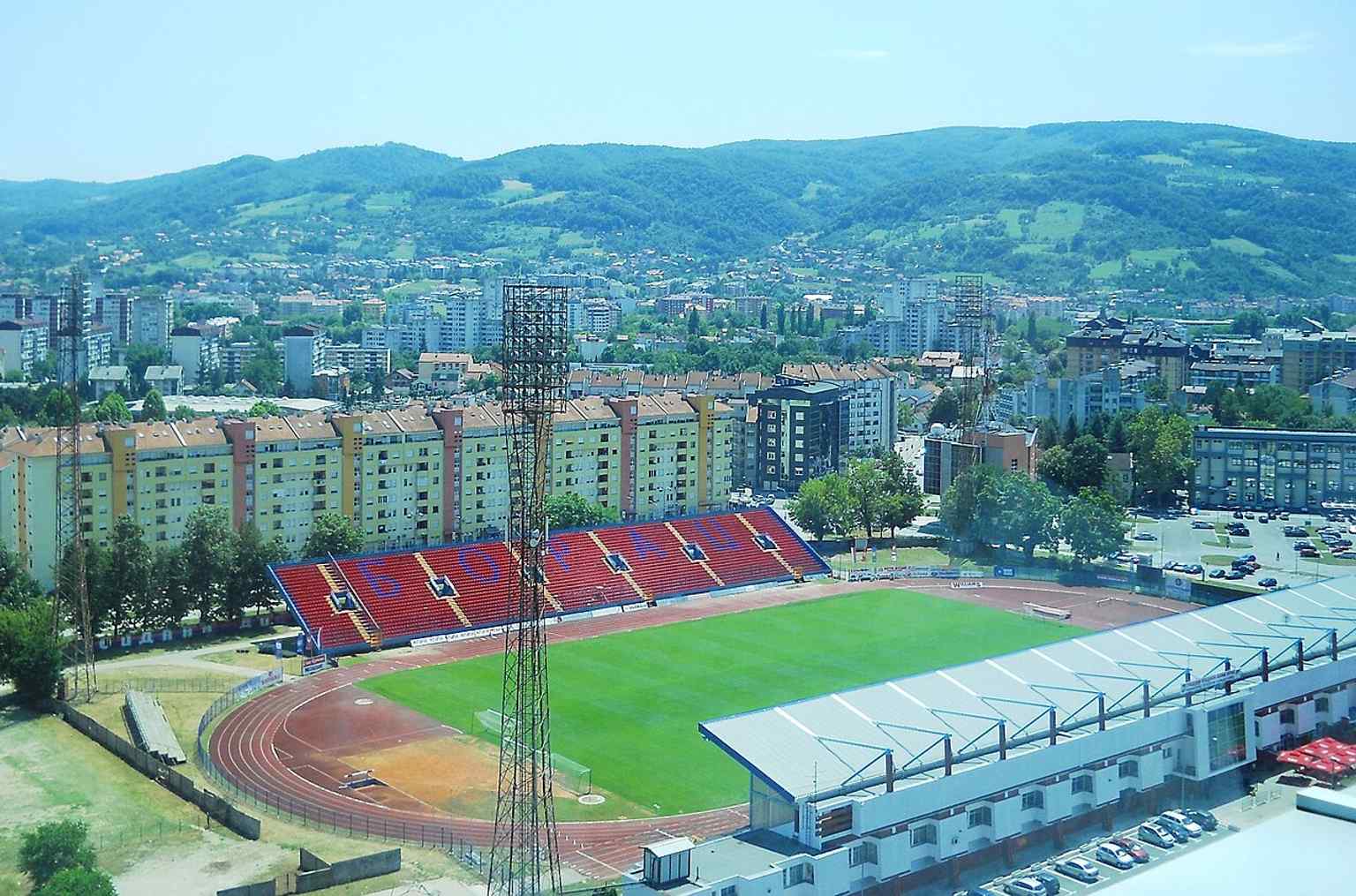
An exterior shot of the Banja Luka City Stadium, which became the home ground for FK Borac Banja Luka after World War II.Photo: Marko235, Wikimedia Commons, CC BY-SA 3.0. Cropped & resized. 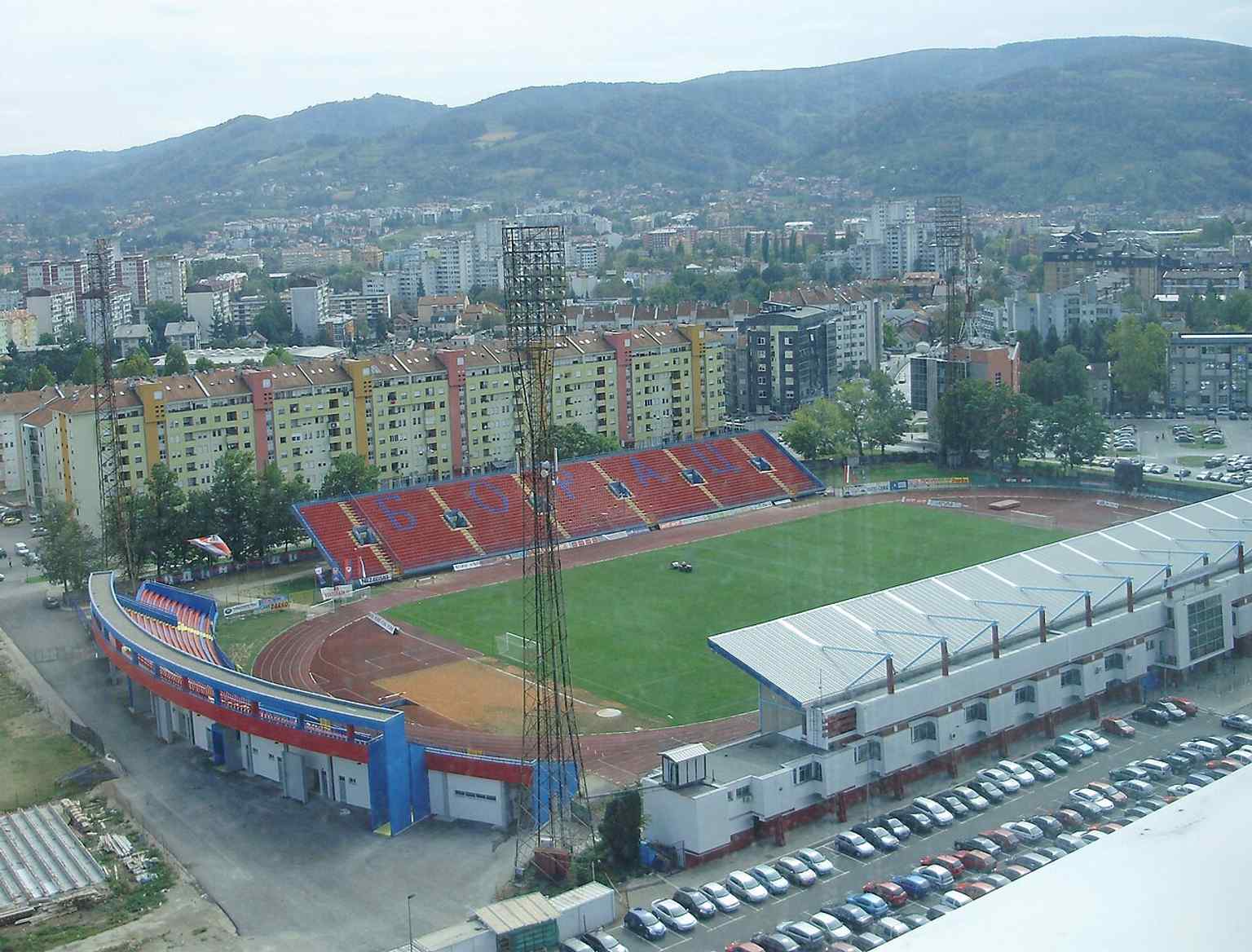
This image from September 2012 captures the stadium shortly after the completion of the north stand, contributing to its modern capacity of 9,730 seats.Photo: NektarBL, Wikimedia Commons, CC BY-SA 3.0. Cropped & resized. 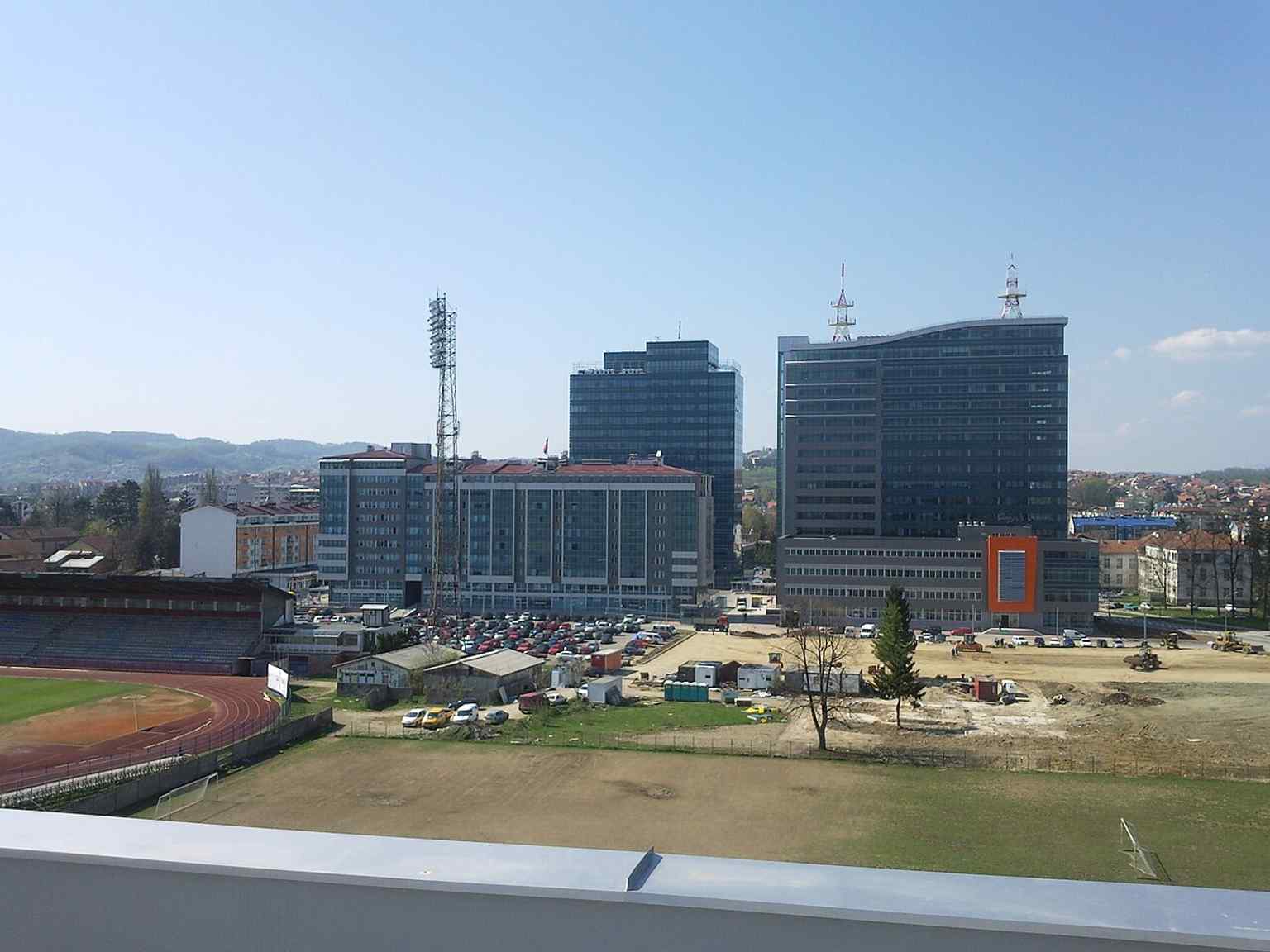
An exterior perspective from 2010, the year the stadium underwent a complete reconstruction that installed new seats and updated lighting systems.Photo: igor porcic kalvarij…, Wikimedia Commons, CC BY 3.0. Cropped & resized. On your left, you will spot a sweeping curved building made of heavy stone blocks, featuring a row of tall square columns and two large bronze statues standing guard at the main…Read moreShow less
Open dedicated page →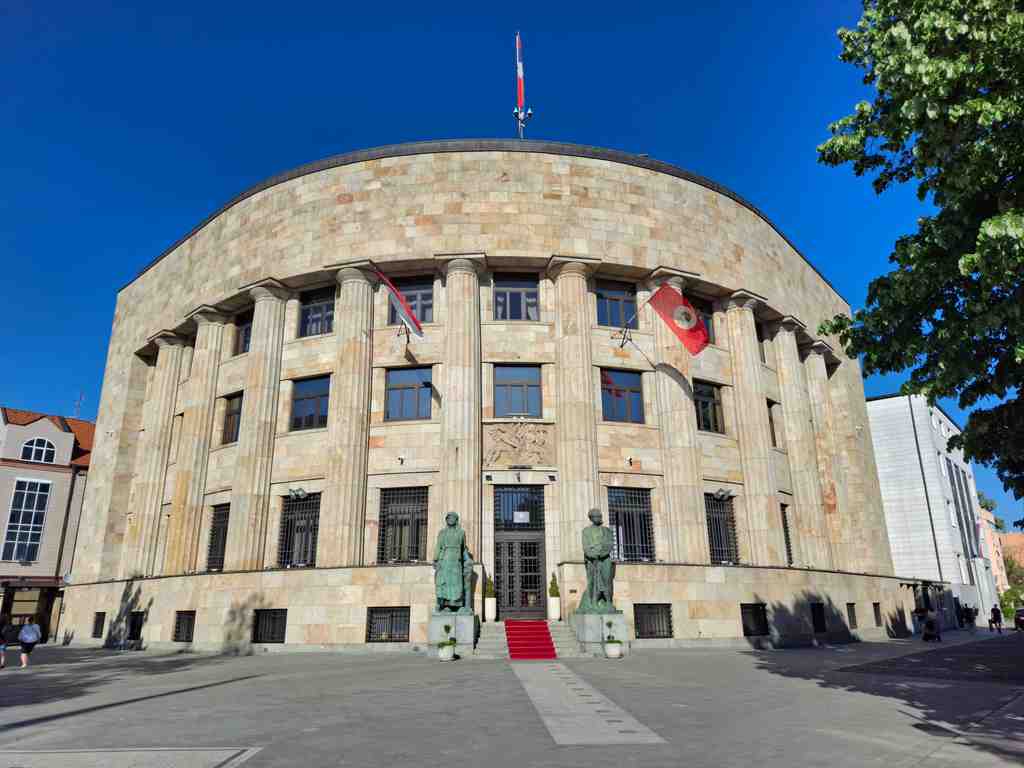
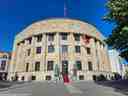
Palace of the Republic, Banja LukaPhoto: ArhistefoBL, Wikimedia Commons, CC0. Cropped & resized. On your left, you will spot a sweeping curved building made of heavy stone blocks, featuring a row of tall square columns and two large bronze statues standing guard at the main entrance. It looks completely presidential now, but this grand structure actually owes its existence to the stock market crashing a whole ocean away.
After the infamous Wall Street crash of 1929, the Kingdom of Yugoslavia was scrambling to fight off the economic shockwaves. The State Mortgage Bank decided the best way to secure their capital and build public trust was to construct a massive, solid bank in a developing region. Banja Luka got the green light. They brought in an architect named Miodrag Vasić from Belgrade to draw up the plans. Vasić was so intensely committed to the project that he refused to leave the city even once during construction. He just stayed right here, keeping a close eye as stonemasons hauled in heavy, hand-carved stone all the way from Macedonia to build that impressive curved facade.
When it finally opened in 1936, the bank received a highly unusual dual blessing from both an Orthodox metropolite, which is a senior bishop in the church, and a Muslim Effendi, honoring both major local faiths.
If you check your screen, you can get a great look at the details of those two statues flanking the entrance. They were added in 1937, sculpted by Vladimir Petrovič Zagorodnjuk. They represent everyday Krajina peasants, and each of those bronze figures weighs a massive six hundred kilograms. The man with the turban and weighing scale represents trade, while the woman holding the sickle represents the household.
Now, look up at the stone wall just above the main doors. You see that single relief sculpture? There actually used to be eleven of those decorating the building. During World War Two, occupying forces took over the bank to use as a command center. When the Yugoslav Partisans, the local anti-fascist resistance fighters, moved to retake the city, they came up with a really wild combat tactic. They found a standard firefighter pump, filled it entirely with gasoline, and essentially turned it into a makeshift flamethrower to blast the building. The attack heavily damaged the structure, and those other ten beautiful reliefs were eventually taken up to the attic and destroyed forever.
Things definitely calmed down after the war. By the 1960s, it housed a state bookkeeping service, and the front steps actually became the absolute favorite hangout spot for local teenagers to meet up. It is pretty amazing how a place shifts from a literal war zone to a spot where kids just hang out and trade gossip.
Finally, in 2008, the government poured 5.5 million euros into an extensive renovation, transforming this Depression-era bank into the Palace of the Republic. Today, it serves as the official residence of the President of Republika Srpska, making it one of the most heavily guarded addresses in town.
It is quite the journey from a local bank to the seat of presidential power. Take your time admiring the grand architecture, and then we will wander over to our next destination.
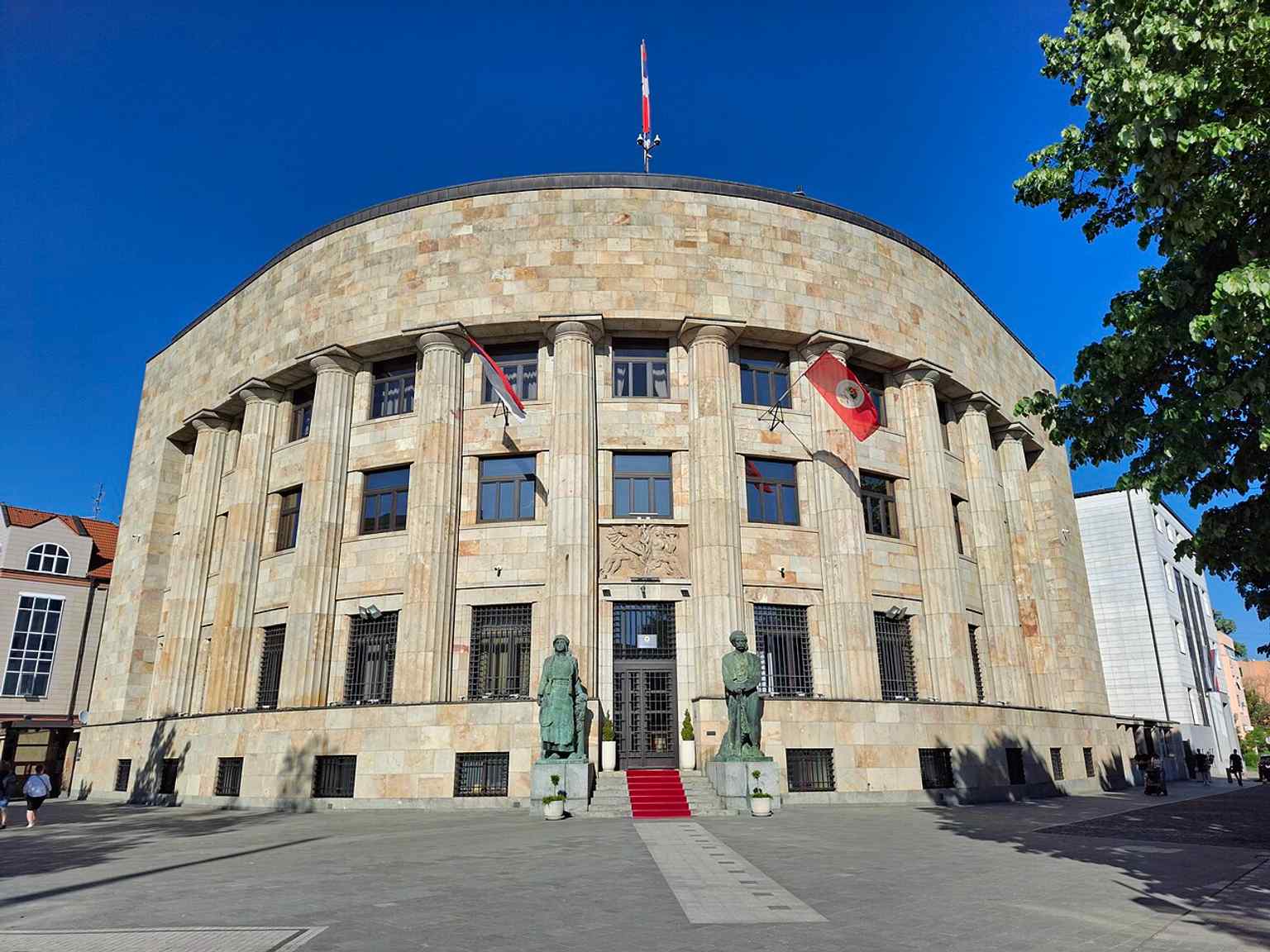
The Palace of the Republic, today the official residence of the President of Republika Srpska, was originally built as the State Mortgage Bank.Photo: ArhistefoBL, Wikimedia Commons, CC0. Cropped & resized. Just ahead on your left is the distinct maroon signage featuring crisp white Cyrillic lettering framed by thin white lines. You are standing right outside the National and…Read moreShow less
Open dedicated page →
National and University Library of the Republika SrpskaPhoto: NUB RS, Wikimedia Commons, Public domain. Cropped & resized. Just ahead on your left is the distinct maroon signage featuring crisp white Cyrillic lettering framed by thin white lines. You are standing right outside the National and University Library of the Republika Srpska. It is easy to look at an institution like this and assume it was always so official, but it has a beautifully humble origin story.
Back in 1935, a committee decided Banja Luka needed a library, originally naming it after King Peter the First. They did not have a fancy staff ready to go. Instead, the Ministry of Education simply appointed a local primary school teacher to be the very first librarian. Imagine getting that surprise promotion.
The community really pulled together to fill the empty shelves. Local groups like the Serbian Reading Room, the high school, and everyday citizens just donated their own reading material. By the time the doors officially opened in April 1936, that lone schoolteacher was managing a solid collection of six thousand books. It was a massive deal, becoming the very first public library in the entire province.
The library has had a bit of a naming journey since then, taking on the name of writer Petar Kocic in 1980 before settling into its current official title in 1999. The collection has grown so much that they even got a special postage stamp to celebrate their 75th anniversary in 2011.
If you want to browse those historic shelves yourself, they are open Monday through Friday eight to eight, Saturdays until two, and closed Sundays. It is pretty cool to think how a few donated books started all this. Whenever you are ready, we will make our way to our final stop.
Turn to your right to find a simple, square white walled building with a red tiled roof, topped by a striking wooden minaret towering from the center. Welcome to the Mosque of…Read moreShow less
Open dedicated page →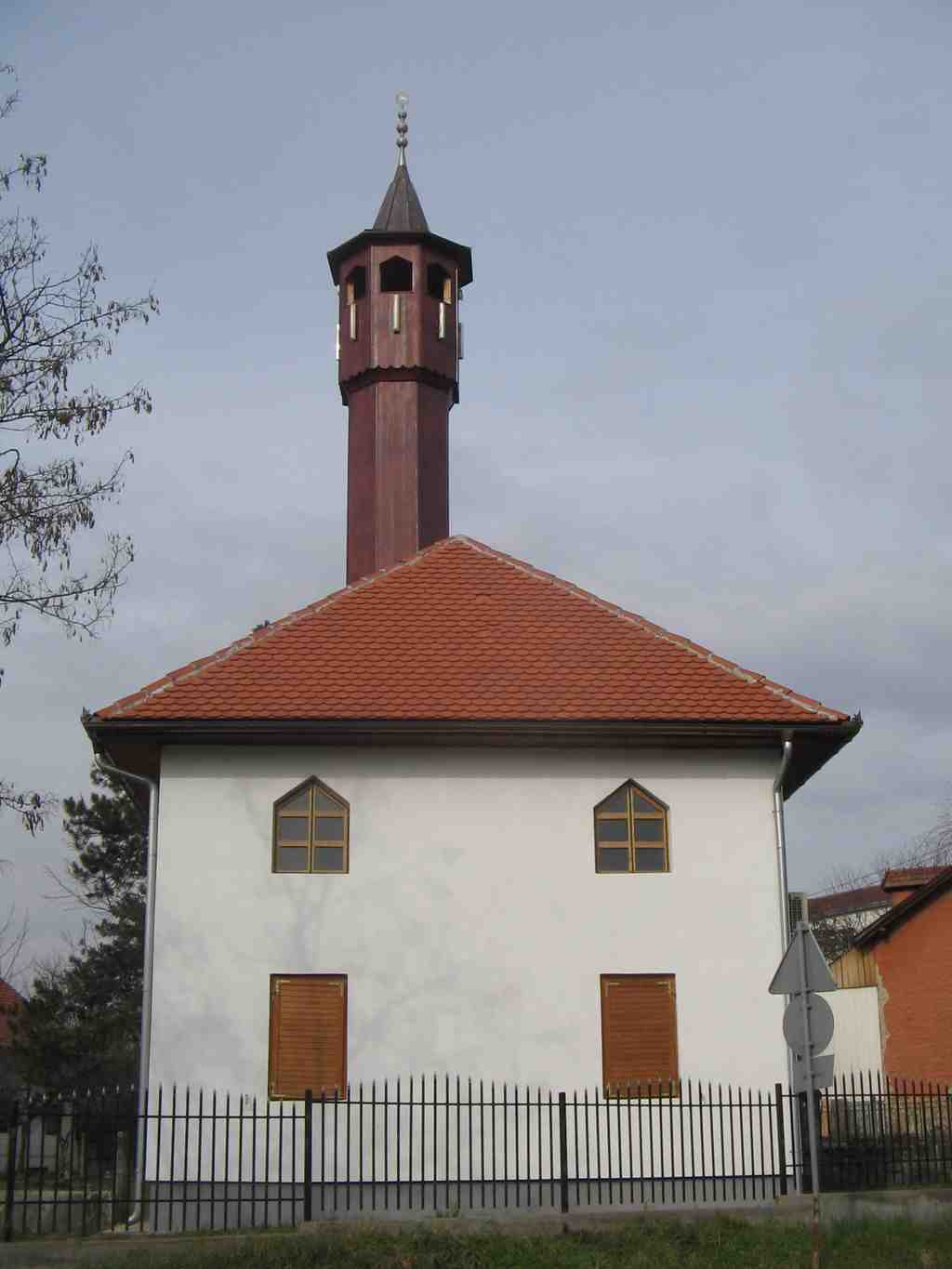
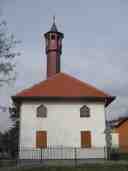
The Mosque of OmarPhoto: Rade Nagraisalović, Wikimedia Commons, CC BY-SA 4.0. Cropped & resized. Turn to your right to find a simple, square white walled building with a red tiled roof, topped by a striking wooden minaret towering from the center. Welcome to the Mosque of Omar, also known as the Dolac Mosque.
This place goes way back to 1618. It was originally built right in the suburbs of Kastel Fortress, that massive stone stronghold we explored at the very start of our tour. In its early days, it featured open wooden porches known as sofas. Right next to it is the harem, which is a traditional Islamic graveyard. Here you can find around a hundred nišani, those tall, distinctly carved stone grave markers.
But the building standing before you holds a heavy history. During the Bosnian War, on September 9, 1993, the mosque was burned to the ground. The roof and that signature wooden tower were completely destroyed, and the rubble was later hauled away.
Yet, the story does not end in ashes. The community rallied, and this UNESCO protected site was rebuilt, officially reopening its doors in 2007. It stands as a quiet but powerful symbol of endurance.

Frequently asked questions
How do I start the tour?
After purchase, download the AudaTours app and enter your redemption code. The tour will be ready to start immediately - just tap play and follow the GPS-guided route.
Do I need internet during the tour?
No! Download the tour before you start and enjoy it fully offline. Only the chat feature requires internet. We recommend downloading on WiFi to save mobile data.
Is this a guided group tour?
No - this is a self-guided audio tour. You explore independently at your own pace, with audio narration playing through your phone. No tour guide, no group, no schedule.
How long does the tour take?
Most tours take 60–90 minutes to complete, but you control the pace entirely. Pause, skip stops, or take breaks whenever you want.
What if I can't finish the tour today?
No problem! Tours have lifetime access. Pause and resume whenever you like - tomorrow, next week, or next year. Your progress is saved.
What languages are available?
All tours are available in 50+ languages. Select your preferred language when redeeming your code. Note: language cannot be changed after tour generation.
Where do I access the tour after purchase?
Download the free AudaTours app from the App Store or Google Play. Enter your redemption code (sent via email) and the tour will appear in your library, ready to download and start.
If you don't enjoy the tour, we'll refund your purchase. Contact us at [email protected]
Checkout securely with 


.jpg)
.jpg)
.jpg)
.jpg)
.jpg)
.jpg)
.jpg)
.jpg)
.jpg)
.jpg)
.jpg)
.jpg)


