
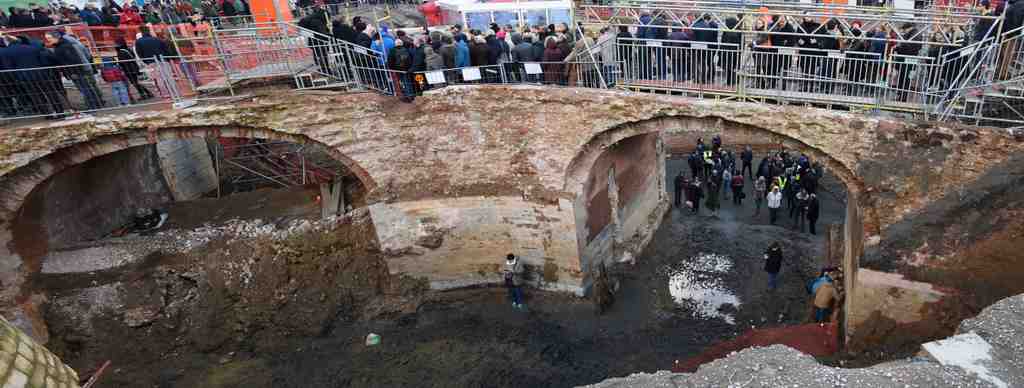
To spot the Kipdorp Bridge, look just ahead to where the street dips a little and open your eyes for the old, sturdy stonework peeking through modern surroundings. You might notice a long, arched structure nestled partly under the Opera Square. The historical stones almost look like they’re emerging from the depths, stubbornly refusing to be forgotten in this busy city.
Let’s imagine it’s the 1500s. You’re standing right outside the brand new Kipdorp Bridge, stretching an impressive 90 meters across! Back then, it was part of Antwerp’s high-tech Spanish city wall. Seriously, this was their version of airport security. You would hear the clatter of wagon wheels, clopping horses, and the buzz of travelers trying to make it through before the gates closed tight for the night.
Emperor Charles V ordered the wall to be built after a wild attack tried to topple Antwerp. He thought, “Let’s make this city impossible to conquer!” So they built a wall that soared ten meters high, with five epic city gates-one of which was right here: the Kipdorppoort. Fancy Italian architects and our own Gilbert van Schoonbeke masterminded the works. This wasn’t just any wall, it was a Renaissance fashion statement, with pentagon-shaped bastions and even a moat. If you’re guessing there were lots of confused ducks, you’re probably right.
This spot became the city’s most critical passage in and out of Antwerp. Anyone seeking fortune-or a good pie-coming from the Kempen or North Brabant had to cross this bridge. The Kipdorp Gate was open from an impressively early 3:30 in the morning during summer. Sleepy-eyed travelers, beware: if you arrived late, you’d be sleeping under the stars with the city walls for company.
Now picture 1583. Angry shouts and clashing swords echo as French troops dash toward the gate, desperate to take the city. Spoiler alert: They didn’t, thanks to the sturdy defenses here!
Fast forward to the 1800s and the grand wall is taken down to make way for boulevards-a city’s way of getting a new haircut. Most of the Kipdorppoort disappeared, but when workers recently dug up the streets for a tram line, they struck archaeological gold: ancient pottery, toy fragments, coins, and even an 83-centimeter-long sword, possibly dropped mid-battle or maybe during an especially dramatic lunch break. Historians never say.
Today, you can admire the uncovered remains both from above and below, glimpsing layers of Antwerp’s history sandwiched right here among glass and concrete. So, next time you cross this spot, imagine guards scanning the horizon, sleepy merchants hurrying across, or the clank of armor echoing through the early morning mist. This bridge may seem quiet now, but its stones remember everything.




