
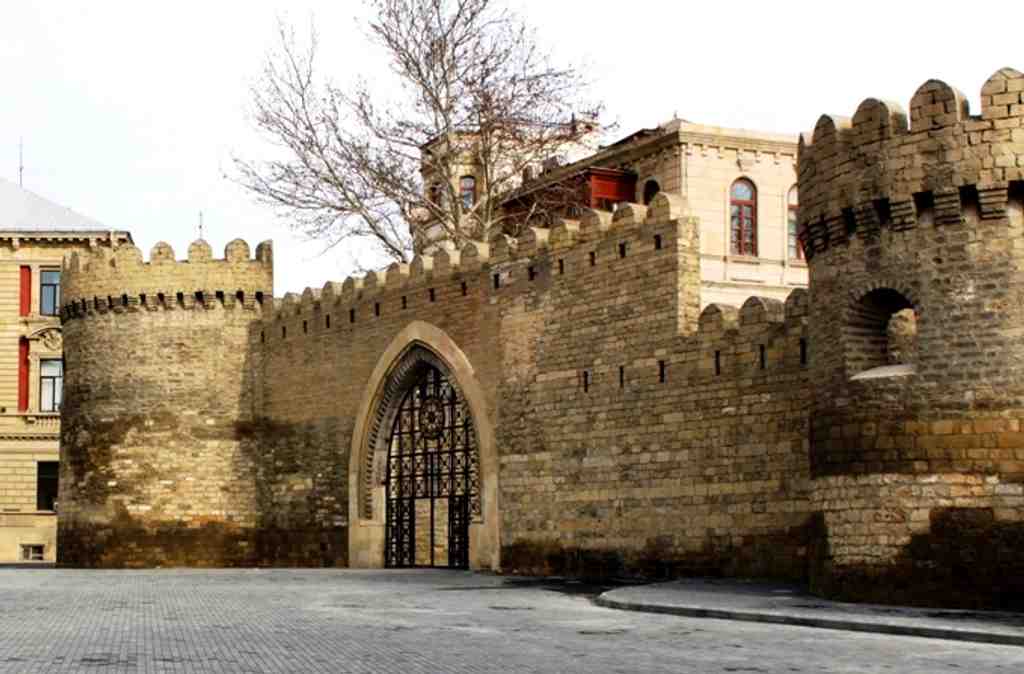
Right in front of you is the Baku Fortress Wall! To spot it, just look for the tall, rugged stone wall with its chunky battlements-those tooth-like shapes running along the top. There’s an arched gate with heavy iron bars, almost looking like it’s daring you to peek inside. The wall curves around the corner, strong and sturdy, and a round tower stands guard, watching over the street. It's like a giant stone hug around the heart of old Baku.
Now, imagine yourself back nearly 900 years ago. The year is 1139, and the new wall you’re standing in front of is being finished under the orders of Shirvanshah Manuchohr III. The blocks are rough, the air smells of dust and fresh mortar, and everywhere there’s the clanking of hammers.
You can almost hear the panic of townsfolk rushing behind these walls as a warning horn sounds from that very tower. In those days, the fortress was the city’s ultimate shield. The walls-so thick you could race two horse carts across their tops-wrapped 1500 meters around the city. There were two mighty gates, one facing the wild Caspian Sea and the other open to dry land, as if inviting both friends and foes for a tricky game of hide-and-seek.
Travelers in the Middle Ages described a double wall, meaning attackers would have to survive not just one, but two rings of stone! The inner wall you see now, survived centuries of battle and a makeover or two-Baku has had more facelifts than a celebrity on a reality show.
The fortress has seen earthquakes, invasions, power struggles, even a Russian Navy attack that ended very badly for the bold Russians. Their ships burned in the harbor while Baku stood firm, its defenders cheering from the ramparts.
Time marched on and, eventually, the fortress lost its military purpose. By 1867, it was officially retired-sort of like an old war hero who’s seen too much action but still deserves respect. Some walls were knocked down for ‘better air movement’-at least, that’s what the paperwork said. But the stones you see right now? Survivors. They hold stories of sieges and celebrations, kings and conquerors, and the daily dramas of Baku’s past.
So, as you gaze up at these ancient stones, imagine the clang of swords, shouts of guards, the rushing feet of messengers, and the wind that’s carried secrets across these walls for centuries. If these stones could talk, they’d probably have more gossip than all the cafes in Baku put together.


