
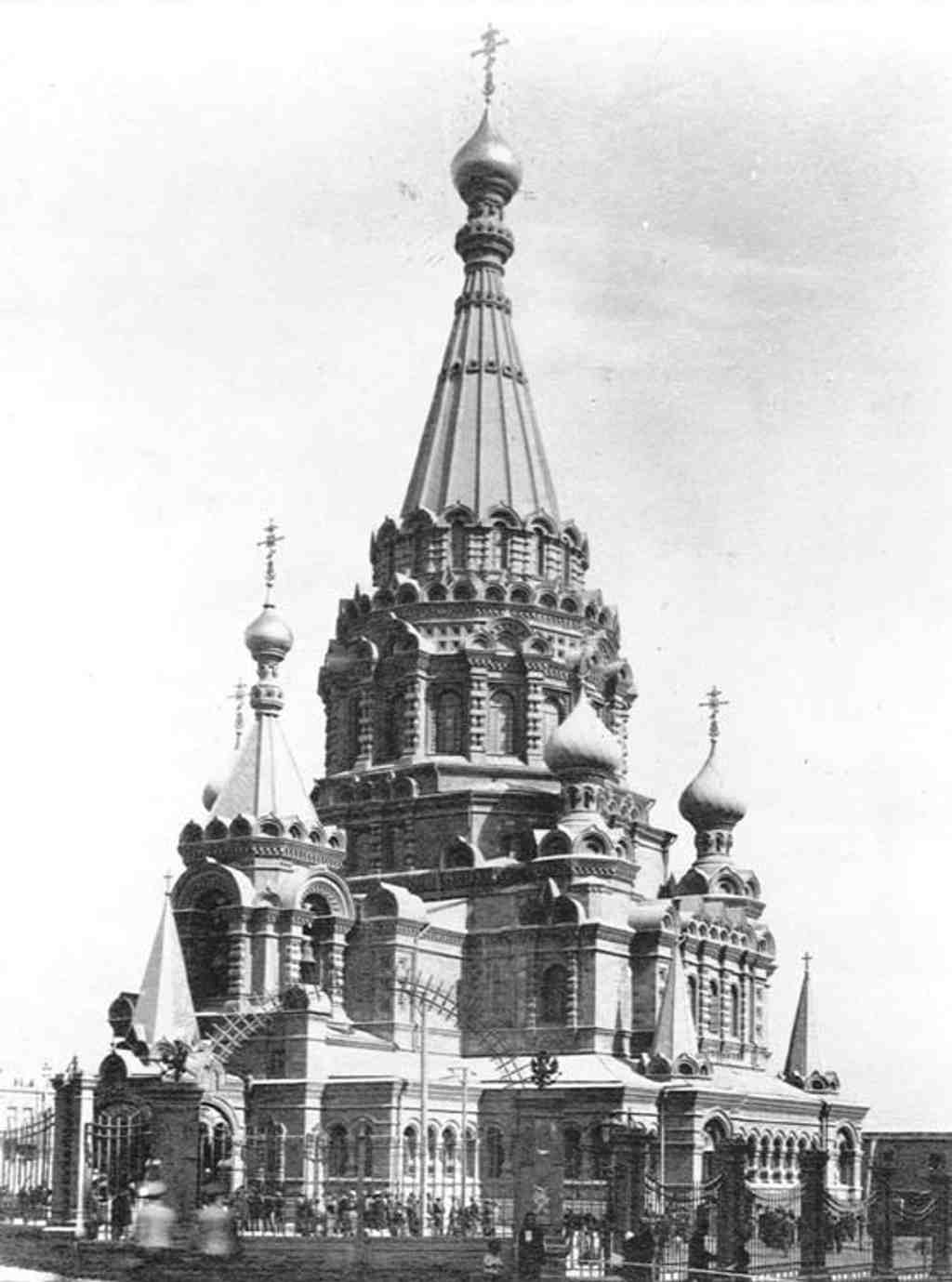
Take a look just ahead of you-if you were walking here a hundred years ago, you’d spot a giant, golden-crowned church rising above the city like a giant wedding cake. Those tall, onion-shaped domes, sparkling and catching the sunlight, would have made it impossible to miss. The spire shot up into the sky, with crosses gleaming on top-it's almost like the kind of castle you’d draw as a child, only far grander, and made for grownups to marvel at.
Now, let’s travel back in time together, right here in front of the old site of the Alexander Nevsky Cathedral, also known as “The Golden Church.” Imagine the busy streets of Baku in 1888, horses clopping past, townsfolk chattering, and church bells ringing in the distance. This place buzzed with excitement. The Russian Orthodox community had outgrown its tiny prayer spaces, and the governor decided it was high time for something magnificent. Some people weren’t thrilled with the chosen spot-it used to be an old, abandoned cemetery. For ten years, neighbors argued over whether a brand-new cathedral should be built here. But eventually, everyone put aside their differences, and the emperor himself gave the final "thumbs up" for construction.
The first stone was laid with great ceremony. Picture the Emperor Alexander III and his family-future emperor included-standing alongside Baku’s Christian, Muslim, and Jewish leaders, tying together the city’s different communities. Now here’s something amazing: the emperor ran out of money, so the people of Baku stepped up. Nearly 75 percent of the donations came from Muslims, even the legendary oil baron Zeynalabdin Taghiyev chipped in 10,000 roubles. And the Jewish community? They contributed, too! It was a true group project-if only modern group projects went this smoothly, right?
When it finally opened in 1898, this church was enormous-81 meters high, with domes, arches, and crosses all shimmering with gold. It could be seen from nearly everywhere. People called it “The Golden Church,” and for a time, it was the heart of Orthodox faith in the whole Caucasus.
But its glory didn’t last forever. In the 1930s, the Soviet government wasn’t a fan of big religious buildings. One day, with a thunderous blast, the Alexander Nevsky Cathedral was blown to pieces, making way for modern Baku. Today, if you listen closely, you might still hear a faint echo of organ music or church bells in the wind. And right where you’re standing, the Bulbul School of Music now carries on the tradition of gathering voices together-though now it’s singing rather than prayer that fills the hall.


