
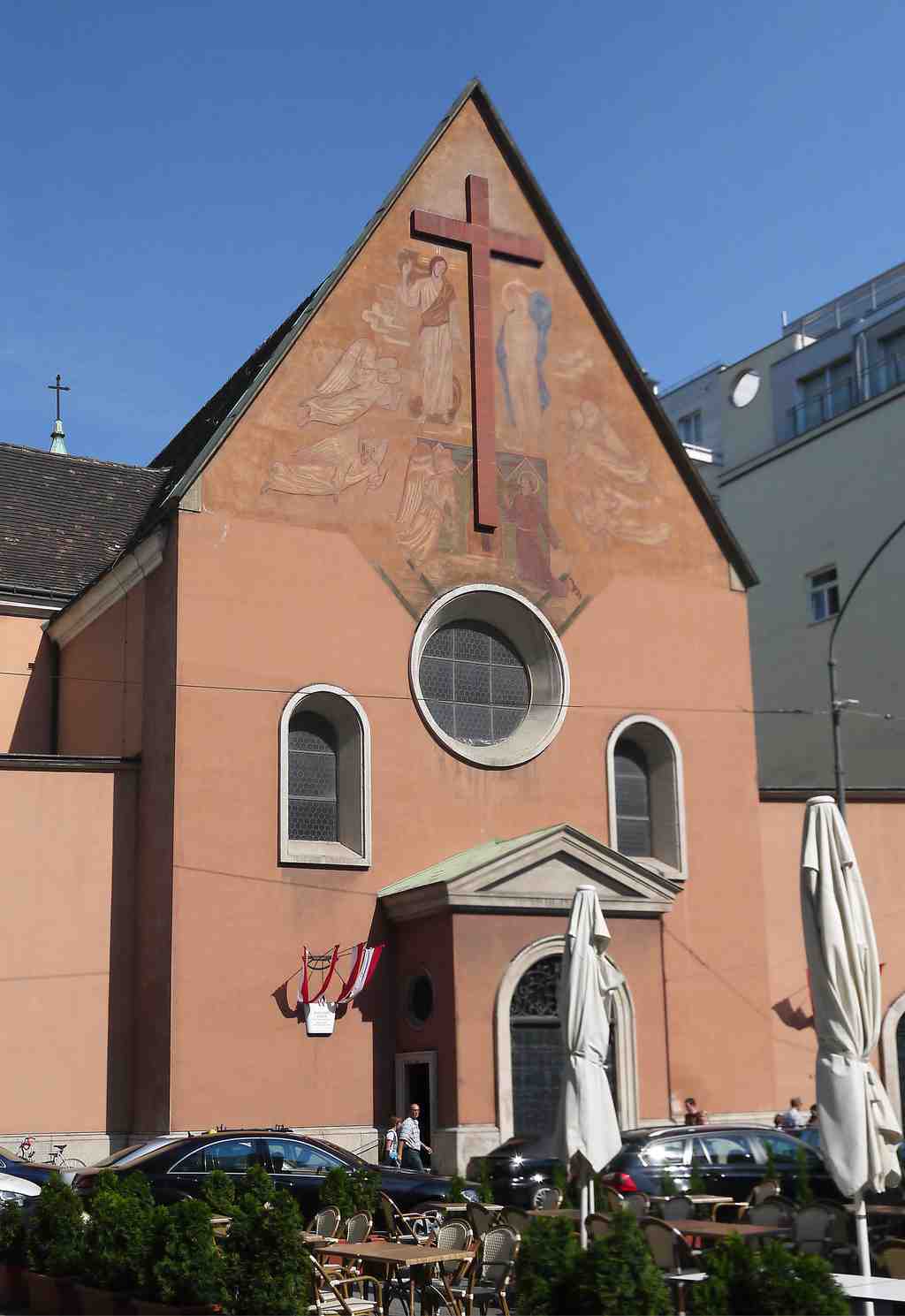
To spot the Imperial Crypt, look ahead for a salmon-colored church facade with a red cross mounted above a circular window and faded painted figures just under the roof.
Alright, you’ve found yourself in front of what looks like an unassuming church, but trust me, beneath your feet is one of Europe’s most dramatic royal resting places - the Imperial Crypt. Imagine Vienna in the early 1600s: the city buzzing with horse-drawn carriages, the clang and clatter from the nearby market square, and right here, Anna of Tyrol was hatching a clever plan for her future. She decided she and her husband, Emperor Matthias, deserved something more lasting than just a palace - so in her will, she set aside money to build a crypt and a Capuchin cloister. As fate would have it, she died just a year later, and with her passing, the plan kicked into motion.
The first stones went down in 1622, smack in the middle of war and upheaval (you know, just the little distraction called the Thirty Years’ War). Ten years later, the crypt was ready, and a grand ceremony saw the sarcophagi of Matthias and Anna taken downstairs into what’s now called the Founders Vault. The place was dark, plain, and chilly - not exactly a Disney ending, but definitely imperial.
But that was just the beginning. As the centuries ticked by, Vienna’s royal family - the Habsburgs - had a habit of expanding, not just their empire, but their burial space! Leopold I, Joseph I, and then Maria Theresa, each added more vaulted rooms. By the mid-1700s, Maria Theresa pushed the crypt out past the church itself and into the monastery garden, capping it all off with a dramatic dome that let sunlight pour into the silence below. Imagine the hushed footsteps on stone, the musty scent of centuries-old metal, and the distant chanting of monks echoing through the air.
The Imperial Crypt became the “who’s who” of royal final stops: 12 emperors, 18 empresses, and countless princes and princesses found their last address here. The sarcophagi tell their own tale - some are sturdy and simple, almost as plain as a box, while others are so decked out in bronze, gold, and flourishes you’d think the Habsburgs were holding a rococo parade even after death. Want a bit of a shiver? A few covers weigh as much as a small car!
The monks still living upstairs might remind you that dreams of grandeur only last so long. For over 200 years, they’ve kept the crypt’s traditions alive. If you were royalty and you died, your coffin didn’t just roll up. Oh no - your body paused at the chapel doors, where an official knocked, asking admittance for “Emperor so-and-so.” Each time, the monks replied, “We know him not.” Not until the official finally pleaded, “It is only a poor sinner,” did the monks open the doors. Even the grandest ruler gets cut down to size in the end!
Of course, time hasn’t always been kind. Damp air, curious visitors, and centuries of change have left scars. In the 1900s, the crypt got a modern twist with air conditioning, careful conservation, and even a new visitors’ route that keeps you from getting lost. Besides the grandeur, it’s a place of fragile memory-delicate bronze, fading silk, the hush of history.
So as you stand here, try picturing the scenes below: rows of ornate coffins, guardians tending flickering candles, emperors and empresses resting side by side-for once, no squabbling over the throne! If the Habsburgs were collecting frequent-flier miles for afterlife journeys, they’d definitely be platinum status. And who knows, maybe enough emperors are packed in now that the crypt could compete with Vienna’s best sausage stand for most famous customers!
If you're keen on discovering more about the funeral entrance ritual, the sarcophagi or the people buried here, head down to the chat section and engage with me.




