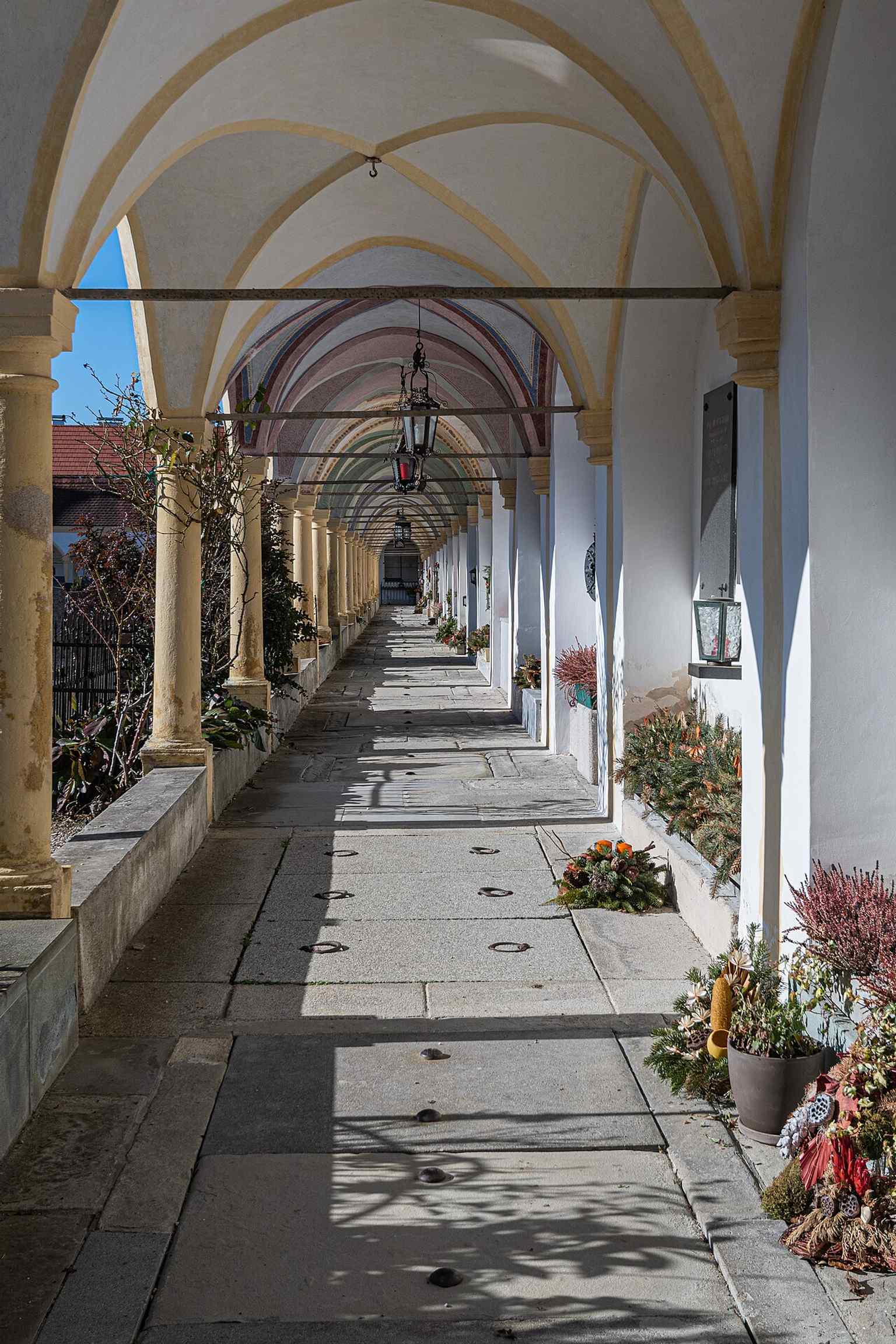
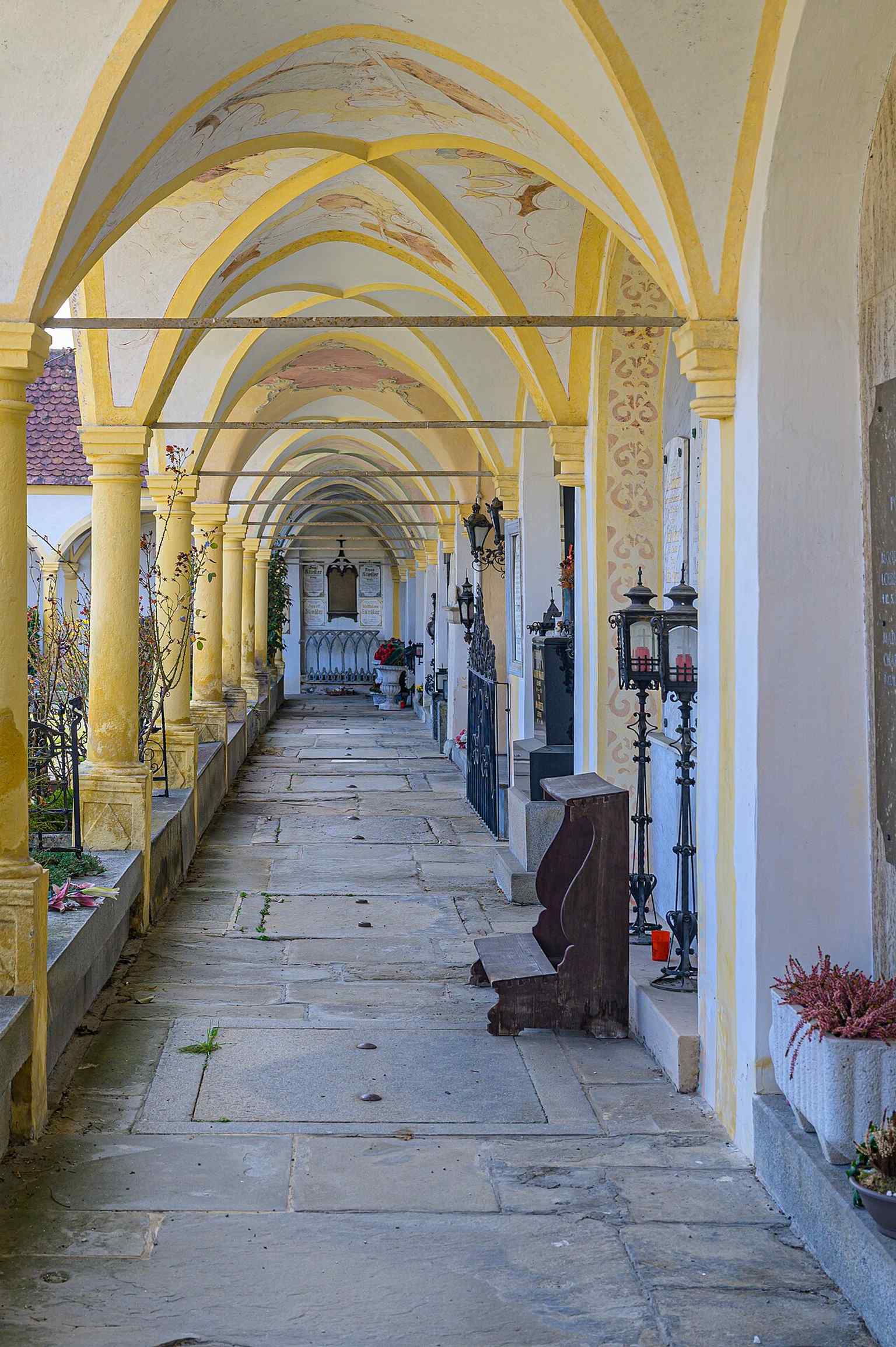
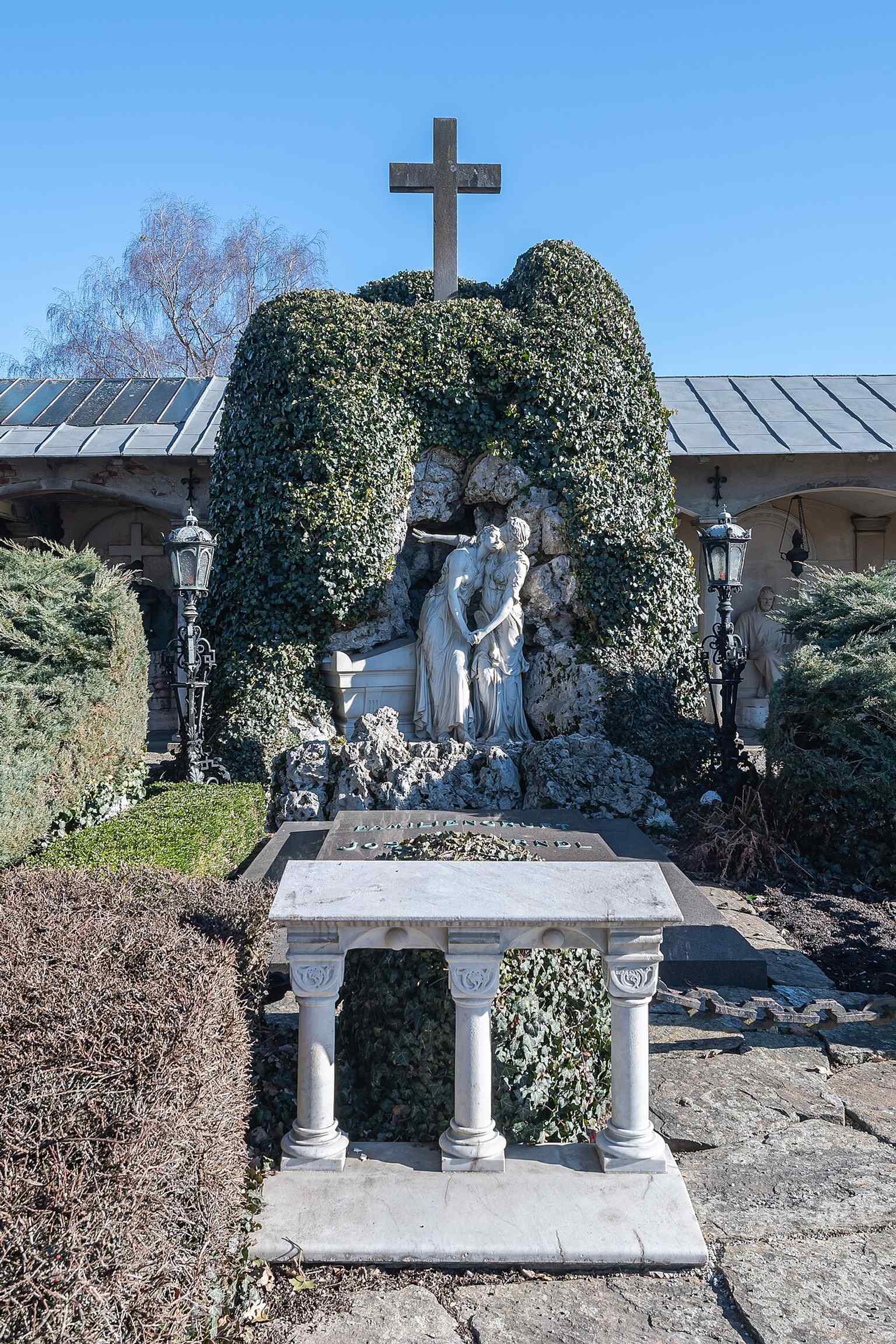
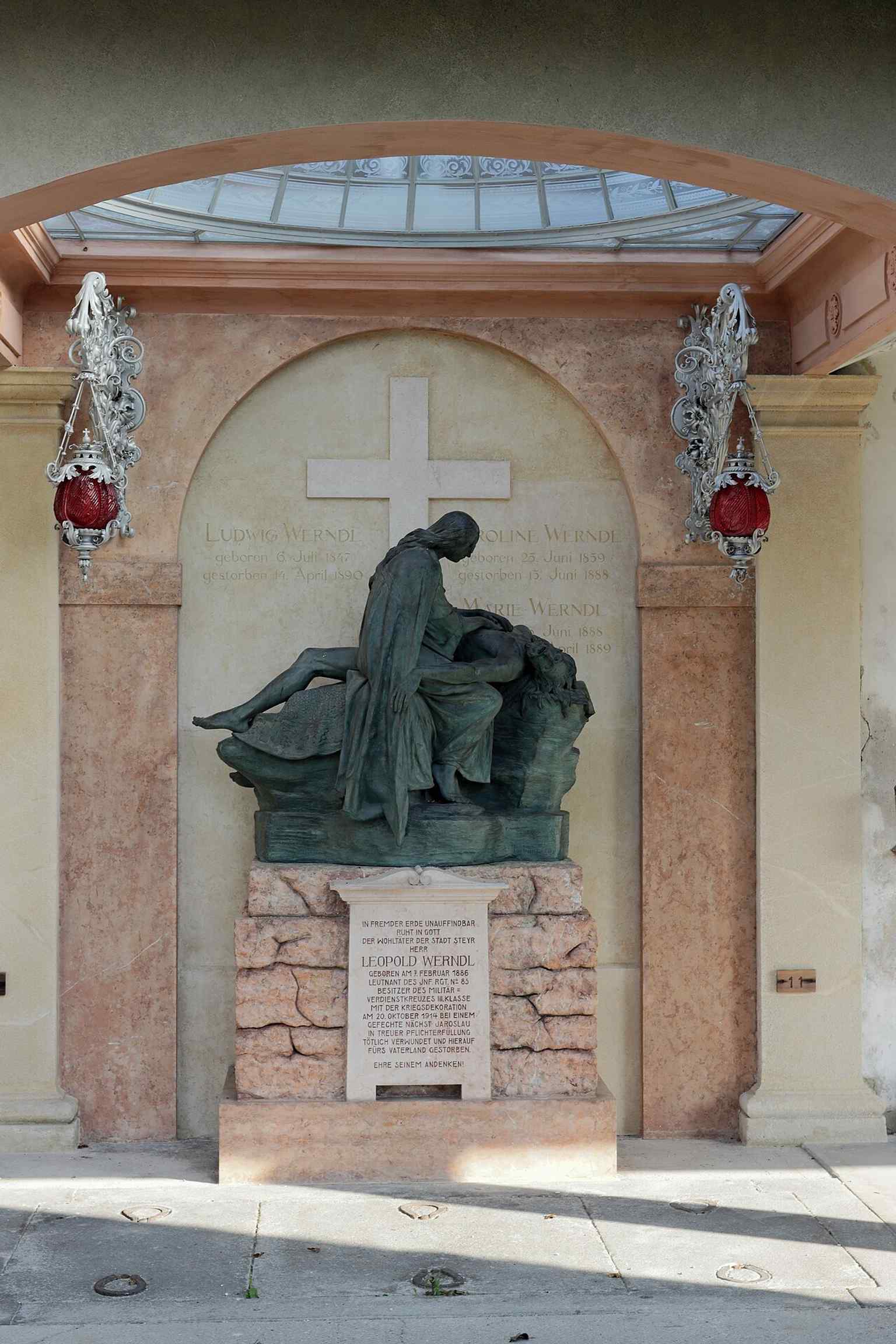
Tabor CemeteryPhoto: Fotosː BEV - Bundesamt für Eich- und Vermessungswesen / Bearbeitung (Stitch, Tonwertkorrektur)ː Christoph Waghubinger, Wikimedia Commons, CC BY 4.0. Cropped & resized.
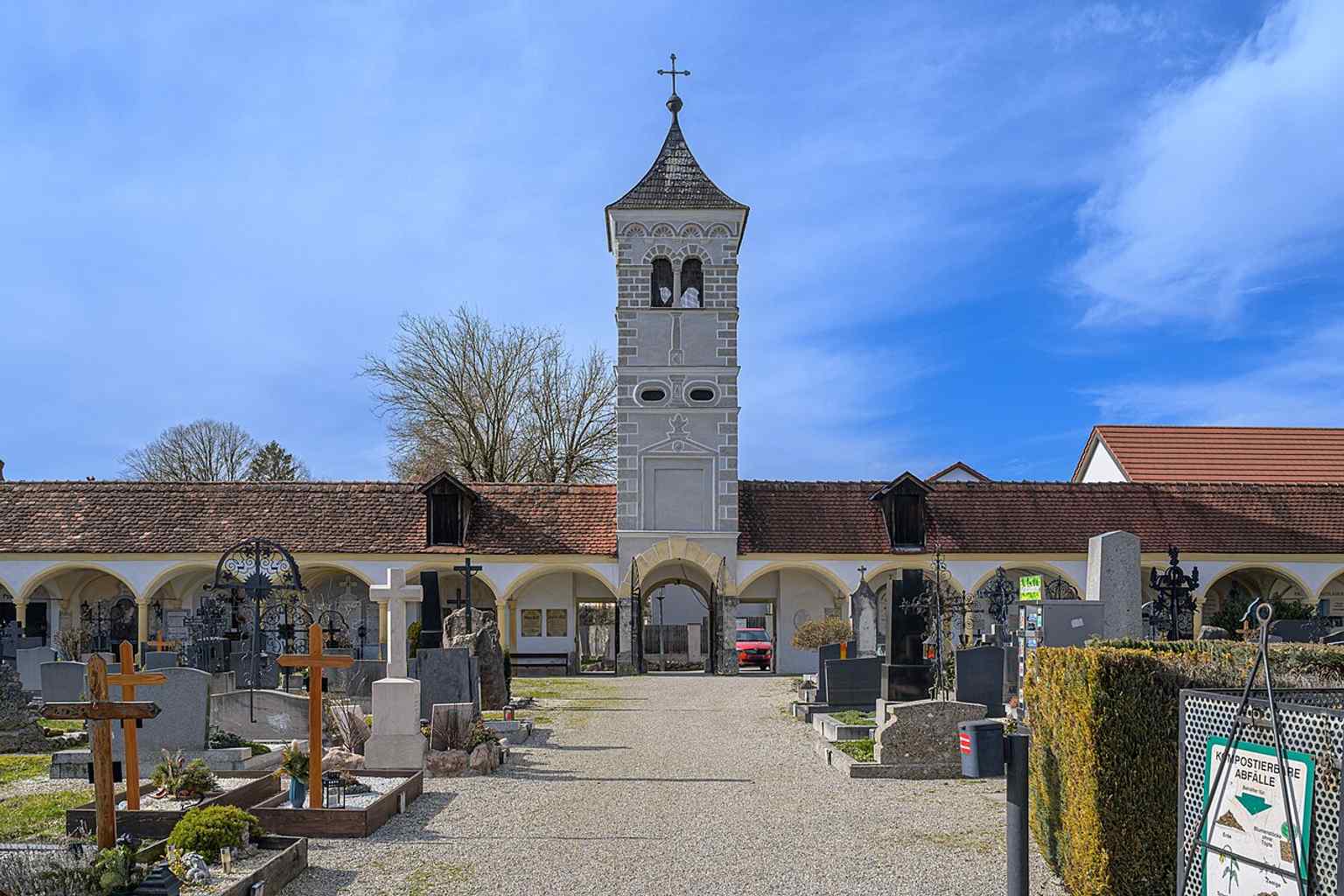
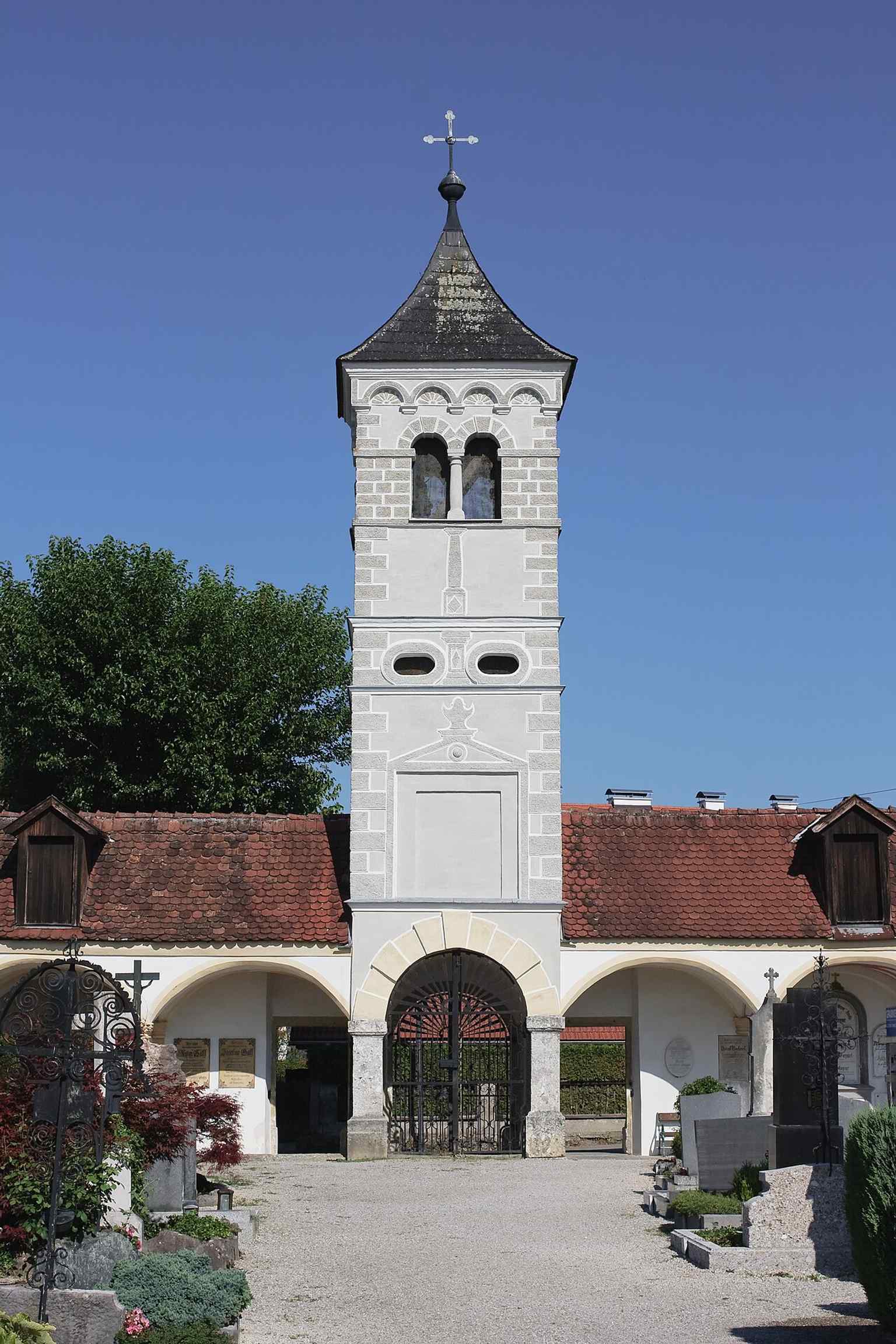
In front of you stands a pale stone gateway with a square tower, a rounded Renaissance arch, and arcaded wings that frame the cemetery behind it.
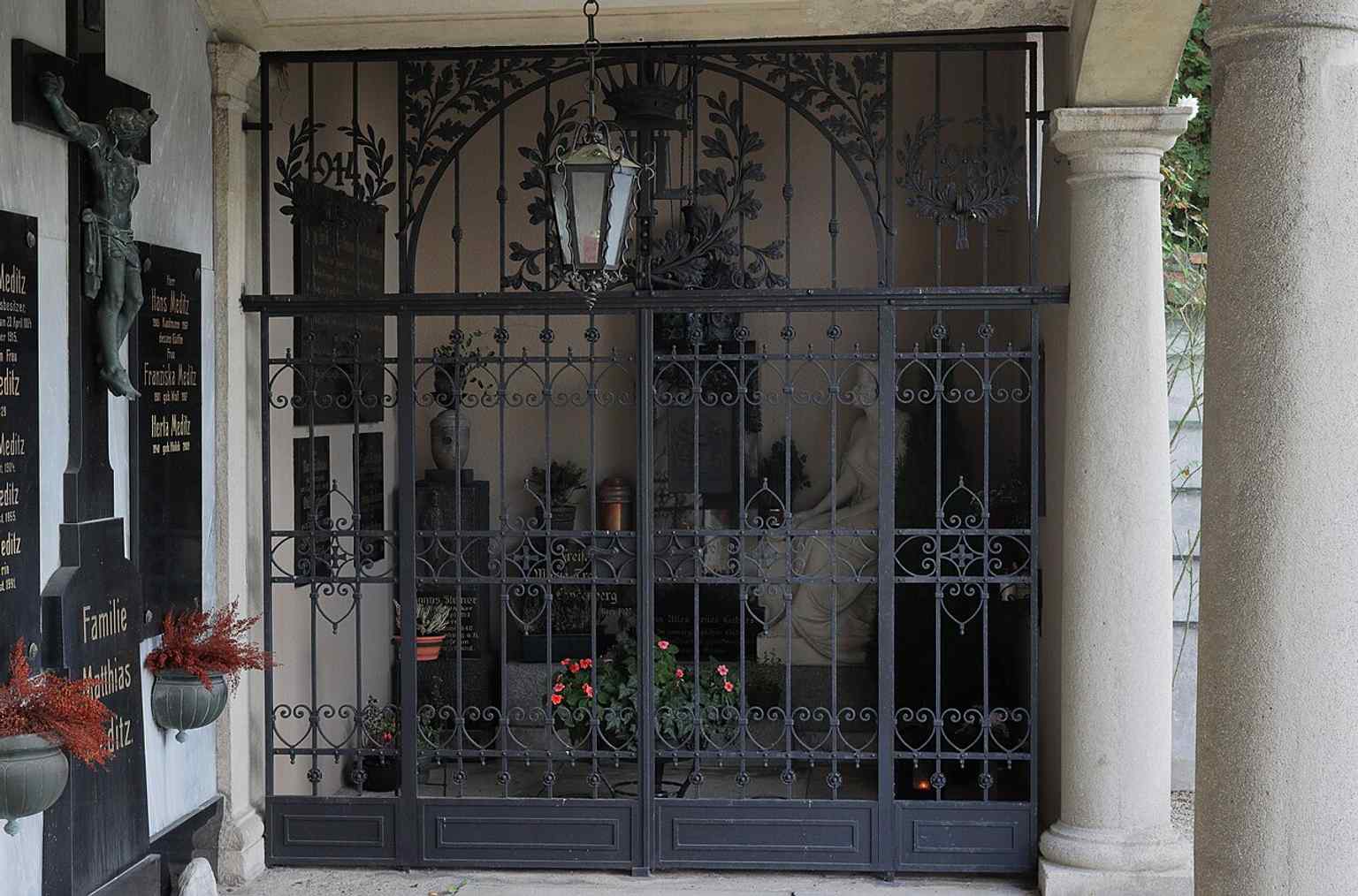
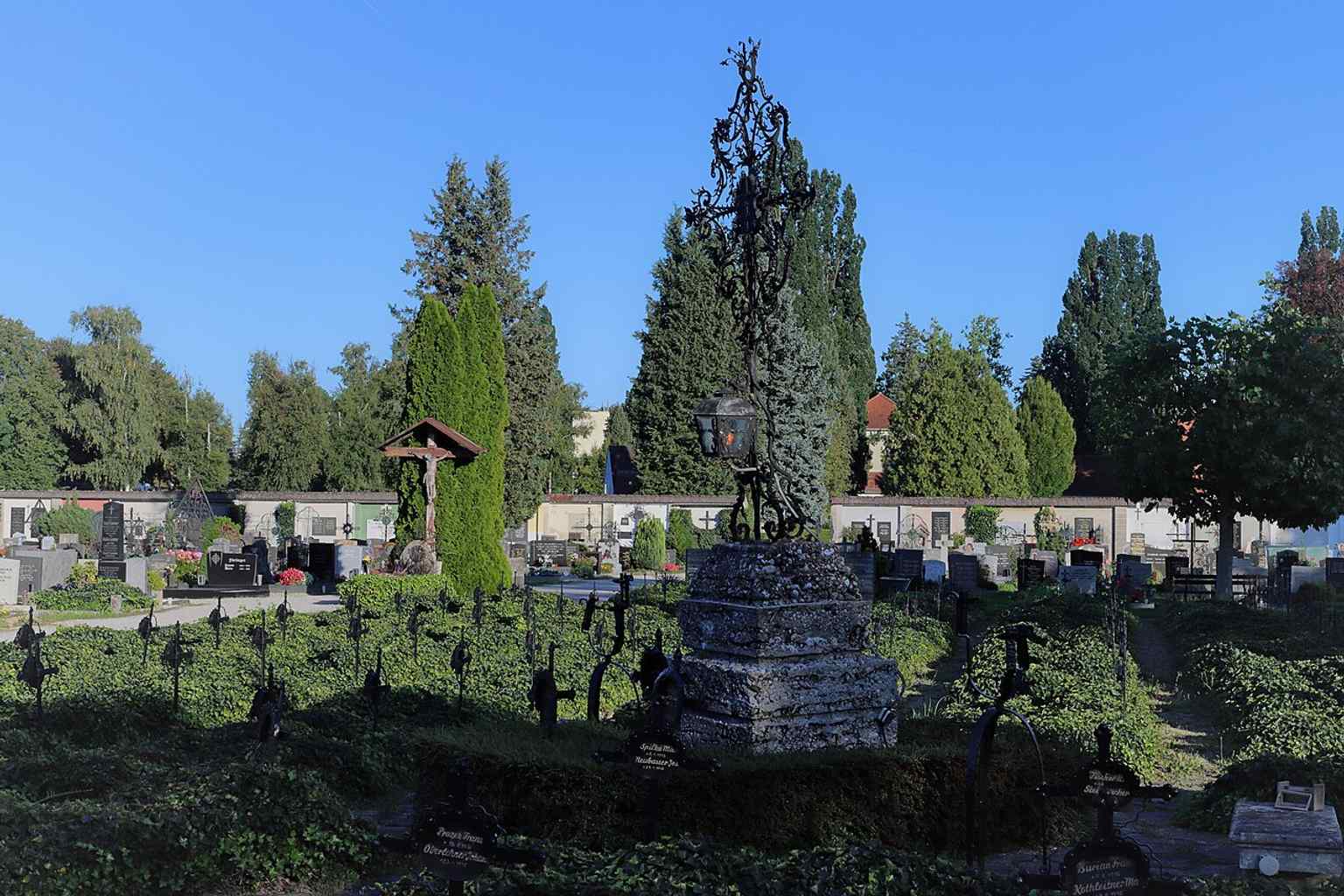
From right here, the entrance tells the whole story. Tabor Cemetery is huge by city standards, about four hectares with around eight thousand five hundred graves, but its heart is still the part finished in fifteen eighty-four: this Renaissance gate and the arcaded burial gallery beside it. That gallery holds eighty-four vaults and forms a Campo Santo, which simply means a sacred burial court laid out as a square. People decorated it richly with paintings and sculpture, so even a place of mourning carried a strong sense of craft.
Steyr did not build this cemetery out of elegance. The old burial ground by the parish church overflowed during the plague of fifteen forty-one and fifteen forty-two. Another site failed when the ground began sliding toward the defensive ditch in fifteen sixty-nine. Then a flood on the Enns and Steyr rivers swallowed the money set aside for this new cemetery. Only in fifteen eighty-three did work finally begin here. And because the Reformation unsettled church life, the cemetery stayed unconsecrated until the thirty-first of August, sixteen twenty-eight, when Abbot Anton the Second Spindler of Garsten blessed it.
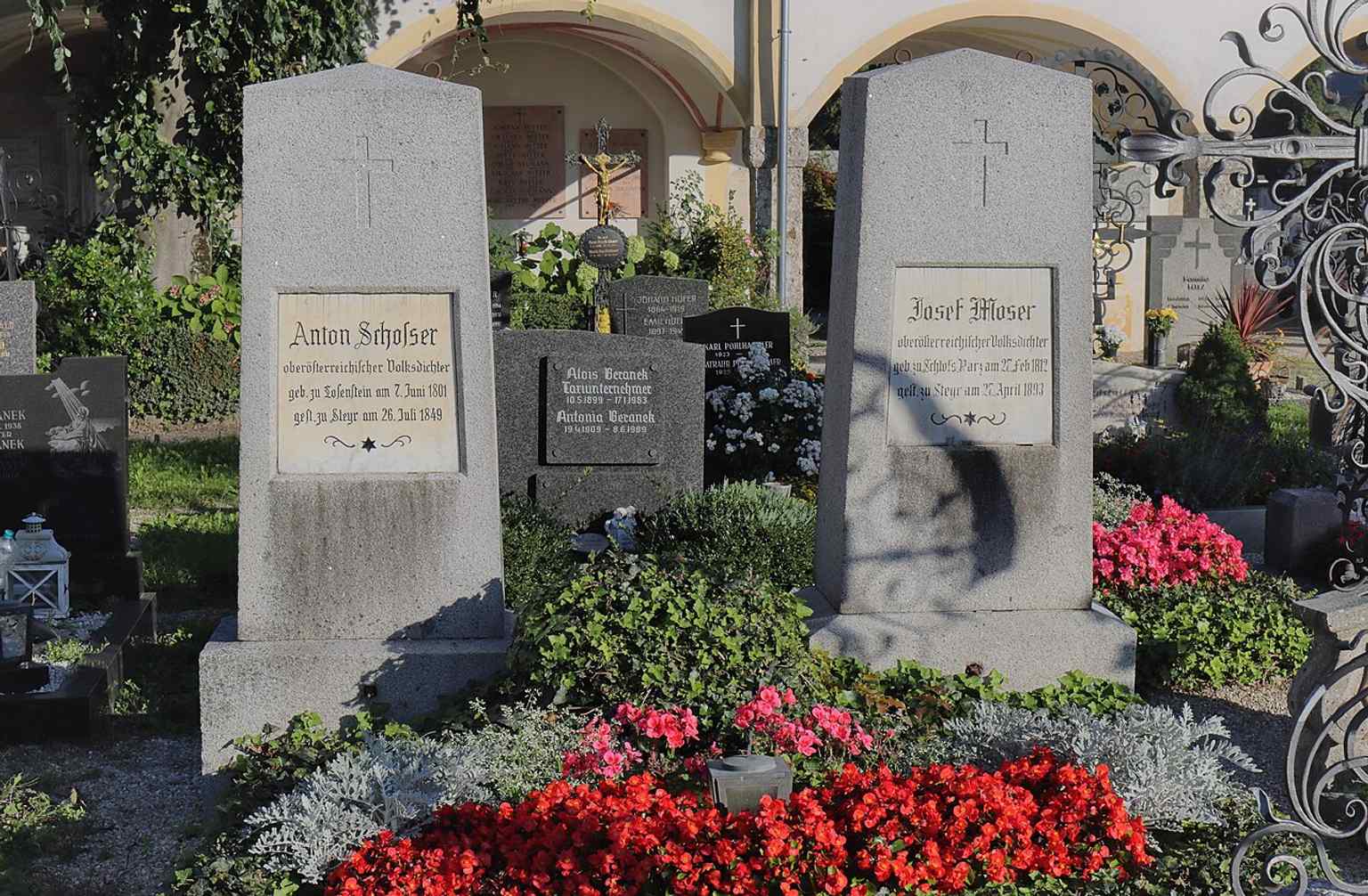
Over time, this place turned into a map of Steyr itself: a Protestant section in eighteen ninety-two, a Jewish cemetery from eighteen seventy-four with one hundred forty-one graves, soldiers' graves from the end of the First World War, and a mass grave for more than one hundred Hungarian Jews murdered on a death march in the war's final days. Friedrich Uprimny, who fled in nineteen thirty-nine and later returned as the city’s only Jewish citizen to come back after the war, devoted himself to restoring the Jewish cemetery.
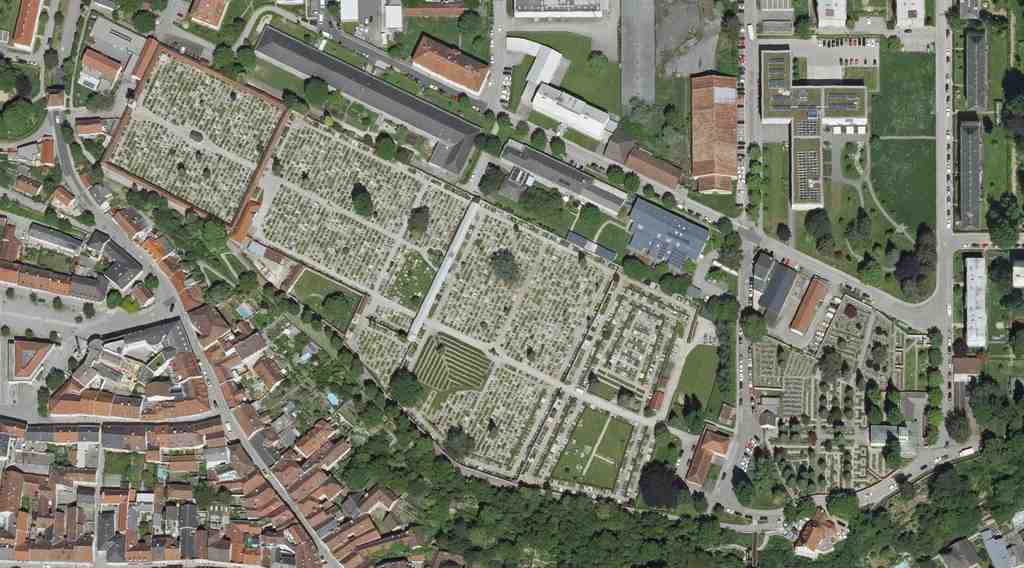
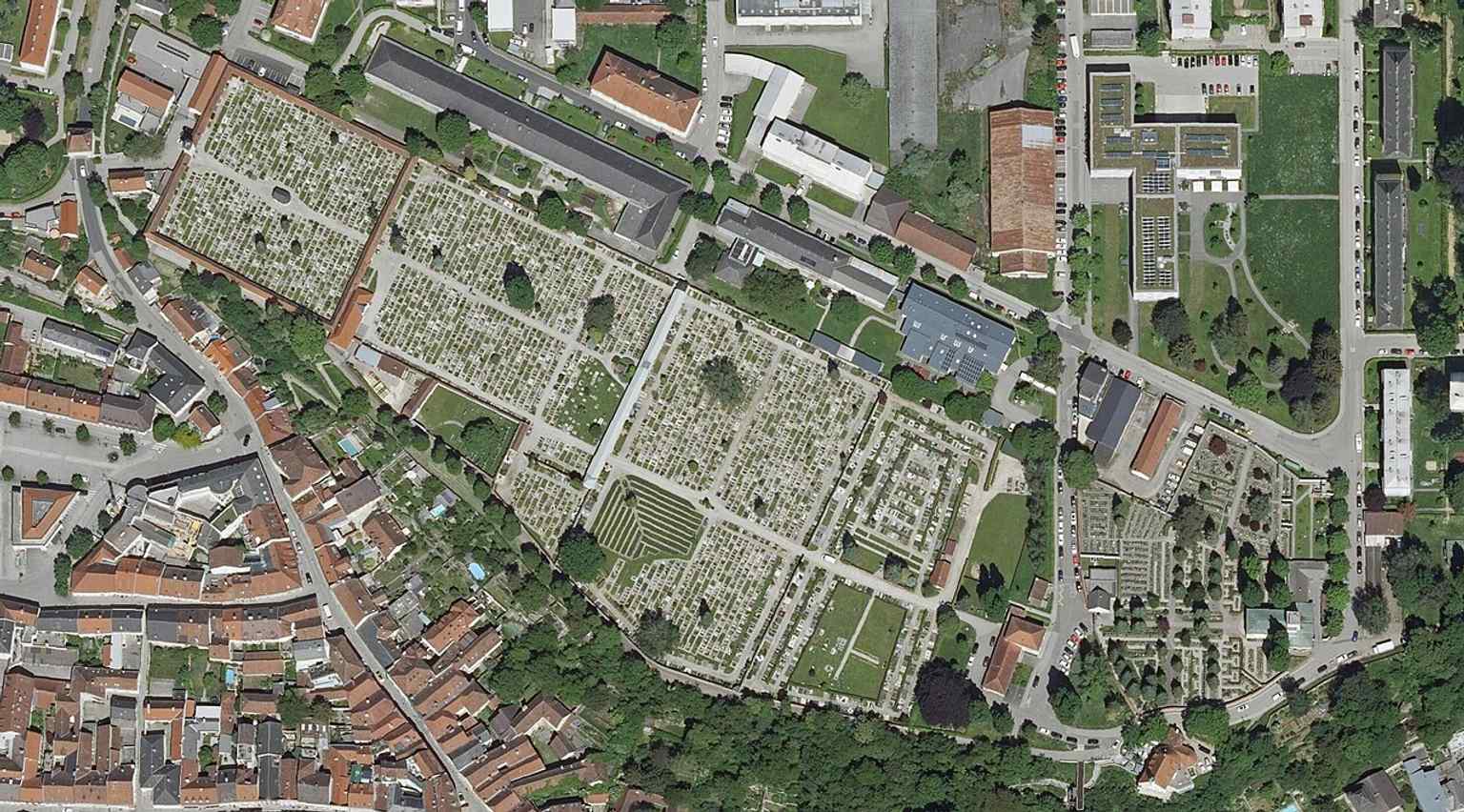
If you want, compare the earlier view in the app; the old bell-tower gateway still anchors everything, even as the setting around it feels more contemporary now. On your screen, the aerial photo shows the earth cemetery and the neighboring urn cemetery side by side like two chapters of the same story.
A clear aerial view showing the main Tabor Cemetery and the adjacent urn cemetery at Tabor, matching the site’s dual cemetery layout described in the history.Photo: Fotosː BEV - Bundesamt für Eich- und Vermessungswesen / Bearbeitung (Stitch, Tonwertkorrektur)ː Christoph Waghubinger, Wikimedia Commons, CC BY 4.0. Cropped & resized.
Writers like Marlen Haushofer and industrial giants like Josef Werndl rest here now, and the cemetery stays open daily from seven in the morning until eight in the evening.
4.8 across the App Store and Google Play. Here's a few we keep coming back to.
starstarstarstarstar
This tour was such a great way to see the city. The stories were interesting without feeling too scripted, and I loved being able to explore at my own pace.
Started this tour with a croissant in one hand and zero expectations. The app just vibes with you, no pressure, just you, your headphones, and some cool stories.