
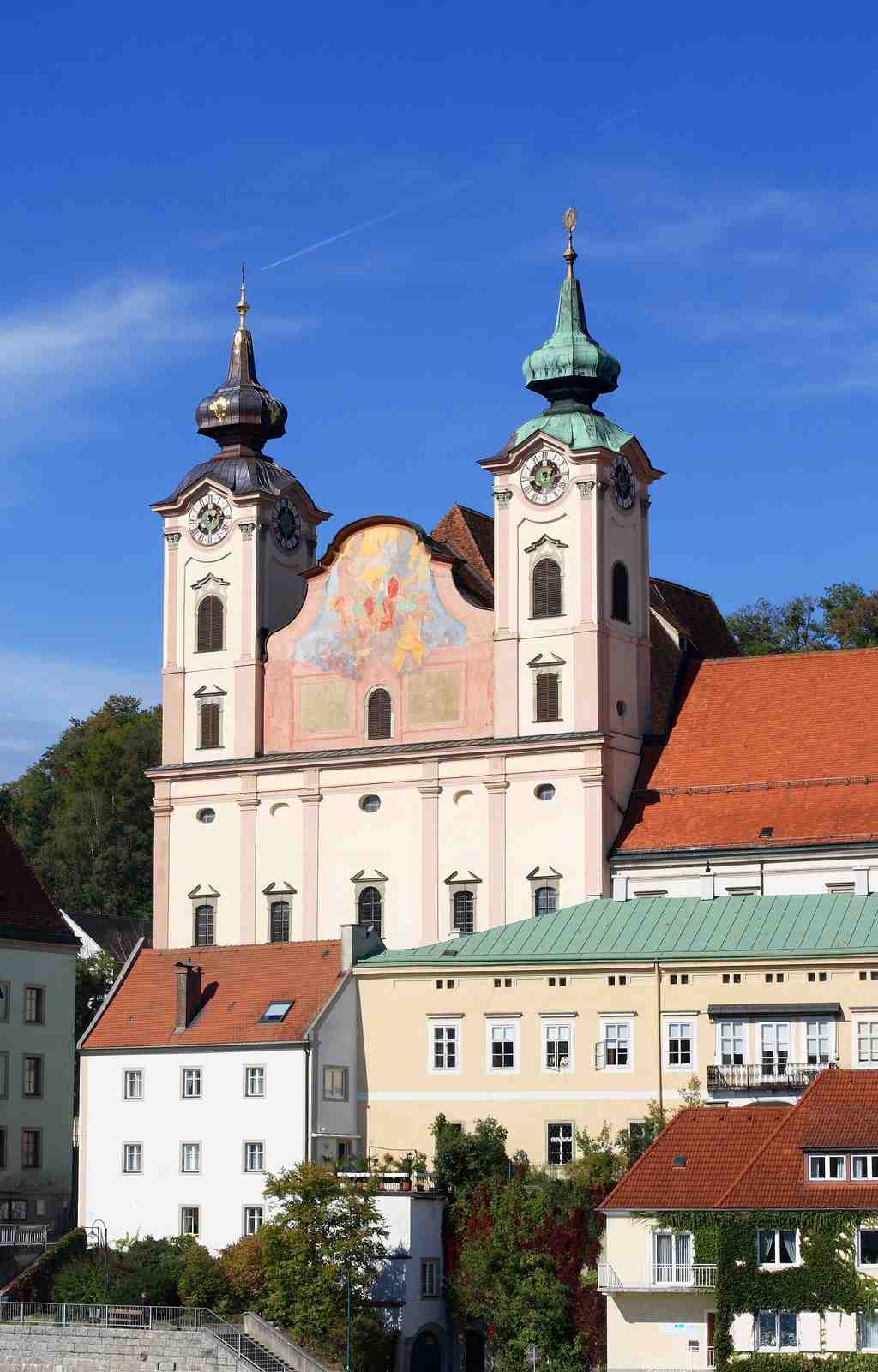
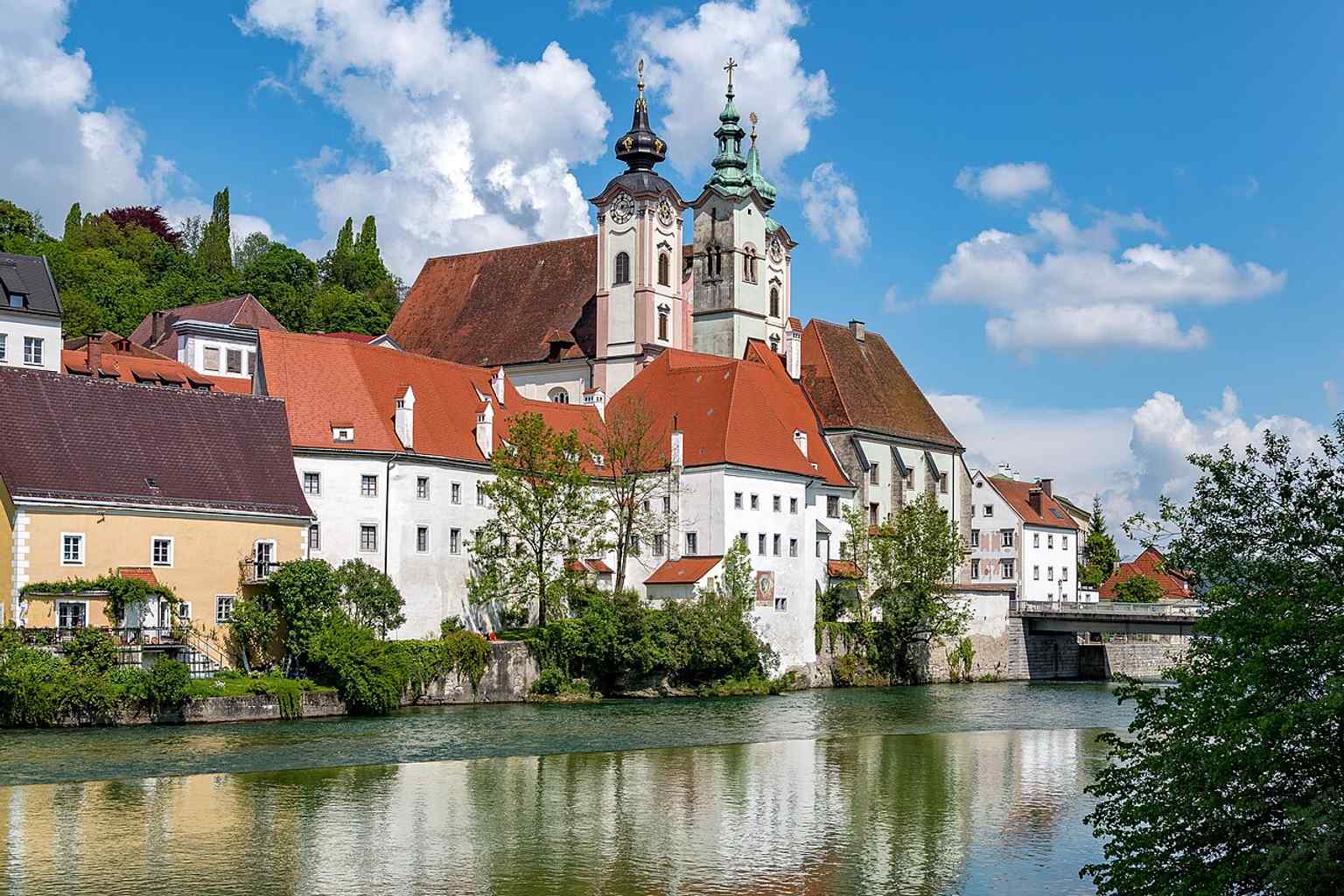
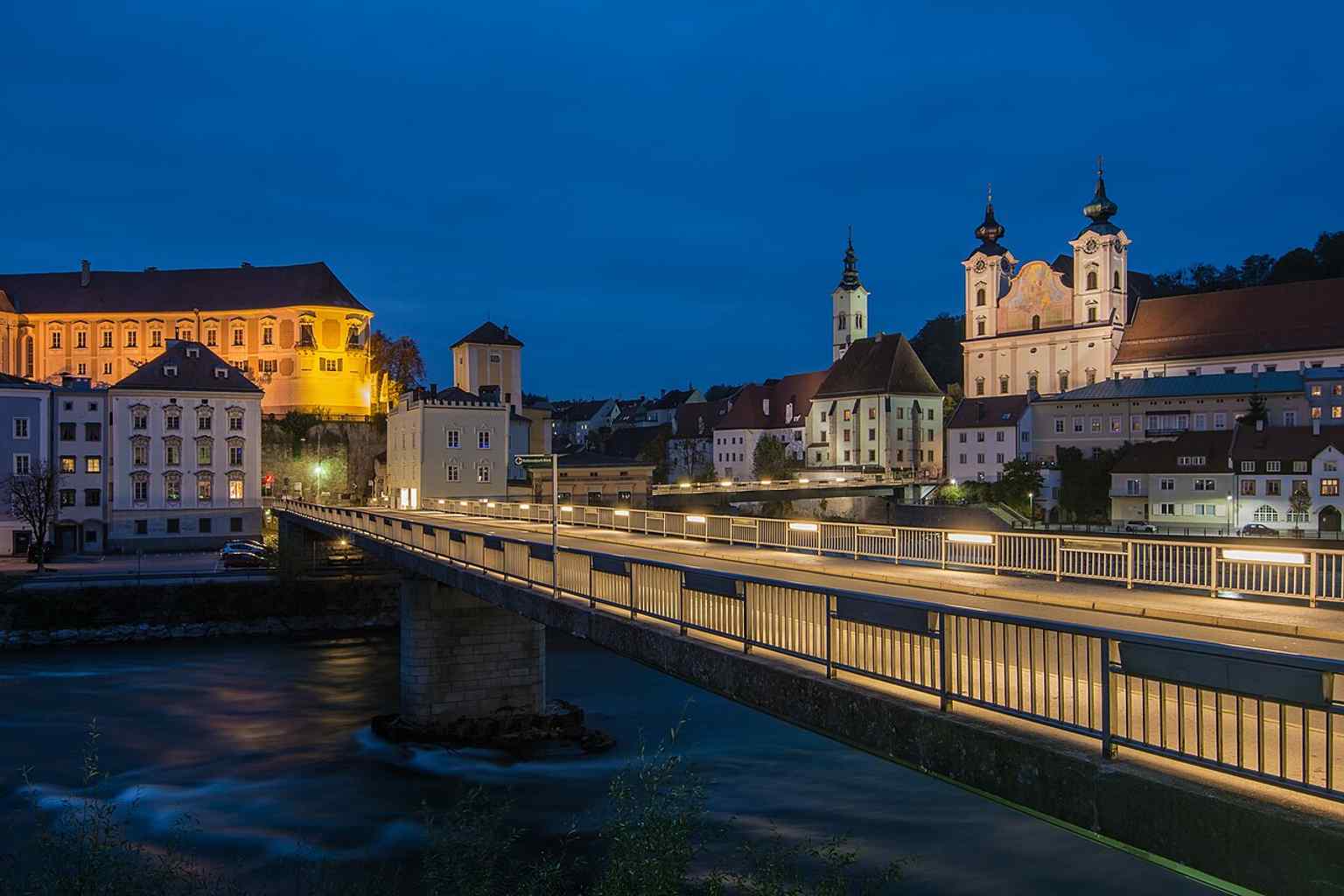
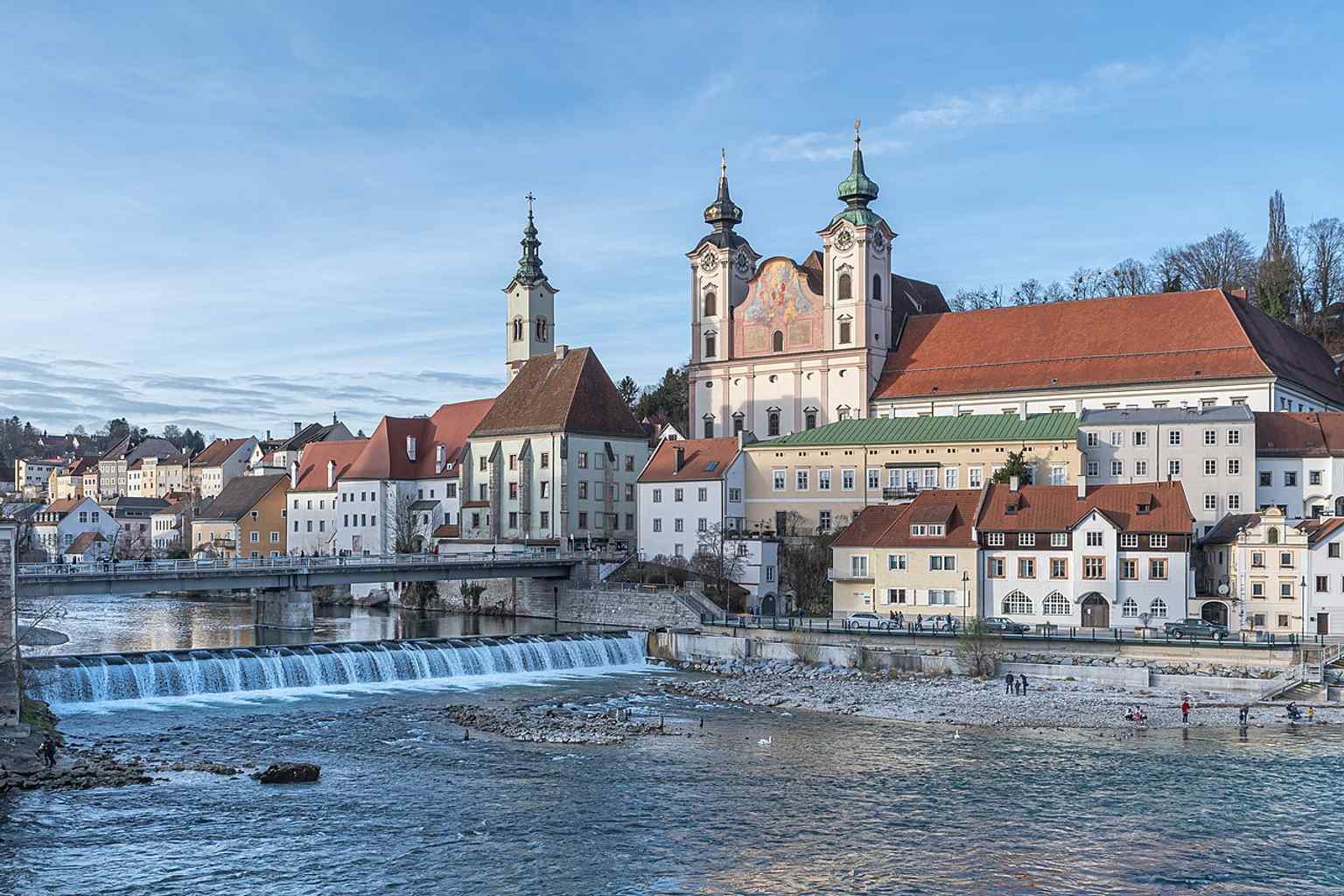
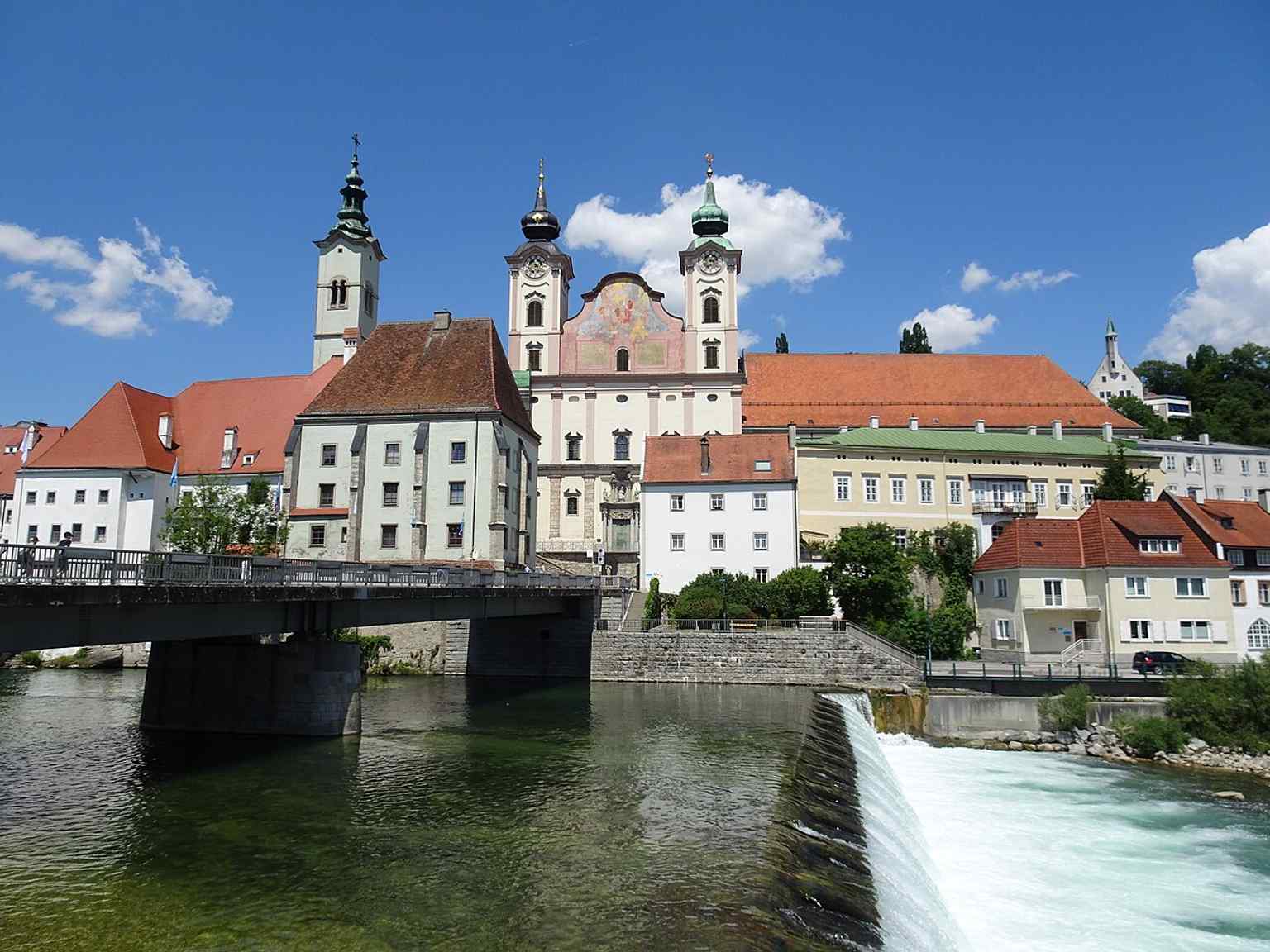
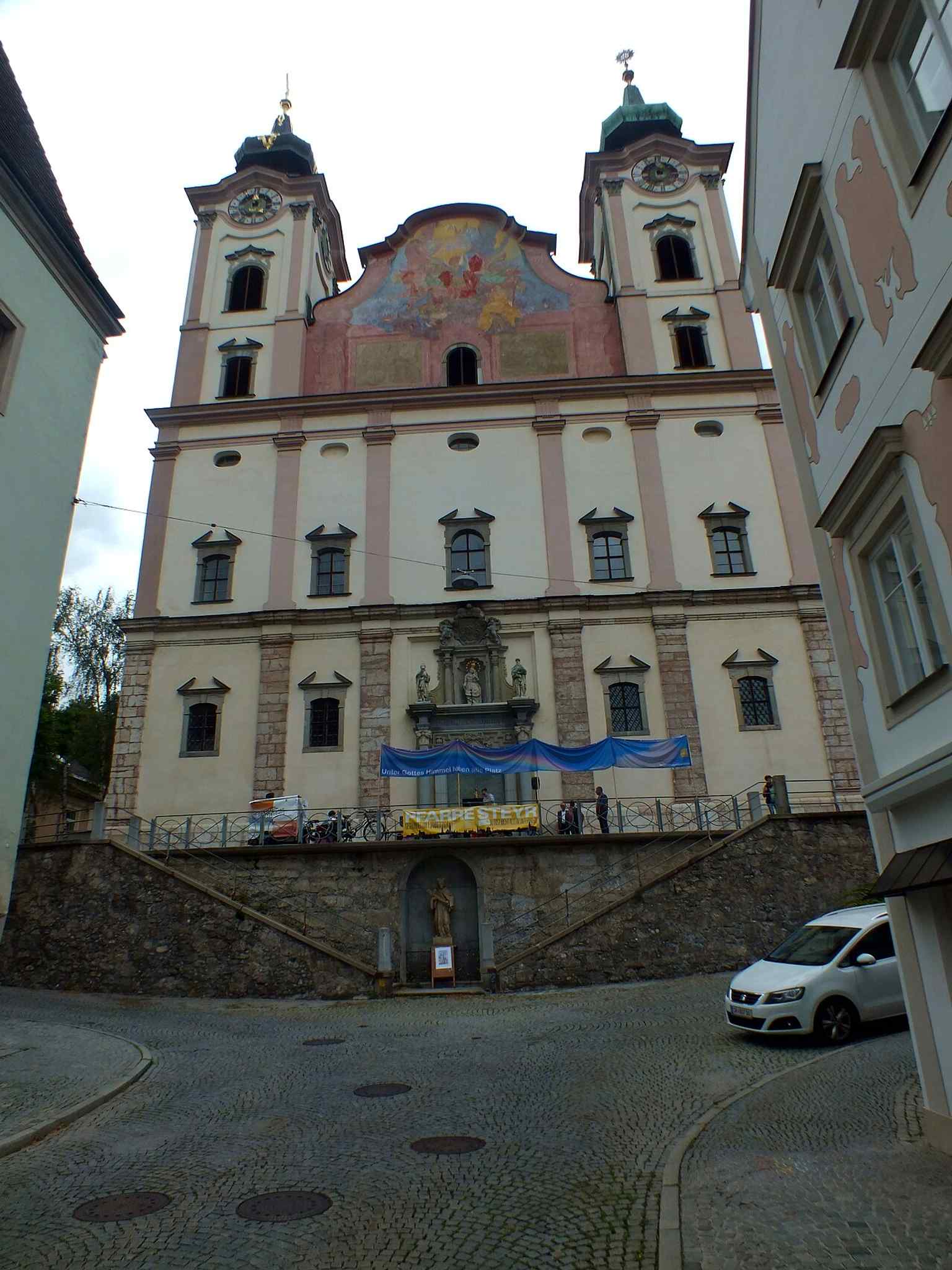
On your left, look for a pale stone church with a tall twin-towered façade, a broad rectangular front, and a monumental portal crowned with statues and a noble coat of arms.
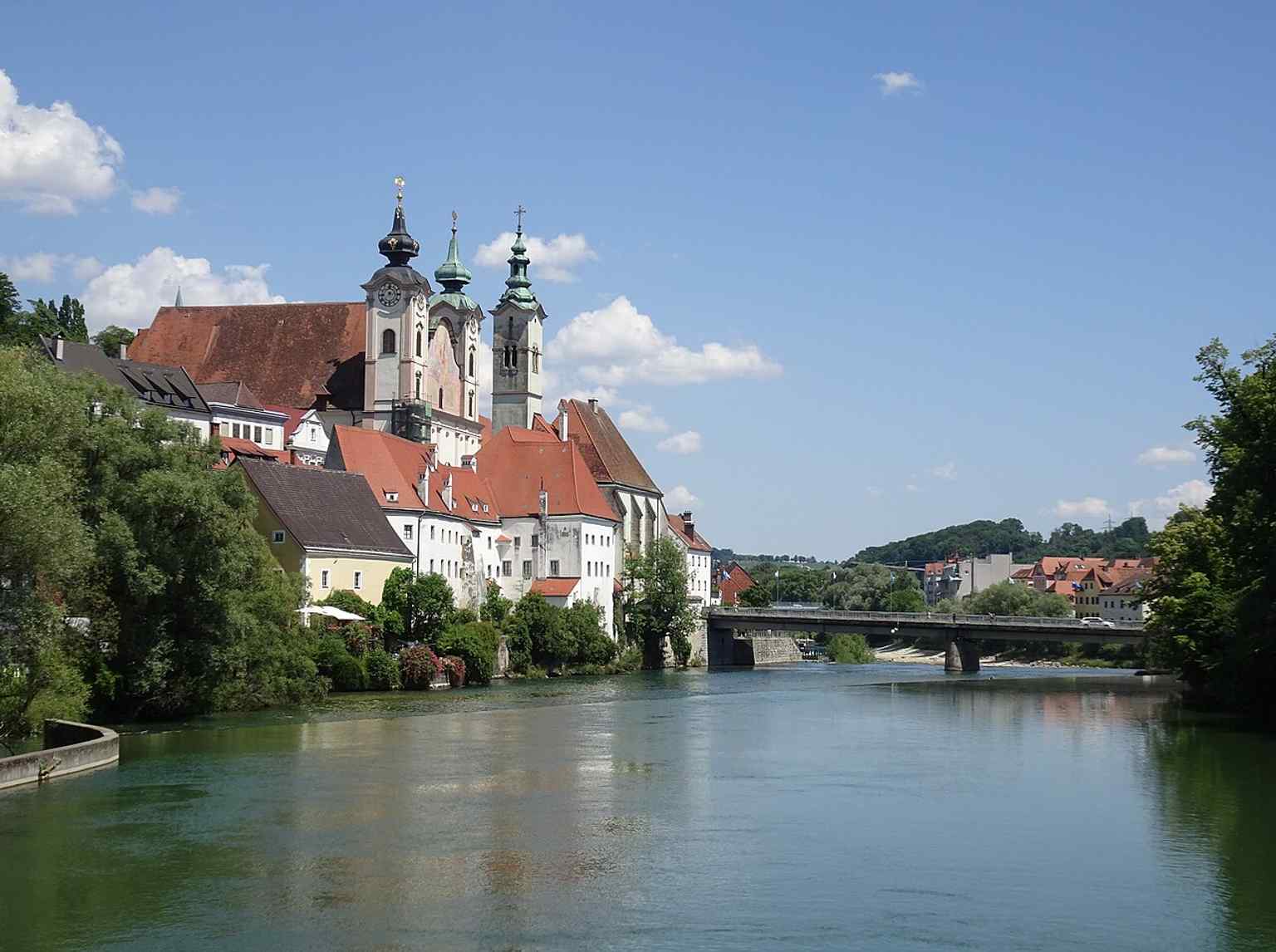
This is St. Michael, and it really knows how to make an entrance. It doesn’t just sit in Steyrdorf... it presides. Set up high above the bridgehead where the Steyr meets the Enns, the church was meant to be seen from a distance, almost like a spiritual checkpoint at the edge of town. If you glance at the image in the app, you’ll catch that commanding perch right away.
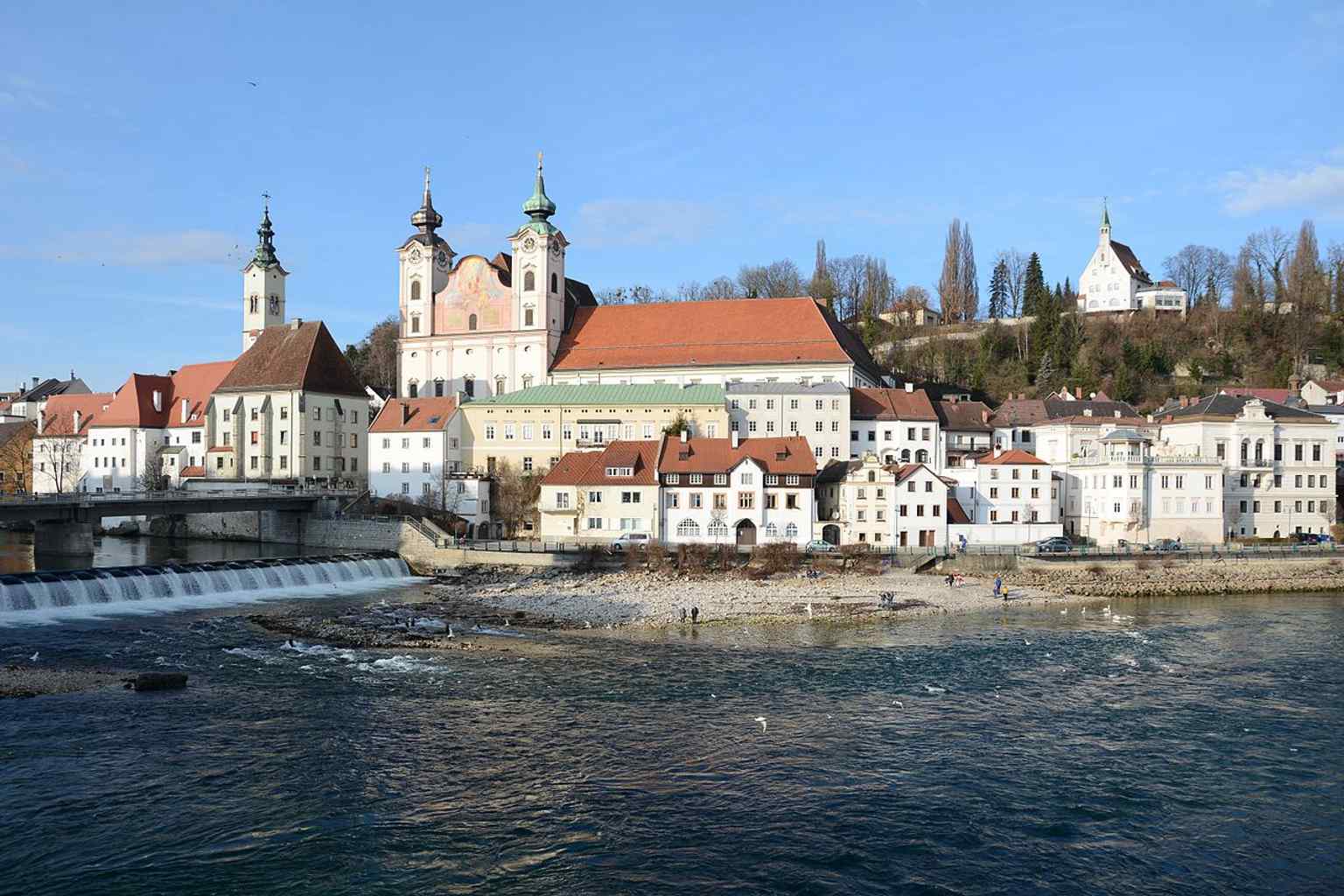
Its story starts with a major shift in the city’s religious life. In the early seventeen hundreds? No, earlier than that... in the sixteen thirties, Steyr had been a strong center of Protestant belief, but the Habsburg rulers pushed hard for Catholic renewal. The Jesuits became one of their sharpest tools. Emperor Ferdinand the Second ordered the city in sixteen thirty to hand over eleven houses near the Bürgerspital so the Jesuits could build a church and a college. By sixteen thirty-four, those houses came down. By sixteen forty-eight, the new church stood ready for consecration.
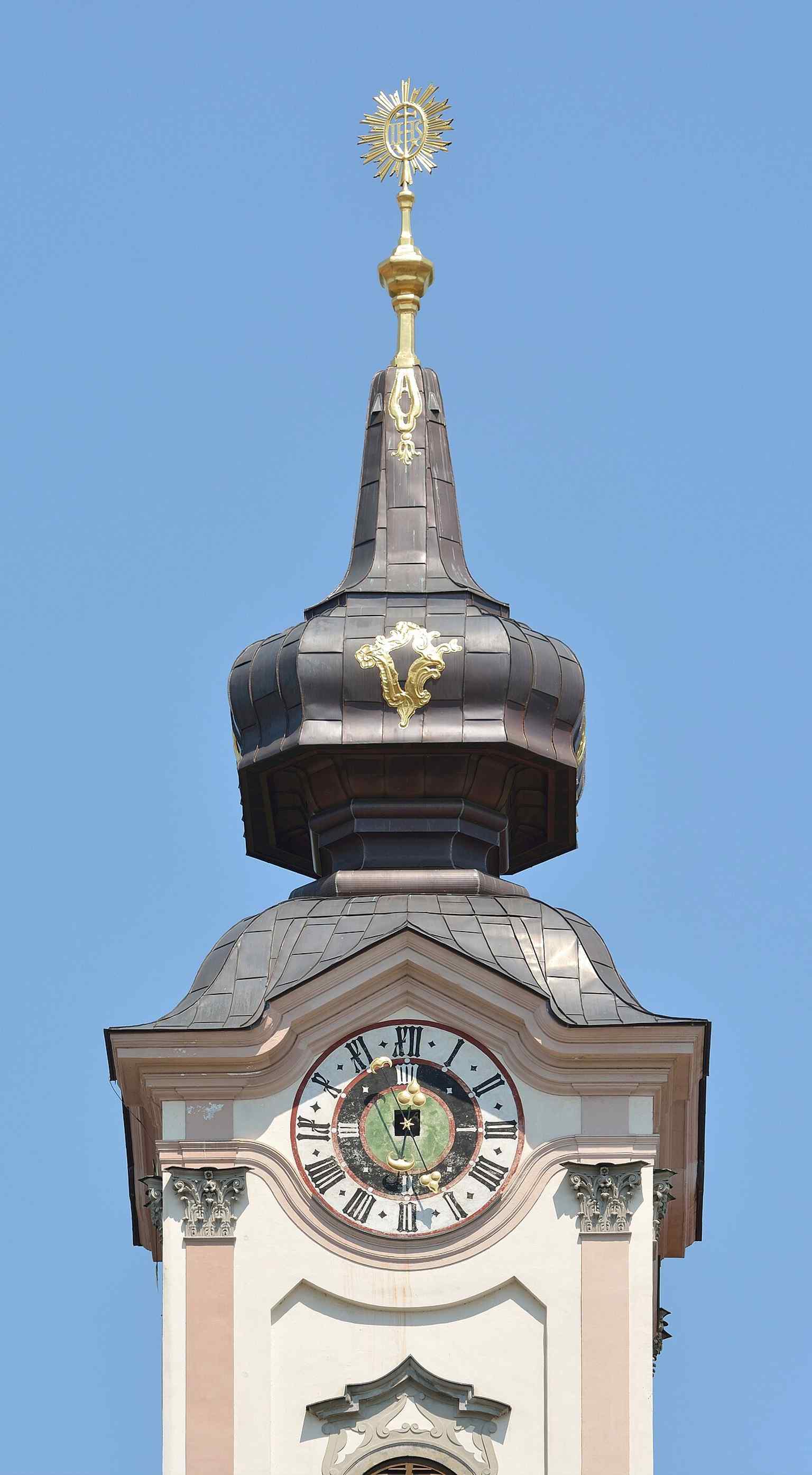
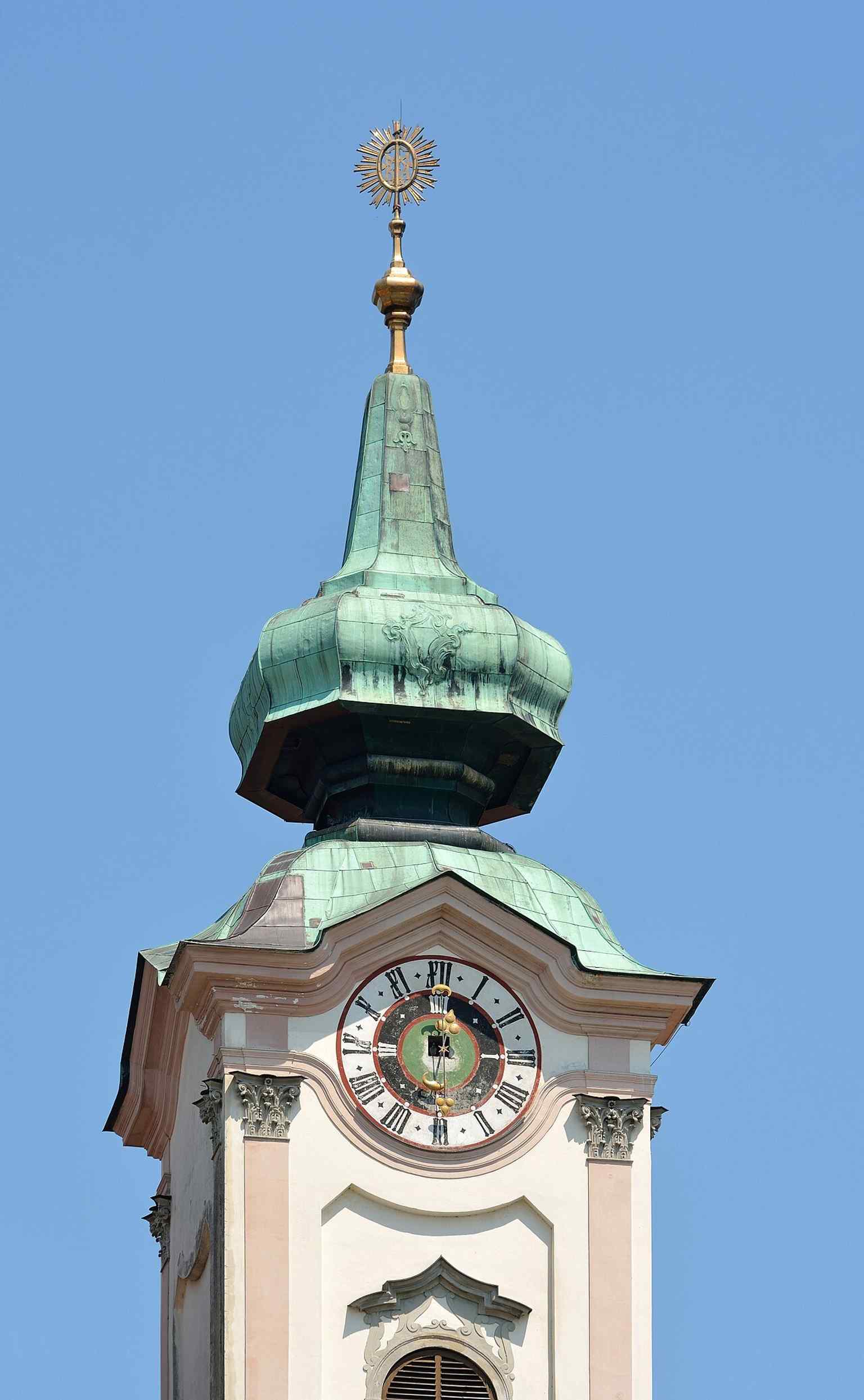
And then it kept growing. The twin towers reached completion in sixteen seventy-seven, and later, between seventeen sixty-six and seventeen seventy, builders raised them even higher, giving the whole façade that extra vertical swagger. Around the same time, Franz Xaver Gürtler painted the gable with a dramatic fall of the angels.
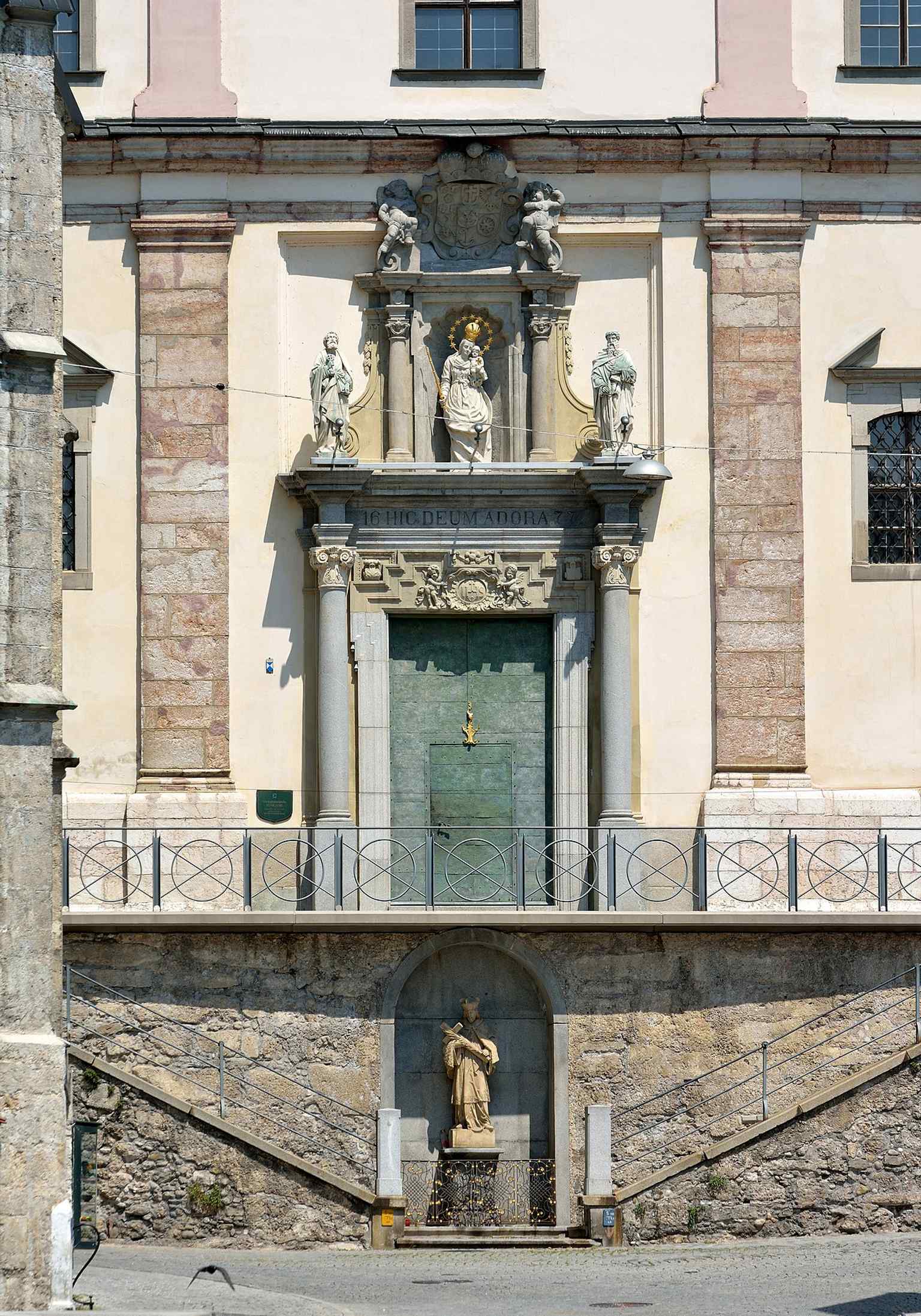
Now, zero in on the portal. It carries the Latin words Hic Deum Adora... “Here, adore God.” That’s not subtle, and the Jesuits were not trying to be subtle. If you want the details up close, check the portal image in the app. Above the entrance, you’ve got the Virgin Mary with the child Jesus, flanked by Peter and Paul, and at the top sits the Eggenberg coat of arms, a little badge of political power folded into sacred space.
The building itself follows a Jesuit model made famous in Munich: one big central hall, rather than a forest of aisles, with side chapels tucked into the walls. Inside, that main hall carries a barrel vault - a ceiling shaped like the inside of a long stone tunnel - and the decoration leans late Baroque and early Classical. The high altar shows the Archangel Michael defeating Lucifer, which fits the whole personality of the place: disciplined, theatrical, absolutely sure of itself.
After the Jesuit order was dissolved in seventeen seventy-three, the church lost its original role. But not for long. In seventeen eighty-five, Emperor Joseph the Second’s reforms turned this former Jesuit church into Steyr’s second parish church, serving the suburb here.
So St. Michael is more than a handsome façade. It’s a marker of power, education, religion, and city planning all rolled into one stone statement.
Let it linger for a second... and when you’re ready, we can continue on toward the urn cemetery at Tabor.






.jpg)
