AudaTours logoAudaTours

Stop 5 of 15

Marienkirche

Marienkirche
Steyr parish church
Steyr parish churchPhoto: Lewenstein, Wikimedia Commons, CC BY-SA 3.0 AT. Cropped & resized.

On your right, look for the pale stone Gothic church with its tall six-sided tower, pointed rooflines, and stepped buttresses bracing the outer walls.

This is Steyr’s parish church, dedicated to Saint Aegidius and Saint Coloman, and it’s the heavyweight sacred building of the city. It has been claiming this hill for a very long time. Historians trace the first church here back to around the year eleven hundred, and by twelve seventy-five it shows up in records during a property dispute, which is such a classic way for history to say, yep, this place mattered.

The church took hits early on. A city fire in thirteen oh three damaged it, but the really dramatic reinvention came in the fifteenth century, when Steyr grew rich and crowded enough to want a church that matched its ambition. In fourteen forty-three, the master builder Hans Puchsbaum, the same kind of top-tier architect you called when you wanted something grand, began a full late-Gothic rebuild. He finished the raw structure of the choir, the sacred space around the altar, and after his death Laurenz Spenning vaulted it and added the tower... even though the tower had not been part of the original plan.

Then came the fire of fifteen twenty-two. And this one was brutal. Flames started near the city bath, jumped into the timber and scaffolding of the unfinished church, and tore through the roof, altars, windows, paintings, the ornate pulpit, and even the bells bought at huge expense. Imagine the whole place as a half-finished masterpiece suddenly turning into a frame of smoke and falling beams.

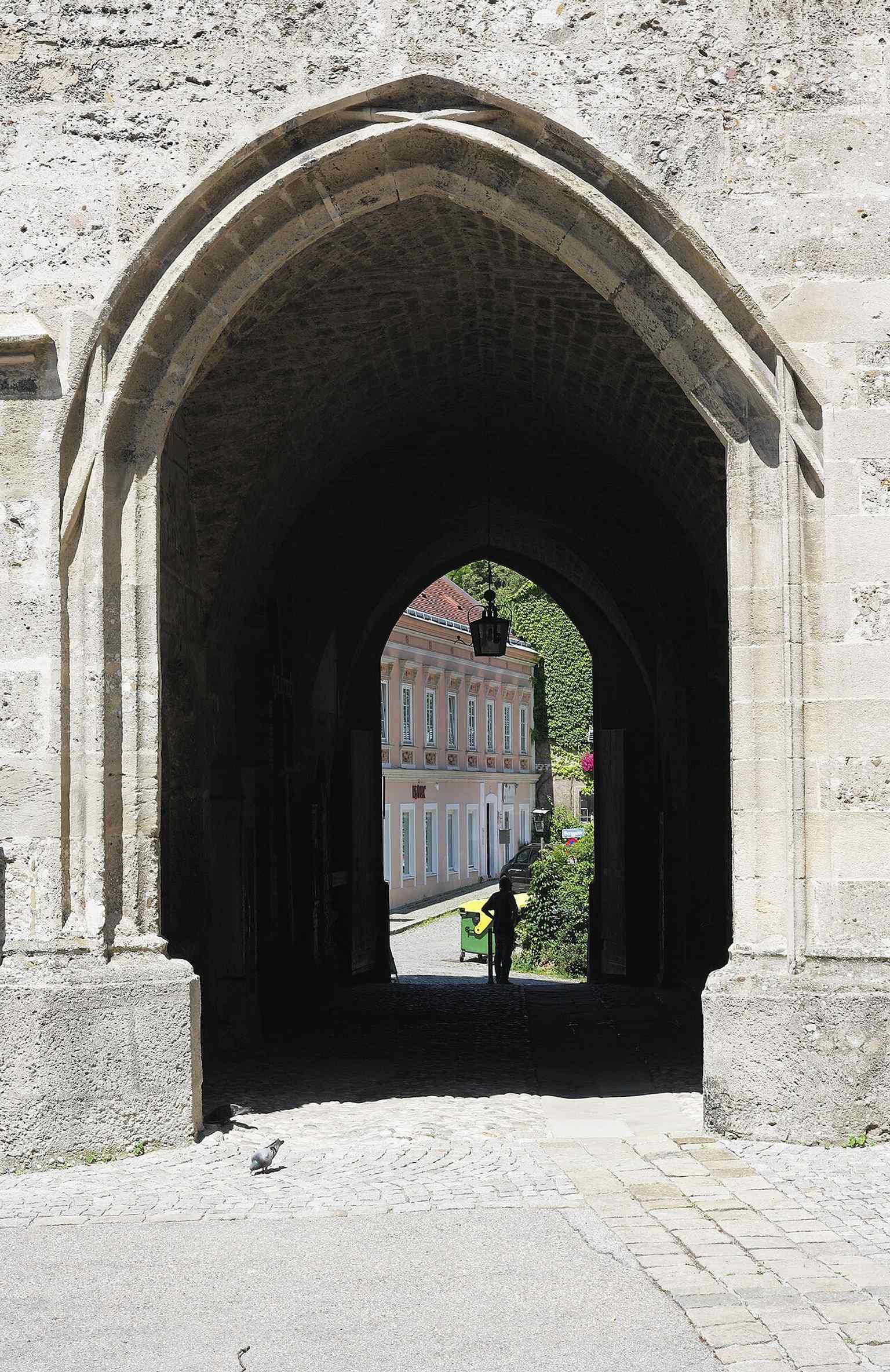
The church kept changing with the city. In the later sixteen hundreds, after many townspeople embraced Luther’s teachings, Protestant preachers worked here, and the broad west porch took shape during that era. Later, Benedictine monks from Garsten steered the church toward Baroque style. Then the nineteenth century pulled a sharp turn back again: Adalbert Stifter, better known as a writer, pushed for a return to Gothic character, so much of the Baroque interior got removed in favor of a more medieval look.

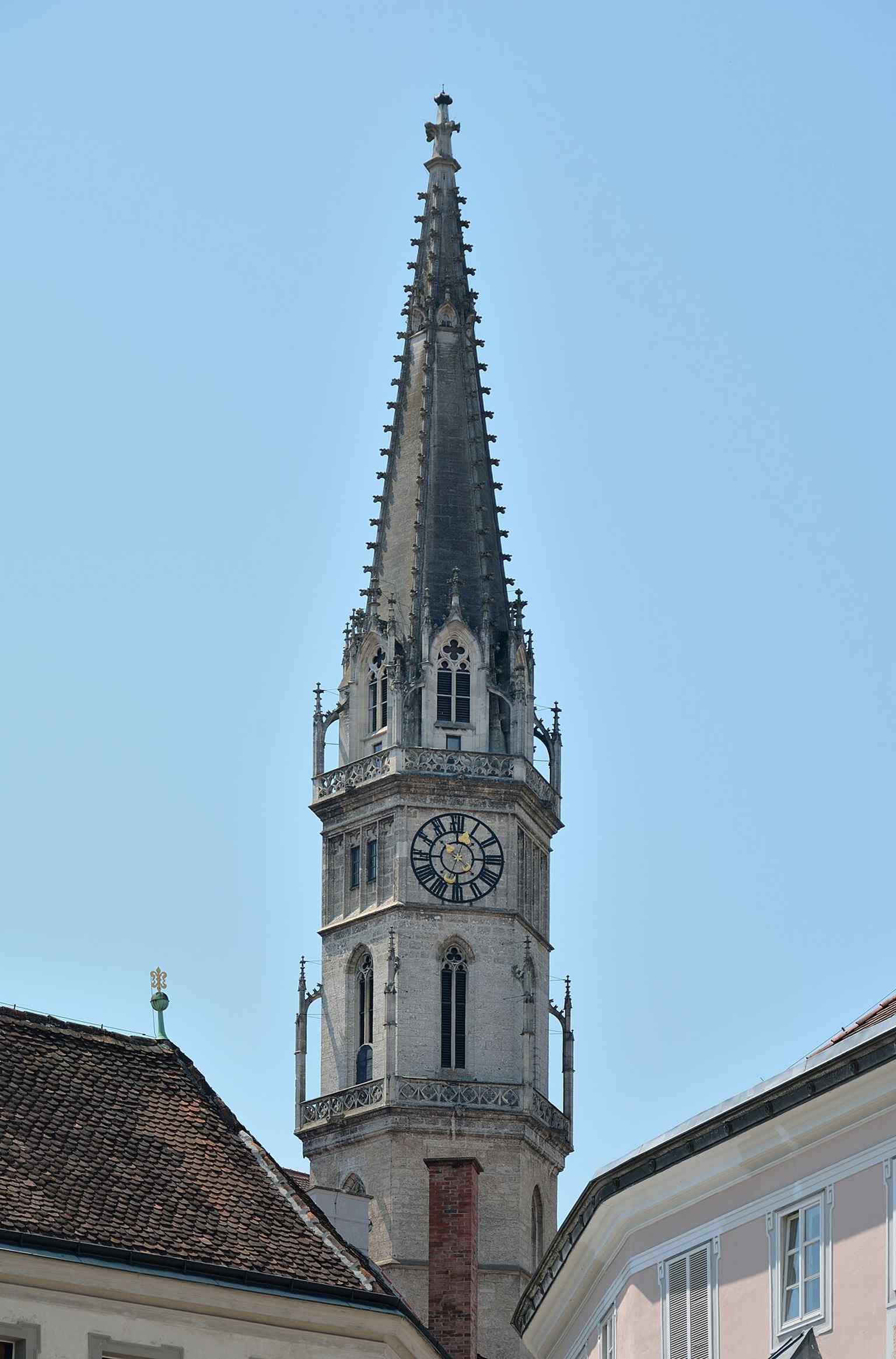
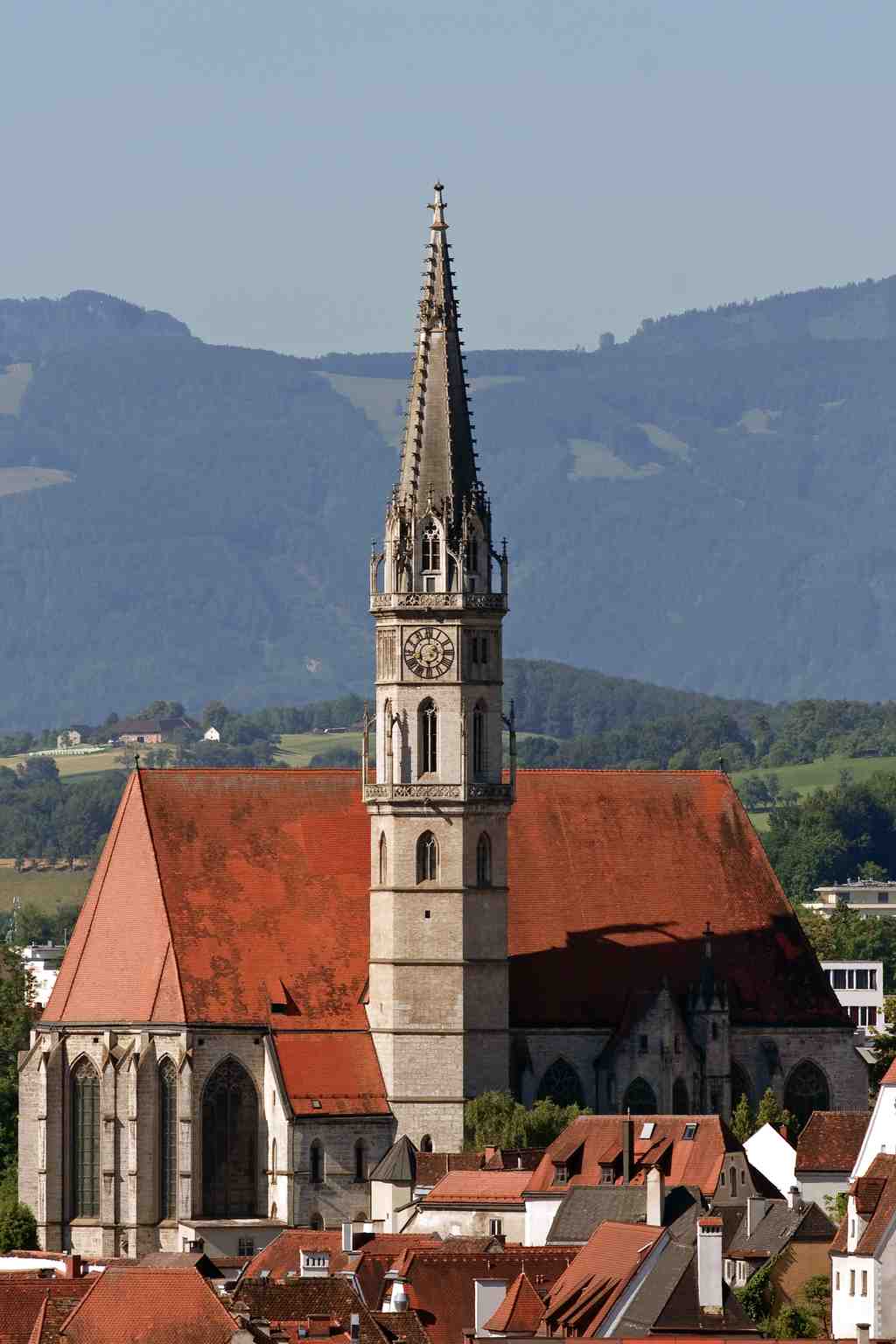
The tower you see now tells another rescue story. After the tower spire burned in eighteen seventy-six, Friedrich von Schmidt designed the present neo-Gothic stone top, finished in eighteen eighty-nine. That’s why the tower feels so exact and vertical, like a stone finger pointing over Steyr.

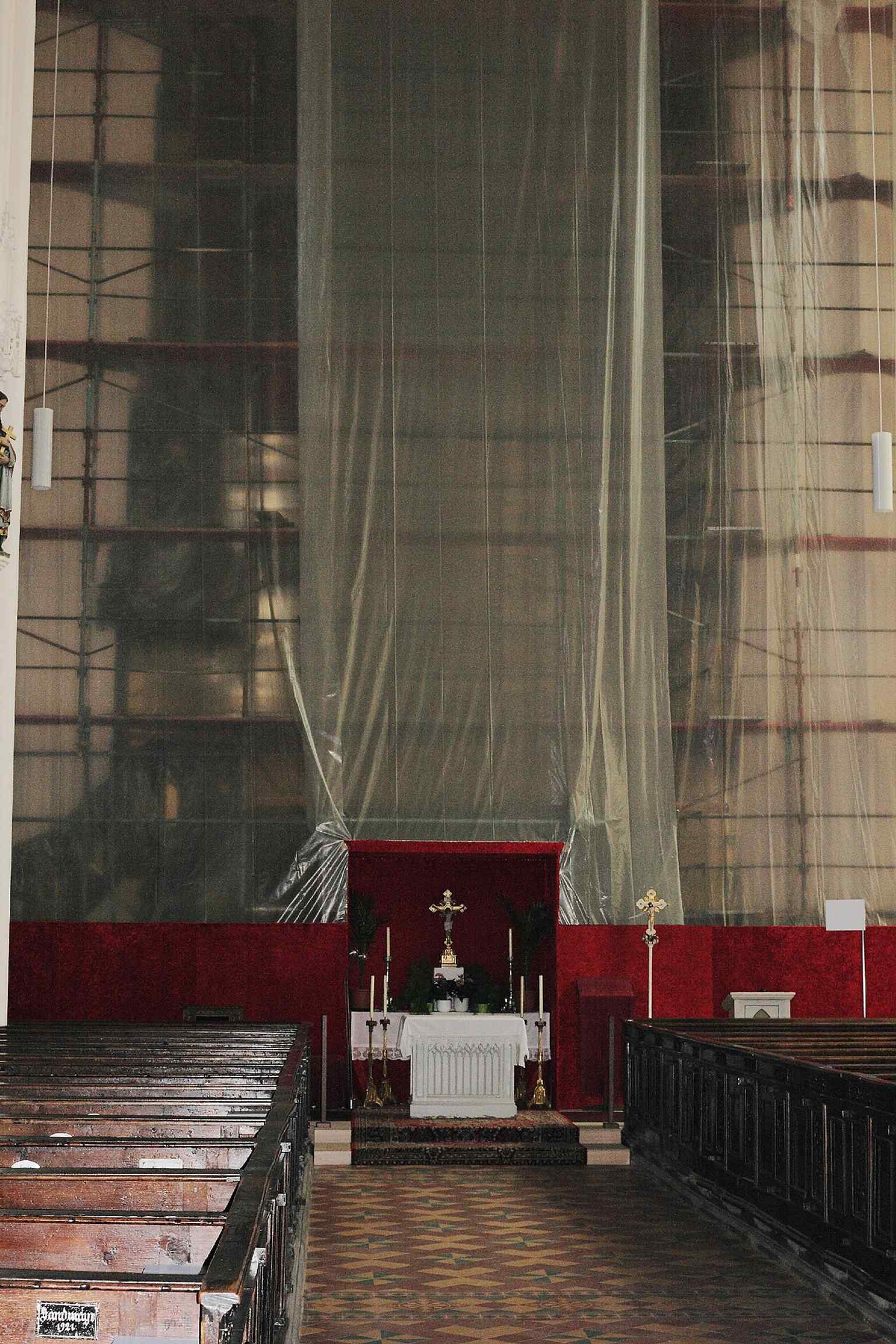
If you feel like it, compare the earlier restoration view in the app; it shows how the interior went from scaffolding into the bright late-Gothic space visitors admire now.

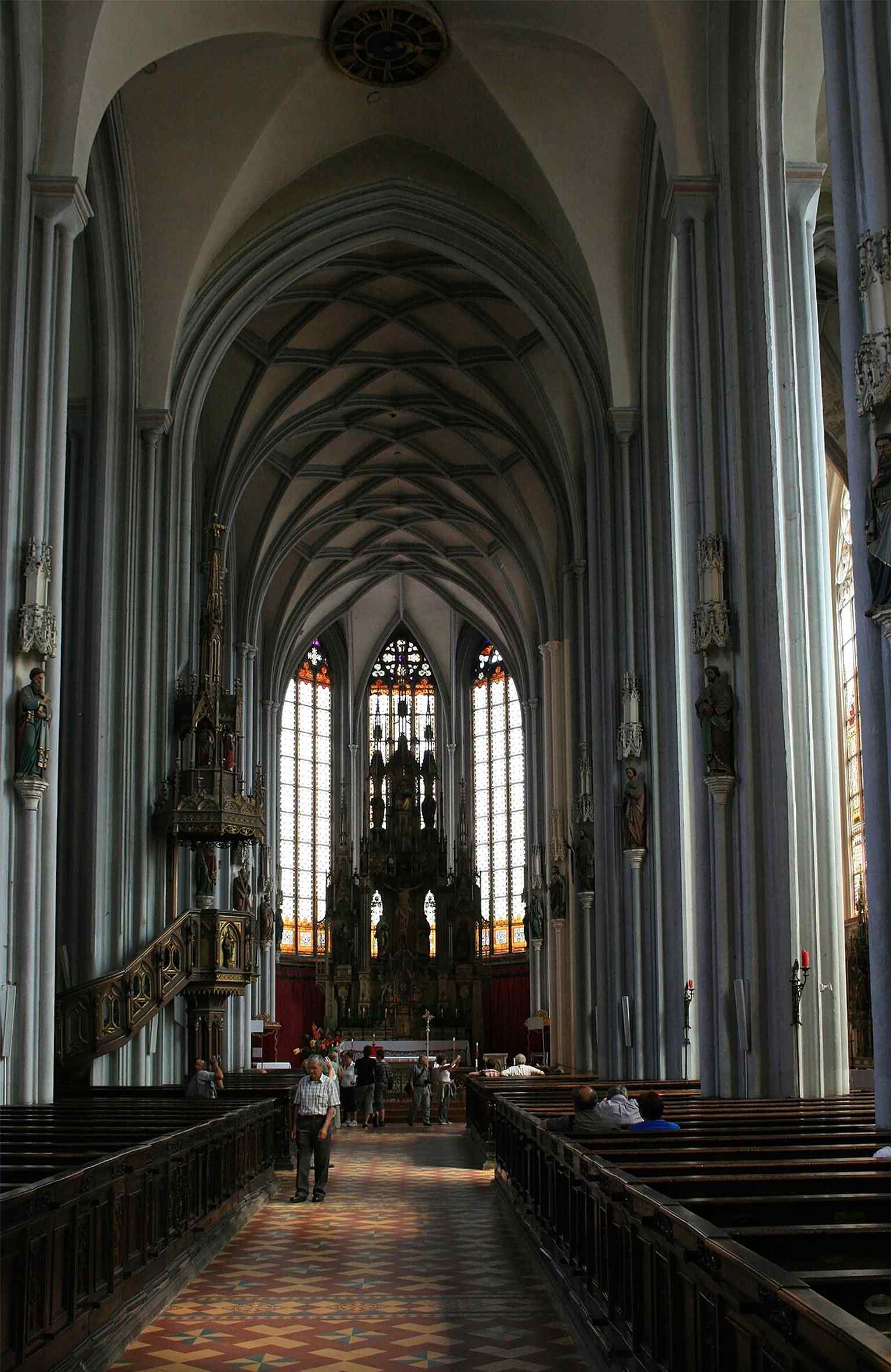
That interior restoration ran from two thousand nine to two thousand fifteen, conserving the vaults, glass, roof timbers, and bringing back the white and yellow coloring. And if you glance at the image on your screen, you can see the nave, the church’s big central hall, opening into that soaring Gothic space.
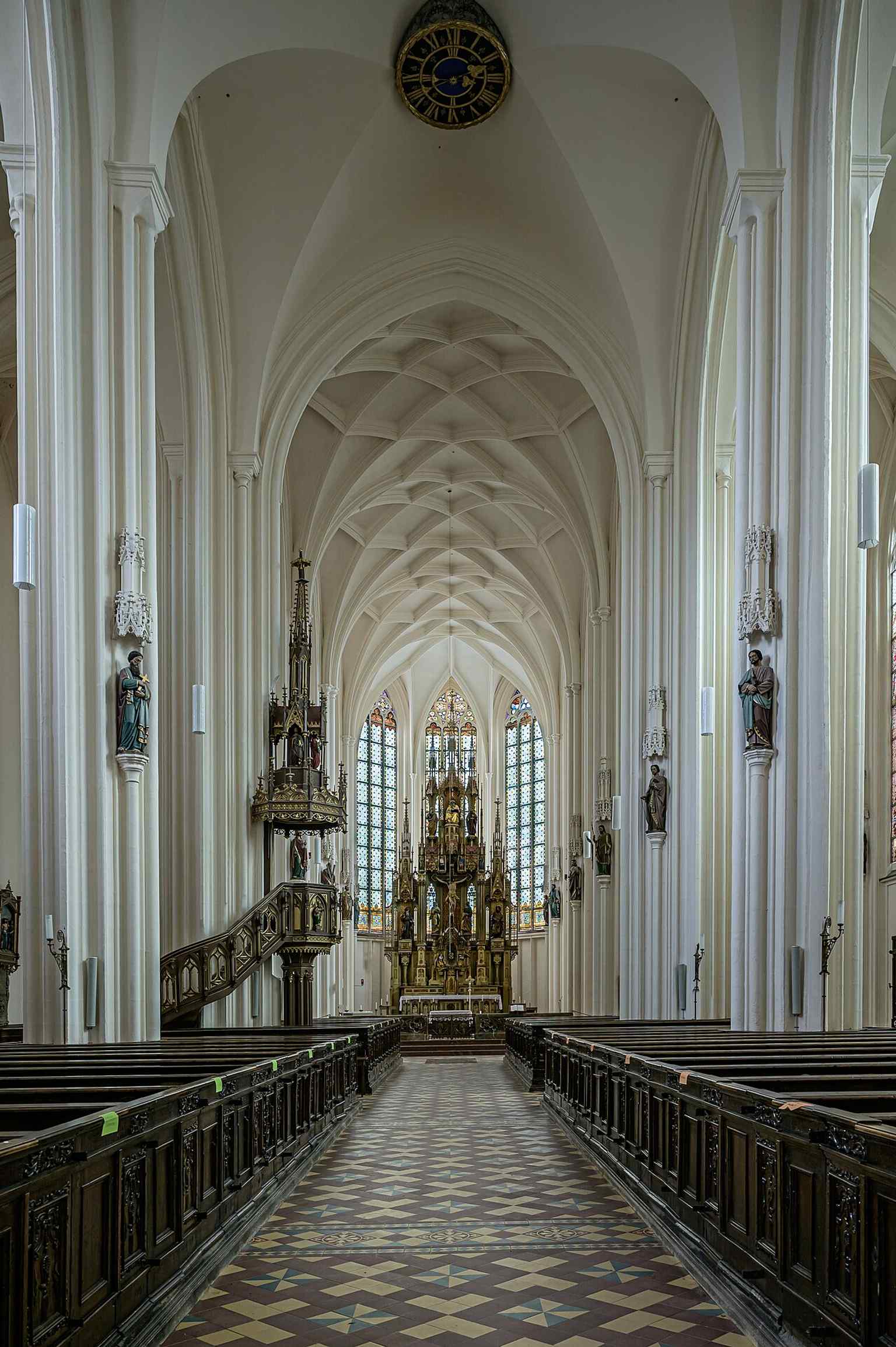
The nave seen from inside shows the church as a bright hall space, with the historic pew carvings and Gothic proportions still clearly visible.
The nave seen from inside shows the church as a bright hall space, with the historic pew carvings and Gothic proportions still clearly visible.Photo: Isiwal, Wikimedia Commons, CC BY-SA 4.0. Cropped & resized.

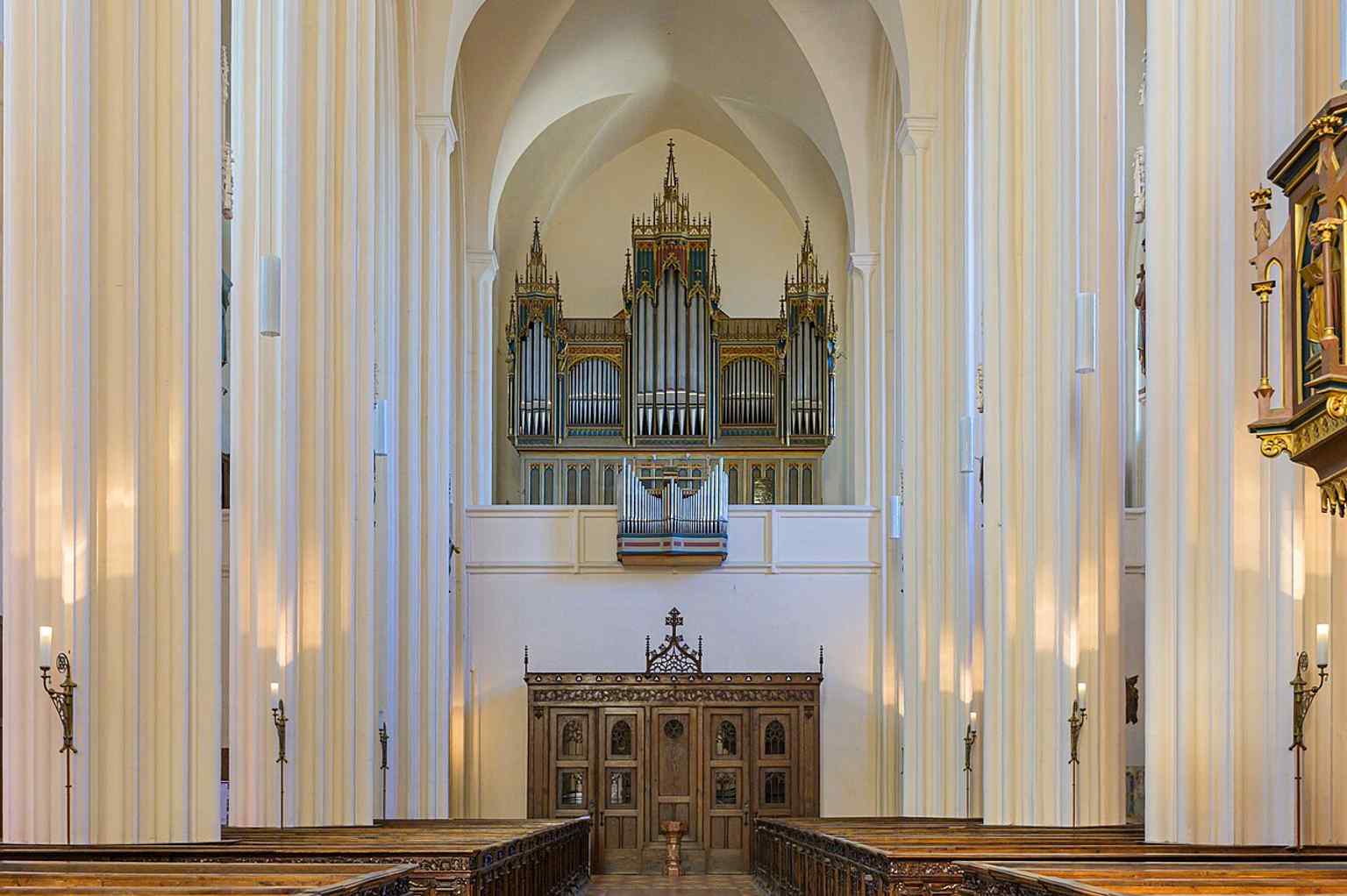
One more lovely twist: Anton Bruckner spent summers living in the old parish house opposite from eighteen eighty-four onward, and between eighteen eighty-six and eighteen ninety-four he composed parts of his eighth and ninth symphonies here. He even advised changes to the organ. So this church did not just gather prayers... it also quietly fed music that still shakes concert halls.

This place feels less like one building and more like a stack of centuries learning how to sing together.

Take a second with it, and when you’re ready, we can wander on to the next stop.
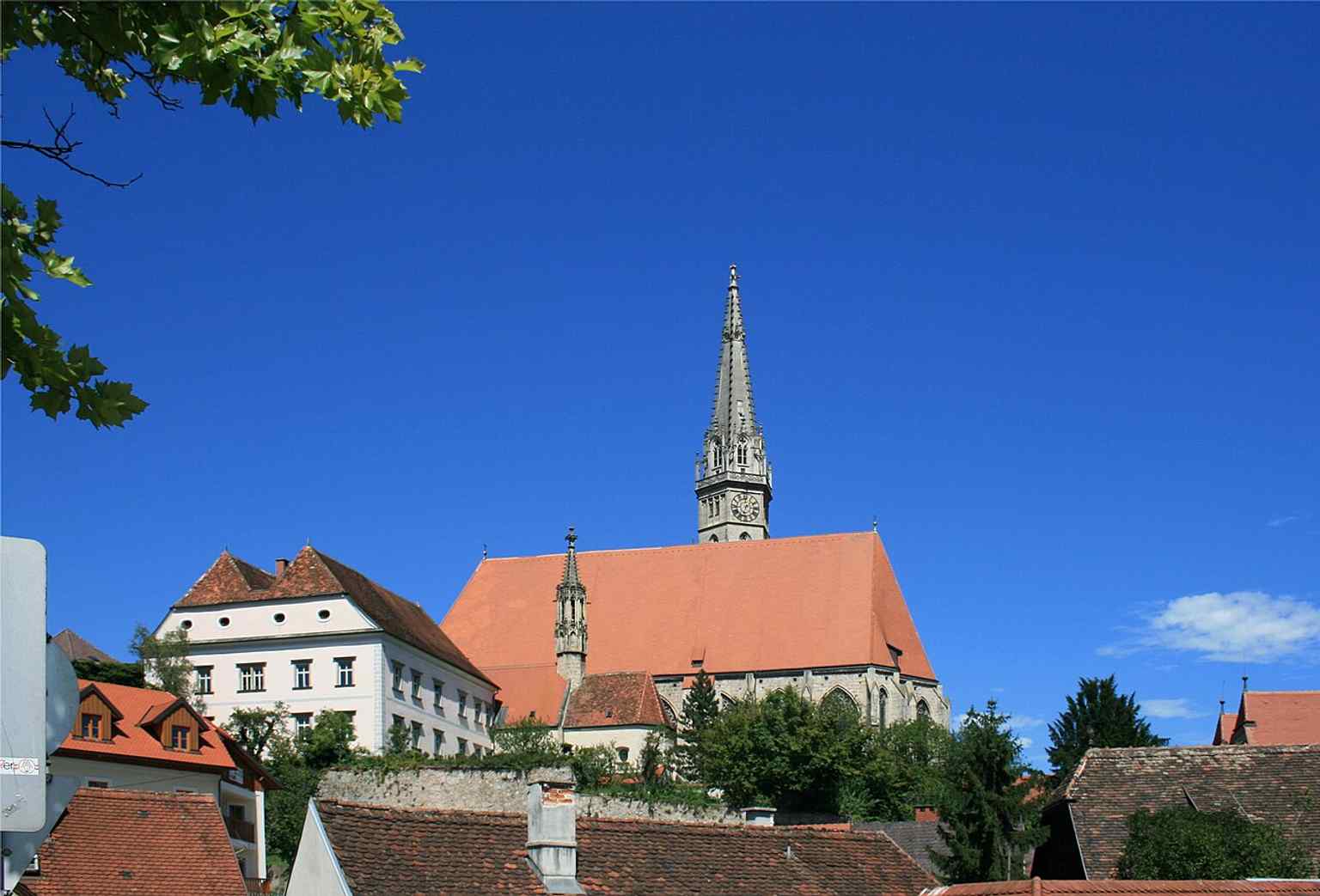
A classic side view that places the church together with the Margaretenkapelle and old parish house, showing the whole landmark ensemble on the hill above Steyr.
A classic side view that places the church together with the Margaretenkapelle and old parish house, showing the whole landmark ensemble on the hill above Steyr.Photo: Christoph Waghubinger (Lewenstein), Wikimedia Commons, CC BY-SA 3.0. Cropped & resized.
The tower view highlights the church’s powerful vertical landmark, including the neo-Gothic top added after the 1876 fire.
The tower view highlights the church’s powerful vertical landmark, including the neo-Gothic top added after the 1876 fire.Photo: P e z i, Wikimedia Commons, CC BY-SA 3.0 at. Cropped & resized.
Looking through the west porch toward the old lane network, this image shows the 16th-century west entrance that was expanded during the Reformation era.
Looking through the west porch toward the old lane network, this image shows the 16th-century west entrance that was expanded during the Reformation era.Photo: Christoph Waghubinger (Lewenstein), Wikimedia Commons, CC BY-SA 4.0. Cropped & resized.
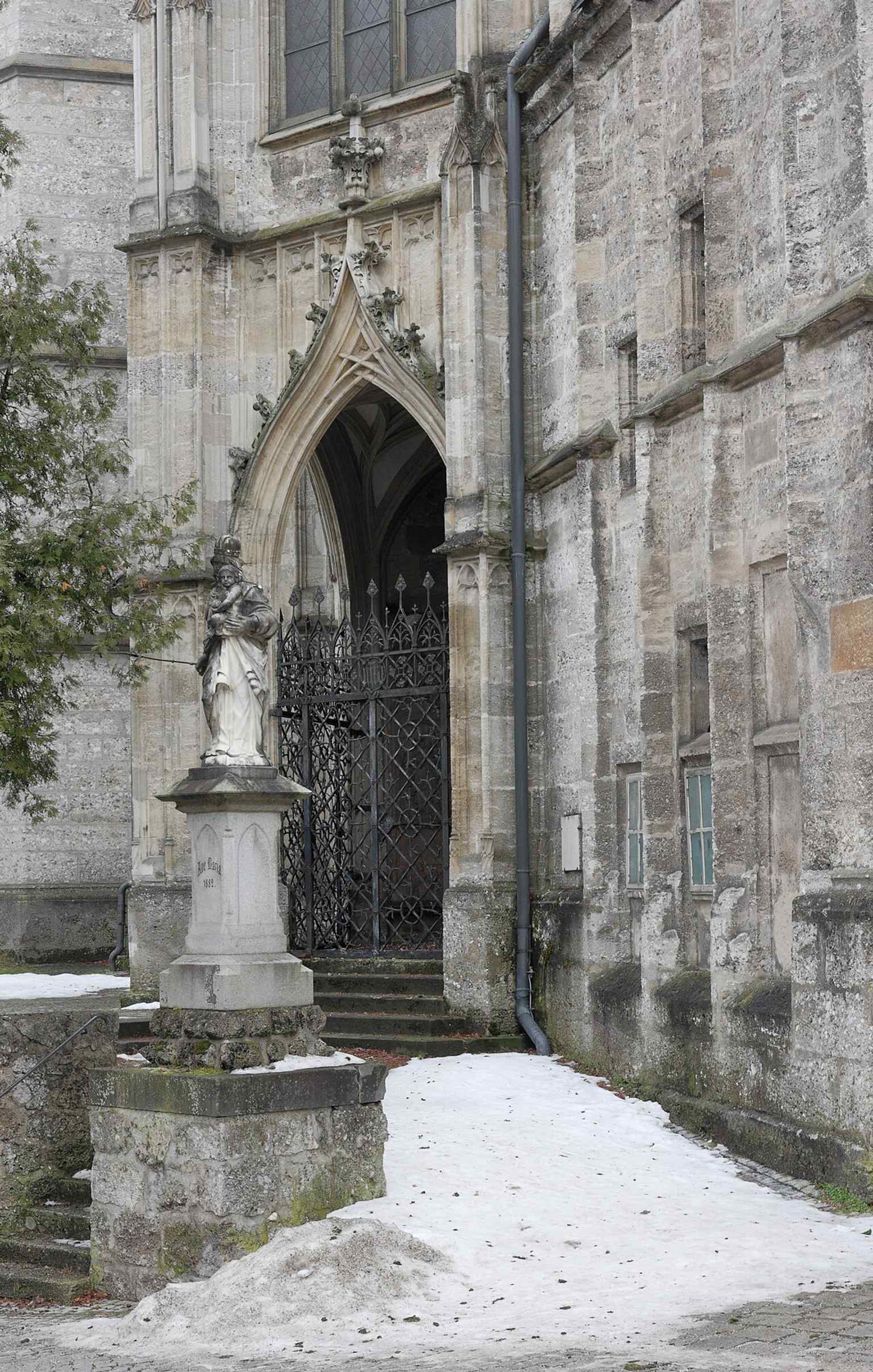
The north porch and Marian statue show one of the church’s important exterior approaches, including the richly carved northern portal area.
The north porch and Marian statue show one of the church’s important exterior approaches, including the richly carved northern portal area.Photo: Christoph Waghubinger (Lewenstein), Wikimedia Commons, CC BY-SA 4.0. Cropped & resized.
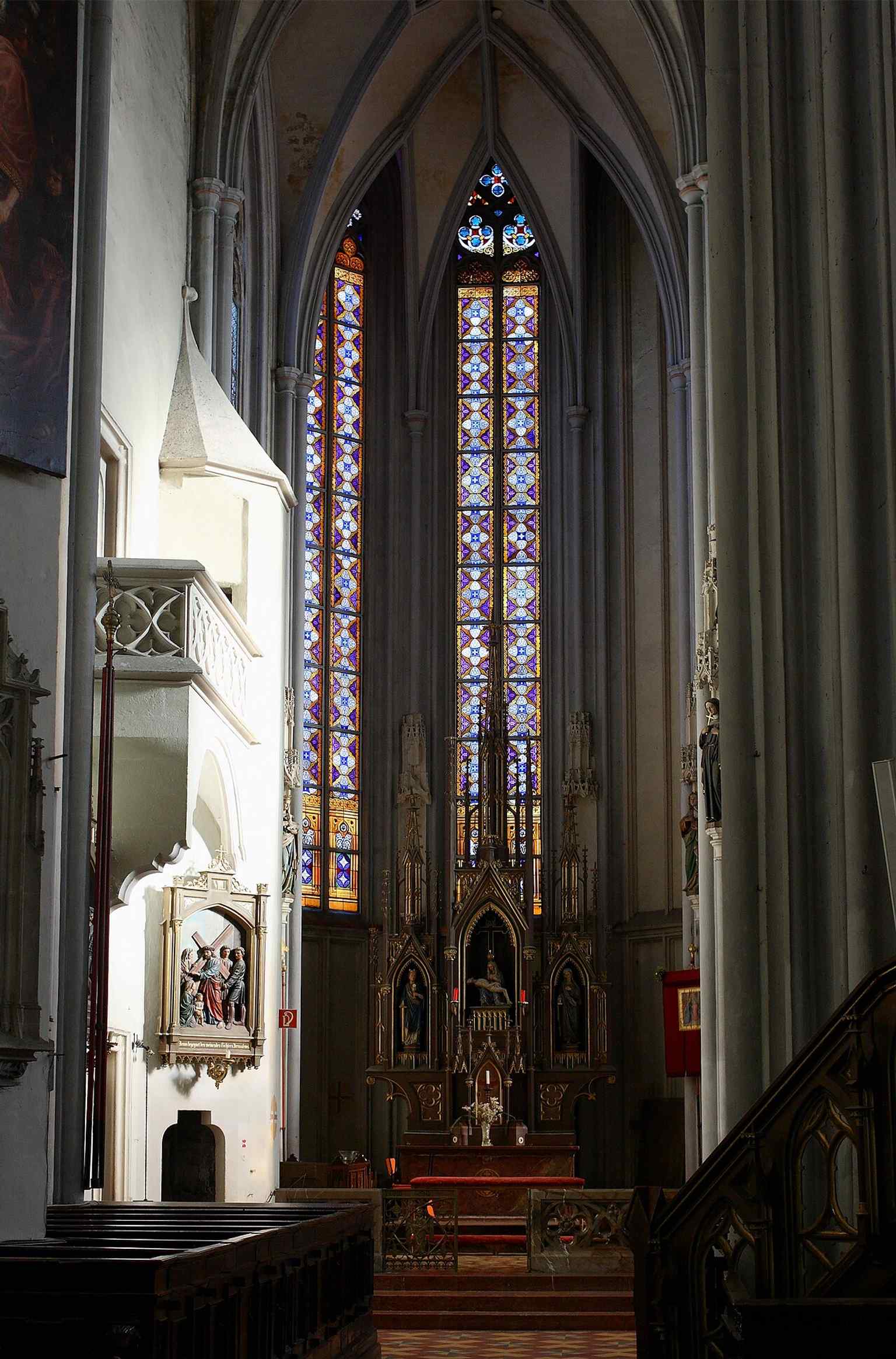
A wide nave view toward the high altar captures the church’s three-aisled Gothic hall and the neo-Gothic redesign of the 19th century.
A wide nave view toward the high altar captures the church’s three-aisled Gothic hall and the neo-Gothic redesign of the 19th century.Photo: Christoph Waghubinger (Lewenstein), Wikimedia Commons, CC BY-SA 3.0. Cropped & resized.
This view into the left choir aisle helps explain the church’s late-Gothic spatial structure and the long choir added in the 15th century.
This view into the left choir aisle helps explain the church’s late-Gothic spatial structure and the long choir added in the 15th century.Photo: Christoph Waghubinger (Lewenstein), Wikimedia Commons, CC BY-SA 3.0 at. Cropped & resized.
The organ loft at the main entrance connects to the church’s musical history, including Anton Bruckner’s ties to the instrument.
The organ loft at the main entrance connects to the church’s musical history, including Anton Bruckner’s ties to the instrument.Photo: Isiwal, Wikimedia Commons, CC BY-SA 4.0. Cropped & resized.
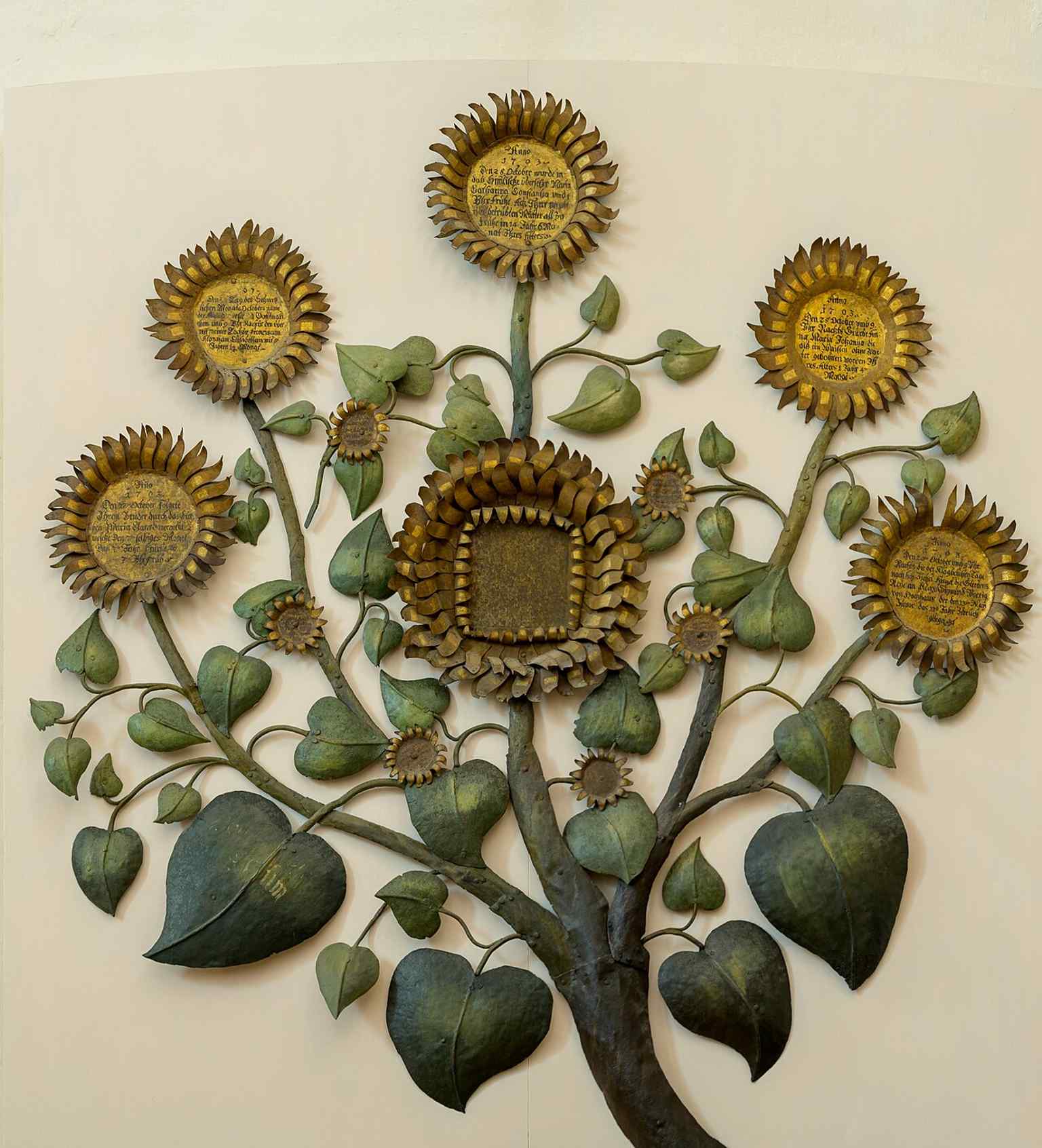
The sunflower epitaph is a moving reminder of the 1703 smallpox deaths remembered inside the church.
The sunflower epitaph is a moving reminder of the 1703 smallpox deaths remembered inside the church.Photo: Isiwal, Wikimedia Commons, CC BY-SA 4.0. Cropped & resized.
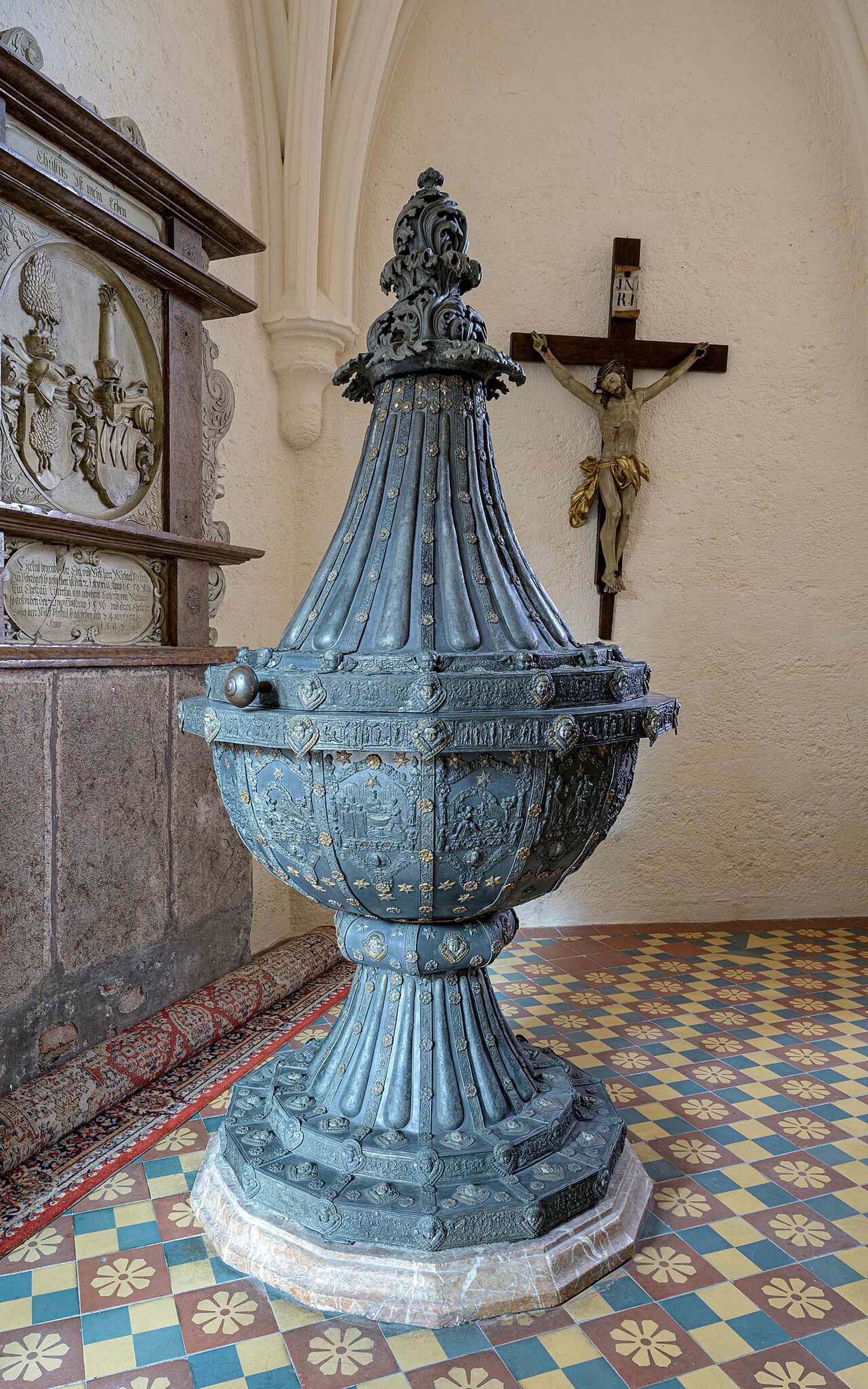
This 1569 baptismal font reflects the church’s Renaissance furnishings and its long-liturgical history.
This 1569 baptismal font reflects the church’s Renaissance furnishings and its long-liturgical history.Photo: Isiwal, Wikimedia Commons, CC BY-SA 4.0. Cropped & resized.
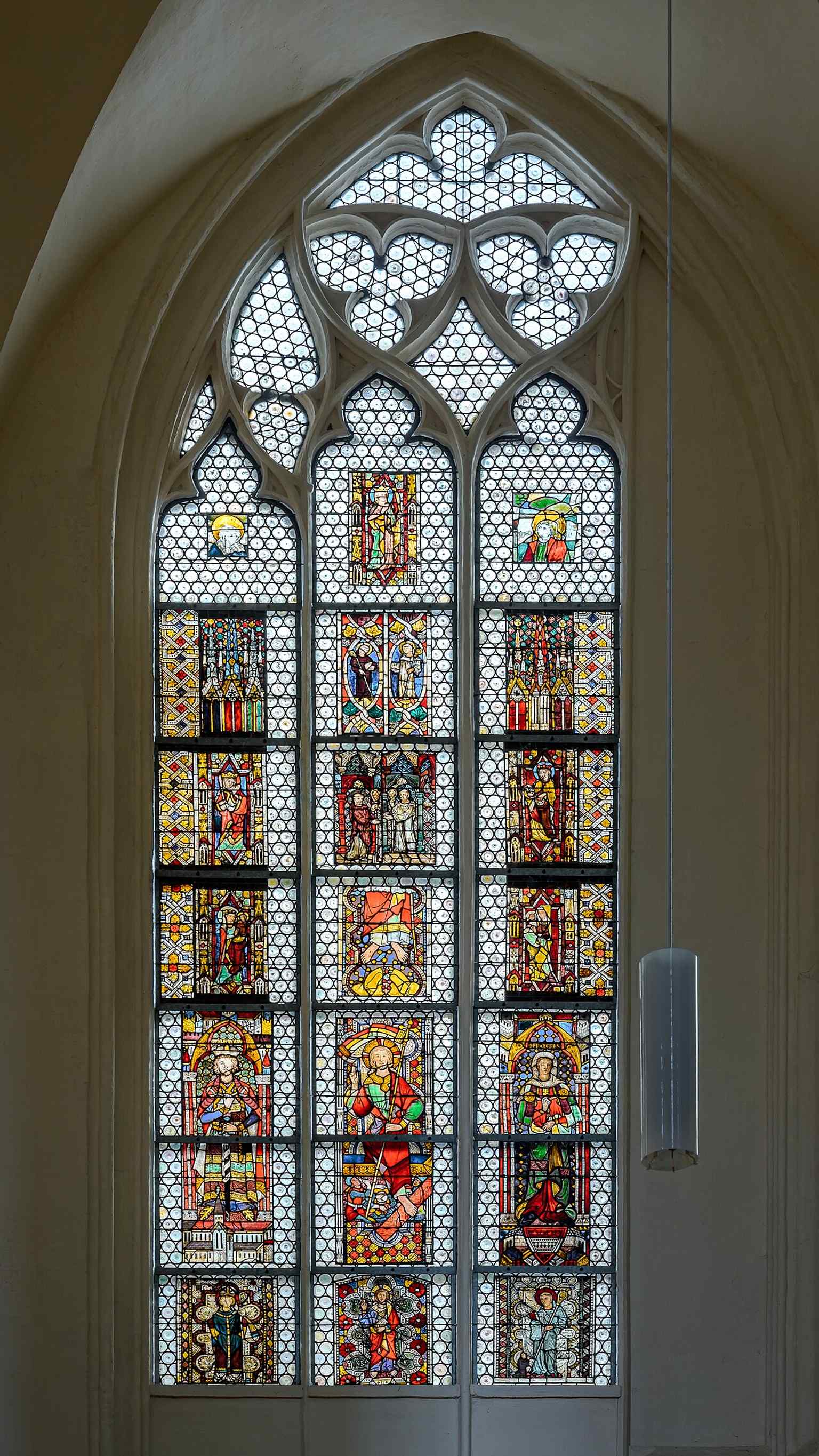
The Laxenburg window preserves rare medieval glass fragments, some dating back to around 1300 and later returned from Laxenburg.
The Laxenburg window preserves rare medieval glass fragments, some dating back to around 1300 and later returned from Laxenburg.Photo: Isiwal, Wikimedia Commons, CC BY-SA 4.0. Cropped & resized.
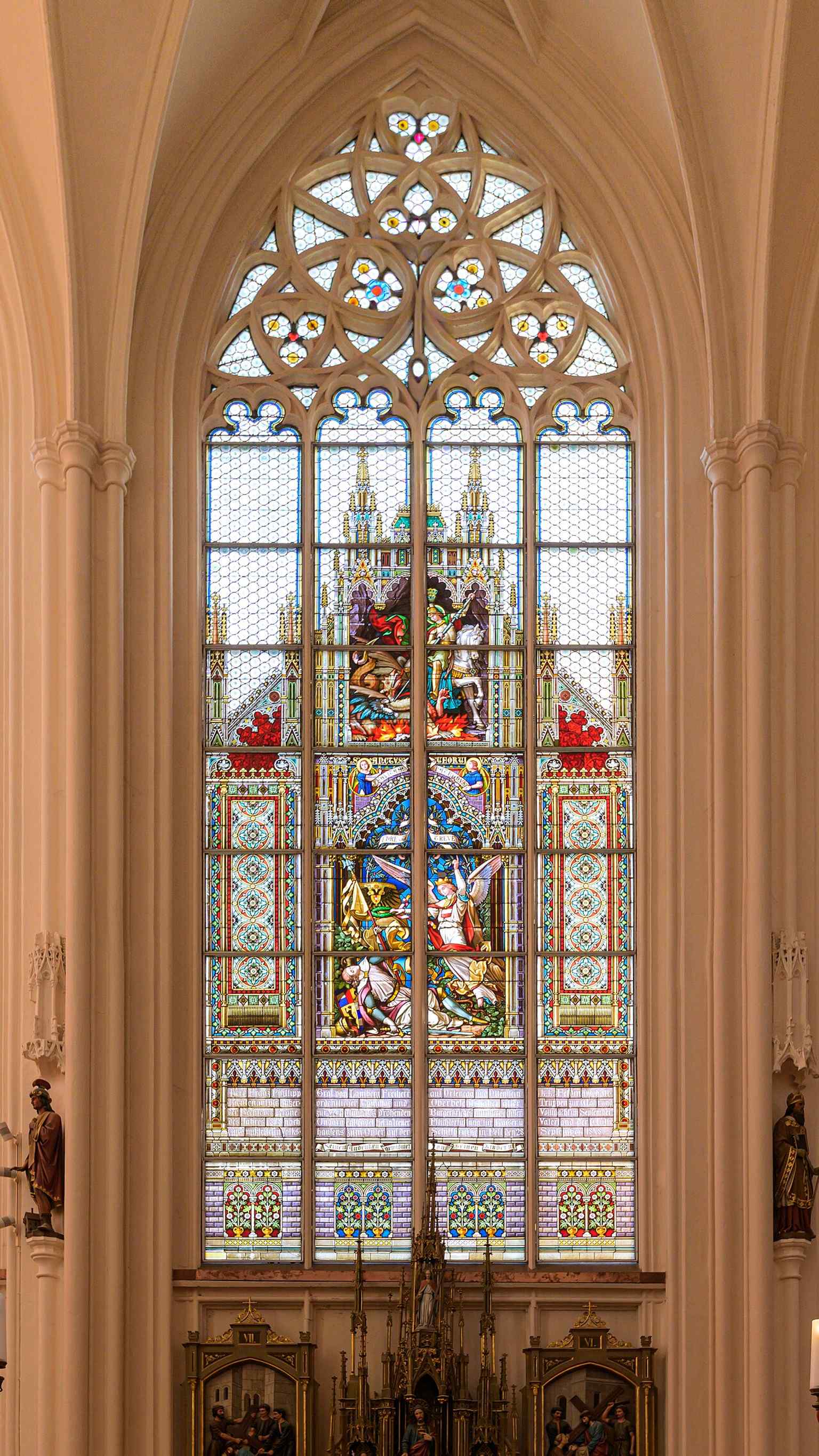
The Lamberg memorial window commemorates Franz Philipp von Lamberg and shows how 19th-century stained glass was used for historical remembrance.
The Lamberg memorial window commemorates Franz Philipp von Lamberg and shows how 19th-century stained glass was used for historical remembrance.Photo: Isiwal, Wikimedia Commons, CC BY-SA 4.0. Cropped & resized.
Scaffolding in the nave documents the 2009–2015 interior restoration, when the church’s Gothic vaulting and surfaces were carefully conserved.
Scaffolding in the nave documents the 2009–2015 interior restoration, when the church’s Gothic vaulting and surfaces were carefully conserved.Photo: Christoph Waghubinger (Lewenstein), Wikimedia Commons, CC BY-SA 4.0. Cropped & resized.
arrow_back Back to Steyr Audio Tour: Castles, Cemeteries, and Stories by the River
Loved by travellers

Thousands of tours started.
Plenty of opinions.

4.8 across the App Store and Google Play. Here's a few we keep coming back to.

starstarstarstarstar
This was a solid way to get to know Brighton without feeling like a tourist. The narration had depth and context, but didn't overdo it.
Christoph
Christoph
Brighton Tour
starstarstarstarstar
Started this tour with a croissant in one hand and zero expectations. The app just vibes with you, no pressure, just you, your headphones, and some cool stories.
download Get the app

Pop your headphones in.
Step outside.

Free to download. Tours in every city. Start in 60 seconds — no account, no card.

Download on the App StoreGet it on Google Play
starstarstarstarstar_half
4.8
AudaTours app icon
headphones
~ 4 min until your first tour starts
public
1,000+ cities worldwide
all_inclusive
AudaTours
Unlimited

Every tour. Every city. One subscription.

3096 tours2272 cities138 countries50+ languages