
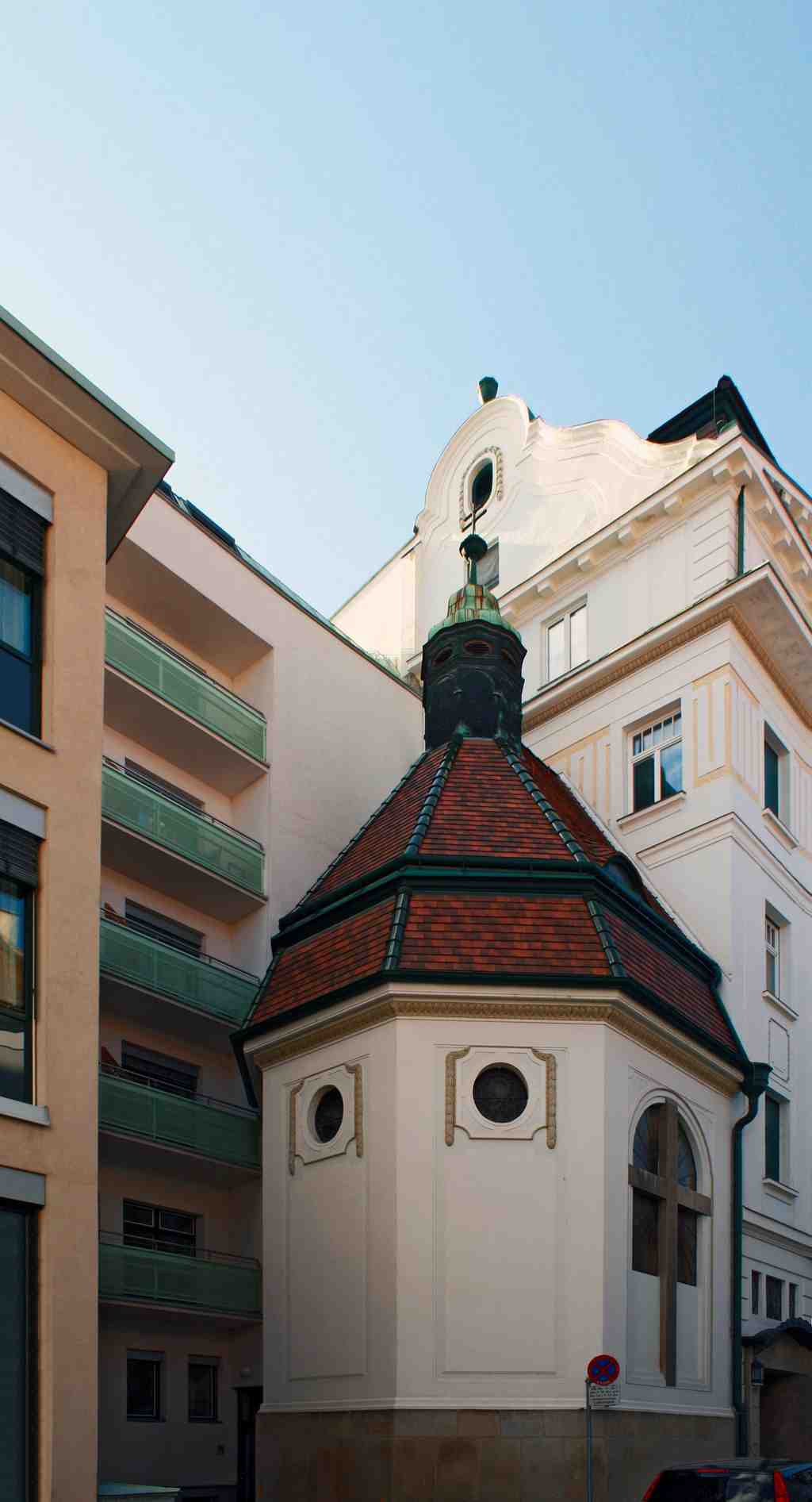
To spot the St. Anthony's Chapel in the Herzoghof, look for a small, white octagonal building with a red-tiled pointed roof topped by a little green dome, nestled snugly between taller modern and historic buildings-almost as if it’s hiding in plain sight.
Now, as you stand here, let me whisk you back through the centuries to a spot that’s seen almost everything-war, wealth, fire, and faith. Imagine the Herzoghof estate, once belonging to the powerful Babenbergers, echoing with the clip-clop of horses, the hustle of merchants, and-somewhere in the background-a chapel just waiting to be built. The estate’s fortunes changed hands through emperors, counts, and even through the fires of war. In 1683, during the Turkish War, devastation swept through and the building was destroyed. But from these ashes, a determined noblewoman, Countess Katharina von Lamberg, hatched a plan. She wanted to honor Saint Anthony of Padua, and so, in 1708, the first chapel was completed-a real beacon of peace after all that chaos!
Picture the old days: on the wall, a Lamberg family crest, a white lamb upon a hill, with a sundial to help the locals tell time before smartphones were a thing. The estate, also called the Herzogbad, became a treat for local nobles and not-so-nobles alike, and eventually even belonged to the city of Baden. Through fire and city-wide disasters, the chapel somehow escaped untouched while all around it turned to ash in the big fire of 1812. Bit dramatic, right? If you listen closely, you might still hear it breathe a sigh of relief!
The real plot twist came in 1908, when the entire old complex, chapel and all, was torn down-not by invaders or flames, but by good old Viennese urban planning! What you see now is its stylish, Jugendstil (Art Nouveau) replacement, with the spirit of Saint Anthony still watching over the place.
Step inside, and you’d see little angels (Putten) on the altar, golden candlesticks shining, and above all, the Virgin Mary and baby Jesus cozily surrounded by decorative flourishes, preserved from the original 18th-century baroque chapel. Rarely is a mass celebrated here today, but when it happens, you can bet history is listening, too. And if you look closely, maybe you’ll spot some of those old statues-each with their own adventure, frozen in time. Now, how’s that for a chapel with more plot twists than a Netflix series?


