
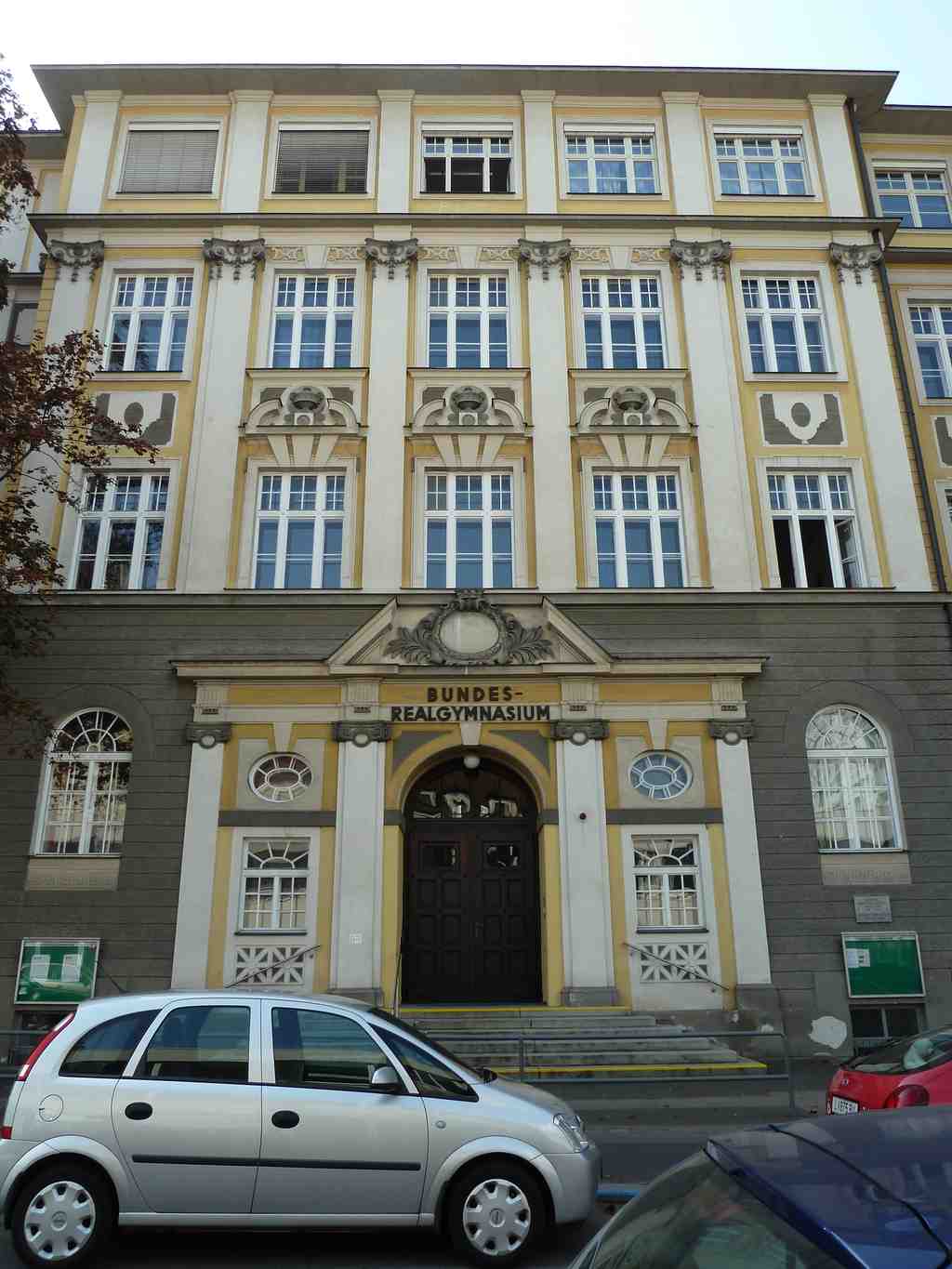
Look to your left and spot a grand, pale building with tall windows, a stately corner entrance, and a block-long presence-it looks every bit the classic high school you’d conjure in an old European movie, equal parts charisma and formidable symmetry.
Welcome to Bundesrealgymnasium Linz Fadingerstraße, or if you’d rather not risk a tongue-twist, just “the Fadinger Gymnasium.” Built in 1909 by architect Karl Bundsmann, this building marks the confident stride from historicism to early art nouveau-that’s “Jugendstil” if you want to impress the locals. Take in that U-shaped footprint; the connecting corner pavilion anchors the block like the wise old teacher during lunch duty. The outer walls? A textbook example of “look, but don’t touch”-this place has been protected as a landmark for decades.
Now, here’s a school that’s seen about every twist history could throw its way. Back in 1851, when Linz had more cobblestone than coffee shops, locals like the writer Adalbert Stifter pushed for a proper institution where young minds could be filled, not just with calculus and chemistry, but with the spirit of modern progress. Imagine the excitement when the first classes started in a repurposed craftsman’s hall-blackboards squeaking, inkpots at the ready. Of course, by the 1890s, the old digs were so overcrowded you’d get an education just by dodging elbows.
So, in 1908-with a budget that would have made city councilors sweat (we’re talking about what would be several million euros or dollars today)-crews broke ground right here. And when World War I ended, out went the Habsburg eagle above the entrance. Times change, but the homework stays the same.
Past these cheerful facades, a parade of students has shuffled, including a few names you might only mention at the family dinner table with a deep breath. Ludwig Wittgenstein, the famed philosopher, wandered these halls. So did a young Adolf Hitler, though history records his grades as utterly forgettable-proof that brilliance and mischief can share a classroom.
The building is impressive, but it’s the sheer variety of young talent-future billionaires, artists, scientists, politicians, and, yes, a couple of notorious characters-that gives the Gymnasium its gravitas. The school’s always claimed to nurture independence, curiosity, and creative thinking; sometimes, perhaps, a bit too much.
But education here isn’t just old chalk and musty books. In the 1970s, the school’s theater group put on shows so lively the audience didn’t just toss roses-they tossed career offers. In recent years, students fiddled with robotics, built radios, and snagged media prizes-think student-made films and award-winning radio shows, broadcasting the unvarnished voice of Linz’s new generation.
Inside, there’s a grand hall used for everything from final exams to film screenings and the occasional concert-though the echo of a hundred students whispering answers is probably its best-guarded secret.
Alright, let’s keep things moving. To visit Egeregg Castle, just head north along Fadingerstraße for about 5 minutes.




