
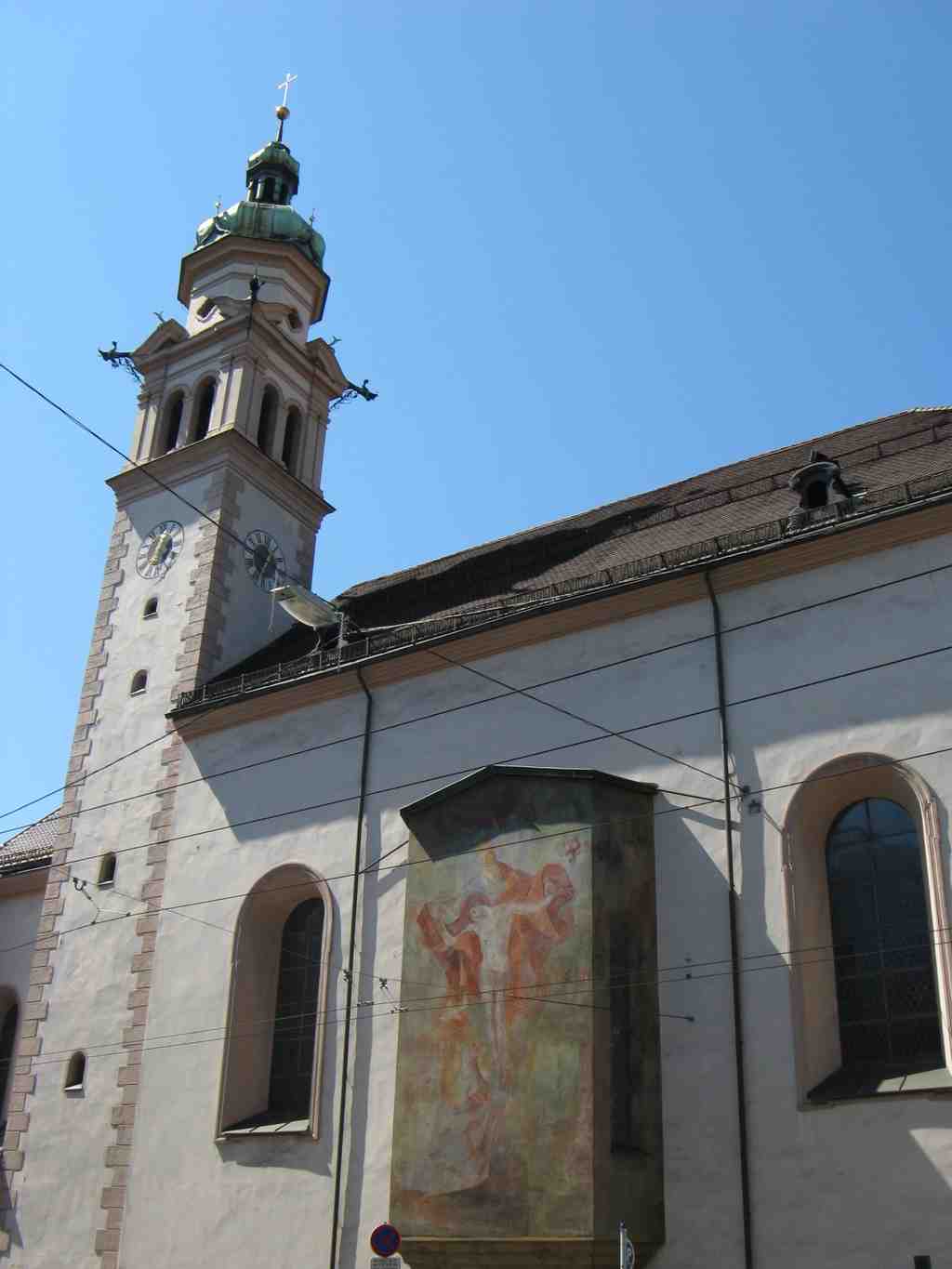
To spot the Servit Church, just look for the simple cream-colored building with tall arched windows and a striking baroque tower topped with a greenish dome, and you’ll notice a colorful mural painted outside above the entrance.
Now, let’s step back in time together, right here on Maria-Theresien-Straße, with echoes of horse hooves and the soft ring of bells in the air. Imagine it’s the early 1600s-a time of powdered wigs, candlelight, and a city eager for a touch of beauty and hope. The Servit Church, dedicated to Saint Joseph, was founded between 1613 and 1616, thanks to Anna Caterina Gonzaga, the strong-willed widow of Archduke Ferdinand II. I like to think she picked this spot because Innsbruck’s chilly winters demanded a cozy church and perhaps she was an early advocate for indoor heating!
But adventure struck fast. Just a few years in, in 1620, disaster! The whole complex was swallowed up by flames, leaving little more than ashes and-if we believe the old stories-a few very startled monks in singed robes. Not to be defeated, the Servites rolled up their sleeves, rebuilt, and by 1626, they were back in business, with a dazzling new altar crafted in 1628 by the renowned artisan Matthias Carneri.
Growth continued, with grand chapels sprouting up in the 1700s and the tower receiving its crowning finish in 1899. The church flourished, often receiving nods (and donations) from the mighty Habsburgs. But history has a mischievous streak; in 1938, the Nazis shut the monastery down, the first in Innsbruck to suffer that fate. Then, in 1943, bombs rained down, reducing much of the church to rubble.
Yet, much like a soap opera hero, the Servit Church bounced back after the war. With new art, fresh renovations, and laughter echoing again, the Servites reopened their doors. So as you stand here, remember: you’re looking at a survivor, a symbol of resilience, and possibly the best place in Innsbruck to hide from both history lessons and winter draughts!


