
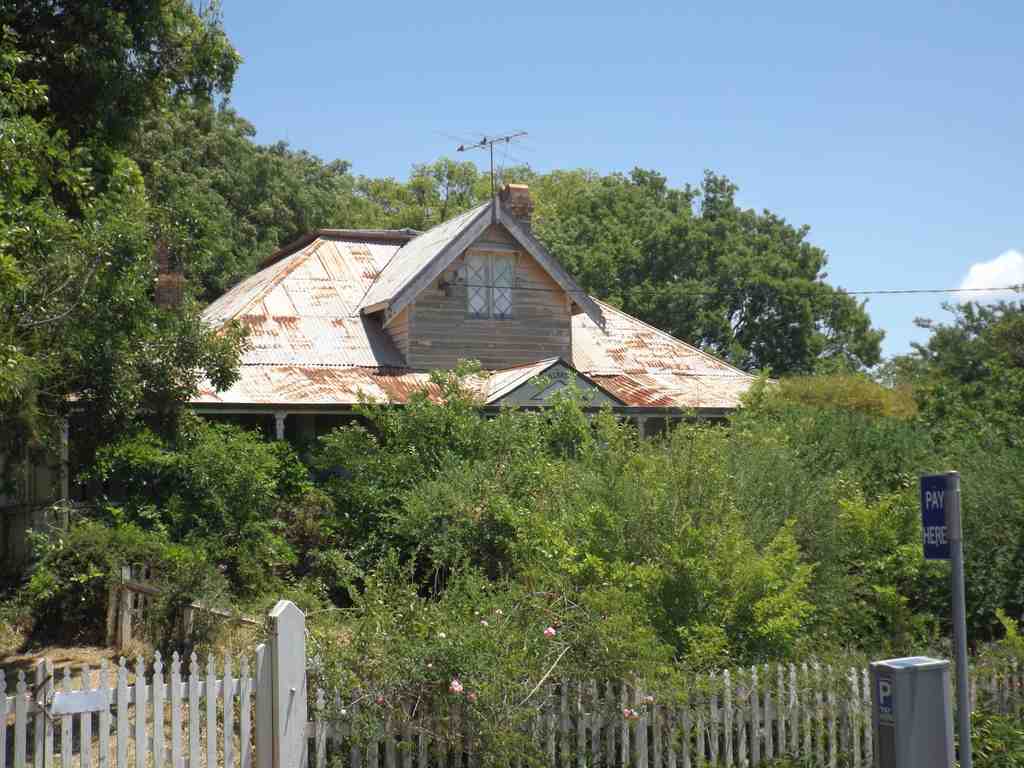
To spot Millbrook, look for a large, weathered timber house with a steep, rusty corrugated iron roof and a gabled attic peeking out from behind a wild, leafy garden and a white picket fence at 9 Phillip Street.
Alright, welcome to Millbrook-where, I promise, the only thing more impressive than the house is the wild tangle of the garden trying to reclaim it! Just imagine standing here in the late 1800s: the sunlight filtering through those big old trees, the crisp sound of footsteps on the gravel drive, and maybe the odd clucking of chickens to top it off.
Now, Millbrook wasn’t always sitting quietly on Phillip Street. Back in the 1860s, it sat on Ruthven Street and belonged to a man named William Henry Groom-a person who had, let’s say, more plot twists than your favorite detective show. Imagine a boy of just thirteen, shipped off to Australia in 1849 for stealing! Young Groom didn’t stay out of trouble either; after a brush with gold theft and a little time behind bars, you’d think things would get worse. But no-he moved to Drayton, got married, and suddenly found himself at the heart of just about everything in Toowoomba. He became the town’s first mayor, not once but seven times, and led with his wife as Lady Mayoress. He even went on to be the region’s first member of the Queensland Parliament, helping Toowoomba grow, change, and thrive.
Picture the family garden then: peach, apple, and apricot trees, herbs sprouting near the back door, and a chicken run-because you can’t live off just pretty flowers, right? Mrs. Grace Groom, William’s wife, threw grand garden parties here, the air filled with the smell of blossoming flowers and the laughter of politicians and local dignitaries. If you listen very closely, you can almost hear the delicate clink of teacups at afternoon tea on the glassed-in verandah, busy servants bustling quietly nearby.
After William’s death in 1901-he actually died attending the first ever sitting of the Australian Parliament!-his widow Grace decided Ruthven Street was getting far too noisy. So what did she do? She picked up most of this entire house and moved it here. All except one wing, because, after raising eight children, she finally had enough space.
Generations of the Groom family lived here, and this old house heard its share of secrets and stories. Imagine, fires crackling in the twin drawing room and dining room hearths on chilly Toowoomba nights, and in the mornings, sunlight pouring into the attic windows, catching on the cast-iron verandah rails and the marble birdbath out front-maybe you spot it peeking through the greenery. The family would serve tea in the drawing room for important guests, and in the quieter glass room for close friends, calling the maid with a little tassel near the fireplace-talk about old-school “room service”!
As the decades slipped by, new stories took root. In 1933, Dr. Allan Row, a hero of both medicine and the battlefield, took up residence-imagine patients nervously knocking at the door, waiting for appointments in what was once the formal sitting room. Dr. Row and later his wife Dorothy modernised bits of the place, though not too much-there’s still a certain charm to hand-cranked laundry and a kitchen where you could roll out pastry for a pie big enough to feed all Toowoomba. The garden, at one point, was spruced up by the local women's rugby league team-now, there’s a sight you don’t see every day!
And though times changed, Millbrook never fully lost its sense of history. The creak of floorboards, the soft hum of the wind in the elms, and the sight of the stables out back are reminders of lives lived with joy, hardship, and ambition. Some say you can still feel the presence of those famous garden parties and hear the echo of politics discussed over tea. So while Millbrook is now watched over by new owners and curious visitors like you, it stands-worn roof, painted windows, and all-as a living diary of Toowoomba’s heart and soul.




