
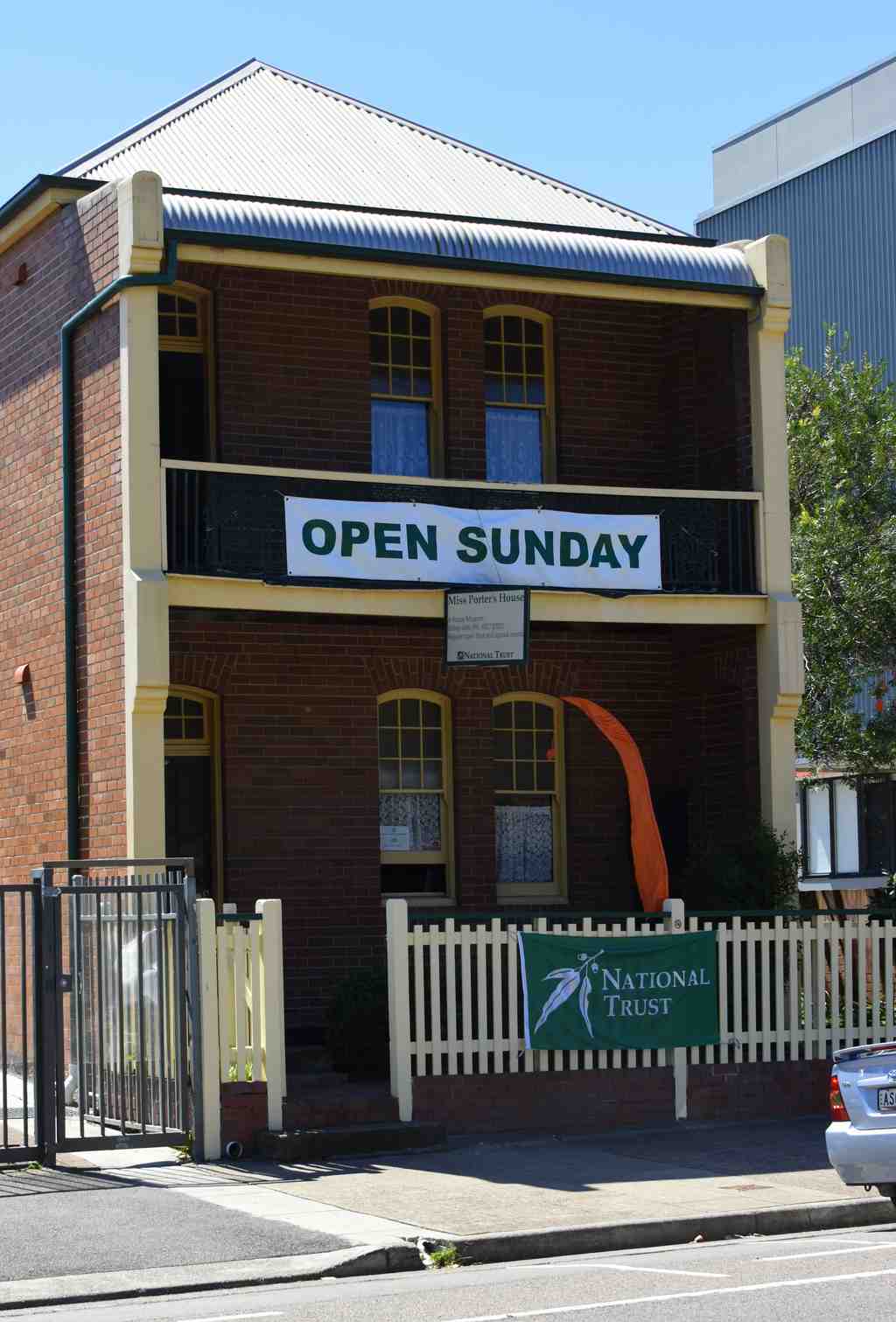
If you’re looking for Miss Porter’s House, keep your eyes peeled for a striking red-brick, two-storey Edwardian terrace with yellow trim, a cast-iron balustrade on the upper balcony, and a banner that reads “OPEN SUNDAY,” right beside the pale picket fence along busy King Street.
Take a step closer and let’s slip back in time-don’t mind the traffic, imagine horse-drawn carts rumbling past instead. Here, in 1909, a proud new house rose up in a noisy, industrial part of Newcastle, standing out like a handwritten letter in a sea of emails. Built by John T. Owen for the Porter family, this very home has watched Newcastle’s hustle and bustle change for more than a century. Back in the 1860s, James Porter, just seventeen, sailed from England and began a new life on the estuary islands of the Hunter River. He built up his business as a storekeeper and carrier, his lively shop just around the corner, and dreamed of a proper home for his children.
In 1907, James bought this plot from the Australian Agricultural Company, right next to his shop and opposite the roaring Gas Company’s works. By 1909, the house was up, furnished by his son Herbert and his new bride, Florence, who dove into settling their own family. This elegant home was a unique sight in a neighborhood filled with gasworks, produce markets, and the hardworking families of Chinese market gardeners. What the Porters built wasn’t just a house-it was a small fortress of comfort in a place ruled by industry and commerce. Over the years, as businesses sprouted and faded, this house clung to its identity. If bricks could talk, they’d have plenty of stories to tell.
But fate had a few curveballs for the Porters. In 1919, tragedy struck twice: Herbert, only 41, was taken by the influenza epidemic, and his mother Eliza soon after. The house became the women’s world. Florence, left with daughters Ella and little Hazel, weathered hard years, quietly managing with help from a small inheritance and clever hands. You might picture the Porters sipping tea by the fireplace or reading by lamplight, the house filled with laughter and, later, the hush of resilience. Both sisters, Ella and Hazel, chose never to marry, living out their days here and keeping the treasures of family life tucked away, like time capsules in every drawer.
Imagine entering the front hallway, where a sitting room opens off to the right, velvet lounge gleaming in the sun-a 1939 treasure-while the stenciled timber ceiling hovers above. The dining room still holds Herbert’s dining table, where special meals and ordinary days met. Upstairs, bedrooms waited for quiet dreams. In the backyard, you’d find a “bush house,” a rustic retreat built in the first years of the home and refreshed decades later by the sisters, offering shade and a cool breeze against Newcastle’s heat.
But it wasn’t all easy living. Many buildings around here crumbled, fell to ruin, or became home to fast-changing businesses-tattoo parlors one year, brothels the next, even a super-sized Kentucky Fried Chicken where the old Palais Royale used to stand. Through two world wars, the Depression, and even a devastating earthquake in 1989, Miss Porter’s House endured. That earthquake left cracks filleting the walls, the balcony roof collapsed, dust billowed everywhere-ninety years of industrial soot suddenly painting everything gray. Some said, “Tear it down!” But Ella and Hazel? They fought tooth and nail, writing to the insurance company and town clerk, determined that their memories-and this house-would survive.
After repairs, they even celebrated with some modern luxuries: an indoor toilet at last, and a new rainwater tank gifted by friendly neighbors. Since Hazel’s passing in 1997, the house and everything in it-from invoices and dazzling art deco lamps to the smallest kitchen gadget-has been lovingly preserved by the National Trust as a rare, living museum.
So, as you stand outside, picture this house as a survivor and a storyteller, holding the lived-in history of Newcastle’s modest, proud families. You’re not just looking at a building-you’re brushing up against 90 years of everyday life, courage, and a little dash of quiet rebellion!




