
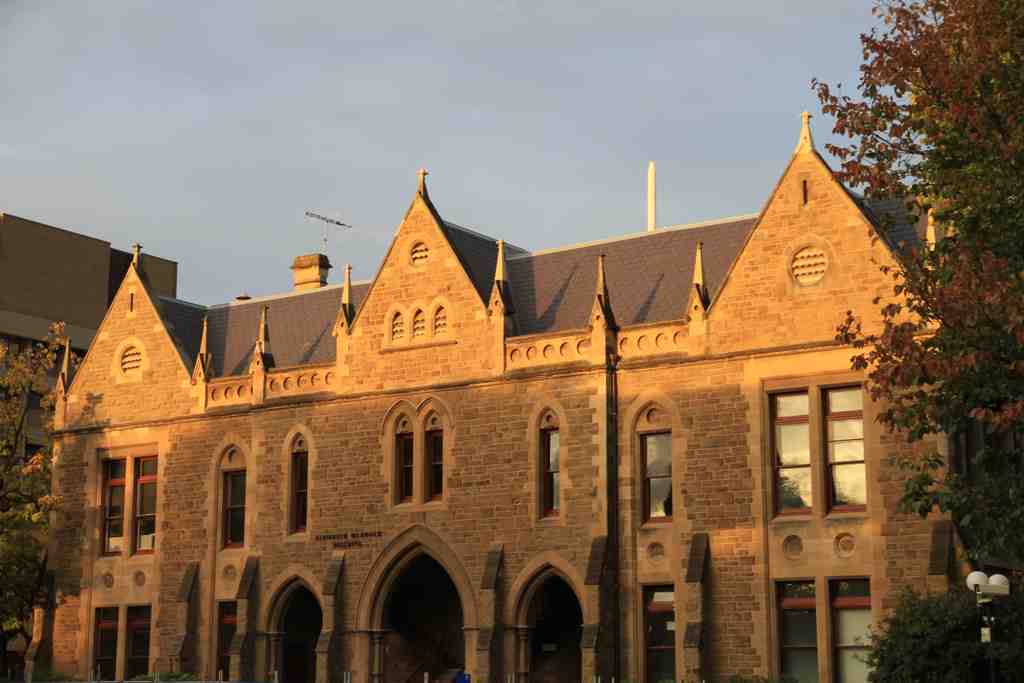
To spot the Old Pathology Building, just look for the grand two-storey stone building with pointed gables, tall lancet arches, and a slate roof right in front of you on Grattan Street.
Now, let’s step back in time to the year 1885. Imagine the clang and clatter of stonemasons' hammers as they build this striking structure right before your eyes. This isn’t just any building; this is the heart of medical discovery at the University of Melbourne, designed in the Neo-Gothic style to make even the bravest students feel a little bit like they’re heading off to Hogwarts-but with more anatomy lessons and fewer magical beasts!
Classes at the University started in 1853, and by the early 1880s, Professor H. B. Allen was dreaming of a grand medical school. His pride and joy? A museum packed full of thousands of pathology specimens, some odd enough to make even the toughest students queasy. Allen’s ambition turned these walls into the ultimate science classroom-just imagine glass jars lined up, holding secrets of past epidemics and medical marvels.
When Peter MacCallum took over, he brought even more excitement and founded the Society of Pathology and Experimental Science in 1930. Science marched on-and the need for laboratories grew as the university’s medical school tackled the major health mysteries of the twentieth century. Students filed through these hallways, learning to battle diseases in an era when epidemics swept through like Melbourne’s wild winter winds.
Take a look at those bluestone plinths, sturdy buttresses, and sharply pointed arches-this building was deliberately made to match the rest of the campus in that Gothic “seriously smart” style. But behind those dignified facades, imagine the bustling life: students, professors, maybe even the odd nervous bat, all playing their part in a story that continues today.
This place isn’t just stone and slate. It’s a living testament to Australia’s very first medical school and the endless curiosity that has shaped more than a century of learning right here in Parkville.




