
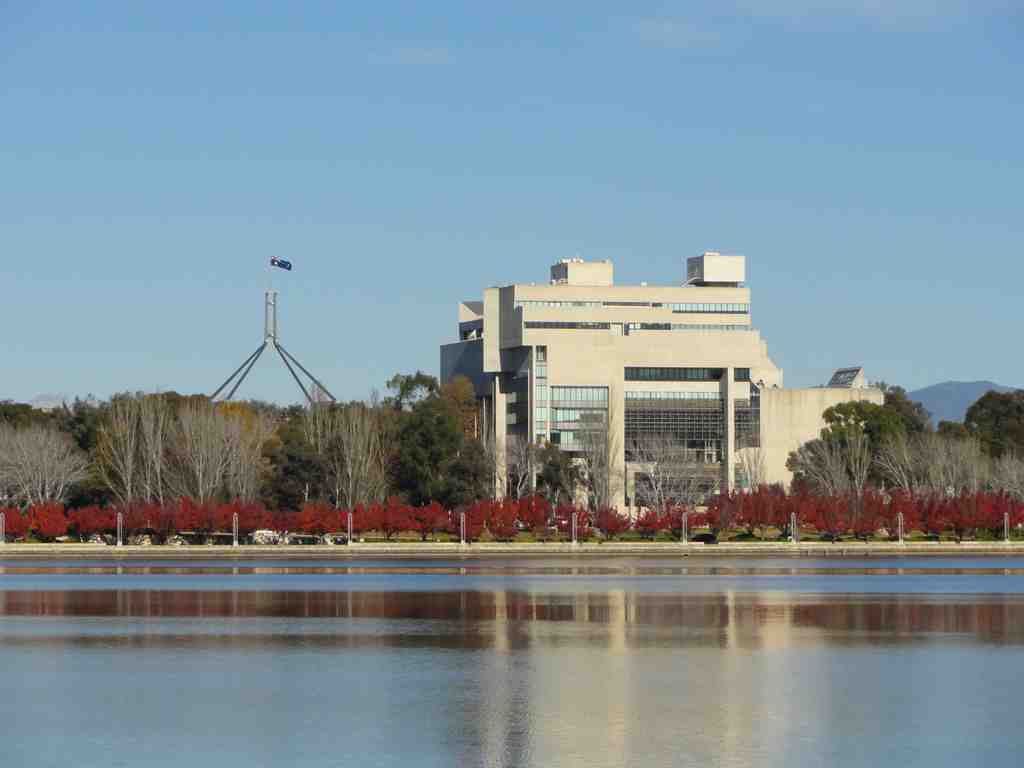
Coming up on your left, you’ll spot the unique and imposing structure of the High Court of Australia Building. It stands majestically on the shore of Lake Burley Griffin and is a prime example of Brutalist architecture. To help you find it, look for a large, multi-tiered concrete building with striking vertical lines and substantial use of glass.
The High Court of Australia Building has been the courthouse’s permanent home since 1980. It was the brainchild of architect Christopher Kringas, who was honored with a plaque in the public hall after his untimely death. The construction began in 1975 and was completed in 1980, inaugurated by none other than Queen Elizabeth II on the 26th of May. The building’s architectural significance spans internationally, earning it various accolades, including the Australian Institute of Architects Canberra Medallion in 1980 and the national Enduring Architecture Award in 2007.
The High Court’s saga is a fascinating one. Prime Minister Robert Menzies envisioned a grand national capital plan, which included this very court building. After years of planning competitions and architectural feats, Christopher Kringas’s winning design was realized, despite his passing just before the project's physical inception. The result? An architectural marvel of the Brutalist style, complete with a vast 24-meter-high public hall, interconnected by a central public ramp system. The exposed concrete paired with expansive glazing creates a bright, functional environment for justice.
So, as you gaze upon this notable edifice, remember the remarkable history and architectural prowess it represents. It’s not just a building; it's a chapter in the story of Canberra’s development and architectural advancement.
If you're keen on discovering more about the architecture, interior or the artwork, head down to the chat section and engage with me.




