
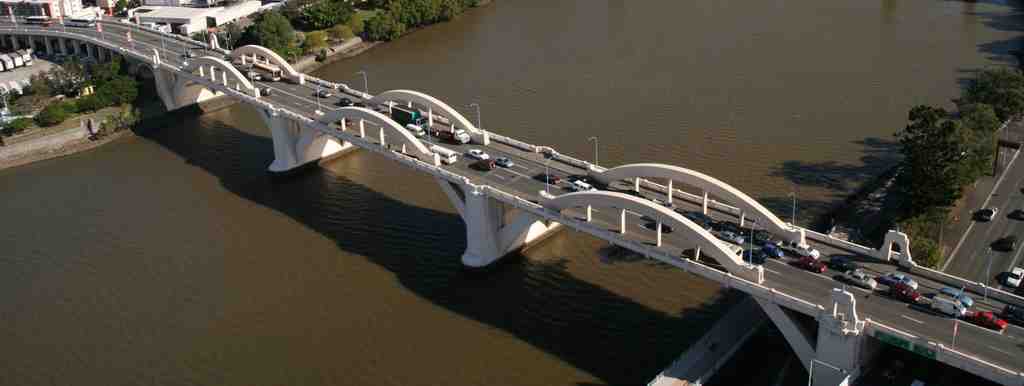
In front of you, spanning the wide, chocolate-brown Brisbane River, is a pale, cream-coloured bridge with three tall, elegant steel arches rising up through the middle of the roadway-just look ahead and spot the graceful arches leaping over the water!
Now, take a breath and imagine yourself in the early 1930s-Brisbane was buzzing with excitement and a touch of desperation. The Great Depression had cast a gloom over the city. Jobs were scarce, but there was one massive project promising hope, progress, and maybe even a little pride: the bridge you’re standing before now. Back then, it was known simply as the Grey Street Bridge, but the city folk must have thought “Grey” was far too dull a name for something that looked like a trio of rainbows frozen in the sky.
When the city bosses decided to build this bridge, traffic was already a tangle on the old Victoria Bridge farther downstream. Brisbane desperately needed another crossing-a way for people and goods to leap the river and connect north and south without endless jams. Engineer Harding Frew led the design, choosing the striking “rainbow arch” style, which was the first of its kind in Australia. Just think: before this, nothing like it had ever graced an Aussie river. The steel skeleton inside those arches was wrapped in concrete, sculpted to look like light-coloured porphyry-a stone locals would recognize from Queensland’s hills.
Construction was no walk in the park. The riverbed here is tricky, with bedrock hiding deep beneath muddy water. How do you build something huge, strong, and stylish with that kind of challenge? The answer came at three o’clock one morning, if you can believe it. Manuel Hornibrook, the man overseeing the build, had an idea: sand islands! Workers drove steel sheets into the riverbed, filled them with sand to make little islands, then dug down to set the bridge’s feet deep on solid rock. It was tough work, as you can imagine-men slogging away under pressure, sometimes so deep underground they needed airlocks, just in case.
Brisbane wasn’t just growing bridges; it was a real boomtown in those days. Factories lined the river, trams rattled through the streets, and locals dreamed of shining modernity. Even the bridge’s Art Deco towers, which frame both ends and look a bit like little Olympic podiums, were there partly to hold up wires for trams-but, in the end, the trams never came. Instead, people strolled and bicycled across, joining the endless parade of cars, trucks, and even the odd horse in the early days.
Curiously, before European settlement, this point on the peninsula was known to local Aboriginal people as Kurilpa-the “place of rats”-named for the bush rats that scurried through the lush riverside undergrowth. Ferries crossed here long before the arches, and a sandy beach on the South Bank side was a major meeting and crossing place. Then, after the Moreton Bay Penal Colony ceased in 1842, the riverbank quickly filled with farms, timber trades, and new families, all eager for a better way to get to the other side. Imagine the crowds gathered for the bridge’s grand opening in March 1932: a sea of hats and excitement, the new arches gleaming against the sky, the riverbank buzzing with the hopes of a city.
It wasn’t until 1955 that the bridge got its current name, honoring William Jolly, Brisbane’s very first Lord Mayor and a chap who wasn’t afraid to move mountains-or, at least, rivers-for progress. By then, the bridge was such a vital artery that it carried nearly half the city’s cross-river traffic. Its light colour wasn’t just for looks: after a round with the paintbrush in the 1970s, it was given its creamy tone to mimic fresh concrete, even after decades of sun and rain.
Today, the William Jolly Bridge is a lively thoroughfare with cars, bikes, and people passing every hour. At peak times, it’s a chorus of horns, rumbling engines, and hurried footsteps-quite a change from the creaking ferries it replaced! And if you keep your eyes peeled up at night, the arches are floodlit, lighting up the skyline just as they did for generations before you. So stroll across, take in the river view, and remember: whether you’re a history buff or just looking for a great selfie spot, you’re walking along the same arches that have carried Brisbane’s hopes for nearly a century. And hey, watch out for any ghosts of old trams-they may still be waiting to cross!
Exploring the realm of the description, traffic use or the in popular culture? Feel free to consult the chat section for additional information.




