
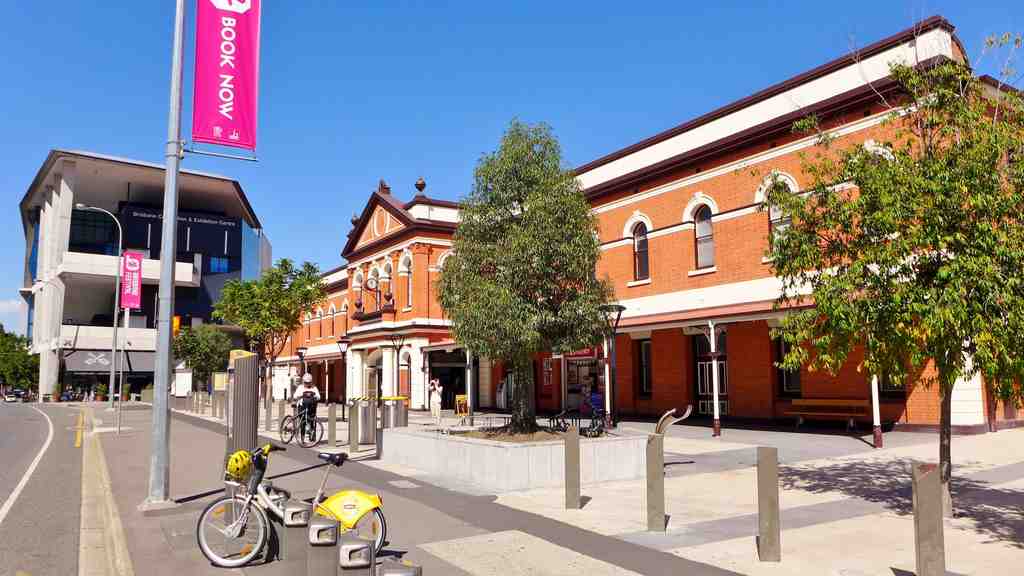
To spot the South Brisbane railway station, look for a long, two-storeyed red brick building right in front of you, with a striking central entrance, crowned by a pediment and flanked by decorative arched windows and cast-iron columns.
Welcome to the South Brisbane railway station-the grand old storyteller of Queensland’s rails, standing proudly since the days when trains were the kings of transport and carriages clang-clanged through the night. Picture yourself on Grey Street in the late 1800s-the air buzzes with anticipation, and the hammering of workers echoes as bricks are stacked to form this impressive structure. The scent of fresh masonry drifts by, mingling with a distant promise of steam engines.
Built between 1891 and 1918, this is Brisbane’s second oldest railway station in the centre of the city, with walls that have seen floods, festivals, and a few confused tourists wondering if they’re at the “Cultural Centre,” “Melbourne Street,” or perhaps even the “Interstate” station-yes, it’s had more names than a pop star on a comeback tour!
Back in the late 19th century, this station wasn’t just a stop on your daily commute: it was a slice of the city’s beating heart. Imagine-when the first version was erected in 1884 on Melbourne and Grey Streets, Brisbane was taking its first brave steps towards becoming the vibrant metropolis you see today. Yet the station you’re facing now came quickly after, rising up on higher ground in 1891, intended as a temporary terminus until a river-crossing line could be built. Only two platforms, modest for such ambition-but talk about being thrust into the spotlight. The 1893 floods changed everything. With the Albert Bridge washed away, South Brisbane suddenly became the key terminal for all southern and western rail services. In that chaos, when telephone wires and bridges were submerged, this station (and a small band of other outposts) kept the city connected to the northern side by just a thread-imagine workers dashing through rising waters just to keep the lines open!
Now, take a close look at the architecture around you-doesn’t it ooze character? The Renaissance style jumps out: arched windows, fancy molded window frames, pilasters with Corinthian capitals (that’s the leafy bit at the top), and that grand parapet crowning the facade. If you listen carefully when you walk under the awnings, you might even sense the stories of commuters bustling through, cast-iron seats creaking quietly, as they waited for trains home. Speaking of seats, many here are early originals, rescued from other stations and put here for Expo ‘88-a little furniture reunion, you might say.
And let’s not forget the busy hum of train and bus connections! South Brisbane isn’t just about the rails; the Cultural Centre busway station hums right next door, shuttling people towards museums, art galleries, and the nearby Queensland Performing Arts Centre. The platforms out back (now level with the upper floor-quite the clever design for those high-water days) have seen everything from old bullnosed butterfly roofs to tank roofs on steel frames, with iron columns and decorative timber friezes to tie it all together.
If your shoes are clicking on the Grey Street pavement, imagine for a moment the hustle of opening day-not that there was one! They started running trains before the station was even finished, skipping the ribbon cutting. But soon, the place was famous for its temperance refreshment rooms, serving up treats to passengers on South Coast, Cleveland, and Beaudesert line trains. In 1912, growing traffic meant the station needed expanding; by 1918 it was a busy hub with a mighty 40-foot turntable (you could spin a whole train around!), which later grew to 60 feet before being retired in the age of diesel.
Over the years, South Brisbane railway station has had its platforms trimmed and stretched, its front park turned car park, its bricks freshly painted for Expo ‘88. Floods, festivals, the pounding of countless footsteps-this station has seen it all. Yet, step back and look at it now: the original grandeur still glows in the Queensland sun, right down to its ornate cast iron and dignified brickwork-a rarity, one of just three masonry railway stations built in Brisbane by 1901.
So, as you stand here, imagine the thousands of journeys, the whispers of adventure, and maybe-just maybe-catch a hint of a steam whistle from Brisbane’s golden railway days drifting through the modern city air!
Intrigued by the adjacent attractions, description or the heritage listing? Explore further by joining me in the chat section below.




