
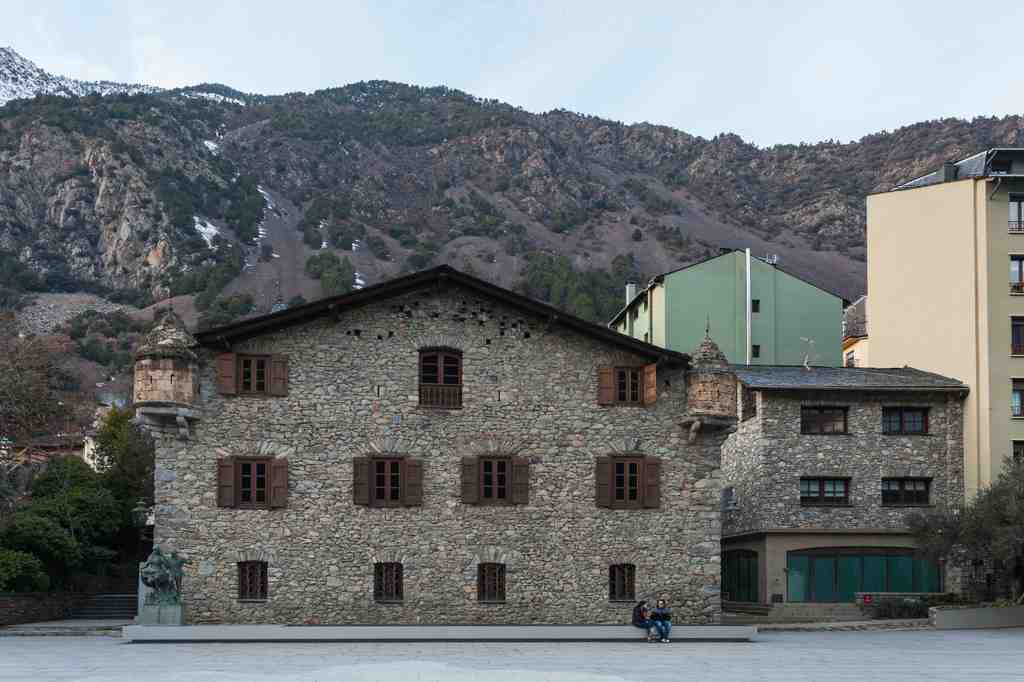
To spot Casa de la Vall, look for a solid, rectangular stone building with wooden shutters and two small round towers on each front corner, directly ahead against the dramatic backdrop of the mountain.
Now, ready for some time travel? You’re standing where over 400 years of Andorran secrets, arguments, parties, and political plots have unfolded-welcome to Casa de la Vall! This sturdy old house was built back in 1580 by the wealthy Busquets family. Just imagine them hauling massive stones up onto this rocky perch (probably complaining the whole way, as anyone would), so their home would overlook the sparkling valley below. You’ll spot their mark right above the door: a coat of arms, the name “ANTO. B / 1580,” and a carved tree-like the world’s earliest personalized doorbell.
The Busquets’ house wasn’t just fancy-it was practical. The thick stone walls kept out mountain chills, and, just in case things got lively (think religious wars, not just rowdy kids), there are even hints of defensive, military touches that probably kept both invaders and nosy neighbors away. Inside, the ground floor was the storeroom-stuffed with food and supplies. Upstairs, the family gathered in a wide, social room called the soler, perfect for sharing stories, feasts, and maybe the latest village gossip.
There’s a curious custom in Andorra: wealthy families like the Busquets always kept a special “bishop’s room” ready-in case the bishop or coprince happened to drop by. Talk about unexpected guests! If he did turn up, the hosts earned instant social prestige, plus probably a few extra desserts for dinner.
But in 1702, the Busquets sold the house-and its story really took off. The government, known as the Consell de la Terra, moved in and made this home one of Europe’s oldest working parliaments. Picture the ancient valley folk, gathering to hash out laws using the privilege given by a bishop all the way back in 1419. Some say they were meeting even earlier...so you’re standing where arguments about sheep and taxes have echoed for centuries.
But, as with all old houses, adjustments were needed! The entrance became a stable for the politicians’ mules and horses (no parking meters back then). Later, it even hosted the prison-tucked right under the stairs. I wonder if anyone ever tried to trade secrets for an extra bit of bread.
Walking inside, you’d find the grand “Salle of Lost Steps,” not because counselors lost their socks, but because here they’d pace, debate, and maybe hatch plans before heading into official meetings. Around you, the walls now display symbols of Andorran pride-from flags and shields to old paintings of Christ’s Passion. There’s even a cabinet secured with seven locks-a true “national treasure” chest, holding all those crucial government documents and requiring a key from every parish.
The kitchen? Think huge open fire, oversized pots that could stew an entire sheep, and a bread oven-all warmed by roaring flames as counselors sheltered from blizzards, telling stories and feasting together while working into the night. I like to imagine the echoes of laughter, the hissing of stew on the fire, and maybe the sound of an impatient counselor ringing the old bell to summon everyone upstairs for an urgent vote.
The second floor was transformed into the main session room for parliament, filled with simple chairs, heavy cloaks, and-presiding overall-the ever-serious faces of the co-princes. There’s even a special bell rung by the eldest counselor from the Canillo parish before each meeting-a tradition as old as the mountains! Over time, the parliament outgrew the house and moved sessions to a larger building in 2011, but Casa de la Vall still hosts special occasions, like Constitution Day and Saint Thomas’s Day.
All around outside, you’ll notice sculptures-a tribute to 700 years since the signing of the pariatges, a dramatic pair dancing a traditional contrapàs, and even pieces dedicated to Andorra’s poets and those who voted for the modern Constitution. The defensive tower at the back? It’s not just for show. It once guarded the approach to Andorra la Vella, reminding everyone: this is the house where Andorra’s story was shaped, debated, and fiercely protected.
So as you stand here, take a moment to listen for the ghosts of old counselors, a clattering horse, or a whispered plot behind the thick walls-a home, a fortress, and the beating heart of Andorra’s past!


