
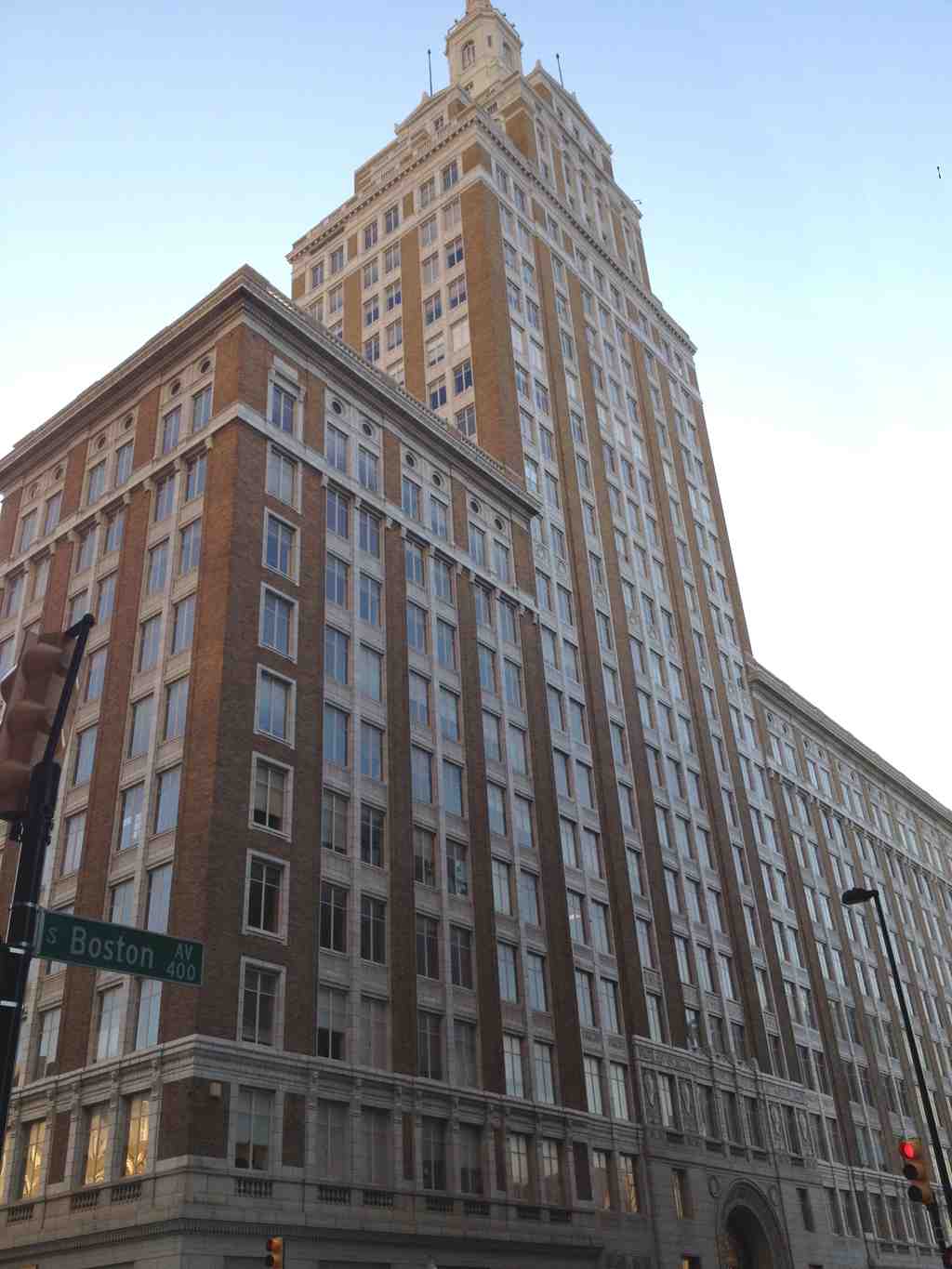
Right in front of you stands a massive brick skyscraper with light terra cotta trim and a towering central section topped by an ornate cupola. This is the 320 South Boston Building, and it is a pure, unapologetic monument to extreme wealth. Originally built in 1917 and expanded to twenty two stories in 1929, it stood as the tallest building in Oklahoma.
Look at the sheer opulence of its Beaux Arts design, an architectural style famous for its grand, theatrical decoration meant to project absolute power. The builders held nothing back. Inside, the grand lobby is wrapped in Italian marble, reportedly sourced from the exact same quarry Michelangelo used for his famous David sculpture.
But who needed a fortress of this magnitude? Enter Harry F. Sinclair. He was an infamous petroleum industrialist who helped organize the bank that built this tower, capitalizing on loans to wildcat oil drillers that other banks were too terrified to touch. Under Sinclair and the Oil Barons of the era, this institution earned the nickname The Oil Bank of America.
When you hold that much regional wealth, you need to protect it. Deep underground sits a massive 1928 bank vault built by the Mosler Safe Company, guarded by a door that weighs an astonishing thirty tons. It was a flawless symbol of extreme security in an industry defined by massive gambles.
But towering ambition often collides with harsh realities, sometimes tragically. In 1949, a television station was erecting a transmitter on the roof. A heavy steelworker's wrench slipped from four hundred feet up, plummeting to the street below and fatally striking a woman walking past. Insiders whispered that the worker had been distracted by a beautiful woman touring the incredible tower heights, an eerie reminder of the human cost of building into the clouds.
Take a look at your screen to see a great shot of the very top of the building. For decades, an urban myth claimed that peak was designed as a mooring mast for Navy Zeppelins. A massive airship actually did fly over Tulsa in the nineteen thirties, permanently cementing the legend. But the truth is much more grounded. That cupola was the Weather Teller. Starting in 1967, local meteorologists would illuminate the tower in colored lights to broadcast the forecast across the downtown skyline.
It was a brilliant piece of civic showmanship. Yet, even this glowing beacon could not escape hard economic limits. During the brutal energy crisis of the nineteen seventies, as the nation faced severe fuel shortages, the colorful lights became an unjustifiable luxury. The plug was permanently pulled, bringing that chapter of sky high optimism to a quiet close.
Our next stop promises a story of architectural engineering that practically defies gravity. We are heading to the Mid Continent Tower.




