
Wycieczka audio po Cedar Rapids: Historyczna i kulturalna podróż po Cedar Rapids
Miasto zbudowane na wyspie pośrodku rzeki – Cedar Rapids kryje więcej tajemnic, niż sugeruje jego spokojna panorama. Ta wycieczka audio z przewodnikiem odkrywa kolejne warstwy obywatelskiego serca śródmieścia, prowadząc Cię przez imponujące sądy i przez wyspę Mays Island, aby odkryć historie, których większość turystów nigdy nie słyszy. Przygotuj się na odkrycie ukrytych walk o władzę, cudów architektury i odporności, która pozwalała sprawiedliwości trwać nawet wtedy, gdy wzbierały wody powodziowe. Jaki dramat sądowy wstrząsnął połową stanu Iowa? Dlaczego uparty wizjoner próbował stworzyć tutaj wyspiarską utopię? Który gmach sądu przetrwał zarówno polityczne wrzenie, jak i szalejące wody, zachowując nienaruszony marmur? Śledź każdą historię, która rozwija się na mostach i pod dostojnymi kolumnami. Pozwól, by zapomniane skandale, ambitne marzenia i wyzywająca architektura wciągnęły Cię w Cedar Rapids, które niewielu ma okazję poznać. Naciśnij „odtwórz” i rozpocznij spacer – pod Twoimi stopami czeka wyspa intryg.
Podgląd trasy
O tej trasie
- scheduleCzas trwania 30–50 minsIdź we własnym tempie
- straighten6.1 km trasy pieszejPodążaj wyznaczoną trasą
- location_onLokalizacjaCedar Rapids, Stany Zjednoczone
- wifi_offDziała offlinePobierz raz, korzystaj gdziekolwiek
- all_inclusiveDożywotni dostępOdtwarzaj ponownie w dowolnym momencie
- location_onStart przy Sąd Dystryktowy Stanów Zjednoczonych dla Północnego Dystryktu Iowa
Przystanki na tej trasie
Ah, the United States District Court for the Northern District of Iowa-what a name, and what a place! This courthouse has jurisdiction over fifty-two of Iowa's ninety-nine…Czytaj więcejPokaż mniej
Ah, the United States District Court for the Northern District of Iowa-what a name, and what a place! This courthouse has jurisdiction over fifty-two of Iowa's ninety-nine counties. Talk about a lot on their plate! Established way back on March 3, 1845, and eventually split into the current Northern and Southern Districts on July 20, 1882, this place has history seeping through its bricks. Currently, Chief Judge Leonard T. Strand and Judge C. J. Williams are calling the shots, with Senior Judge Linda R. Reade adding her wisdom to the mix. Don't forget the magistrate judges, Kelly Mahoney and Mark A. Roberts-they're kind of like the sidekicks of the justice league here! It’s not just one building doing all the law-enforcing; they also have a satellite courthouse in Sioux City. You could say they’re really spreading the love-or the law, in this case! Now, what's really fascinating is that the court's responsibilities are divided among different regions like the Cedar Rapids Division and the Western Division. Sounds a bit like the Hogwarts Houses of justice, doesn't it? Only here, they're sorting cases instead of students. Here's a fun tidbit: the chief judge rotates, much like a game of musical chairs, but with more legal documents and fewer tunes. They need to be under 65 and have at least one year of active service on the court. And they serve for a snug term of seven years, or until they reach age 70-whichever comes first. So, whether you're drawn here by a fascination with history, an interest in law, or just enjoying the architecture, know that this court is not just a building but a cornerstone of justice, holding a mighty gavel over half of Iowa! Are you ready to move on to our next spot? Let's go! Intrigued by the jurisdiction, chief judges or the u.s. attorneys? Make your way to the chat section and I'll be happy to provide further details.
Otwórz dedykowaną stronę →This is actually the third incarnation of the county's courthouse. The original, built way back in 1842 in Marion, cost a whopping $40,000-a small fortune back then! Standing two…Czytaj więcejPokaż mniej
This is actually the third incarnation of the county's courthouse. The original, built way back in 1842 in Marion, cost a whopping $40,000-a small fortune back then! Standing two stories tall and made of solid brick, it witnessed the early days of justice in Linn County. Fast-forward to 1855, and we had a courthouse sequel, still in Marion. It seems Marion was really vying to be the county seat, while Cedar Rapids, with persistent determination, finally secured the plot for this courthouse in 1919. Now, you might find it amusing-or perhaps a bit frustrating-that even though voters initially didn’t support a $1.3 million bond to build it, the county board of supervisors went ahead and planned for it anyway. Persistence paid off, as a smaller referendum did pass in 1922, and voila, we now have this beauty, completed in 1925 for just under half a million dollars. Designed by the Urbana, Illinois architect Joseph Royer in the Beaux-Arts style, the courthouse was ready to impress. It's a three-story Bedford stone structure resting on a robust granite foundation. The building's main block, flanked by two stately short wings, boasts classical elements galore-think full entablature, a nine-bay entrance porch, and ten fluted Ionic columns. But don't let the refined exterior fool you; the building has seen some tough times. Remember the flood of 2008? It wreaked significant havoc, but thanks to a thorough renovation completed in 2014, the courthouse stands as grand as ever. Step inside (well, metaphorically for now), and you'll find travertine walls and floors gleaming with marble, lending an air of opulence. For all its grandeur, it's also a symbol of resilience and adaptation, having evolved from its humble beginnings to this striking piece of architecture. So, whether you're interested in its history, style, or simply a good tale of persistence, the Linn County Courthouse has something captivating for everyone. Ready to move on and explore more jewels of Cedar Rapids? Let’s go!
Otwórz dedykowaną stronę →Historically, Mays Island-and an adjacent block-was listed on the National Register of Historic Places in 1978. This island saw it all and then some during the devastating flood…Czytaj więcejPokaż mniej
Historically, Mays Island-and an adjacent block-was listed on the National Register of Historic Places in 1978. This island saw it all and then some during the devastating flood of 2008, with water levels rising above the first floors of every building. Talk about making a splash! Before that watery fiasco, the island was like a bridge itself, unifying both sides of Cedar Rapids with its concentration of local and county government entities. The Memorial Building, a fine piece of architecture, was designed by the local talents Hunter & Hatton. The Linn County Courthouse, a dashing Beaux Arts structure, was crafted by Joseph Royer of Urbana. A fun fact: it's so insular that these long, narrow buildings, just like the island, face each other, giving it an almost secluded vibe. Picture this: Mays Island wasn’t always such a neat civic hub. Before Cedar Rapids officially became a city, it was a low, marshy area, kind of an equine hideaway for local horse thieves! In the 1850s, "Major" John May came along, claiming the island for his utopian vision. Though he paid someone else to fight in his stead during the Civil War, his knack for real estate spun into motion the dream of an island town. Initially, May’s ambitions were thwarted by floods and its inaccessibility-no bridges back then! Undeterred, he lobbied for a name change for neighboring Kingston to "West Cedar Rapids." He was planting seeds for a united city, and boy did they grow! By 1871, Cedar Rapids annexed Kingston and built a bridge right through Mays Island-talk about long-term vision! And so, businesses started to flourish. Speaking of flourishing, in 1889, a Russian immigrant named Henry Smulekoff set up a thriving furniture business here, which operated until 2014-a testament to the lasting allure of this historic island. There you have it! Mays Island is more than just a speck of land in the river; it's a symbol of unity, resilience, and a touch of old-school entrepreneurial spirit. Now, onto our next stop!
Otwórz dedykowaną stronę →



Pokaż jeszcze 7 przystankówPokaż mniej przystankówexpand_moreexpand_less
Originally serving as the Cedar Rapids City Hall until the infamous Flood of 2008, it underwent a major makeover and had its big re-debut on April 15, 2014. Talk about a fresh…Czytaj więcejPokaż mniej
Originally serving as the Cedar Rapids City Hall until the infamous Flood of 2008, it underwent a major makeover and had its big re-debut on April 15, 2014. Talk about a fresh start! This landmark has been a symbol of community effort since more than 40 civic groups rallied to build it back in the 1920s. Imagine trying to get that many people to agree on dinner, let alone a major building project! Constructed in the elegant Beaux-Arts style, the building was completed in 1927 and instantly became one of three cities in the world-with Paris and Osaka-to house its government on an island. Pretty exclusive club, right? Inside, there's more to see! The building features a four-story main section with a towering eight-story front, capped with a cenotaph. The Memorial Window is a showstopper, painted by none other than Grant Wood. And yes, this is the same guy who gave us "American Gothic"-the famous pitchfork couple! His only stained glass window here is a 24x20-foot masterpiece featuring the Lady of Peace and Victory. She’s got a Grecian robe, a blue mourning veil, and holds a palm branch and a wreath. Her six-foot-tall, soldier buddies across the bottom cover American wars from the Revolution to World War I. Pretty impressive entourage. The building isn't just about looks; it hosts events from weddings to fundraisers and offers meeting spaces for veterans' groups. Once home to City Hall, it now houses a small museum with artifacts from various American conflicts, and features monuments like the Iwo Jima statue and a granite monument to Vietnam War veterans. To top it all off-literally-is an eternal flame, lit in 2000, symbolizing the everlasting memory of those who've served. Despite sustaining damage during the 2008 flood, this building has risen from the ashes like a phoenix, continuing to serve the community in numerous ways. So, enjoy the view, and think of all the stories these walls could tell! Next up, we'll be heading to the Iowa Masonic Library and Museum. Ready to continue our journey? Let's go!
Otwórz dedykowaną stronę →Founded in the 1840s, this library holds the impressive title of being the first Masonic library in the world to have its own building. Though, it wasn't always rooted here. The…Czytaj więcejPokaż mniej
Founded in the 1840s, this library holds the impressive title of being the first Masonic library in the world to have its own building. Though, it wasn't always rooted here. The collection did a bit of a tour, hopping from Theodore S. Parvin's house in various cities before landing in Cedar Rapids in 1884. Now, if you’re imagining a dusty old library, think again. This collection is one of the largest in the world with over 100,000 volumes. Whether you’re interested in Freemasonry or just a lover of books, you’ll find something fascinating here. And guess what? You don’t need a secret handshake to get in-it's open to everyone! Hold on to your hat because the artifacts here span beyond books. On the first floor, you’ll find a treasure trove dedicated to Masonic memorabilia. Wander upstairs, and the second floor treats you to a vast array of non-Masonic items, including a Civil War flag from the Battle of Champion Hill. History literally hangs in the air here! Oh, and fun fact, this spot offered sanctuary to the African American Museum of Iowa after the floods of 2008. Hats off to Masonic hospitality, right? The building itself, completed in 1955, screams elegance. With Vermont marble and bronze fittings, it's more like a palace of wisdom. And if you’re into Bible verses, check out the front facade for a quote from Amos 7:7. Lastly, don’t miss the offices of the Grand Lodge of Iowa nestled within these walls. Established in 1844, before Iowa was even a state, this is the nerve center of Freemasonry in the region. So take your time, explore, and maybe even uncover a little Masonic mystery along the way! Intrigued by the museum, buildings or the grand lodge of iowa? Make your way to the chat section and I'll be happy to provide further details.
Otwórz dedykowaną stronę →Built in 1875, it was more than just brick and mortar; it was a home for a vibrant community of Unitarian Universalists. Imagine the countless meetings, gatherings, and…Czytaj więcejPokaż mniej
Built in 1875, it was more than just brick and mortar; it was a home for a vibrant community of Unitarian Universalists. Imagine the countless meetings, gatherings, and potlucks-boy, they must have had some heavenly casseroles! However, as they say, all good things must come to an end. Due to the high costs of upkeep and declining membership, the congregation voted to sell the building in May 2010. The decision was akin to finally giving up that beloved, but rusty old car that had been with you through thick and thin. By October 2011, the building was demolished. It’s a bit like when your favorite TV show is cancelled-parting is such sweet sorrow, as Shakespeare would say. Interestingly, its sister building, the Universalist Church in Mitchellville, Iowa, managed to snag a spot on the National Register of Historic Places too! Talk about sibling rivalry right? So, while this site may no longer stand in its original grandeur, its spirit and the memories created here continue to resonate within the community. History isn't just about buildings; it's about the people who filled them with life.
Otwórz dedykowaną stronę →Now, talk about a busy congregation! By 1928, the church had welcomed no fewer than 23 pastors. That's almost like having a new flavor of the week, but instead of ice cream, it's…Czytaj więcejPokaż mniej
Now, talk about a busy congregation! By 1928, the church had welcomed no fewer than 23 pastors. That's almost like having a new flavor of the week, but instead of ice cream, it's spiritual guidance-definitely keeps things interesting! The church may have grown slowly at first, but it blossomed much like a late-blooming flower when many African Americans moved to Cedar Rapids after the collapse of the coal industry in Southern Iowa. Imagine an old steam engine gathering speed, chugging along steadily. And if we had a growth catalyst award, that would surely go to Rev. Benjamin Horace Lucas, who came aboard in 1928 and really got the congregation rolling. In 1931, the congregation upgraded from their modest wood-frame structure to this beautiful brick Colonial Revival building you see now. It's like trading in a quaint bicycle for a shiny new car. Ever since, this sturdy structure has catered to the spiritual and social needs of the community, standing as a resilient symbol of endurance and unity. Despite the winds of change and the development of Mercy Medical Center obliterating much of the neighborhood, Bethel AME Church still stands tall, one of the few remaining links to Cedar Rapids’s early African American community. Fittingly, it was listed on the National Register of Historic Places in 2013-a badge of honor for a true community hero. So, take a moment to appreciate this magnificent piece of history. It's like taking a step back in time while standing in the present. Amazing, right?
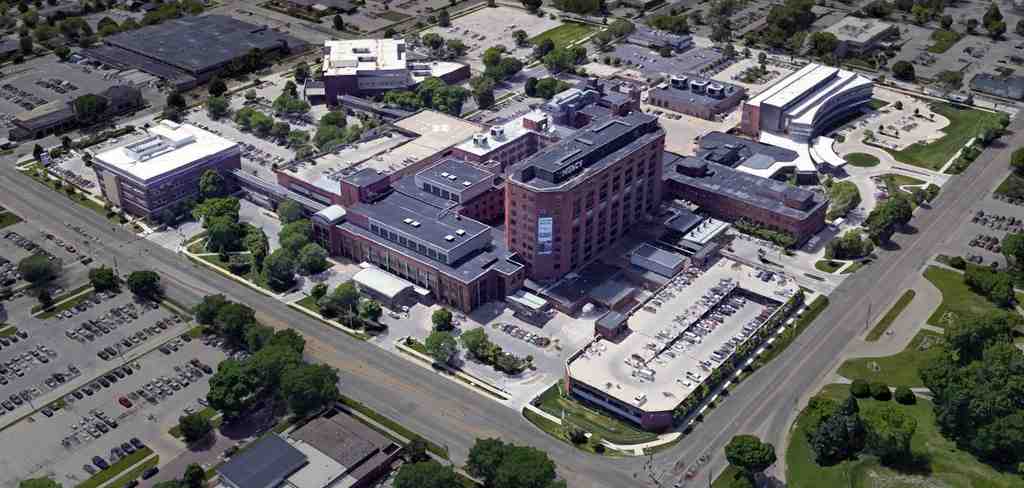
Otwórz dedykowaną stronę →You've made it to our final stop: the Mercy Medical Center in Cedar Rapids! Let's take a breather and give you the scoop on this impressive landmark. Ready for a blend of fun and…Czytaj więcejPokaż mniej
You've made it to our final stop: the Mercy Medical Center in Cedar Rapids! Let's take a breather and give you the scoop on this impressive landmark. Ready for a blend of fun and facts? Here we go! Mercy Medical Center is like the trusty sidekick of Cedar Rapids’ healthcare scene. It's one of two big hospitals around here and often ranks as the best in Iowa or close to it! Pretty impressive, right? It might be smaller, but don’t judge a book by its cover - this place packs a serious punch. It's a non-profit, acute-care hospital with a level III trauma center, meaning they can handle just about any emergency life throws at them. Despite being called "Mercy," you won't need divine intervention to get top-notch care here. It's independent, not riding on the coattails of other Mercy hospitals. They even have a for-profit partnership for outpatient and urgent-care clinics called MercyCare. So, they have their halo but keep their feet on the ground in the business world! Now, you might be wondering, what exactly is an acute-care hospital? Think of it as the emergency superhero - there for sudden health crises rather than long-term battles. But don't be fooled; they also cater to adult psychiatric care, inpatient rehabilitation, and even host Hallmar, an on-site nursing home. It's like a medical Swiss Army knife! One of the coolest things? This hospital can transfer patients by helicopter to the University of Iowa’s level I trauma center for super-specialized cases. Watch out, James Bond - Mercy’s got its own chopper! Mercy’s history and operation methods are quite unique. Founded by the Sisters of Mercy, this hospital blends charitable missions with modern healthcare. They have a mix of non-profit compassion and for-profit efficiency, especially in their MercyCare clinics. Who says you can't have the best of both worlds? They serve not just Cedar Rapids but also seven surrounding rural counties, providing services like cardiology, dialysis, and chemotherapy. It’s no wonder they often resist mergers to keep their independence - they’re a critical local hero! With a residency program and a strong community focus, Mercy also works hand in glove with the University of Iowa, making sure the next generation of doctors gets top-notch training. Mercy may have its roots in the Catholic Church, and that comes with following certain healthcare directives. So, if you’re looking for specific reproductive or end-of-life services, you might need another plan. But hey, every superhero has their kryptonite, right? And there you have it! Mercy Medical Center, where care, community, and a bit of Catholic charm come together. Time to take a deep breath, stretch those legs, and perhaps even pay tribute to the superheroes in scrubs who keep this place running!
Otwórz dedykowaną stronę →





Najczęściej zadawane pytania
Jak rozpocząć trasę?
Po zakupie pobierz aplikację AudaTours i wpisz kod realizacji. Trasa będzie gotowa do natychmiastowego rozpoczęcia – po prostu dotknij \"Play\" i podążaj trasą z nawigacją GPS.
Czy potrzebuję internetu podczas trasy?
Nie! Pobierz trasę przed rozpoczęciem i korzystaj z niej w pełni offline. Jedynie funkcja czatu wymaga internetu. Zalecamy pobieranie przez WiFi, aby oszczędzać dane mobilne.
Czy to wycieczka grupowa z przewodnikiem?
Nie – to samodzielny audioprzewodnik. Zwiedzasz niezależnie, we własnym tempie, z narracją audio odtwarzaną przez telefon. Bez przewodnika, bez grupy, bez harmonogramu.
Ile trwa trasa?
Większość tras zajmuje 60–90 minut, ale to Ty kontrolujesz tempo. Wstrzymuj, pomijaj przystanki lub rób przerwy, kiedy chcesz.
Co jeśli nie zdążę ukończyć trasy dzisiaj?
Żaden problem! Trasy mają dożywotni dostęp. Wstrzymaj i wznów, kiedy chcesz – jutro, za tydzień lub za rok. Twój postęp jest zapisywany.
W jakich językach są dostępne trasy?
Wszystkie trasy są dostępne w ponad 50 językach. Wybierz preferowany język podczas realizacji kodu. Uwaga: języka nie można zmienić po wygenerowaniu trasy.
Gdzie znajdę trasę po zakupie?
Pobierz darmową aplikację AudaTours z App Store lub Google Play. Wpisz kod realizacji (wysłany e-mailem), a trasa pojawi się w Twojej bibliotece, gotowa do pobrania i rozpoczęcia.
Jeśli trasa Ci się nie spodoba, zwrócimy Ci pieniądze. Skontaktuj się z nami pod adresem [email protected]
Bezpieczna płatność przez 


