AudaTours logoAudaTours

Wycieczka audio po Nottingham: Wycieczka audio po Nottingham z Robin Hoodem

starstarstarstarstar
4.25 opinii
Audioprzewodnik15 przystanków

Pod tętniącymi życiem ulicami Nottingham kryją się całe światy – ręcznie wykute jaskinie, drewniane relikty z minionych wieków i kamienne mury, które niegdyś rozbrzmiewały krzykami sprawiedliwości i buntu. Wyrusz w samodzielną podróż audio przez labirynt tajemnic tego miasta, odkrywając legendarne zabytki i przeoczone zakątki, pełne prawdziwych historii, których wielu turystów nigdy nie poznaje. Jakie sekrety czaiły się pod miastem podczas nalotów na Nottingham (Nottingham Blitz)? Kto zniknął w krętych korytarzach Miasta Jaskiń (City of Caves), pozostawiając po sobie tylko szepty? I jakie dziwne wydarzenie spowodowało zawalenie się całej podłogi sali sądowej w Narodowym Muzeum Sprawiedliwości? Spaceruj w cieniu i w słońcu, gdy z każdym krokiem odsłaniają się opowieści o kupcach, banitach, skandalach i powstaniach. Usłysz burzliwą historię Nottingham rozbrzmiewającą pod stopami i ujrzyj miasto w sposób, jakiego nigdy wcześniej sobie nie wyobrażałeś. Gotowy, by zejść do serca tajemnicy Nottingham? Twoja przygoda zaczyna się teraz – odważ się odkryć to, co kryje się pod spodem.

Podgląd trasy

map

O tej trasie

  • schedule
    Czas trwania 40–60 minsIdź we własnym tempie
  • straighten
    4.0 km trasy pieszejPodążaj wyznaczoną trasą
  • location_on
  • wifi_off
    Działa offlinePobierz raz, korzystaj gdziekolwiek
  • all_inclusive
    Dożywotni dostępOdtwarzaj ponownie w dowolnym momencie
  • location_on
    Start przy Severn's Building

Przystanki na tej trasie
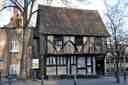
  1. Ah, welcome traveler! You are now approaching the historic Severn's Building. You'll surely recognize it by its charming medieval appearance. Look for a two-story, timber-framed…Czytaj więcejPokaż mniej

    Ah, welcome traveler! You are now approaching the historic Severn's Building. You'll surely recognize it by its charming medieval appearance. Look for a two-story, timber-framed structure that stands proudly with a jettied first floor. Notice the beautiful crisscrossing wooden beams which create an ornate pattern across the building's façade. The roof is covered with plain tiles, giving it a rustic yet quaint look, just over the sign that reads "The Lace Centre." This grand old building dates back to around 1450 and was once home to a prosperous merchant. Originally, it stood proudly on Middle Pavement, where it was numbered as No. 10. Over the centuries, it has served many purposes, including offices for the architects Samuel Dutton Walker and John Howitt from 1879 to 1885. It found itself at the heart of historical events. The Severn family, who were wine and spirit merchants, moved in around 1900. It endured the Nottingham Blitz during World War II, with its yard suffering extensive damage. After the war, there were plans to modernize the building, but these never came to fruition. In 1968, Nottingham City Council decided to dismantle and relocate it to this very spot, a wise move indeed! Between 1980 and 2009, the building was used as a lace museum and shop, reflecting Nottingham's rich history in the lace industry. In recent years, the building has changed hands a few times and is now once again on the market. It continues to stand as a proud testament to Nottingham’s vibrant history. Now that you've had a good look and a bit of history, prepare yourself for the next stop on our tour, an old church with tales and secrets of its own! Let's march on!

    Otwórz dedykowaną stronę →
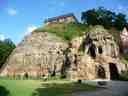
  2. Ah, welcome to the hidden depths of Nottingham, my fine friend! Before you lies the entrance to the City of Caves. When coming towards this landmark, look for a subtle entrance…Czytaj więcejPokaż mniej

    Ah, welcome to the hidden depths of Nottingham, my fine friend! Before you lies the entrance to the City of Caves. When coming towards this landmark, look for a subtle entrance tucked away, often marked with signage leading the way down into the underworld of sandstone wonders. Not very conspicuous, it may look like a mere doorway or small building access; thus, it's easy to miss if one isn't paying close attention. Instead of a grand façade, its entrance might resemble the discreet doorway to a secret hideout-quite fitting for an outlaw like myself, wouldn’t you say? Now, let's venture into this underground marvel! The City of Caves is quite the historical gem. Imagine, if you will, a sprawling network of caves carved into the soft sandstone beneath Nottingham. Over the centuries, these caves have served various purposes-a tannery, pub cellars, and even an air raid shelter during the dark days of the world wars. Known as the Caves at Drury Hill by Historic England, this labyrinth was initially buried beneath the medieval streets, now replaced by the Broadmarsh Shopping Centre. Ah, but the name City of Caves is quite fitting, as there are hundreds of such man-made caves beneath Nottingham, used for over a thousand years. These caves are carved with simple tools, turning the soft stone into dwellings, cellars, and workplaces. Interestingly, the caves were so integral to the lives of the people that in Old Brythonic, Nottingham was called "Tig Guocobauc," meaning "place of caves." How fitting that even the Welsh Bishop of Sherborne Asser named it so in the 9th century! The pottery found in these caves dates them back to 1270-1300, showcasing their ancient use until the St. Mary's Nottingham Inclosure Act of 1845 banned their use as homes for the poor. Throughout history, there have been more than 800 catalogued caves beneath this city, including 200 rediscovered since 2016 by the city archaeologist Scott Lomax. The construction of the Broadmarsh Shopping Centre in the 1960s threatened these historic treasures, but public outrage and efforts by the Nottingham Historical Arts Society helped preserve them for our enjoyment. Speaking of noteworthy discoveries, you’ll find an underground tannery-the only known one in Britain-hidden within these caves. The Pillar Cave, carved in the mid-13th century and later transformed into part of the tannery in the 15th century, is a testament to the resourcefulness of the Nottingham populace. The historical use of these caves for crafting small animal hides and even as water sources adds layers to their storied past. Finally, these caves also served as air raid shelters during the bombings of World War II. Imagine families huddling together in these sandstone sanctuaries, just like the many who found refuge in Sherwood Forest in my day. So, step inside, my friend, and let the walls whisper to you their ancient tales. Perhaps you'll feel a bit like an outlaw yourself, exploring the hidden heart of Nottingham.

    Otwórz dedykowaną stronę →
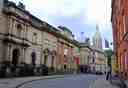
  3. Ah, you've made it to the National Justice Museum, a grand piece of history right here in Nottingham! Look for a stately building of golden sandstone to your left, adorned with…Czytaj więcejPokaż mniej

    Ah, you've made it to the National Justice Museum, a grand piece of history right here in Nottingham! Look for a stately building of golden sandstone to your left, adorned with classical columns and archways that transport you back to another time. You’ll see two vertical banners that read "Galleries of Justice" hanging outside, and the impressive dome of the neighboring church is a helpful landmark as well. This was no ordinary site-it started as the Shire Hall and County Gaol, where individuals met the full might of the law. The building's history stretches back to the 14th century for courtrooms and at least 1449 for the gaol, making it one of the oldest courthouses in England. Over the centuries, the hall has seen justice served and even executions carried out. Imagine the crowd in 1724 when the courtroom floor collapsed-almost a spectacle worthy of one of my daring escapades! Rebuilt and expanded, it was a place of stern justice, with public hangings outside until 1864, when hangings moved behind closed doors. Those steps at the entrance saw many a fateful day. Inside these walls, not only would you have been tried, but also arrested and even executed. It’s no surprise that the building is Grade II* listed, preserving its chilling yet fascinating history. As Robin Hood, opponent of Nottingham’s sheriffs, I find it somewhat ironic standing here. But now, instead of justice enacted, it’s history preserved-so go on, venture inside if you dare, and uncover the many tales this place has to tell!

    Otwórz dedykowaną stronę →
Pokaż jeszcze 12 przystankówPokaż mniej przystankówexpand_moreexpand_less
  1. Ah, I see you're approaching the grand St Mary's Church. Look for its towering silhouette rising amid the historic Lace Market district. The steps leading to its entrance are…Czytaj więcejPokaż mniej

    Ah, I see you're approaching the grand St Mary's Church. Look for its towering silhouette rising amid the historic Lace Market district. The steps leading to its entrance are framed by a classic stone cross. Notice the intricate gothic perpendicular style of its architecture, with tall pointed arches and stained glass windows that tell tales of old. The Church of St Mary the Virgin is the oldest parish church of Nottingham, a Grade I listed building of outstanding architectural and historic interest. Mentioned in the Domesday Book of 1086, it whispers secrets from the Saxon times. This church, like an old oak tree, has weathered the reigns of monarchs from Edward III to Henry VII. The main structure stretches back over centuries, with its uniformity in gothic style quite a marvel. The south aisle wall, built in the early 1380s, marks the beginning of this grand structure’s current incarnation. The nave and transepts followed in the early 15th century, and the tower was proudly completed during the reign of Henry VIII. Once part of the Lenton Priory, this church has seen monks as rectors and appointed vicars to carry on the daily rituals. In 1513, Dame Agnes Mellers founded a school here, which evolved into what we now know as Nottingham High School. Imagine that! Initially, even the now-celebrated Goose Fair pales next to the commemoration services instated back then. Also, George Fox, the founder of the Quakers, once found himself imprisoned after interrupting a sermon here in 1649. St Mary's has quite the colorful past; the town fire engine was stashed here in the 1700s, and it opened its own workhouse in 1726. Following a major restoration in the mid-19th century, the church re-opened with Bishop John Kaye presiding. St Mary's even set a precedent with pioneering Sunday School education long before it was seen elsewhere. Truly, this is a place where history breathes through every stone and every story. As you stand here, take in the grandeur of St Mary’s Church-a true sentinel of time and tradition, right here in the heart of our beloved Nottingham. Seeking more information about the features, the church today or the vicarage? Ask away in the chat section and I'll fill you in.

    Otwórz dedykowaną stronę →
  2. Ah, you've arrived at the historic Lace Market! Take a good look around you. To spot this hidden gem, focus on the grand red-brick buildings that rise before you in a tight,…Czytaj więcejPokaż mniej

    Ah, you've arrived at the historic Lace Market! Take a good look around you. To spot this hidden gem, focus on the grand red-brick buildings that rise before you in a tight, harmonious formation. The intricate Victorian architecture, characterized by large windows, iron railings, and decorative brickwork, captures the essence of Nottingham's rich industrial past. You'll notice the old gas lamps and red phone boxes scattered about, invoking a sense of stepping back in time. The Lace Market is a quarter-mile square area that was once the thriving heart of the world's lace industry. Picture this: bustling salesrooms and warehouses filled with exquisite lace, with buyers from across the globe drawn to Nottingham's finest fabrics. Now, it’s a conservation area adorned with trendy bars, restaurants, and shops. Don’t miss the chance to explore the Lace Market Theatre or the Nottingham Contemporary arts centre while you’re here. Long before lace became the area's claim to fame, this very hill was the site of Nottingham's original Saxon settlement. St Mary's Church, which you can see standing proudly on High Pavement, is believed to be the third church on that site, dating back to 1474 and showcasing stunning early English Perpendicular architecture. After the Norman Conquest, the Saxon settlement evolved into the English borough, and opposite, around Nottingham Castle, the French borough developed. Eventually, these two boroughs converged, and the Old Market Square became the city's focal point, steering the Saxon area towards its future as the lace industry's epicenter. The transformation into the Lace Market kicked off with the preparation of stocking frames by William Lee in 1589. Though Lee himself moved to France, Nottingham became the hub for stocking knitting by the mid-18th century. Innovations like the Bobbinet and Leavers machines allowed lace knitting to flourish, leading to the Victorian-era peak where 25,000 workers were engaged in lace production. However, like many traditional industries, lace making saw a decline by the 1970s. The once-vibrant market slumped into dereliction until Nottingham City Council's Operation Clean Up in 1978 breathed new life into the area. With public grants for historic building refurbishment, the majority of the warehouses have been revitalized for modern uses. Now, the Lace Market stands as a testament to Nottingham’s ability to reinvent itself. A lively mix of residential, commercial, and cultural spaces have replaced the old warehouses. Stay and soak in this unique blend of history and modernity, and perhaps grab a pint in one of the charming nearby pubs! Onward now, to further adventures in Nottingham!

    Otwórz dedykowaną stronę →
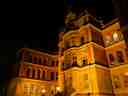
  3. As you stand here on Stoney Street, look up and to your right. The Adams Building is before you, a splendid sight bathed in evening light. Its red brickwork, punctuated by…Czytaj więcejPokaż mniej

    As you stand here on Stoney Street, look up and to your right. The Adams Building is before you, a splendid sight bathed in evening light. Its red brickwork, punctuated by sophisticated stone detailing, brings a touch of majesty to these historic streets. Notice the symmetrical grandeur of the main building, the tall arched windows, and the impressive central entrance crowned by intricate stonework. Now, let me regale you with the tale of this architectural gem. The Adams Building, formerly the Adams and Page warehouse, is the largest building in this Lace Market district and is quite a marvel. Thomas Adams, a Victorian industrialist with a heart of gold, commissioned this grand structure. Imagine this: back in 1855, Adams joined forces with Nottingham architect Thomas Chambers Hine to erect a building not just for efficiency, but also for the well-being of his many workers. Quite revolutionary, wouldn't you say? They created a showroom and warehouse for lace, once the pride of Nottingham’s industry. The main façade on Stoney Street is the earliest section, complete with elaborate masonry and a grand entrance behind an iron-railed courtyard. Picture the hustle and bustle of workers in the two-storey display hall, originally lit by decorative gas lamps, with lace products streaming in from outlying factories to be finished and sold here. Inside, there was a steam engine to power the operations and hydraulic engines for hoists and packing machines. There are some creative elements to the design too - the “lace lofts” at the rooftop level were essentially vast expanses of glass to let in maximum light. This was essential for the meticulous lace-finishing work. Beneath the ornate exterior lies Adams' philanthropic vision. The basement was converted into a chapel large enough to seat over 500 workers, with facilities like indoor toilets, washing rooms, tea rooms, and even a heating system - practically unheard of in mid-Victorian factories. The Anglo-Italian style, with elements reminiscent of the 15th century Palazzo Riccardi of Florence, makes the Adams Building special. You might even say it outshines every other building in Hard-hearted Sheriff’s Nottingham. The once plain industrial environs were tasked to measure up to this "finest erection in the Midlands!" Now part of Nottingham College, the Adams Building continues to be a cornerstone of education and history. I dare say, the spirit of Thomas Adams still reverberates in these walls, reminding us of a time when care for one’s workers met architectural innovation. Quite a tale, wouldn’t you agree? If you're keen on discovering more about the background, phase i or the later phases, head down to the chat section and engage with me.

    Otwórz dedykowaną stronę →
  4. Ah, there you stand, right before the legendary Broadway Cinema in the heart of Hockley. To spot it, look towards the left side of the street. You'll see a striking modern…Czytaj więcejPokaż mniej

    Ah, there you stand, right before the legendary Broadway Cinema in the heart of Hockley. To spot it, look towards the left side of the street. You'll see a striking modern structure with large glass windows reflecting the sky and the surrounding buildings, and a vertical sign that proudly spells out "BROADWAY." There's a gentle ramp leading up to the entrance, which should beckon you inside. Now, let me whisk you on a tale of this splendid place. Once upon a time, this very site began its life as the Broad Street Wesleyan Church in 1839, designed by the grand architect S. S. Rawlinson. The echoes of old sermons still whisper that this is where the founder of the Salvation Army, William Booth, found his calling. Fast forward to the swingin' sixties, and you'd find the Co-operative Education Centre and the Nottingham Film Society nestled here. It wasn’t until 1982 that the spell was cast, transforming it into the enchanting Broadway Cinema. A proud moment for Robin Hood's city came in 1993 when it hosted the UK premiere of Quentin Tarantino's "Pulp Fiction," just after its triumph at the Cannes Film Festival. Film director Shane Meadows, a fellow outlaw in storytelling, has made Broadway his hideout for press interviews. And let’s not forget filmmaker Jeanie Finlay, who brought her Game of Thrones documentary 'The Last Watch' to life right here. In 2006, with a generous bounty from the National Lottery and Arts Council England, a grand redevelopment worth about £6 million brought even more magic to the Broadway Cinema, making it home to four splendid screens. One of these screens is the world’s only cinema designed by the legendary Sir Paul Smith. And if your throat's a bit dry from all this walking and talking, they’ve got not one, but two bars to quench your thirst! Laraine Porter, co-founder of the British Silent Film Festival, held court here between 1998 and 2008, filling the halls with the enchanting silence of early cinema. So, next time you're in the mood for a cinematic adventure, just remember, Broadway Cinema stands ready to welcome you in Robin Hood’s Nottingham!

    Otwórz dedykowaną stronę →
  5. Ah, there it is! To your left, standing proud on Thurland Street, is the historic Corn Exchange. Picture a grand red-brick building with ashlar stone dressings, a testament to the…Czytaj więcejPokaż mniej

    Ah, there it is! To your left, standing proud on Thurland Street, is the historic Corn Exchange. Picture a grand red-brick building with ashlar stone dressings, a testament to the Italianate style designed by Thomas Chambers Hine. The building’s symmetrical five-bay frontage is quite striking, with the outer bays slightly projected. Take a closer look at the arch-headed openings on the ground floor and the segmental-headed pediments on the first floor - they showcase intricate architectural details that are hard to miss. The Corn Exchange, a Grade II listed building, has a rich history dating back to the mid-19th century. Imagine, if you will, a bustling scene of corn merchants in the northwest corner of the Nottingham Exchange before this fine building was erected. Then came the year 1845, when a group of enterprising local businessmen formed the Nottingham Corn Exchange Company to establish a purpose-built corn exchange on land previously occupied by Thurland Hall, dating back to 1458. With the generous blessing of the 4th Duke of Newcastle, Henry Pelham-Clinton, construction began, and the Corn Exchange was officially opened on 6 April 1850. Originally, this edifice hosted the lively trade of corn merchants, with its principal room being a vast hall measuring 77 feet long by 55 feet wide. Over the years, the Corn Exchange has adapted to the changing times. Post-Great Depression, its role waned as a trading hub and evolved into an events venue. Early 20th century saw exhibitions by the Nottingham Society of Artists and even the Thirtieth Annual Conference of the Independent Labour Party in 1922. Rolling into the late 20th century, the Corn Exchange found a new rhythm as the "Clinton Rooms," a concert venue where avant-pop group Stereolab graced the stage in 1996. It then transitioned through various identities: O'Reilly's public house with an Irish theme in the late '90s, the Jongleurs Comedy Club from 2010, and finally, the Roxy Ball Room with an indoor sports theme from 2017. Quite the journey, wouldn’t you say? From corn merchants to comedy clubs, this place has seen it all. Now as you stand before it, let your imagination wander through its storied past. Perhaps you'll catch the whispers of its rich, multifaceted history wafting through the arches. And who knows, maybe you'll find yourself back here one evening for a joyous event, reveling in the echoes of the countless gatherings this building has hosted over the centuries.

    Otwórz dedykowaną stronę →
  6. Ah, I see you’ve reached Nottingham Guildhall! Look to your right and there it stands, a grand Victorian edifice that commands attention with its stately presence. You can’t miss…Czytaj więcejPokaż mniej

    Ah, I see you’ve reached Nottingham Guildhall! Look to your right and there it stands, a grand Victorian edifice that commands attention with its stately presence. You can’t miss the French Renaissance Revival architectural style-complete with intricate stone windows and slate roofs adorning its Darley Dale ashlar facade. Nottingham Guildhall, built between 1887 and 1888, replaced the former Guild Hall on Weekday Cross. This impressive structure was chosen through a competition judged by Alfred Waterhouse, favoring the design by Thomas Verity and George Henry Hunt. The construction, carried out by Gabbutts of Liverpool-a decision that ruffled the feathers of local companies-originally budgeted at £128,416, ended up costing £65,000 due to simplified designs. This exquisite landmark once buzzed with activity as a magistrates' court. Imagine the drama that unfolded within these walls as justice was served! In the 1990s, the Nottingham City Council repurposed it as office space before moving to modern digs in 2010, leaving the Guildhall relatively unused and awaiting its next chapter. But let's not forget the subterranean secrets beneath this grand structure! The Guildhall boasts a two-level cave system with brick-lined passages and cells. These were adapted during World War II as emergency headquarters and air raid shelters-imagine the echoes of history reverberating through those dimly lit corridors. In recent times, the Guildhall faced a series of woes with vandals setting fire multiple times during 2024, necessitating increased security. Yet, with all its stories and struggles, Nottingham Guildhall remains a testament to the city’s rich history and resilience. Now, as you stand before this storied structure, take a moment to envision the bustling legal proceedings or the echoes of wartime urgency emanating from its underground passages. Ready to move on to our next stop? Let's continue our journey through Nottingham's vibrant history!

    Otwórz dedykowaną stronę →
  7. Ah, you've made it to Rock City! Now, standing before you is a building that's cemented itself as a core of Nottingham's vibrant musical heartbeat. You won't miss it-it boasts an…Czytaj więcejPokaż mniej

    Ah, you've made it to Rock City! Now, standing before you is a building that's cemented itself as a core of Nottingham's vibrant musical heartbeat. You won't miss it-it boasts an imposing facade with bold signage declaring its name, often adorned with posters of upcoming gigs. The queues, especially on a concert night, will be a clear giveaway that you've reached one of the premier spots for live music. Rock City is more than just a music venue; it’s a legendary institution. Since opening its doors in December 1980, its first gig playing host to The Undertones, it's become a rite of passage for many bands on the alternative music scene. The venue has a decent capacity of 2,000, spread across three rooms: The Main Hall for the headline acts, the Basement (Beta) room, and the Black Cherry Lounge for a more intimate setting. This place has quite the reputation-described by NME as "sweaty but truly indie" and the winner of numerous awards like Kerrang! magazine's Venue of the Year for ten consecutive years. Many a night have seen the rafters shaking here, with the likes of Nirvana, Oasis, and Public Enemy gracing its stage. Rock City is a living testament to the ever-evolving landscape of alternative music, hosting everything from grunge and punk to Britpop and beyond. The building itself is ripe with history, originally opening as the Alexandra Skating Rink in 1876 and undergoing many transformations before becoming the Rock City you see before you. Its legacy of riots, unforgettable performances, and DJ nights have made it a key thread in the fabric of Nottingham’s nightlife. Rock City is not just a venue; it’s an experience. The immersive atmosphere, where legends like Kurt Cobain once mingled with fans, creates a unique vibe that few other places can replicate. So whether you're here for a gig or one of the famed club nights, you’re stepping into a piece of Nottingham’s rich musical heritage. Enjoy the energy and maybe even raise a glass to your favorite outlaw while you're at it! For further insights on the overview, theft problem or the club nights, feel free to navigate to the chat section below and inquire.

    Otwórz dedykowaną stronę →
  8. Ah, here we are at the magnificent Nottingham Royal Concert Hall! Look just ahead to see its striking modern architecture, which stands out with sweeping glass facades and sleek,…Czytaj więcejPokaż mniej

    Ah, here we are at the magnificent Nottingham Royal Concert Hall! Look just ahead to see its striking modern architecture, which stands out with sweeping glass facades and sleek, curvilinear lines. The design is elegant yet commanding, much like the mysterious Sherwood Forest itself. The building's tall glass windows reflect the sky, making it seem almost ethereal, a fitting stage for the arts. Now, let me regale you with a tale of this fine establishment. As a fellow who appreciates a good performance-preferably one that tells tales of daring deeds and noble outlaws-the Royal Concert Hall holds a special place in Nottingham's heart. Managed by the Nottingham City Council, this concert hall is part of a cultural complex that includes the city's Theatre Royal. They are truly the twin jewels of Nottingham's performing arts scene. The Royal Concert Hall, which opened its doors in 1982, stands proudly opposite the newer Cornerhouse complex and sits conveniently near the Royal Centre tram stop. But dear traveler, did you know that this site once hosted the Empire Palace of Varieties, a grand old theatre designed by Frank Matcham in 1898? Oh, the tales that building could tell - it closed its curtains for the final time in 1958 and was later demolished in 1969 to make way for road widening. Designed by the Renton Howard Wood Levin Partnership, the same architects behind the Sheffield Crucible Theatre and Manchester's Bridgewater Hall, the Royal Concert Hall cost a princely sum of £12 million. With a seating capacity of 2,499, it offers a space as grand and sweeping as Sherwood Forest, prompting its audiences to be enthralled by its performances. And who could forget the first artist to grace its stage? Why, none other than the iconic Elton John, who performed there in November 1982. Imagine that-keyboards blazing, his voice echoing off those polished walls. So here we stand, my friend, before a modern marvel that continues to be a beacon of culture and entertainment in Nottingham. Let's raise a toast to the magic of storytelling and the power of performance!

    Otwórz dedykowaną stronę →
  9. Ah, welcome to the heart of Nottingham! Ahead of you lies the expansive Old Market Square, often lovingly referred to as "Slab Square" by the locals. As you approach, you'll…Czytaj więcejPokaż mniej

    Ah, welcome to the heart of Nottingham! Ahead of you lies the expansive Old Market Square, often lovingly referred to as "Slab Square" by the locals. As you approach, you'll notice a vast open space framed by historic buildings, bustling with activity. Before you is a bustling yet open area, stretching over an impressive 12,000 square metres - or about three acres - making it one of the largest paved squares in the United Kingdom. To your right, you'll spot the prominent Council House, a grand building that once served as Nottingham's town hall until 2010. This architectural marvel dominates the eastern end of the square and is easily recognizable by its iconic dome and pillars. To help you get your bearings, the square is bordered by Beastmarket Hill to your left (the west), Long Row directly ahead (to the north), and South Parade on your right (to the south). The perimeter of the square is ringed with shops, cafes, and a few banks, creating a lively atmosphere perfect for a leisurely stroll or a spot of shopping. Now, let me weave you a tale of this historic square. In the olden days, long before the days of tights and archery practice, this very spot was the meeting point of two ancient towns: the Norman town near the Castle Rock and the Anglo-Saxon settlement around the Lace Market. A mighty wall once divided these two communities, and a stainless steel drainage channel now marks where that boundary stood. For centuries, this square has been a hub of activity, a place where markets thrived and the townsfolk gathered. The original market was even larger than today's square, extending to around 5.5 acres! Imagine the hustle and bustle of merchants and traders eager to sell their wares. The Goose Fair, one of the oldest and largest fairs in England, once called this square home before moving in 1928. And in the past, the square was the site of Smith's Bank, England's first provincial bank, established in 1688. It’s hard to believe that where you're standing has seen so much change and development over the centuries. The square has also seen its share of public events and protests. One notable event involved the famed Luddites, who protested here in the early 19th century against the machines that threatened their livelihoods. Today, the square continues to be a central meeting point for the people of Nottingham, hosting fairs, concerts, exhibitions, and more. Just imagine, you might be standing where great celebrations, royal visits, and significant protests once took place. Such is the legacy of Old Market Square, a living testament to Nottingham’s vibrant history. So, pause for a moment, take in the sights and sounds, and perhaps spare a thought for the countless feet that have walked this path before you. Onward, my friend, to the next stop of our journey!

    Otwórz dedykowaną stronę →
  10. Ah, I see you've made it to St Peter's Church! Just take a look in front of you. It's hard to miss the towering, majestic spire stretching skywards. The church, built of pale…Czytaj więcejPokaż mniej

    Ah, I see you've made it to St Peter's Church! Just take a look in front of you. It's hard to miss the towering, majestic spire stretching skywards. The church, built of pale stone, stands proudly amidst the city hustle, with arched windows and a large clock facing the street. The structure evokes an air of timelessness and resilience. St Peter's Church, formally known as The Church of St Peter with St James, carries with it a long and varied history. As one of the three medieval parish churches in Nottingham (the others being St Mary's and St Nicholas), it has witnessed centuries of change. Its origins trace back to around 1100, though the original structure was destroyed by fire and subsequently rebuilt over the following centuries. This church isn't just a beacon of faith but a custodian of music and community. It boasts an impressive organ and a choir renowned for their enchanting performances. Since 2007, Peter Siepmann has been at the helm as the Organist & Director of Music. The choral tradition here is long and storied, having seen illustrious directors like Vincent Trivett and Kendrick Partington nurture the musical talents that fill this sacred space. St Peter's offers a regular series of "coffee break" concerts on Saturday mornings, a tradition that started in 1988. It also occasionally hosts evening performances that captivate local audiences. From its 15th-century payments to organists to a rather dramatic clock-related incident in 1846-where a clock face gave way and dragged a worker down with it-the church's history is rich and riveting. So, as you stand before this monumental church, think of all the echoes of past congregations, musicians, and moments that its walls hold. Hold on to that sense of timelessness as we look forward to our next stop on this adventure.

    Otwórz dedykowaną stronę →
  11. Aye, traveler, as you walk along, you’ll see the magnificent St Nicholas Church ahead. Look to the left and you'll spot an impressive medieval structure with red-brick walls and a…Czytaj więcejPokaż mniej

    Aye, traveler, as you walk along, you’ll see the magnificent St Nicholas Church ahead. Look to the left and you'll spot an impressive medieval structure with red-brick walls and a sturdy square tower reaching towards the heavens. The tower is adorned with arched windows, and patches of lighter stone frame the edges, adding to its ancient charm. The surrounding trees on both sides lend a touch of greenery, contrasting beautifully with the solid brick façade. St Nicholas Church, known to the locals as St Nic's, holds a storied past, woven deeply into the fabric of Nottingham's history. This fine parish church under the Anglican diocese of Southwell has stood here, in one form or another, since the eleventh or twelfth century. Ah, if only these walls could speak, they’d recount tales as old as the times when I, Robin Hood, roamed these lands. Back in 1643, during the tumultuous days of the English Civil War, the original church was destroyed. The Royalists, in a daring move, set up camp in the tower and laid siege to the Castle garrison, but the Governor of the Castle, Colonel Hutchinson, had other plans. He ordered the church to be demolished, leaving a void for almost three decades. Only in 1671 did construction commence anew, and by 1678, the church ye see today was completed. The fact that this structure holds the stories of centuries is evident in its very foundation. The registers of marriages, burials, and baptisms beginning in 1562, speak of generations and legacies, while old documents from 1671 record church property inventories and meetings. Imagine, the very ground you stand on hasn't hosted a burial since 1881, those resting here surely have stories to share. Now, as with any good tale, there’s a bit of grandeur. The church once housed an organ with intriguing companions-rods, curtains, bassoons, and a serpent! Over time, the organ was upgraded to an electronic one in 2010, bringing modernity to this historic edifice. So, take a moment to admire this Grade II* listed building of more than local interest, where the echoes of Nottingham's medieval past blend seamlessly with the present. And who knows, if you wander close, you might even hear an ancient melody, or perhaps a whisper of an old ballad sung by a dashing outlaw from Sherwood Forest. Onward, to explore more tales of Nottingham!

    Otwórz dedykowaną stronę →
  12. Aha, we’ve reached the grand finale of our tour! Now, right ahead, perched majestically on Castle Rock, you’ll spot the Nottingham Castle. It's impossible to miss, standing tall…Czytaj więcejPokaż mniej

    Aha, we’ve reached the grand finale of our tour! Now, right ahead, perched majestically on Castle Rock, you’ll spot the Nottingham Castle. It's impossible to miss, standing tall and proud, the grand mansion building looms over the city from its elevated perch. The grey stone structure is both imposing and elegant, signifying centuries of history and fortitude. The elevation of Castle Rock gives the castle a commanding view, with sheer cliffs dropping off on the south and west sides. Now, let’s dive into the riveting tale of Nottingham Castle. This formidable fortress, originally a Norman construction ordered by William the Conqueror in 1068, evolved significantly through the medieval period, transforming into a key royal fortress and occasionally serving as a royal residence. The castle we see today, however, is primarily a product of the Stuart Restoration era, a ducal mansion built in the 1670s by William Cavendish, the 1st Duke of Newcastle. This structure replaced much of the original castle after it was largely demolished post the English Civil War. Imagine, if you will, the grandeur of medieval knights and kings bustling about this very site. Indeed, Nottingham Castle was a royal stronghold and a place of leisure, closely linked to the royal hunting grounds nearby. But it wasn’t all royal leisure - Prince John and I, Robin Hood, had many a fateful showdown here, according to the legends! One of the castle’s most dramatic moments came in 1194, during a battle when the rightful King Richard the Lionheart besieged the castle held by Prince John’s supporters, my old nemesis, the Sheriff of Nottingham included. The castle fell in only a few days. Additionally, it was the site of young King Edward III’s audacious coup d'état against his regents, his mother Isabella of France and her lover, Roger Mortimer. The castle's secret tunnels played a crucial role in their downfall. In the modern era, the castle saw turmoil yet again, being burned down by rioters in 1831, and subsequently left in ruins until the 1870s when it was restored to house an art gallery and museum. After another spell of neglect, a massive restoration was undertaken recently, and it reopened to the public in June 2023. Though little of the original castle remains, the surviving gatehouse and ramparts are enough to whisk you back to those medieval days. The stories of rebellion, drama, and passion echo around this historic site. As you stand here, let the tales of Nottingham Castle inspire you as much as they have generations before. Thank you for joining me, Robin Hood, on this grand tour of Nottingham. Keep your wits about you, honor those who fight for justice, and always remember the magic of history beneath your feet. Farewell, noble visitor!

    Otwórz dedykowaną stronę →

Opinie

4.2
starstarstarstarstar
5 opinii

Najczęściej zadawane pytania

Jak rozpocząć trasę?

Po zakupie pobierz aplikację AudaTours i wpisz kod realizacji. Trasa będzie gotowa do natychmiastowego rozpoczęcia – po prostu dotknij \"Play\" i podążaj trasą z nawigacją GPS.

Czy potrzebuję internetu podczas trasy?

Nie! Pobierz trasę przed rozpoczęciem i korzystaj z niej w pełni offline. Jedynie funkcja czatu wymaga internetu. Zalecamy pobieranie przez WiFi, aby oszczędzać dane mobilne.

Czy to wycieczka grupowa z przewodnikiem?

Nie – to samodzielny audioprzewodnik. Zwiedzasz niezależnie, we własnym tempie, z narracją audio odtwarzaną przez telefon. Bez przewodnika, bez grupy, bez harmonogramu.

Ile trwa trasa?

Większość tras zajmuje 60–90 minut, ale to Ty kontrolujesz tempo. Wstrzymuj, pomijaj przystanki lub rób przerwy, kiedy chcesz.

Co jeśli nie zdążę ukończyć trasy dzisiaj?

Żaden problem! Trasy mają dożywotni dostęp. Wstrzymaj i wznów, kiedy chcesz – jutro, za tydzień lub za rok. Twój postęp jest zapisywany.

W jakich językach są dostępne trasy?

Wszystkie trasy są dostępne w ponad 50 językach. Wybierz preferowany język podczas realizacji kodu. Uwaga: języka nie można zmienić po wygenerowaniu trasy.

Gdzie znajdę trasę po zakupie?

Pobierz darmową aplikację AudaTours z App Store lub Google Play. Wpisz kod realizacji (wysłany e-mailem), a trasa pojawi się w Twojej bibliotece, gotowa do pobrania i rozpoczęcia.

verified_user
Gwarancja satysfakcji

Jeśli trasa Ci się nie spodoba, zwrócimy Ci pieniądze. Skontaktuj się z nami pod adresem [email protected]

Bezpieczna płatność przez

Apple PayGoogle PayVisaMastercardPayPal

AudaTours: Audioprzewodniki

Rozrywkowe, niedrogie, samodzielne piesze trasy

Wypróbuj aplikację arrow_forward

Uwielbiany przez podróżników na całym świecie

format_quote Ta trasa była świetnym sposobem na poznanie miasta. Historie były ciekawe, bez przesadnego scenariusza, i uwielbiałam możliwość zwiedzania we własnym tempie.
Jess
Jess
starstarstarstarstar
Trasa po Tbilisi arrow_forward
format_quote To był solidny sposób na poznanie Brighton bez poczucia bycia turystą. Narracja miała głębię i kontekst, ale nie przesadzała.
Christoph
Christoph
starstarstarstarstar
Trasa po Brighton arrow_forward
format_quote Zacząłem tę trasę z croissantem w jednej ręce i zerowymi oczekiwaniami. Aplikacja po prostu idzie z Tobą, bez presji, tylko Ty, Twoje słuchawki i fajne historie.
John
John
starstarstarstarstar
Trasa po Marseille arrow_forward

Nieograniczone audioprzewodniki

Odblokuj dostęp do KAŻDEJ trasy na świecie

0 tras·0 miast·0 krajów
all_inclusive Odkryj Bez Limitu