
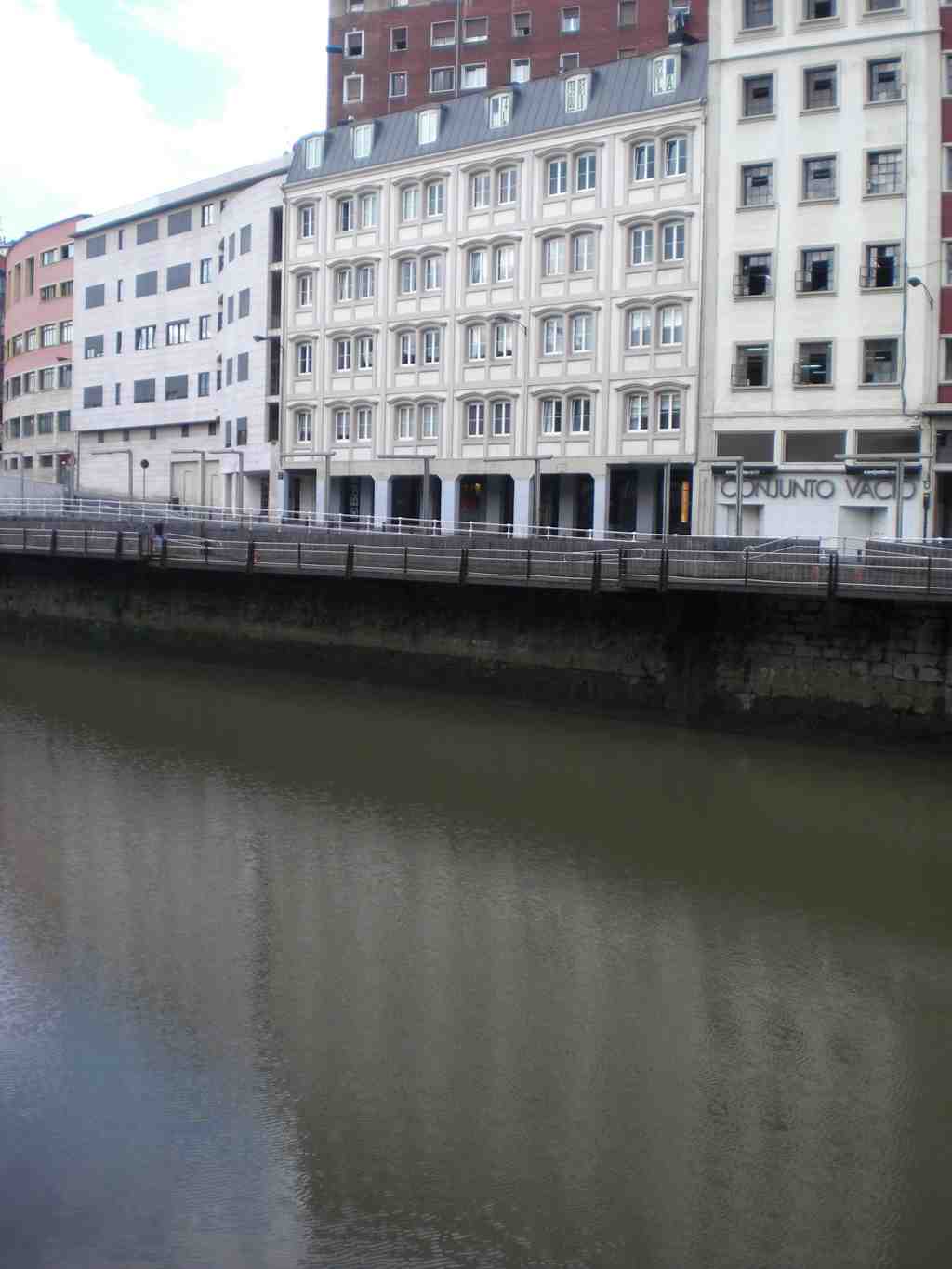
To spot the Flour Factory The Ceres, look just across the river for a large, elegant cream-colored building with neat rows of windows and a steeply pitched, grayish roof-its distinct grid-like facade sets it apart from its neighbors.
Now, as you’re standing here, imagine yourself over a hundred years ago, when this bustling quarter was all about industry and hard work. The year is 1899, and in a tide of excitement and flour dust, the brand-new Ceres Flour Factory is rising up right here. The neighborhood buzzes with gossip. Who’s behind this giant new factory? Meet Toribio Ugalde, the founder, who decided to name his mill after Ceres, the Roman goddess of harvests. Good choice, because if anyone could keep your breadbasket full, it was her!
This was no ordinary building-oh no! It was the first in all of Spain to use a groundbreaking technique called Hennebique reinforced concrete. Picture the engineers, led by Ramón Grotta and Palacios and the architect Federico Ugalde, scratching their heads, pouring concrete, and hoping the whole thing wouldn’t topple into the river. Luckily, it stood strong, with a smart brick-and-artificial-stone facade that gleamed in the sunlight. Those windows with their graceful, arched frames let in clouds of flour and laughter alike.
Originally, the building wore a fancy mansard roof like a French hat, but in the 1950s, someone decided it needed a haircut... and it lost its top, making room for two more floors. As flour mills go, The Ceres was as stylish as they come, with grand arches and detailed molding so nice, even the bricks seemed to be showing off.
Through the years, its concrete bones held steady, earning it historic status as a technological star in Basque architecture. And just when it thought its story was over, a clever architect came along in 2001, transforming the old mill into homes, while keeping its proud, sturdy look. Imagine the stories this place has seen-harvest festivals, flour deliveries, and now, someone’s morning coffee by the window. What a transformation!




