Wycieczka audio po Badajoz: Kulturowa odyseja
W palącym słońcu Estremadury potężne mury Badajoz były świadkami wieków zaciętych podbojów i szeptanych intryg. Każdy kamień Alcazaby strzeże tajemnic, które przetrwały armie i upływ czasu. Oto zaproszenie do podróży przez Badajoz z audioprzewodnikiem, podczas której odkryjesz starożytne fortyfikacje i zapomniane zakątki, które większość podróżnych mija w pośpiechu. Zajrzyj głębiej i odkryj historie ukryte na widoku. Jakie krwawe powstanie zburzyło spokój w twierdzy Alcazaba? Jaki upiorny cień przemyka o północy przez Bramę Palmową, budząc lęki sprzed wieków? Dlaczego zakazana uczta niemal doprowadziła Badajoz do skandalicznej ruiny? Przejdź krętymi, wiekowymi korytarzami, wejdź na mury obronne i prześledź blizny pozostawione zarówno przez rewolucje, jak i romanse. Każdy krok odsłania nową opowieść. Doświadcz dramatu w świetle słońca i w cieniu, gdy historia ożywa pod Twoimi stopami. Odkryj najlepiej strzeżone sekrety Badajoz – naciśnij odtwarzanie i pozwól legendzie poprowadzić Cię drogą.
Podgląd trasy
O tej trasie
- scheduleCzas trwania 40–60 minsIdź we własnym tempie
- straighten3.4 km trasy pieszejPodążaj wyznaczoną trasą
- location_on
- wifi_offDziała offlinePobierz raz, korzystaj gdziekolwiek
- all_inclusiveDożywotni dostępOdtwarzaj ponownie w dowolnym momencie
- location_onStart przy Most Palmowy
Przystanki na tej trasie
To spot the Palm Bridge, look out over the Guadiana River for a long, beautifully lit stone bridge with dozens of arches stretching gracefully across the water-especially…Czytaj więcejPokaż mniej
To spot the Palm Bridge, look out over the Guadiana River for a long, beautifully lit stone bridge with dozens of arches stretching gracefully across the water-especially eye-catching at dusk as the lights twinkle. Welcome to the Palm Bridge! Imagine standing right where people have crossed between the heart of Badajoz and the boroughs of San Fernando and Santa Isabel for centuries. You’re looking at the city’s oldest bridge-older than most grandpas' favorite fishing stories. This isn’t just any bridge; it’s a true survivor, with 32 impressive arches spanning nearly 600 meters across the river. When you glance at the sturdy stonework, you can almost hear the echo of footsteps from travelers hundreds of years ago. Now, picture yourself here in the wild 1500s. The river Guadiana sometimes behaved more like a wild bull than a calm stream. In 1460, there was a bridge here, but imagine the shock when a roaring flood in 1545 swept the original bridge away! For a while, the only way to cross was by hopping on boats bobbing under the sun-probably an adventure, but definitely not for the seasick. Finally, in 1596, after many arguments about what year things actually happened (historians are like that), the Palm Bridge took shape again, this time ready to withstand trouble and storms. But the bridge couldn’t just rest easy. In 1603, King Philip III must have raised his royal eyebrows when another monster flood swept away 16 of the bridge’s arches! People scrambled to rebuild, working from 1609 to 1612, laying new stones and arches, making thirteen new pillars, and offering up a few prayers for drier days. Each time repairs were finished, another test seemed to come along. In 1876, the mighty Guadiana rose yet again, swallowing the bridge so completely that you can still find metal plaques showing how astonishingly high the water went-almost as if the river wanted to leave a mark for the ages. With every disaster and repair, the bridge grew a bit more interesting. In 1833, iron railings were added-imagine a stylish new hat for a grand old lady. Later, in the late 1800s, engineer Cervera Royo added some dramatic, gothic-style “little castles” in the middle of the bridge, making things look a bit like a fairy tale gone urban. In the early 1900s, yet another engineer, José Eugenio Ribera, put in central towers, which sadly didn’t survive the bridge’s most recent facelift in 2003, but the spirit of innovation definitely lives on. And did you know the bridge was once nicknamed “El Puente Bobo,” or “the Dumb Bridge”? Why? Because crossing it was free-nobody charged a toll, unlike the greedy bridges elsewhere! People probably lined up here with smug smiles, thinking, “I’ll show those toll bridges who’s boss.” Alongside the bridge, back in the day, trams clattered by, carrying travelers from the city to the busy railway station, and a special lane separated pedestrians from horses and carts-early traffic control, Badajoz-style. As you stand here, feel the hum of history. This bridge isn’t just a physical link; it’s woven into every flood, every city expansion, every tale told by the riverbanks. On one end, you’ll find the grand Puerta de Palmas, once a principal city entrance, standing proudly as the gateway you’d pass through if you were a medieval merchant or an invading army. On the other, a hornwork fortification keeps watch, a silent reminder of the strategic importance of this exact spot. So, take a slow stroll across these ancient stones, and imagine the centuries of laughter, panic, hope, and relief carried right over your head by the ever-watchful Guadiana. If you listen carefully to the river, maybe you’ll hear it plotting its next trick-just don’t tell the engineers!
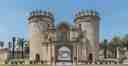
Otwórz dedykowaną stronę →Look straight ahead and you’ll spot the Gate of Palms by its two giant, round stone towers flanking a dramatic archway, with sculpted details above and a view of the old bridge…Czytaj więcejPokaż mniej
Look straight ahead and you’ll spot the Gate of Palms by its two giant, round stone towers flanking a dramatic archway, with sculpted details above and a view of the old bridge stretching right through its center. Now, as you’re pausing here, picture this-five centuries ago, a traveler approaches these towers with a heart full of excitement and maybe a little nervous! The Gate of Palms-once called the “New Gate”-wasn’t just the flashy entrance to Badajoz, but the city’s shield, its customs desk, and sometimes, believe it or not, its prison. The year was 1551, and Badajoz was a fortress city hugging the edge of Spain, always twitching its curtain to check what those neighbors over in Portugal were up to. Imagine the heavy as horses clopped across the bridge behind you, past the river, heading straight for these towers. Throughout the centuries, this gate has been nearly everything except a drive-thru-guards once kept watch from those thick, round turrets, and if you got a little too cheeky with the law (or perhaps with your taxes), you might have ended up lodging inside one of them. No breakfast included; sorry! The big Renaissance-style arch in the middle didn’t just say “Welcome to Badajoz”-it announced power, imitating the triumphant Roman arches honoring emperors. Look up and you’ll see the royal shield of Charles I, right above the gate, reminding everyone who was boss back in the day. Step a bit closer and imagine life here during the 1600s, when the rivalry between Spain and Portugal was at full boil. The city’s walls bristled with soldiers, especially after Portugal’s independence in 1668. Military drills, shouts, and the nervous tension of guards scanning the horizon for any sign of trouble-this was the daily soundtrack around these stones. Yet, through all this, the Puerta de Palmas stood solid and proud, even after the nearby moats were filled in and the city’s defensive system changed. Time rolled on, and as Badajoz grew, the city needed more than walls-it needed to stretch its legs! So, in the early 20th century, parts of the old wall around here were knocked down to let new neighborhoods bloom and the train station connect with the heart of town. But don’t worry; the Gate of Palms survived the renovation frenzy-now, it’s almost like an island in the middle of a roundabout, waving at drivers as they zip by. If you listen closely, you might just catch the echo of a city crier or the faint footsteps of prisoners from long ago. For years, this spot was covered in posters-imagine “Wanted: Most Notorious Bandit” or maybe “Don’t Miss the Badajoz Carnival!” stuck up for all to see, at least until 1948 when such wall-decorating was finally forbidden. Today, the Gate of Palms is the grand old greeter of Badajoz, watching life flow in and out-no longer a fortress, but still a triumphal arch, echoing with history and a few secrets of its own. Now, ready to cross into the city?
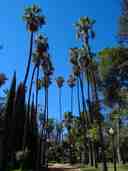
Otwórz dedykowaną stronę →To spot Castelar Park, just look ahead for a grand avenue lined with towering palm trees that seem to stretch right up into the bright blue sky! Welcome to Castelar Park, the…Czytaj więcejPokaż mniej
To spot Castelar Park, just look ahead for a grand avenue lined with towering palm trees that seem to stretch right up into the bright blue sky! Welcome to Castelar Park, the green heart of Badajoz and honestly, the only place where local peacocks might just steal your popcorn. Picture yourself standing here a few decades ago-believe it or not, this magical place was a bit tired and forgotten, more like a set from a lost fairy tale than a bustling city park. Today, though, it’s buzzing with life: listen for the quacking of ducks on the central pond and the chatter of pigeons, all under the shade of those giant palms soaring above you. If you’re patient, you might even spot one of Castelar’s most colorful residents: a proud peacock strutting through like he owns the place (he probably thinks he does). Don’t miss the elegant statues-Carolina Coronado, the beloved romantic writer who whispered stories beneath these trees, and Luis Chamizo Trigueros, a poet from nearby Guareña, both have monuments here to keep them company. It all came back to life thanks to Mayor Miguel Angel Celdran Matute, who dusted off the old benches and gave the park a second youth. Now, it’s the stage for fairs, laughter, children playing across the street, and maybe-just maybe-a pigeon plotting to sample your picnic. Just watch your snacks and soak up the beauty; this park is pure Badajoz charm!
Otwórz dedykowaną stronę →
Pokaż jeszcze 10 przystankówPokaż mniej przystankówexpand_moreexpand_less
To spot the Monument to the Universal Extremadurans, look straight ahead and you’ll see a striking bronze statue of a woman holding a large sword upright, standing on the prow of…Czytaj więcejPokaż mniej
To spot the Monument to the Universal Extremadurans, look straight ahead and you’ll see a striking bronze statue of a woman holding a large sword upright, standing on the prow of a granite ship with a tall mast and granite shields nearby. Now, let me set the scene for you: Imagine you’re standing here in 1983, the city bustling on Avenida de Colón, and suddenly, you see this bold statue rising above the crowd. The woman before you isn’t just anybody-she’s the spirit of Hispanidad, as if she’s stepped right out of an epic adventure, sword in hand, ready to defend her people. Her stance is powerful, and you might feel a breeze that almost seems to whisper stories of explorers sailing off to the New World. This monument is a tribute to Extremadurans everywhere-whether here in Badajoz or spread across the globe. Below the mast, you’ll spot the coats of arms for Badajoz and Cáceres, set in stone to remind everyone that home is never far away. And, if you listen carefully, you might just imagine the excitement of distant ships setting sail, the tension of uncertain journeys, and the joy of returning. Created by Juan de Ávalos, this monument stands as a proud reminder that Extremadurans have hearts big enough to travel the world-but, let’s be honest, they always brag about their home cooking!
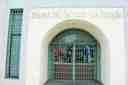
Otwórz dedykowaną stronę →Right in front of you, you’ll see a bright cream-colored archway with a big green metal gate and large silver letters above that spell out "Museo del Carnaval de Badajoz"-just…Czytaj więcejPokaż mniej
Right in front of you, you’ll see a bright cream-colored archway with a big green metal gate and large silver letters above that spell out "Museo del Carnaval de Badajoz"-just keep an eye out for those letters above the arched entrance! Now, let your imagination put on its wildest costume, because you’re about to step into a world where Badajoz never stops throwing confetti! The Museo del Carnaval de Badajoz isn’t just a building-it’s a treasure chest bursting with the spirit and laughter of one of Spain’s most dazzling carnivals, a party so legendary it was declared of International Tourist Interest. As you stand at the doors, picture yourself surrounded by a swirl of music, color, and excitement. Inside, you’d be greeted by a vibrant welcome and a journey through the origins of the Carnival-it all began as a way for the city to let loose before Lent, but over the years it became a wild celebration of creativity and freedom. Dive deeper and every corner tells a new story: the wild costumes worn just last year, the quirky tales and epic fails from Carnivals past, and the year-round energy that fills Badajoz with anticipation. Oh, the drama-just imagine the suspense of judges waiting to crown the best costume, and the comic chaos of a parade in full swing! So if you feel a sudden urge to dance or laugh, don’t worry-you’ve just caught a bit of the Carnival’s infectious magic!
Otwórz dedykowaną stronę →To spot the López de Ayala Theatre, just look for the grand, pale cream building with decorative white trim, tall palm trees lining the front, and a row of elegant arched windows…Czytaj więcejPokaż mniej
To spot the López de Ayala Theatre, just look for the grand, pale cream building with decorative white trim, tall palm trees lining the front, and a row of elegant arched windows above the entrance-it’s impossible to miss in Plaza Minayo! Alright, adventurer, take a deep breath and imagine we’re not just standing on the sunny plaza, but stepping straight into a vibrant world of drama, music, and applause that’s echoed here for well over a century. The López de Ayala Theatre is one of those rare places that’s seen it all-grand openings, roaring crowds, devastating fires, and heroic acts of passion from the city’s very own people. Picture it: October 30th, 1886. The air is electric, filled with the scents of polished wood and fancy perfumes. Locals dress in their finest clothes and chatter excitedly as they press inside, ready for a night of Zarzuela-Spain’s own lively musical theater. The stage lights up for the first time with "El Maestro Campanone," and just like that, this theater claims its spot as Badajoz’s heart of culture. Soon, every famous company passing to Madrid, Lisbon, or Seville just has to stop here, turning this small city into a buzzing crossroads of drama and music. Fast-forward to the 1900s and suddenly, the López de Ayala is dimming the stage lights and rolling out the big screen. For a while, this was the only cinema in Badajoz-a real hotspot for anyone craving the magic of movies or the thrill of new technology. But beneath the glitz, trouble simmers. Imagine August 1936: the city is restless, darkness falls, and disaster strikes-a roaring fire tears through the building, leaving only ashes and empty chairs. You could almost hear the ghosts of old actors and musicians sigh with sorrow. But this is where the story gets its twist! After the war, the theater rises from its ashes like a phoenix, with a brand-new summer terrace for lounging and gossiping under the stars. The 1940s and 50s bring comedy, flamenco, and a steady stream of films. Yet, by 1983, neglect almost spells doom for this beloved building-wrecking crews get ready to tear it down! Cue the dramatic rescue: passionate fans and artists lock arms and block the bulldozers (theatrically, of course). Their love for the theater is loud enough for the city to hear, and soon, it’s saved. Architects Jaime Martínez and Carmen Bravo spend a decade breathing new life into its walls. In 1993, the curtain rises again-and today, this place is busier than ever, with more than 200 shows and 100,000 excited visitors lighting up its halls every year. From zarzuela to flamenco, and the smell of popcorn to the silent threat of bulldozers, the López de Ayala Theatre is a real survivor-proof that Badajoz’s glow is too strong for history to dim. And hey, if you listen closely, you might just hear the echo of applause or a cheeky ghost whisper, “Encore!”
Otwórz dedykowaną stronę →To spot the Provincial Hospital of San Sebastian, look across the street for a large, pale yellow building with rows of neat windows and charming floral displays guarding the…Czytaj więcejPokaż mniej
To spot the Provincial Hospital of San Sebastian, look across the street for a large, pale yellow building with rows of neat windows and charming floral displays guarding the entrance like fluffy soldiers. Now, take a moment to imagine yourself over three centuries ago, standing on this very spot, with the air buzzing with hopes, prayers, and perhaps the slight whiff of old medicinal herbs. This is no ordinary hospital-it is a place steeped in drama and dedication, built back in 1694 when a captain with the striking name Don Sebastián Montero de Espinosa decided Badajoz needed more than just bandages; it needed big-hearted help. He didn’t just whip out his checkbook-he traded his own palace for this land, which he got from some especially resourceful nuns from the Convent of the Descalzas. I believe even reality TV isn’t this dramatic! In its early days, the hospital was like the superhero headquarters of Badajoz, run on charity, and always bustling with urgency. Imagine frazzled doctors in flowing robes, the echoes of nurses’ footsteps in the marble halls, and a steady parade of people-orphans, the sick, the poor, and the lost-finding hope beneath these very walls. In 1757, King Fernando VI issued a royal decree, transforming it into the “Hospicio Real de la Piedad”-the Royal Hospice of Compassion. In his honor, if you look up at the first tier of the grand entrance, there’s a noble coat of arms to remind everyone who stepped in that help here was more than a duty; it was the king’s command. The building’s style is a real “who’s who” of architectural inspiration. Designed by Nicolás de Morales Morgado but sometimes wrongly credited to Don Diego de Villanueva, it started with simple, neoclassical elegance-just two floors, easy lines, nothing too fancy. But as years rolled by and stories piled up, the place grew, sprouting another floor like a hospital stretching out to fit all the memories. The entrance shows off some late-baroque flair-the kind of dramatic curves and flourishes perfect for turning heads. Right above the door, the second tier is designed like a marble altar, sheltering a beautiful statue of the Virgin of Miracles. After more than 300 years of service, the hospital closed its doors to patients in 2003, but-plot twist-it was reborn once again! Now it lives as “El Hospital Centro Vivo”, a lively space for culture and community. Even as you stand here, you’re part of the ongoing story-where history and hope meet, and maybe, if you listen closely, you’ll hear the echoes of gratitude, laughter, and whispers of old miracles in the gentle breeze.
Otwórz dedykowaną stronę →Now, every city needs a boss, right? Badajoz has had quite the lineup. The tradition of guiding this city all began way back in 1013, when the very first “mayor,” Sabur Sabur…Czytaj więcejPokaż mniej
Now, every city needs a boss, right? Badajoz has had quite the lineup. The tradition of guiding this city all began way back in 1013, when the very first “mayor,” Sabur Sabur al-Amirí, took charge. Back then, the idea of city government was a little more... let’s just say, medieval. Picture less paperwork, more swords-though even now some city council meetings can get a little dramatic! Over the years, famous mayors like Carlos Witte y Pau and José María López Rastrollo shaped the city you see today. Modern Badajoz gets a little more democratic-since 1979, folks vote for their leaders every four years. So, when you stand here, you’re in front of a building where the community’s voice echoes through those grand old doors. And let’s not forget the current mayor, Ignacio Gragera Barrera, who, along with his team from the Partido Popular, holds a pretty solid grip after scoring big in the last elections. But it’s not just one party-there are also councillors from PSOE and Vox, so city politics here is never boring. If you think your family dinner gets heated, imagine a city council debate. Inside, the city hall buzzes with decisions that touch every part of daily life, from planning new parks and playgrounds to fixing the potholes that might try to trip you up. Picture workers, serious faces, stacks of papers everywhere-until someone mentions the city budget, then it’s calculators at dawn! Speaking of money, in 2020, this city hall approved a budget of 112 million euros. That’s a lot of lights to keep on and a lot of flowerbeds to water. If these walls could talk, they’d whisper about challenges and celebrations, dreams and, of course, debts. Every decision, big or small, shapes the lives of Badajoz’s people, from playgrounds for kids to homes for seniors. And as you stand here, maybe you hear the distant footsteps of history-or perhaps just a city official rushing out for a café. One thing’s for sure: Badajoz City Hall is where the past and future of this city meet, wrapped up in lively debate, civic spirit, and perhaps a touch of mischief. Ready for the next stop? Let’s go! If you're keen on discovering more about the mayors, competences or the municipal government 2023-2027, head down to the chat section and engage with me.
Otwórz dedykowaną stronę →To spot the Roman Catholic Archdiocese of Mérida-Badajoz, look for a grand pale stone building with a tall square bell tower topped with battlements and bells, right in front of…Czytaj więcejPokaż mniej
To spot the Roman Catholic Archdiocese of Mérida-Badajoz, look for a grand pale stone building with a tall square bell tower topped with battlements and bells, right in front of you in the open square. You’re standing before a place where history, faith, and a few royal squabbles all come together-welcome to the heart of Catholic Badajoz, the mighty Archdiocese of Mérida-Badajoz! Imagine stone echoing beneath your feet as centuries of footsteps pass by. It all began way back in the time when Romans walked these lands-Mérida was once the capital of Lusitania, bustling with both power and prayers. Then came the Visigoths, hungry for their own slice of the pie. Bishops here were like ancient superheroes, using their wit and wealth to defend the province from Suevic raiders. Picture Bishop Zeno, a Greek with a mission-charged with protecting the city, and given the authority to do so. During the sixth century, the diocese became the richest in Spain thanks to bishops Paul and Fidelis, an unstoppable Greek uncle and nephew duo who not only ruled by gold but by guts. The bishops became so influential they practically ran the city-not always to the delight of the kings. Imagine the tension as the Arian King Leovigild and Bishop Sunna sized each other up, both stubborn as old chestnut trees. And atop all this drama, the great city and its see stood strong until the thunder of the Moorish conquest in 711. Fast forward to 1225, after a mighty reconquest led by King Alfonso IX of León. The sun rises over Badajoz, and now a new bishop, Don Pedro Perez, steps up as the first in a long line of rulers for the freshly-reclaimed Christian city. The wind whistles between cathedral walls as secrets from Córdoba to Portugal are whispered through the territory. For centuries, this place was just a diocese but in 1994, Pope John Paul II gave it the golden upgrade-now it’s the Archdiocese of Mérida-Badajoz! The cathedral you see in front of you-Saint John Baptist-stands as the metropolitan heart, echoing with prayers, laughter, and maybe the odd choir practice gone wrong. Think of all those bishops, from Antonio Montero Moreno to José Rodríguez Carballo-each walking these steps, praying under these arched roofs, and leaving a little bit of themselves behind. You’re walking through living history, one stone at a time. Now, are you ready to see where all these holy and not-so-holy antics happened?
Otwórz dedykowaną stronę →To spot the fortified enclosure of Badajoz, look straight ahead for the sprawling old stone walls and star-shaped bastions that wrap around the city-visible here in the map,…Czytaj więcejPokaż mniej
To spot the fortified enclosure of Badajoz, look straight ahead for the sprawling old stone walls and star-shaped bastions that wrap around the city-visible here in the map, you'll see a jagged outline encircling the old town, marked by geometric points and sturdy defensive lines. Welcome to Badajoz’s mighty fortified enclosure! Imagine you’re standing where centuries of soldiers once stood, scanning the horizon for armies, smoke, and-if they were lucky-a peaceful day. But most days were anything but peaceful. This place was the city’s shield, a sprawling network of walls, gates, guard towers, and bastions built mainly between the 1600s and 1700s, with roots stretching way back to when Ibn Marwan first founded Badajoz on a much older Visigothic settlement. In fact, settlements here go all the way back to prehistoric times-so if these stones could talk, they’d have plenty of tales to tell! Now, why build such an enormous fortress? Well, Badajoz just happened to be in the “danger zone”-strategically sandwiched between Castilla, Andalucía, and Portugal, and parked right along two major crossroads. That meant opportunity, but it also meant trouble from anyone fancying themselves a conqueror. Add to that Badajoz’s proximity to Portugal-sometimes a friend, sometimes a not-so-friendly neighbor-and you’ve got a recipe for centuries of tension, alliances, and the occasional flying cannonball. The earliest fortifications were simple walls slapped together with mortar. Over time, rulers kept beefing them up. By the 1100s, the Alcazaba-the inner fortress-rose above you, with its still-imposing towers and thick walls. This was the stronghold, the governor’s home, the city’s last line of defense. Yet as centuries passed and cannons began to roar across Europe, those old walls started to look a bit...well, outdated. When Portugal fought for independence from Spain in the 1600s, Badajoz found itself repeatedly under siege. The Spanish Crown realized it was high time to upgrade their defenses. Enter the era of fancy fortifications, inspired by the brilliant French military engineer, the marquis of Vauban. He designed star-shaped layouts to better deflect cannonballs and create deadly crossfire zones. Here in Badajoz, that meant new sturdy walls, bastions like the ones you see poking out at sharp angles, deep moats, caponiers, and towers. The construction went in fits and starts-think medieval DIY project with a lot of improvisation and not enough budget. But these new defenses would make Badajoz one of the most formidable border fortresses in all of Spain. The fortified zone included everything a besieged city could need: there were secret tunnels, moats deep enough to swim in on a hot day (if not for all the arrows and musket balls), drawbridges that rattled and clanked, revellins-those triangular defensive outworks right outside the main walls-and multiple layers of walls to slow down any invader. Each bastion even had its own name and story-from the Baluarte de San Pedro, battered but unbroken after fierce fighting, to the Baluarte de la Trinidad, which literally had an ancient monastery built inside it. During the War of Spanish Succession and later the Napoleonic Wars, these walls saw real action. Imagine the night air choking with smoke, cannons booming in the distance, and defenders racing along the ramparts. In 1812, British soldiers under General Picton stormed the walls, their boots thumping through the mud as they fought to win back the city. If you look closely at the stones, you might still spot pockmarks from musket balls, and even the numbers “1812” carefully carved out by soldiers after one of the bloodiest assaults. Walking here, picture the generals hurriedly mapping strategies, the townsfolk sheltering behind thick stone, and the rival armies marching over the distant bridges. Over the centuries, as peace (finally!) settled, the city outgrew its ancient armor, many parts were taken down, streets were cut through, and modern buildings squeezed in. But much of the enclosure remains-an immense, silent reminder of when Badajoz was the most coveted prize on the Spanish-Portuguese border. So, as you stand here, listen for the echoes of swords, muskets, and perhaps the faintest whoop of relief from a long-ago defender whose shift was finally over. The walls may not talk, but they sure do whisper. To expand your understanding of the background, the beginning of the defenses or the items, feel free to engage with me in the chat section below.
Otwórz dedykowaną stronę →Look ahead for a grand, sturdy stone building with two square towers flanking an archway, crowned by three flags-you can’t miss it right here in this open plaza. Now, let your…Czytaj więcejPokaż mniej
Look ahead for a grand, sturdy stone building with two square towers flanking an archway, crowned by three flags-you can’t miss it right here in this open plaza. Now, let your imagination whisk you back through time. You’re standing before the Archaeological Museum of Badajoz, but if these stones could talk, oh, the stories they’d tell! This impressive building, the Palacio de los Condes de la Roca, once echoed with the clatter of noble boots and the whispers of ancient walls. But don’t let its fortress-like looks fool you-inside hides a sparkling treasure chest of history. Not so long ago in 1867, in a Spain buzzing with change, the idea for this museum sprang from a dusty committee and a few scattered artifacts. Back then, the “collection” could fit in a small hall-honestly, your living room might’ve felt bigger! But things got interesting in 1869, when artifacts from Los Cercos arrived. Suddenly, it wasn’t just a quiet provincial collection-it was a place with stories to tell. Through wars and moves, with a bit of bureaucratic volleyball between the province and the Spanish State (who knew museums liked to travel?), it finally settled into this striking palace in 1989. The management baton passed to the Junta of Extremadura, but ownership still belongs to Spain. No drama there, right? As smooth as old Roman mosaics! Once inside, you’ll wander past steely-eyed warrior steles from the Final Bronze Age-so many that if they came to life, we’d have a marching band! You’ll see colorful tiles from places as far flung as Toledo and Granada, and exhibitions about the vast sweep of Badajoz's history: from early humans poking around with flint tools, to powerful Romans, Visigoths, Muslim emirs, and Christian knights. Standing here, listen for echoes of ancient footsteps and the hum of centuries-old conversations. This museum is a time machine-and as you step inside, you become part of its never-ending story! If your shoes start squeaking, don’t worry. That’s just the steles whispering, “Welcome!”
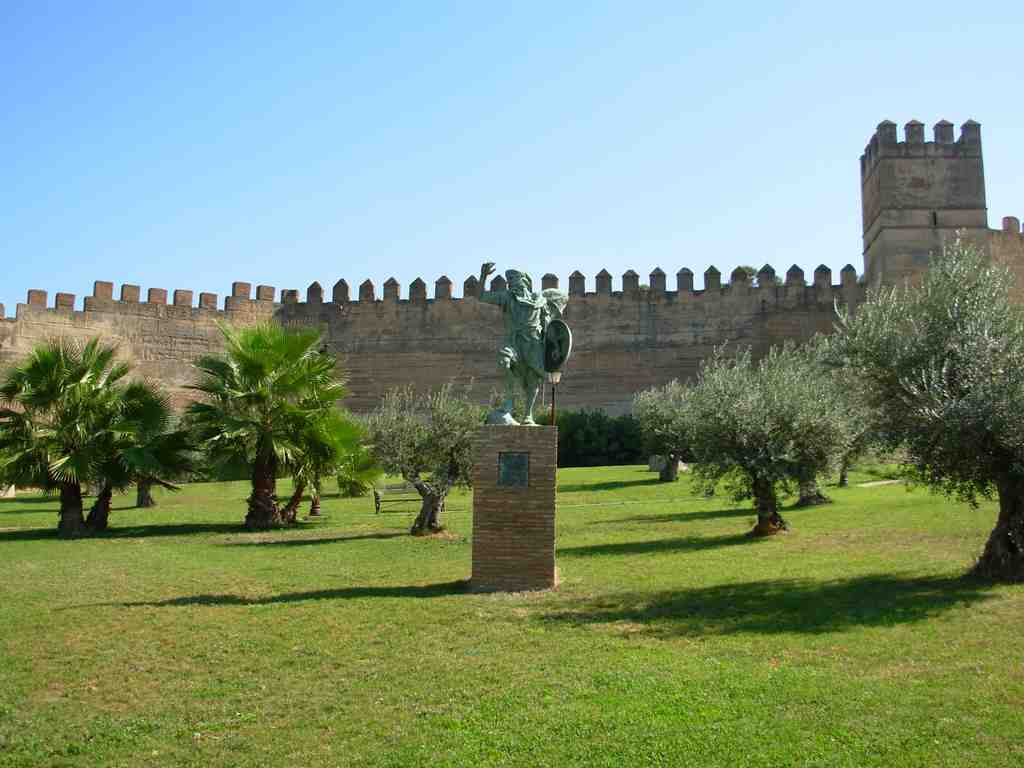
Otwórz dedykowaną stronę →Ahead of you rises a vast, sturdy wall crowned with stone battlements, and to your right you’ll notice a square watchtower - look past the palms and olive trees, and you can't…Czytaj więcejPokaż mniej
Ahead of you rises a vast, sturdy wall crowned with stone battlements, and to your right you’ll notice a square watchtower - look past the palms and olive trees, and you can't miss the immense, fortress-like Alcazaba stretching across the skyline! Welcome to the mighty Alcazaba of Badajoz - not just the biggest in Spain, but the largest Moorish citadel anywhere in Europe! Imagine standing here over a thousand years ago, when the air would be thick with the scent of olive trees, the calls of guards echoing off those walls, and the distant rush of the Guadiana River to the north. This fortress has stories thicker than its walls, which - by the way - run nearly 1,300 meters in a loop and once guarded a space so big, you could fit dozens of football fields inside. Founded in 875 by Abd al-Rahman Ibn Marwan, a rebel given a second chance by the Emir of Córdoba, this spot became the beating heart of a new city called Batalyaws. The original walls went up with little more than mud and dreams, but don’t worry, later upgrades made them sturdy enough to withstand both time and some not-so-friendly neighbors! Now breathe it in: this isn’t just a castle - it’s a time machine layered with centuries. First came the Moorish dynasties, raising minarets and palaces, then in the twelfth century, the imposing Almohad walls you’re looking at today. During the days of the Taifa kings, elegant palaces and even a grand mosque filled the interior. You may still spot columns and marble repurposed from older Roman and Visigoth buildings just by walking around. Talk about recycling! Life in the Alcazaba could be both tense and thrilling. Picture the sound of swords clashing on stone as defenders hurried along the adarve, the high walkway. During sieges, the rivers surrounding the north and east provided a natural moat, and steep slopes made it a real pain for any would-be invader to get close. Sometimes, when the city was under attack, secret paths called corachas let people sneak down to the river for water. These days, all you might need to sneak is a quick photo opportunity, not a bucket and shield! Let’s not forget the towers - each with its own drama and personality. There’s the Espantaperros Tower, with its octagonal shape, famous for being the scarecrow of invaders and the direct ancestor of Sevilla’s Torre del Oro. Then there’s the Tower of the Seven Windows, which legend says was used for grim business during executions, though today it’s probably haunted only by curious cats and ghostly tourists. For the curious walker, the adarve still provides a perfect viewpoint. You can imagine guards patrolling along, peeking through merlons and stone crenellations. Some areas even show the scars of war, where repairs from the 18th and 19th centuries blend into the original Almohad handiwork. And keep your eyes peeled for mysterious arabesque carvings or the odd Visigothic inscription - you never know what secret messages are etched into this place. Inside, you’d find a patchwork of history: The grand palace of the Dukes of Feria - now the Archaeological Museum - offers tales of nobles and epic feasts. There are remnants of ancient mosques, an old military hospital turned into the Library of Extremadura, and even a lost church or two, their stones just visible beneath weeds and time. During darker times, some abandoned chapels were even used as cemeteries, the silence only interrupted by the wind rustling through ruined archways. What’s truly remarkable is how the Alcazaba ties together centuries of life, war, faith, and strategy. From its founding days as a bold Moorish fortress, through Christian conquest, the thunder of cannons, neglect, restoration, and now your visit - it stands as a living chronicle, inviting you to step through layers of history. So take your time, explore each shadow and stone, and remember - every echo here is a whisper from the past. And if you hear any clanking armor or ghostly chants, well, just blame it on me - your friendly, slightly spooky, digital guide! Curious about the walls of the citadel, towers of the citadel or the the interior of the citadel? Don't hesitate to reach out in the chat section for additional details.
Otwórz dedykowaną stronę →To spot the Scarecrow Tower, look ahead on your left-it's the tall, light-colored, octagonal tower with battlements up top and a square brick structure perched like a crown,…Czytaj więcejPokaż mniej
To spot the Scarecrow Tower, look ahead on your left-it's the tall, light-colored, octagonal tower with battlements up top and a square brick structure perched like a crown, standing just beside the city walls. Now, you’ve made it to your last stop, and what a finale! If the city walls could whisper, the Scarecrow Tower-also called Torre de Espantaperros-would shout its tales from the rooftops. Go on, look up and imagine yourself back in the twelfth century: the year is 1169. The sun’s beating down, the air smells of dust and heated stone, and the city is on edge, always watching for distant trouble. This tower stood out even then, rising above the bustling Alcazaba and La Galera Gardens, acting as both a stubborn guard and a tireless lookout. Its octagonal shape-like a stop sign that even invaders couldn’t ignore-helped defenders see enemies from all directions. You might have noticed the tower is set apart from the main wall by about twenty meters, connected only by a walkway with battlements. No accident there. This design made it a truly tough nut for anyone to crack, and a perfect place for watchmen to keep an eye on the horizon for would-be attackers. Back then, most towers were stubby rectangles pasted onto city walls, but not this one! This albarrana tower was tall and proud, built for spying and surviving, with thick, mostly solid walls except for the two upper vaulted chambers where you could peek out onto the world. Step even closer and picture the scene: the main terrace, twenty meters high, ringed by those classic battlements-three notched peaks per side. Up top, you’d once hear a piercing sound ringing out over the city. It’s the famous bell! For hundreds of years, a square brick cupola perched at the summit, holding the bell that earned this place its nickname. Legend has it, every time that bell tolled-calling Christians to prayer or warning the city of news-it startled the non-Christians nearby. Locals joked it was so fierce, even the neighborhood dogs ran off in fright! Hence, Espantaperros-Scarecrow Tower, though some say it was more about scaring enemies than canines. The bell actually did double duty, though: announcing city meetings, sounding municipal alarms, and, a bit less cheerfully, tolling for the death of local council members. But here’s the twist: after centuries of faithful service, that famous bell was taken down in the late 1800s, nearly destroyed, and only scraps survive today in the Archaeological Museum of Badajoz. Yet, in a fantastic turn of fate, a brand-new bell was installed atop the tower in 2021, returning the long-lost sound to the city after 143 years. The tower’s story doesn’t stop there. The attached building next to it, La Galera, became something of an all-purpose headquarters-a prison, an orphanage, even a school over the centuries. Goodness knows what secrets those walls would spill if they could talk! Now, don’t be fooled by a common local mix-up: people often confuse the Scarecrow Tower with another nearby sentinel, the Torre del Alpéndiz. But tonight, it’s all about the octagonal grandeur before you, with Mudejar touches added in the 1500s and a history that’s older than Seville’s more famous Torre del Oro. In fact, some even say Seville’s tower was inspired by this very one, though it tries to show off with its twelve sides and fancier capping! So, as you stand here at the southern extreme of the ancient fortress, listen closely, let the echoes of bells past and present rumble through the air, and maybe let out a bark or two-just in case any historical ghosts are listening! Congrats, explorer, you’ve reached the legendary guardian of Badajoz, where old stones and tall tales meet under a mighty Spanish sky. Want to explore the description, scarecrow tower and alpéndiz tower or the torre de espantaperros vs. torre del oro in more depth? Join me in the chat section for a detailed discussion.
Otwórz dedykowaną stronę →
Najczęściej zadawane pytania
Jak rozpocząć trasę?
Po zakupie pobierz aplikację AudaTours i wpisz kod realizacji. Trasa będzie gotowa do natychmiastowego rozpoczęcia – po prostu dotknij \"Play\" i podążaj trasą z nawigacją GPS.
Czy potrzebuję internetu podczas trasy?
Nie! Pobierz trasę przed rozpoczęciem i korzystaj z niej w pełni offline. Jedynie funkcja czatu wymaga internetu. Zalecamy pobieranie przez WiFi, aby oszczędzać dane mobilne.
Czy to wycieczka grupowa z przewodnikiem?
Nie – to samodzielny audioprzewodnik. Zwiedzasz niezależnie, we własnym tempie, z narracją audio odtwarzaną przez telefon. Bez przewodnika, bez grupy, bez harmonogramu.
Ile trwa trasa?
Większość tras zajmuje 60–90 minut, ale to Ty kontrolujesz tempo. Wstrzymuj, pomijaj przystanki lub rób przerwy, kiedy chcesz.
Co jeśli nie zdążę ukończyć trasy dzisiaj?
Żaden problem! Trasy mają dożywotni dostęp. Wstrzymaj i wznów, kiedy chcesz – jutro, za tydzień lub za rok. Twój postęp jest zapisywany.
W jakich językach są dostępne trasy?
Wszystkie trasy są dostępne w ponad 50 językach. Wybierz preferowany język podczas realizacji kodu. Uwaga: języka nie można zmienić po wygenerowaniu trasy.
Gdzie znajdę trasę po zakupie?
Pobierz darmową aplikację AudaTours z App Store lub Google Play. Wpisz kod realizacji (wysłany e-mailem), a trasa pojawi się w Twojej bibliotece, gotowa do pobrania i rozpoczęcia.
Jeśli trasa Ci się nie spodoba, zwrócimy Ci pieniądze. Skontaktuj się z nami pod adresem [email protected]
Bezpieczna płatność przez