Wycieczka audio po Prato: Nici Czasu — Zamki, Kaplice i Włókiennicze Opowieści
Krew plamiła niegdyś te kamienie, gdy kupieccy książęta spiskowali za zamkniętymi drzwiami w mrocznym sercu Prato. Każdy krok tutaj szepcze sekrety, które zbyt łatwo przeoczyć w pędzie współczesnego życia. Ta wycieczka audio z przewodnikiem prowadzi przez kręte uliczki i nadszarpnięte zębem czasu dziedzińce, odsłaniając historie, które rzadko słyszą przyjezdni. Odkryj ukryte warstwy za fasadami i pozwól, by niespodziewane opowieści tchnęły nowe życie w starożytne mury. Jaka mroczna wiadomość wywołała falę skandalu w Palazzo Datini? Kto zniknął w kościele św. Franciszka podczas nocnego buntu? Dlaczego jedna dziwna rzeźba w Museo dell'Opera del Duomo kryje klucz do wielowiekowej tajemnicy? Śledź intrygi mijając kaplice i pałace, gdzie zderzały się władza, ambicja i wiara. Każdy przystanek przybliża Cię do pulsu miasta ukształtowanego przez śmiałe plany i zapomniane dramaty. Wzrok się wyostrza, zmysły wyczulają — Prato zmienia się z każdym zakrętem. Rozpocznij podróż. Kamienie mają swoje historie. Czy ich wysłuchasz?
Podgląd trasy
O tej trasie
- scheduleCzas trwania 40–60 minsIdź we własnym tempie
- straighten3.1 km trasy pieszejPodążaj wyznaczoną trasą
- location_on
- wifi_offDziała offlinePobierz raz, korzystaj gdziekolwiek
- all_inclusiveDożywotni dostępOdtwarzaj ponownie w dowolnym momencie
- location_onStart przy Piazza Mercatale
Przystanki na tej trasie
All right, you’re standing smack in the middle of Piazza Mercatale-Prato’s answer to “Go big or go home.” This is the largest square in the city, and, for all you trivia lovers,…Czytaj więcejPokaż mniej
All right, you’re standing smack in the middle of Piazza Mercatale-Prato’s answer to “Go big or go home.” This is the largest square in the city, and, for all you trivia lovers, it’s one of the most sprawling medieval plazas in all of Europe. So, even the pigeons get their cardio in around here. Now, picture this place around the year 1153. What you’d see is actually… not much. Maybe a wide field with the Bisenzio River running through what’s now pavement and parking spaces. Back then, the city decided it needed a proper area for traffic-although we’re not talking rush hour, but herds of cows and calves. The solution? Fill in the riverbank with enough dirt to reroute the Bisenzio and raise the ground. That’s urban planning for you… “Just add dirt.” Fast forward to the Middle Ages: those walls to one side, with their proper castle-style battlements? They went up between 1280 and 1330, when city walls were still all the rage. The square really became the center of social life here. Markets, fairs, gossip-this was the spot. By the 1500s, one of Prato’s claims to fame, wool production, really took off. They built these long racks right here-called "tiratoi"-where the woolen fabric was stretched out to dry. Imagine bolts of cloth flapping in the wind, hung up like oversized laundry by men with hands stained from dye. While you might struggle with a stubborn bedsheet, these folks were wrangling yards and yards of soon-to-be-valuable fabric. In the 1800s, the city recruited a hundred of its most down-on-their-luck residents to spruce the place up. They paid them a pittance-about a lira per day, which was hardly enough for a meal, maybe the equivalent of a couple of bucks in today’s money, so… not exactly a cushy government contract. Their job? Leveling this giant square, which apparently resembled the moon, craters and all, and getting it fit for public use again. Sports made their mark here, too: from wild “battagliola” games to horse races, and eventually-because Italy-bicycle races. During World War II, the square took a beating. Bombings destroyed parts of the old arcades and completely flattened the historic church of San Bartolomeo. Rebuilding it was an ordeal; they didn’t finish until 1958. Not that Prato gives up easily. Look around today-east side, you see a big garden; west, more of a car park. The original function as market central is mostly history, but people still gather here for events and that classic pastime…watching life go by. Definitely more “aperitivo” than “wholesale sheep trading” these days. All right, ready for the next bit of Prato charm? Square shape with cut is a quick stroll southwest-about 5 minutes. Let’s keep moving.
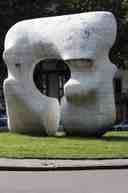
Otwórz dedykowaną stronę →To spot our next landmark, look to your right for a massive white marble sculpture carved into a chunky square with a bold, open cut right through its middle-hard to miss, it’s…Czytaj więcejPokaż mniej
To spot our next landmark, look to your right for a massive white marble sculpture carved into a chunky square with a bold, open cut right through its middle-hard to miss, it’s the sort of thing that makes you pause and wonder if you just found a relic or a modern marvel. Now, let’s get into the story. This unusual hunk of marble is known as "Square Form with Cut," and it’s the work of Henry Moore-Britain’s answer to the question, “How hefty can modern art really get?” Moore put this piece together from thirty separate blocks of bright marble, all quarried from the mountains northwest of here. It wasn’t exactly built in a shed; it was completed at the renowned Henraux studio, known for working with only the best stone, and it debuted at a blockbuster exhibit in Florence back in 1972. Apparently, when it first went on display, even Princess Margaret showed up for the big reveal-now, that’s some serious art world clout. The folks in Prato, not wanting to let Florence keep all the cool stuff, snapped up the sculpture with a little help from local industry leaders. By 1974, it had landed right here, on a spot that used to host a medieval city gate-now long gone, demolished to make way for the sort of public transport that no one remembers fondly. This sculpture quickly became a symbol for the city’s leap into modern times. Imagine Prato, proud of its textile mills and forward-looking spirit, saying to its Renaissance neighbors just down the road, “Hey Florence, nice dome…but check out this!” From up close and far away, “Square Form with Cut” is all about contrasts: massive but smooth, simple but magnetic, a play of solid stone and gaping air. The curving lines feel almost natural, as if the marble grew straight out of the ground already shaped-Moore wanted you to notice how space and stone blend together, asking where one ends and the other begins. Some locals say it looks like the giant fossilized vertebra of a prehistoric beast, while others simply call it “Il Buco di Moore”-which means “Moore’s Hole,” or just “The Hole,” if you want to keep it casual. It’s so iconic here that it even stars in the logo of the city’s main news website, complete with a painted blue “eye” peeking from the central gap. Oh, and if you want to know what it’s worth? Add a few zeros and keep going-estimates put the value of this sculpture well over 75 million dollars today, making it likely the most expensive piece of modern art in Italy that you can freely walk around. Not bad for something called “The Hole,” right? Alright, when you’re ready for the next chapter in Prato’s story, just stroll southwest for about 6 minutes-that’ll bring you to the Textile Museum.
Otwórz dedykowaną stronę →Alright, check this out-on your left, behind that unassuming wall of brick and glass, you’re looking at a spot that’s quietly dressed millions over the last century: Prato’s…Czytaj więcejPokaż mniej
Alright, check this out-on your left, behind that unassuming wall of brick and glass, you’re looking at a spot that’s quietly dressed millions over the last century: Prato’s Textile Museum. It’s not just the biggest in Italy, it’s one of Europe’s heavy-hitters when it comes to spinning yarns-literally and figuratively-about how fabric shaped the world. Now, Prato is what you’d call a fabric town. For generations, this city has been clothed in wool, thread, and just a bit of entrepreneurial grit. The Textile Museum is built inside the old Campolmi Mill, one of the town’s industrial workhorses from way back. Imagine the 19th-century hum of spinning wheels, the air thick with the smell of wet wool and dye. These days, it’s post-industrial chic. But, if you listen for it, you can almost hear echoes of machines rattling and workers gossiping over their looms. The museum’s story really kicks off in 1975. That year, Loriano Bertini, local collector extraordinaire, handed over a stash of centuries-old fabrics-cloth fragments going all the way back to the 1300s. If you’re picturing some dusty attic find, think again. We’re talking silks worthy of Medici banquets and elaborate ecclesiastical robes that probably saw more festivals than the average influencer. As the museum’s collection grew, so did its ambition. Today, it boasts over six thousand items. You’ve got fabrics from pre-Columbian Peru, Christian Egypt, and all across Europe and Asia. There’s Italian velvet, Indian saris, Japanese silks, and hey, even samples from Prato’s own industrial heyday. And if you’re a tactile person, they let you touch certain exhibits-yes, they trust you that much. One gallery is filled with dramatic arches and glass cases that play musical chairs with the textiles, rotating them in and out to keep things fresh-and to save the fragile pieces from too much Italian sun. Talk about old-school fashion rotation. You’ll spot glamorous 19th-century gowns, samplers from the earliest Prato factories, and one-of-a-kind sketches by modern artists like Raoul Dufy and Giò Ponti-a reminder that even big-name painters couldn’t resist a good scarf. There are two particularly quirky highlights here: first, a wall of fashion illustrations, about 1,700 of them, straight from the pages of swanky French magazines in the 1800s. Think of it as Instagram before phones. Second, the machinery-antique spinning wheels and looms, some cobbled together by local tinkerers, all whispering stories of sweaty brows and oil-stained knuckles. The roots of all this textile wizardry go deep, right down to the land itself. Prato’s rivers, canals, and centuries of know-how made this town the Silicon Valley of wool long before anyone thought of microchips. Everything-fashion, fortunes, and Prato’s identity-was woven from this thread. In the boom years, some factories cleared millions of lire back in the 1950s-at the time around $20,000, or close to $225,000 today. That’s a lot of yarn... and a fair bit of espresso. So, next time you check a label for “Made in Italy,” spare a thought for Prato-where centuries of creativity, innovation, and, let’s be honest, some tough hands built the original fast fashion. When you’re ready for your next adventure, head northeast for four minutes to find Emperor’s Castle.
Otwórz dedykowaną stronę →
Pokaż jeszcze 11 przystankówPokaż mniej przystankówexpand_moreexpand_less
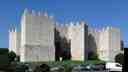
To spot the Emperor's Castle, look to your right for a broad rectangle of pale stone walls, ringed by angular battlements and striking, castle-like towers-standing tall and a bit…Czytaj więcejPokaż mniej
To spot the Emperor's Castle, look to your right for a broad rectangle of pale stone walls, ringed by angular battlements and striking, castle-like towers-standing tall and a bit weathered, as if it’s seen a few centuries’ worth of action (because, well, it has). So, here we are in front of what’s officially called “Il Castello dell’Imperatore,” and honestly, it’s hard not to feel a bit like you’ve stumbled into a medieval showdown-with the walls, battlements, and a sense of a story just waiting to unfold. Back in the early 1200s, Prato was smack in the middle of a serious tug-of-war. On one side: the Holy Roman Empire, led by Frederick II of Swabia-think Game of Thrones without dragons, but plenty of real swords. On the other side? The Pope, wrestling for power in Tuscany. And right here, Frederick II ordered up this fortress, part military flex, part power move, and maybe a pinch of wishful thinking that he’d be around long enough to throw a housewarming. The guy put his chief architect, Riccardo da Lentini, on the job around 1240. Construction kicked off, with plans for eight towers, a moat, and lots of symbolism in the design-sort of a “read between the stones” situation. Trouble was, Frederick died before things could wrap up, so the castle? Well, it never really got to host those imperial banquets. Over time, the place has been a hotel for imperial envoys, a fortress, a holding cell, even a housing complex-at one point, houses actually sat inside these walls. Talk about prime real estate with a view. In the 1930s, the local government wiped away the homes to reveal the ancient shell we see now-just in time for the castle’s darker chapter. During World War II, these walls weren’t much protection: in 1944, it became a prison for locals arrested in an uprising, and later that year, the site of a grim mass execution when the tides of war turned. These are the stones that have seen the heights and nadirs of human ambition. Fast-forward to today, and you’re more likely to catch an outdoor concert or a summer movie than a medieval skirmish. In fact, in 1980, Italy even put the castle on a shiny postage stamp-400 lire back then, which would be only a couple of bucks today, but undeniably priceless in local pride. Ready for the Basilica of Santa Maria delle Carceri? Just head northwest for about 2 minutes, and I’ll meet you there.
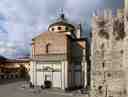
Otwórz dedykowaną stronę →On your right, you’ll spot a squat, perfectly symmetrical church faced in clean stripes of white and green stone, with four equal arms and a compact dome-like a Renaissance jewel…Czytaj więcejPokaż mniej
On your right, you’ll spot a squat, perfectly symmetrical church faced in clean stripes of white and green stone, with four equal arms and a compact dome-like a Renaissance jewel box that’s landed squarely in its own peaceful piazza. Now, this isn’t just any church-it’s Santa Maria delle Carceri, literally “Saint Mary of the Prisons.” Not exactly the friendliest name, right? But as usual in Italy, there’s a story here that is stranger than fiction. Back in 1484, in the shadow of what were the city’s grim public jails, a sick little boy named Jacopino Belcari-nicknamed “della Povera” for his family’s poverty-claimed the image of the Madonna and Child painted on the jail wall came alive. Suddenly, Jacopino was miraculously cured. Word spread like wildfire-imagine TikTok, but with more monks and less dancing-and what started as a simple painted wall became a pilgrimage hotspot almost overnight. The growing devotion brought some heavyweights onto the scene, including none other than Lorenzo de’ Medici-the same “Lorenzo the Magnificent” who pretty much ran Florence and, by extension, these parts. Lorenzo handpicked his star architect, Giuliano da Sangallo, to design this basilica. But Lorenzo wasn’t here for “just another church.” He wanted something new-so Sangallo, taking a page from the genius of Brunelleschi, used a Greek-cross plan: four arms of equal length, all hugging a round central dome. Symmetry ruled, every measurement balancing its neighbor-a bit of Renaissance obsession that would echo all the way to Rome’s St. Peter’s Basilica and even sneak into Raphael’s projects. Take a look at the facade. Those stripes aren’t just for show-they’re a nod to local style, using light alberese stone with bands of deep green serpentine. At the corners, you’ll see slim columns called lesene-basically, architectural cufflinks, if you will-framing the structure with neat geometry. The dome? Another Brunelleschi call-back, but with a twist: it’s perched elegantly atop a twelve-eyed drum and topped by a dainty lantern. Now, there’s an astronomer’s trick hidden here: around summer solstice, the midday sunlight filters through the dome’s lantern and-just for a few moments-illuminates the fresco of the Virgin. It happens every June, like clockwork, and you can almost imagine the gasps when it was first noticed. Another solar spotlight hits in mid-July, lining up with the day Jacopino had his vision. Renaissance architecture: not just pretty, but precision-tuned for cosmic drama. Inside, the wow-factor keeps rising. Stand beneath the dome and you’re surrounded by crisp, harmonious lines-every angle and bracket echoing Sangallo’s devotion to balance. Stained glass windows by Ghirlandaio beam jewel-toned light, and Antonella della Robbia’s blue-and-white medallions add a touch of color above. The marble high altar, inspired by Rome’s Pantheon, frames the very fresco that started it all-boxed and wrapped like the city’s most prized relic. This place was such a stunner that Jules-Giuliano da Sangallo-used it to show off his chops for the new St. Peter’s in Rome, and even his brother and Raphael took notes for their own masterpieces. Ready for Palazzo della Pubblica Assistenza L’Avvenire? Just head southwest for about two minutes and you’ll be there.
Otwórz dedykowaną stronę →You’re looking for a pretty solid stone building with a big, sculpted entryway and those classic medieval-style windows-keep your eyes on the corner of Via San Jacopo, and you’ll…Czytaj więcejPokaż mniej
You’re looking for a pretty solid stone building with a big, sculpted entryway and those classic medieval-style windows-keep your eyes on the corner of Via San Jacopo, and you’ll see its main façade facing directly down a narrow street, almost challenging you not to notice. Alright, let’s step into the tale of the Palazzo della Pubblica Assistenza L’Avvenire-a place whose name, like its look, has certainly caught its share of second glances over the years. This sturdy beauty was born out of necessity and, if I’m being honest, a pinch of competitive pride. Back in the early 1900s, the local society for public assistance-think volunteers offering aid before “first responders” was even a phrase-needed more space. Their old digs were bursting at the seams, so they decided not just to renovate, but to host a national architecture contest. You know, because why settle for basic when you can shoot for Florence-level grandeur? The first round happened in 1912, and by spring the next year, a heavyweight jury picked four finalists out of thirteen hopefuls. The winning pitch came from Enrico Paolo Emilio André, whose design was all about “Ars et Charitas”-that’s art and charity, because in Prato, even public service comes with a flair for style. André didn’t just turn in one design-he gave them two flavors. The winner, Design A, was built to look like a grand medieval palace, all noble lines and tough, chunky stone. If you think that gives it almost Shakespearean drama, you’re not alone-critics later joked it looked fit to host some wild, theatrical dinner showdown. And let’s be real, for what was essentially a headquarters for do-gooders, that’s not a bad aura. Construction got rolling with gusto in 1913, only to be promptly interrupted by a minor inconvenience you might have heard of-World War I. The project was put on ice for years, and when workers picked up their trowels again in 1919, costs had ballooned. Just for fun: what was a few thousand lire back then could buy you a couple of cars. Today, you’d be talking about hundreds of thousands of U.S. dollars-money that, frankly, might still struggle to cover this real estate in modern Tuscany. Standing where you are, notice how the main entrance lines up with another key street, as if the architect was trying to connect this building visually to Prato’s historic core. The front in solid “pietra forte” (a tough local stone) says, “We mean business,” but swing around to the sides, and you get a peek at balconies with little stone supports called “beccatelli” and windows that play with symmetry and shadow. By comparison, the rear wing-well, the best you can say is it’s honest about not being the star. Funny thing is, some locals always grumbled that the Palazzo was old-fashioned, even for its own time. Instead of experimenting with anything fresh and modern-no Art Nouveau swirls, no Deco boldness-it doubled down on the medieval. As one historian put it, this is your go-to prop for a costume drama, only it’s absolutely real. Take a look inside if you ever can-some rooms have been modernized almost beyond recognition (turn-of-the-century bar, anyone?), while upstairs you still get hints of how things once looked when public assistance was Prato’s hot new trend. When you’re ready, Church of San Francesco is just a two-minute walk west.
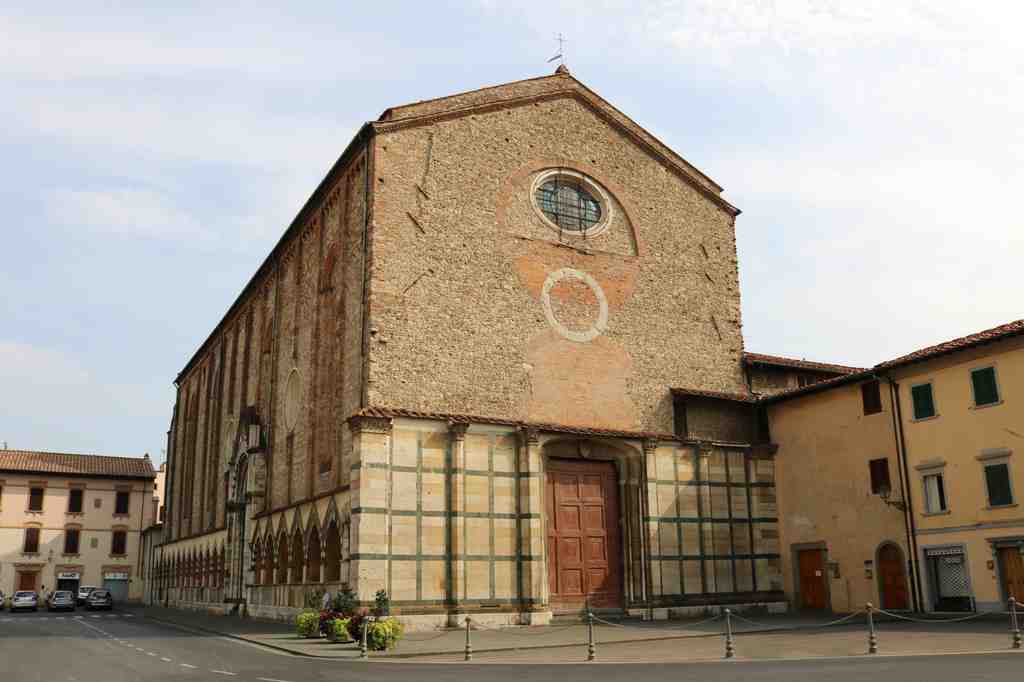
Otwórz dedykowaną stronę →Alright-look to your right and you’ll spot the Church of San Francesco by its striking facade of alternating pale and dark stone stripes, a pointed archway, and its elegant…Czytaj więcejPokaż mniej
Alright-look to your right and you’ll spot the Church of San Francesco by its striking facade of alternating pale and dark stone stripes, a pointed archway, and its elegant brickwork-the first big brick building ever put up in old Prato, so you really can’t miss it. Imagine it’s the summer of 1228, and news has just hit town: the humble Francis of Assisi has been declared a saint. Within just eight days, the city handed over this chunk of land to the newly-minted friars, who wasted no time laying the first stones. The result? One of the earliest Franciscan churches on the planet. Over the next decades, the church slowly grew from a simple dream to the grand building you see today, finally being consecrated in the fall of 1285-just in time for those chilly Tuscan evenings. But like a stubborn old house, San Francesco has always been a bit of a work in progress. The facade took over a century to finish-think of it as the medieval version of an endless home renovation project. They ran through builders, ideas, and, I imagine, quite a lot of patience from the local council. At the center of the facade, above the busy striped doorway, is a stucco relief showing Saint Francis and his miraculous stigmata, a little artistic drama that’s been (possibly but not definitely) linked to the great Donatello. If you’re making a list of things to casually slip into conversation later, “I saw a Donatello in Prato” scores high. The left side of the church stretches out in red brick-odd back then, as stone was very much the fashion. Makes you wonder what the neighbors thought. Look for the elegant bell tower on your right, added in the early 1800s. It’s home to five bells, each with its own story (and, if you’re lucky enough to catch them ringing, a soundtrack to your walk). If you step inside, you’ll find yourself in a space where time tumbles over itself. Take the monument to Geminiano Inghirami, a merchant buried here in the fifteenth century, or the stunning marble tomb of Francesco Datini-Prato’s most legendary business brain, whose fortune would tally up to several million dollars in today’s terms. Imagine the wheeling and dealing that once echoed through these halls. Not all treasures remain, of course. The Renaissance painter Cigoli’s works once decorated these walls but have now taken a rather cold-weather detour to the Hermitage Museum in Saint Petersburg. Still, other gems remain, like the dramatic wooden crucifix presiding above the main altar, and in the Regnadori Chapel-a space that juts out with medieval self-importance-you’ll find centuries-old frescoes, a sculpted Ecce Homo, and, delightfully, a little urn with the bones of a few saints, just in case you needed a reminder of your own mortal coil. San Francesco’s cloister, built in the Renaissance-a real showpiece with its slender ionic columns and leafy acanthus capitals-used to be a center of community and debate. Imagine monks and merchants swapping tales as the sun burned through the Tuscany fog. The church and convent weathered centuries of ups and downs-Napoleon came through and kicked out the friars, the cloister was patched up in the 1940s, and the church saw major restoration in the early 1900s, stripping away all those overzealous baroque makeovers to reveal its original bones. Even the parish changed hands, from the Franciscans to the Carmelite fathers and finally to the local diocese, as religious orders thinned out. Through it all, San Francesco survived, stubborn as Prato itself. Alright, when you’re ready to get moving again, Town Hall (Prato) is northeast-just head that way and you’ll be there in about four minutes.
Otwórz dedykowaną stronę →To spot the Town Hall, look right for a grand three-story building with ochre and terracotta walls, a sweeping arched loggia at street level, and-if you squint at the corner-a…Czytaj więcejPokaż mniej
To spot the Town Hall, look right for a grand three-story building with ochre and terracotta walls, a sweeping arched loggia at street level, and-if you squint at the corner-a large Medici coat of arms peering down like a stern history teacher. Here in the heart of Prato, since 1287, this elegant pile has been the nerve center for city decisions, rumor mills, and probably a fair bit of anxious pacing. Picture medieval officials dashing under these stone arches, dodging cattle and butchers, because back in the day, the ground floor was less “municipal office” and more “livestock parking and meat market.” Yes, all the aroma and mayhem you could want in a city hall. Upstairs, the vast council hall-the nerve center of Prato’s political theater-has hosted centuries’ worth of arguments, grand speeches, and, I’d bet, more than a few whispered deals. In the 1300s, the city actually built a suspended bridge to connect magistrate housing next door, so officials could move between buildings without getting their robes dirty or, heaven forbid, running into a local complaining about taxes. This lovely loggia you see facing the square replaced a warehouse built by merchant Francesco Datini in 1466-he wanted the best spot for his goods. Essentially, Datini was the Jeff Bezos of his day, except instead of Prime delivery, you got a loggia fit for public debate. Check out the Medici coat of arms added in 1550, just in case anyone missed the memo about who was really running Tuscany. The façade got its final unified look in the late 1700s-think of it as an early form of citywide branding. Inside, original frescoes from the 1300s survive-an Allegory of Justice, because what’s a city hall without a few moral reminders, and a Madonna and Child found hiding behind a wall in 1857. There’s even a gallery established for local artists, where they once let the paintings get all their vitamin D from a huge skylight. Oh, and just inside-if you dodge the queue for civil documents-you’ll spot Bacchino, a tipsy bronze Bacchus who looks about as sober as a mayor at a festival. Feeling inspired? When you’re ready, Chapel of the Assumption (Prato) is just 3 minutes southeast.
Otwórz dedykowaną stronę →Alright, take a look to your right. You’re standing by the Chapel of the Assumption, one of Prato’s little masterpieces that, frankly, could hold its own against the big-ticket…Czytaj więcejPokaż mniej
Alright, take a look to your right. You’re standing by the Chapel of the Assumption, one of Prato’s little masterpieces that, frankly, could hold its own against the big-ticket chapels of Florence-minus the hordes of camera-wielding visitors. This gem is tucked inside the cathedral, just off to the right, and from the outside, you’d never guess the brilliance hidden within. Let’s peel back a few layers. Back in the 1430s, when the world outside was still wrapping its head around Renaissance ideas, a local wool merchant named Michele-who was doing quite well, thanks to the booming textile trade-decided his money could buy a little slice of eternity. If you’re wondering how much that commission would’ve set him back, let’s just say a chapel’s worth of frescoes in those days cost what would be tens of thousands of dollars in today’s money... not exactly impulse shopping. The artistic heavyweight Paolo Uccello stepped onto the scene, brush in hand. Now, Uccello isn’t your run-of-the-mill painter. He was obsessed with perspective-think the calculus geek of the art world. He started the grand cycle of frescoes, storytelling in color and geometry, but was soon pulled back to Florence for a bigger gig. Enter Andrea di Giusto, a talented local hand who finished the job-like a solid backup quarterback, if you like your art history with a sporting metaphor. What they left behind is a visual storytelling marathon. Picture this: three stories stacked like a wedding cake, with bands of painted heads gazing down-a cast of saints and ordinary folk, caught mid-expression. On the vault above, four grand Virtues-Faith, Hope, Charity, and Fortitude-float overhead, dressed for the occasion and marked out by their classic symbols. Look up and you might spot some attitude... those faces have a lot to say. Let me give you a taste of the drama. On one wall, the story of Saint Stephen unfolds: first, a tense public debate outside a rounded building that whispers Brunelleschi’s dome in miniature-Uccello showing off his knack for light and shadow. Next, Stephen’s brutal stoning scene, complete with bystanders dressed not in dusty biblical gear, but in the sharp threads of Uccello’s own time. It’s part historical record, part creative license-and the faces! Some in the crowd glare, smirk, or look on in disbelief, with features so expressive you half expect them to start an argument right now. Move to the other side: you’ll find the tender yet lively Birth of the Virgin. The scene is bustling-noblewomen sweep in with color-coordinated cloaks, servants scurry about, and baby Mary gets her first bath, all rendered with a surprising dose of wit and realism. There are modern touches-a glass vase here, a metallic gleam there-that show off the influence of northern European painters, catching the eye and adding a touch of “oh, that’s clever” for anyone paying attention. Don’t overlook the circles-little portraits between scenes-where the artists indulge in playful experimentation with emotions: sassy, stern, maybe a little bored... it’s the original Renaissance LinkedIn, right up on the wall. This chapel is a freeze-frame of Prato’s ambitions in the 1400s-wealthy merchants, ambitious artists, and a city eager to prove it could punch above its weight. Not bad for a side room in a relatively quiet Tuscan town. Ready for the next bit of magic? To get to Museo dell'Opera del Duomo (Prato), just walk northwest for about 3 minutes.
Otwórz dedykowaną stronę →On your left, look for an arched entrance tucked beneath the cathedral’s tall medieval bell tower-if you see a stone doorway with a view of the old cloister through it, you’re at…Czytaj więcejPokaż mniej
On your left, look for an arched entrance tucked beneath the cathedral’s tall medieval bell tower-if you see a stone doorway with a view of the old cloister through it, you’re at the Museo dell'Opera del Duomo. Let’s set the scene: you’re standing outside a museum that manages to pack nearly a thousand years of art, intrigue, and very stubborn city pride into a relatively cozy corner of Prato. And believe me, this place is much more than just a “backup storage” for old church paintings. It started out back in 1967, when someone had the bright idea to gather treasures not only from the grand Cathedral of Santo Stefano next door, but from churches all over the area-think of it as Prato’s ultimate family attic. Originally, the museum snuggled into just two rooms shared by the bishop’s palace and the cathedral itself. But Prato’s history is like your favorite pair of pants: over time, it kept expanding. By the '70s and ‘80s, new galleries were added facing a Romanesque cloister, and soon enough, they were even uniting underground tunnels, so the route winds from the bell tower entrance, down into crypts and vaults, across medieval refectories, and around a cloister that’s so serene you might start whispering for fear of waking up the marble lions. Inside, the collection is a who's-who of big names from the Italian Renaissance. Ever heard of Donatello? Of course, you have-his famous stone pulpit, where for centuries the priest would show off the Sacra Cintola (the Virgin Mary’s belt, said to grant miraculous favors), used to perch outside the cathedral but had to be rescued from the elements. After an infrared laser spa-day-seriously, they zapped centuries of grime off the carvings-it’s now here, looking as lively as ever. You’ll also stumble upon works by Paolo Uccello and Filippo Lippi, both stars of Renaissance Florence-though don’t be surprised if you see visitors with their noses pressed to ancient glass, ogling Botticelli’s Crucifix or fragments of Etruscan pottery. It’s like flipping between streaming Italian masters and the original season of "Etruscans: Bronze Age." If you head into the so-called Volte, the museum’s atmospheric, vaulted underworld, you’ll find tombs painted with medieval frescos-some pretty grisly, some quietly moving. Try to spot the “Good Shepherd” nestled between saints. And if you wander through the old cloister-built back when Henry II was still in diapers-they say you can spot capitals decorated by mysterious sculptors who may have never set foot anywhere near Florence. Oh, and just to hammer home what “sacred treasure” means here: there’s a room dedicated entirely to the Sacra Cintola and all the ingenious jewelry boxes created to hold it-one, made in the 1440s, is an over-the-top mashup of gold, bone, bronze, and some truly impressive 15th-century bling. In today’s dollars, the material alone would run you into the HUNDREDS of thousands, but let’s face it: you can’t put a price on miracles. Prato’s story is written into these stone walls, from ancient Roman finds up to Madonna-and-Child paintings that crossed oceans and centuries. Not bad for a building you almost walked right past, hey? When you’re ready, Church of San Domenico is about a 6-minute walk north. Just head back across Piazza del Duomo and keep going.
Otwórz dedykowaną stronę →Look to your left for a church with an unfinished stone facade and striking bands of dark and pale stone, a tall red brick bell tower peeking out back-the Church of San Domenico…Czytaj więcejPokaż mniej
Look to your left for a church with an unfinished stone facade and striking bands of dark and pale stone, a tall red brick bell tower peeking out back-the Church of San Domenico welcomes you with its stern, unmistakable profile. Now, San Domenico looks a bit like it’s auditioning for a role in a medieval drama-serious, stoic, definitely no-nonsense. Founded back in 1281, it was built over three decades, smack in the heart of the so-called “mendicant” church wave. These were churches built by humble orders that got by on donations and a lot of elbow grease from their followers. So, yes, you’ll notice a bit of humility here... but with some stylish flourishes. Check those chunky pillars-dressed with neat stripes of alberese and serpentino stone. That geometric rhythm, and those two-tone arches over tombs at ground level, almost look like medieval graphic design-well before Photoshop. The real showstopper out back? That bell tower of red brick, capped off in 1314, is a minor masterpiece in itself. Take a good look-its upper levels are pierced by elegant twin and triple windows. Inside, you’ll find three church bells, each with a story of its own, the oldest cast nearly three centuries ago by a Florentine craftsman. The smallest bell, cast by a local named Santi Gualandi, is dedicated to St. Francis of Assisi and St. Anthony of Padua-two saints who definitely knew how to keep good company. Back in 1647, disaster struck-quite literally. Lightning hit, a fire raged, and the church’s grand Gothic windows had to be sealed up, making way for lighter, airier Baroque interiors. Walk inside and you’ll notice that blend-lofty, arching ceilings, 12 massive stone “niches” lining the walls, and that calm, crafted contrast between the cool gray stone and bright, creamy plaster. Fun fact: the baroque organ loft above you was designed by Silvani, and houses a prized 17th-century organ. Now, if these walls could talk, they’d have more than a few thrilling tales. The painter Fra Bartolomeo lived here for a stretch, and a wealthy Florentine named Riccuccio once commissioned Giotto-yes, *the* Giotto-to paint a masterpiece for the church. Unfortunately, that iconic work vanished in the fire, probably worth millions today, but imagine commissioning a great artwork in 1312 for a sum that’d translate to a cool couple hundred thousand dollars now. You’ll notice tombs and commemorative slabs around the complex-if you have time to peek into the old convent, its Renaissance cloister is lined with the resting places of several local notables, including the famed playwright Sem Benelli. Alright, ready for a change of scene? When you’re set, Palazzo degli Alberti is a four-minute walk to the southeast.
Otwórz dedykowaną stronę →You’ll spot the Palazzo degli Alberti on your right-a solid, stately building with a classic stone façade, arched windows, and a hefty carved doorway facing the small square off…Czytaj więcejPokaż mniej
You’ll spot the Palazzo degli Alberti on your right-a solid, stately building with a classic stone façade, arched windows, and a hefty carved doorway facing the small square off Via Rinaldesca. Alright, let’s get a little closer-try not to trip over the centuries while you’re at it. This is the so-called “Casone degli Alberti,” a grand townhouse with roots reaching all the way back to the 1200s. If you look up, you might catch glimpses of ancient loggias and sealed-off windows in the stone-like the architectural equivalent of a Facebook timeline showing all its past phases. But most of what you see today comes from the Renaissance face-lift this palace got at the turn of the 16th century. Take a second to admire those arched window frames and the decorative stone teeth skirting the façade. Up on the corner, there’s a noble family crest-belonging to the Bardi di Vernio, who, among other claims to fame, were related by marriage to Cosimo de’ Medici. That’s right, Florentine royalty right here in the humble streets of Prato. Now, the business side: since 1870, this palace has doubled as the home of the local savings bank. Imagine-waltzing in to discuss your mortgage with Caravaggio’s “Crowning with Thorns” glaring at you from the wall. Because inside is a jaw-dropping art collection, assembled mainly by the savings bank over the years. The stars? An early Madonna and Child by Filippo Lippi, a luminous Bellini crucifixion, and that Caravaggio-so dramatic it practically commands you to stop scrolling and pay attention. But in a twist worthy of a daytime soap, these masterpieces were whisked away to Vicenza when the collection changed hands in the 2010s. Prato was not amused. Picture bankers, locals, and city officials uniting-pitchforks metaphorical-to demand their art back. It took a few years, but in 2018, the collection returned right here, mostly thanks to local activism and a binding legal order. Now, viewing the collection? You’ll need an appointment-clearly, they like to keep a bit of mystery alive. When you’re ready for more, just head southeast. Palazzo Datini is a zero-minute stroll away-basically, just keep going and you’re there.
Otwórz dedykowaną stronę →To spot Palazzo Datini, look for a sturdy, medieval mansion with thick grayish walls and a jumble of elegant windows, just off Via Ser Lapo Mazzei-the frescoes on the facade might…Czytaj więcejPokaż mniej
To spot Palazzo Datini, look for a sturdy, medieval mansion with thick grayish walls and a jumble of elegant windows, just off Via Ser Lapo Mazzei-the frescoes on the facade might be faded now, but they were once showstoppers in the neighborhood. Now, let me introduce you to the house of Francesco Datini, a fellow some folks called “the merchant of Prato” and others probably called “the boss you never want to cross.” He moved into this corner in the mid-1300s, snagging the property for 63 lire and 6 soldi-a bargain back then, but the equivalent of thousands of dollars in today's terms. Even then, renovations started immediately, because apparently medieval Italians couldn’t resist a bit of home improvement either. As the house took shape, Datini brought in some of the best Florence had to offer: artists like Niccolò Gerini and Agnolo Gaddi. The walls quickly filled up with stories-literally. In 1410, a whole team of painters was tasked to cover over 2,000 square arms of wall in “marble” painting, with sixteen panels showing off Datini’s life and a flurry of golden lilies and official crests. The payout? Two hundred seventy-eight golden florins, plus supplies-think tens of thousands, easily, by modern rates. All that show was a subtle way of saying, “Yes, I’ve made it in the world. And I know painters.” Inside, you’ll find the Casa Datini Museum. Admission is free, so you can dive into the life of one of the early “self-made men”-and see how his house went from a private home to an archive and center for everything from postal history to economic research. When you’re up for it, the Francesco Cicognini National State Boarding School is just 2 minutes southwest from here.
Otwórz dedykowaną stronę →Alright, just on your right, you’ll spot a grand, cream-colored building with rows of arched windows and a stone entrance that looks like it belongs in a novel about strict…Czytaj więcejPokaż mniej
Alright, just on your right, you’ll spot a grand, cream-colored building with rows of arched windows and a stone entrance that looks like it belongs in a novel about strict headmasters and dramatic schoolyard rivalries. So, gather 'round-figuratively, of course-because this spot isn’t just any stately old block. This is the Francesco Cicognini National State Boarding School: Prato’s *eldest* institution for shaping young minds. That job’s been on its agenda since 1692, back when powdered wigs were the rage and the Jesuits were calling the educational shots. Picture it-a medieval abbey, the Badia di Santa Maria a Grignano, echoing with Latin drills and possibly the sighs of overworked pupils. If you look at its ornate entrance, designed by Giuseppe Valentini, the baroque ambition of the place is obvious. Giovan Battista Origoni-one of those overachieving Jesuits-dreamed up the building’s layout, adding a big entrance hall, refectory for untold trays of hearty Tuscan fare, and a chapel that’s seen more homework prayers than perhaps any church in town. Inside, you get a theater that originally masqueraded as a tiny church. Not to mention, Biblically-themed frescoes from 1754 by Giacinto Fabbroni liven up the dining hall-a little divine inspiration over your polenta. Originally funded with a chunk of local priest Francesco Cicognini’s estate-it would have bought you a small Tesla these days-the school quickly grew into a magnet for aspiring scholars from all over Tuscany. Of course, like everything else Italian in the 18th century, it tangled with politics and religion. The Jesuits were kicked out in 1773 by papal decree, then the Grand Dukes of Lorraine waded in, and suddenly things leaned a bit more… secular. There was even a brief cameo as military barracks during the Napoleonic shake-up. Perhaps the best part? The school wasn’t just churning out proper citizens-it minted bona fide personalities. Ever heard of Gabriele D’Annunzio? He was sneaking around the halls here as a teenager-probably composing poetry and perfecting his scandalous stare. Directors, writers, scandalous thinkers... they all roamed these corridors. The whole time, the emblem of the school-a stork stabbing a snake, with the motto “Invisa colubris” (not fond of snakes)-watched over them. Subtle reminder: behave, or else. Over the years, the school adapted. By the late 19th century, it was state-run, moving from classical studies to the sciences as Italy realized it should probably keep up with all those experiments happening up north. In the 1970s, parts of the school migrated to newer digs, but “Cicognini” powered on with even more modern methods-and, eventually, girls in the boarding program too, starting in 2012. Peek inside today and you’ll find elementary-age kids right up to high schoolers, all hustling between classes, armed with books, dreams, and, perhaps, a prayer that their next exam will be easier than the last. So, whether you’re picturing drama, science, or just the sound of bored teenagers plotting mischief, Cicognini has hosted it all. And that, my friend, is the story of Prato’s living, learning legend-part monastery, part revolution, all institution.
Otwórz dedykowaną stronę →
Najczęściej zadawane pytania
Jak rozpocząć trasę?
Po zakupie pobierz aplikację AudaTours i wpisz kod realizacji. Trasa będzie gotowa do natychmiastowego rozpoczęcia – po prostu dotknij \"Play\" i podążaj trasą z nawigacją GPS.
Czy potrzebuję internetu podczas trasy?
Nie! Pobierz trasę przed rozpoczęciem i korzystaj z niej w pełni offline. Jedynie funkcja czatu wymaga internetu. Zalecamy pobieranie przez WiFi, aby oszczędzać dane mobilne.
Czy to wycieczka grupowa z przewodnikiem?
Nie – to samodzielny audioprzewodnik. Zwiedzasz niezależnie, we własnym tempie, z narracją audio odtwarzaną przez telefon. Bez przewodnika, bez grupy, bez harmonogramu.
Ile trwa trasa?
Większość tras zajmuje 60–90 minut, ale to Ty kontrolujesz tempo. Wstrzymuj, pomijaj przystanki lub rób przerwy, kiedy chcesz.
Co jeśli nie zdążę ukończyć trasy dzisiaj?
Żaden problem! Trasy mają dożywotni dostęp. Wstrzymaj i wznów, kiedy chcesz – jutro, za tydzień lub za rok. Twój postęp jest zapisywany.
W jakich językach są dostępne trasy?
Wszystkie trasy są dostępne w ponad 50 językach. Wybierz preferowany język podczas realizacji kodu. Uwaga: języka nie można zmienić po wygenerowaniu trasy.
Gdzie znajdę trasę po zakupie?
Pobierz darmową aplikację AudaTours z App Store lub Google Play. Wpisz kod realizacji (wysłany e-mailem), a trasa pojawi się w Twojej bibliotece, gotowa do pobrania i rozpoczęcia.
Jeśli trasa Ci się nie spodoba, zwrócimy Ci pieniądze. Skontaktuj się z nami pod adresem [email protected]
Bezpieczna płatność przez