
Przewodnik audio po Ćennaj: Podróż przez historię i sztukę
W sercu Ćennaj każda ulica skrywa echo imperium i buntu pod dzisiejszym zgiełkiem ruchu ulicznego i handlu. Ta wycieczka audio z przewodnikiem prowadzi przez ponadczasowe ikony, takie jak Spencer Plaza, Muzeum Rządowe i Biblioteka Publiczna Connemara, odkrywając opowieści, których większość turystów nigdy nie usłyszy. Który katastrofalny pożar prawie wymazał z pamięci legendarny punkt handlowy? Jakie tajemne powiązania łączą Muzeum Rządowe z rzymskimi skarbami zakopanymi z dala od europejskich brzegów? I który bezcenny artefakt w Bibliotece Publicznej Connemara może odkryć zapomniane sekrety kolonialnej przeszłości? Przejdź przez tętniące życiem korytarze, gdzie niegdyś stawiano fortuny, i po marmurowych posadzkach deptanych przez uczonych, przemytników i wizjonerów. Każdy krok zmienia twoje wyobrażenie o Ćennaj, łącząc jego spektakularną architekturę ze skandalem, innowacją i przetrwaniem. Gotowy, by odkryć warstwy kryjące się za wspaniałością Ćennaj? Niech ciekawość będzie twoją mapą — twoje polowanie na historie w całym mieście zaczyna się teraz.
Podgląd trasy
O tej trasie
- scheduleCzas trwania 30–50 minsIdź we własnym tempie
- straighten5.9 km trasy pieszejPodążaj wyznaczoną trasą
- location_on
- wifi_offDziała offlinePobierz raz, korzystaj gdziekolwiek
- all_inclusiveDożywotni dostępOdtwarzaj ponownie w dowolnym momencie
- location_onStart przy Spencer Plaza
Przystanki na tej trasie
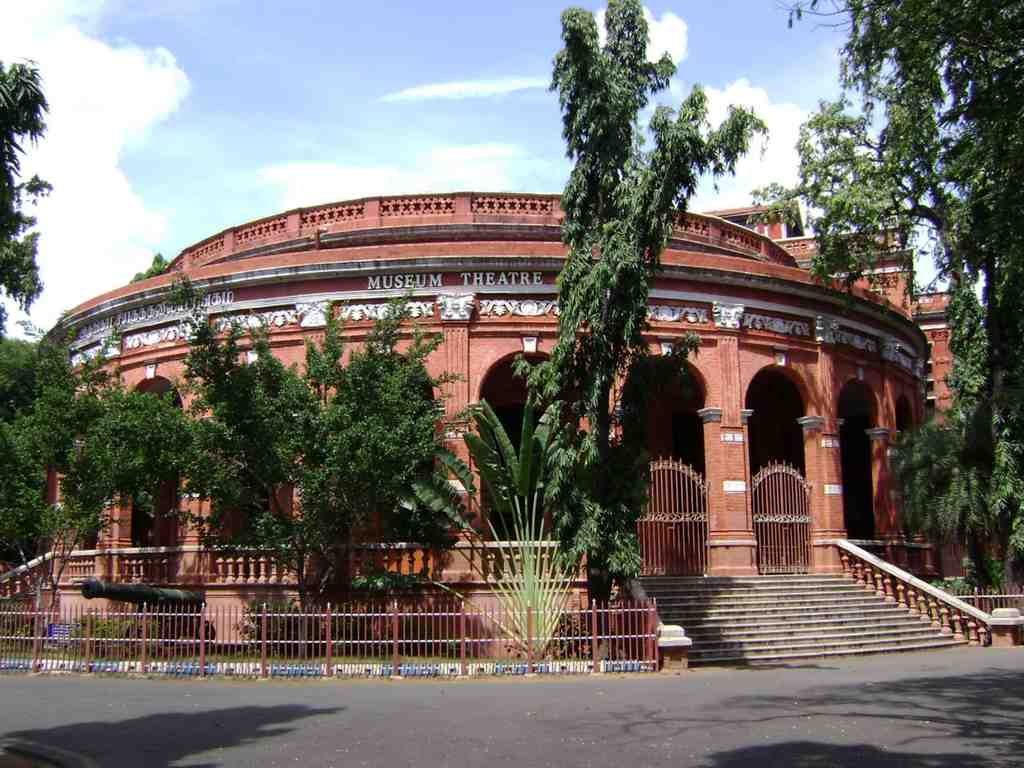
Fancy some Roman antiquities? Surprise, you don’t need to go to Europe! The Government Museum boasts one of the largest collections of Roman artifacts outside Europe. Talk about a…Czytaj więcejPokaż mniej
Fancy some Roman antiquities? Surprise, you don’t need to go to Europe! The Government Museum boasts one of the largest collections of Roman artifacts outside Europe. Talk about a Roman holiday in Chennai! And bronze idols! This museum houses the richest collection in Asia, with some pieces dating back to 1000 BCE. Don't worry if 1000 BCE sounds a bit too ancient to wrap your head around; you can just call them the "super old goodies". The splendid Museum Theatre here is another highlight - it might just make you want to break into an impromptu Shakespearean soliloquy. And don’t miss the National Art Gallery with its rare European and Asian paintings, including works by the legendary Raja Ravi Varma. The building itself is an architectural marvel in Indo-Saracenic style, so even if you’re not into paintings, the place is a visual treat. This museum sits on what used to be an estate granted back in 1778 and has seen many changes since then, including being used as a collectorate. It was shifted to its present location in 1854. And if you're wondering about the name Pantheon Complex, it’s because this place originally included public assembly rooms and was quite the hotspot for social gatherings. In summary, the Government Museum, Chennai is like a time capsule, transporting you through history while being housed in a structure that’s a piece of history itself. So, go on, dive into the past and don’t forget to come out for air - because trust me, this place is irresistibly captivating! Yearning to grasp further insights on the location, the museum complex or the the future? Dive into the chat section below and ask away.
Otwórz dedykowaną stronę →Once upon an age where a small deposit was refundable, this library opened its doors under the generous gesture of Lord Connemara, a former Governor of Madras. Talk about noble…Czytaj więcejPokaż mniej
Once upon an age where a small deposit was refundable, this library opened its doors under the generous gesture of Lord Connemara, a former Governor of Madras. Talk about noble deeds by an Anglo-Irish nobleman! Here's a fun fact: Back in 1860, Captain Jesse Mitchell kickstarted a humble library inside the Madras Museum with surplus volumes from Haileybury College in the UK. And now, boom, you’re standing in front of one of the largest libraries in Asia, a true depository for literary treasures. Picture this: A complex so architecturally diverse it could make even the most seasoned architect’s head spin! From Gothic-neo-Byzantine to Southern Hindu Deccani, this place has it all. Think of it as the “United Nations” of architectural styles-fitting, considering it’s also a repository for UN publications! While the library complex has evolved with the times, adding a new building in 1973, including a textbook section, reference room, and even a Braille Library, the sense of historic grandeur is ever-present. The library’s collection has grown remarkably, thanks to the provisions of the Delivery of Books and Newspapers Act, ensuring that a copy of every publication in India finds a home here. And it doesn’t stop there; they also add new titles regularly through state government funds. Now, if you’re intrigued by rare books, you’re in for a real treat! Among the considerable collection lies a 1608 Bible, a silent witness to centuries of history. Alright, reading enthusiasts, if books are your thing, you might never want to leave. Remember, though, you can always come back! Enjoy exploring, and keep your library cards handy!
Otwórz dedykowaną stronę →
Pokaż jeszcze 4 przystankówPokaż mniej przystankówexpand_moreexpand_less
Back in 1996, this stadium was christened by hosting the Men's Champions Trophy. Imagine the thrilling moments as titans like Australia, Germany, the Netherlands, Pakistan, Spain,…Czytaj więcejPokaż mniej
Back in 1996, this stadium was christened by hosting the Men's Champions Trophy. Imagine the thrilling moments as titans like Australia, Germany, the Netherlands, Pakistan, Spain, and our very own India battled it out on the newly laid turf. Fast forward to December 2005, and the Champions Trophy was back, bigger and better. The place had undergone a transformation with a synthetic surface and international-standard floodlights, courtesy of the Sports Authority of Tamil Nadu. It was ready to dazzle again! But wait, there’s more! The 2007 Men's Hockey Asia Cup saw India steamrolling South Korea with an epic 7-2 victory. It was like watching a Bollywood action movie, but on grass! The stadium is also the battlefield for all division matches of the Chennai Hockey Association and serves as the home ground for the Chennai Cheetahs of World Series Hockey fame. It’s safe to say the place is perpetually buzzing with excitement-or should I say, 'puck-ing' with excitement? Whether it's the intense All India MCC Murugappa Gold Cup or just a regular match, the Mayor Radhakrishnan Hockey Stadium continues to be a beacon for sportsmanship and high-octane hockey action. So while you stand here, take a moment to soak in the energy of a place that’s seen triumphs, heartbreaks, and endless rounds of applause. Who knows, you might even hear the echoes of past cheers in the wind! How does a hockey player like their drink? On ice, of course! Ha, couldn't resist slipping in a joke. Enjoy your tour!
Otwórz dedykowaną stronę →Ah, you've reached the final stop: Madras Presidency! Buckle up, because we're about to embark on a journey through time, with a few chuckles along the way! The Madras…Czytaj więcejPokaż mniej
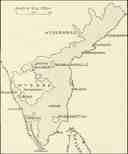
Ah, you've reached the final stop: Madras Presidency! Buckle up, because we're about to embark on a journey through time, with a few chuckles along the way! The Madras Presidency, or the Presidency of Fort St. George if you’re feeling formal, was like the head honcho of British India for a while. At its peak, it stretched across a vast swath of southern India. Think of it like the VIP section of a concert, but for an entire region! This area included today's Andhra Pradesh, Tamil Nadu, and parts of Kerala, Karnataka, Odisha, and Telangana. Madras, our very own Chennai, was the winter capital, while Ooty got the cool gig as the summer capital. Talk about a seasonal job! Way back in 1639, the English East India Company, in a shopping spree of sorts, bought the village of Madraspatnam. A year later, they set up the Agency of Fort St George, which eventually evolved into the Madras Presidency. It had more status changes than a social media user. First, it became a Presidency in 1652, demoted back to an Agency in 1655, and then proudly reinstated as a Presidency in 1684. Notable personalities like Elihu Yale (yes, the Yale you’re thinking of) became president of this region. By 1785, the Madras Presidency got a more permanent upgrade under Pitt's India Act and was led by a Governor - far more distinguished than a mere President, don’t you think? Madras’ governance was more intricate than any soap opera plot. Judicial, legislative, and executive power vested in the Governor, ably supported by a Council. This Council saw several changes and reforms over the years, notably in 1861, 1909, 1919, and 1935. By 1908, the place was sliced into twenty-two districts, each managed by a District Collector. It was like slicing up a giant administrative pie! Fast forward to 1917’s Montagu-Chelmsford Reforms, and Madras got itself a "Dyarchy" system where the Governor shared power with a Prime Minister. This was quite the precursor to democratic governance. The Madras Presidency also played a key role in India’s independence movement, turning out some of the nation’s most significant freedom fighters. By 1950, Madras transformed yet again, this time into Madras State, a proud part of the newly-formed Republic of India. Historically, we can trace settlements here back to the Stone Age, with dolmens and all. Moving forward in time, Madras saw the rule of the Pandya dynasty around 230 BC, followed by the Cholas, then the brief but mysterious Kalabhras, and eventually the Pallavas, whose reign saw a cultural zenith. Post the intriguing Vijayanagar Empire era, Madras became a bustling hub for European trading companies. So there you are-Madras Presidency, a roller-coaster of history with no shortage of drama and development. I hope this historical tour wasn't too over-powering! Now you know why they say Chennai isn't just a place; it's a legacy. Enjoy the rest of your day, and remember: history is best served with a pinch of humor! Wondering about the origins, geography or the demographics? Feel free to discuss it further in the chat section below.
Otwórz dedykowaną stronę →

Opinie
Najczęściej zadawane pytania
Jak rozpocząć trasę?
Po zakupie pobierz aplikację AudaTours i wpisz kod realizacji. Trasa będzie gotowa do natychmiastowego rozpoczęcia – po prostu dotknij \"Play\" i podążaj trasą z nawigacją GPS.
Czy potrzebuję internetu podczas trasy?
Nie! Pobierz trasę przed rozpoczęciem i korzystaj z niej w pełni offline. Jedynie funkcja czatu wymaga internetu. Zalecamy pobieranie przez WiFi, aby oszczędzać dane mobilne.
Czy to wycieczka grupowa z przewodnikiem?
Nie – to samodzielny audioprzewodnik. Zwiedzasz niezależnie, we własnym tempie, z narracją audio odtwarzaną przez telefon. Bez przewodnika, bez grupy, bez harmonogramu.
Ile trwa trasa?
Większość tras zajmuje 60–90 minut, ale to Ty kontrolujesz tempo. Wstrzymuj, pomijaj przystanki lub rób przerwy, kiedy chcesz.
Co jeśli nie zdążę ukończyć trasy dzisiaj?
Żaden problem! Trasy mają dożywotni dostęp. Wstrzymaj i wznów, kiedy chcesz – jutro, za tydzień lub za rok. Twój postęp jest zapisywany.
W jakich językach są dostępne trasy?
Wszystkie trasy są dostępne w ponad 50 językach. Wybierz preferowany język podczas realizacji kodu. Uwaga: języka nie można zmienić po wygenerowaniu trasy.
Gdzie znajdę trasę po zakupie?
Pobierz darmową aplikację AudaTours z App Store lub Google Play. Wpisz kod realizacji (wysłany e-mailem), a trasa pojawi się w Twojej bibliotece, gotowa do pobrania i rozpoczęcia.
Jeśli trasa Ci się nie spodoba, zwrócimy Ci pieniądze. Skontaktuj się z nami pod adresem [email protected]
Bezpieczna płatność przez 


