
Wycieczka audio po Agrze: Wycieczka po Agrze
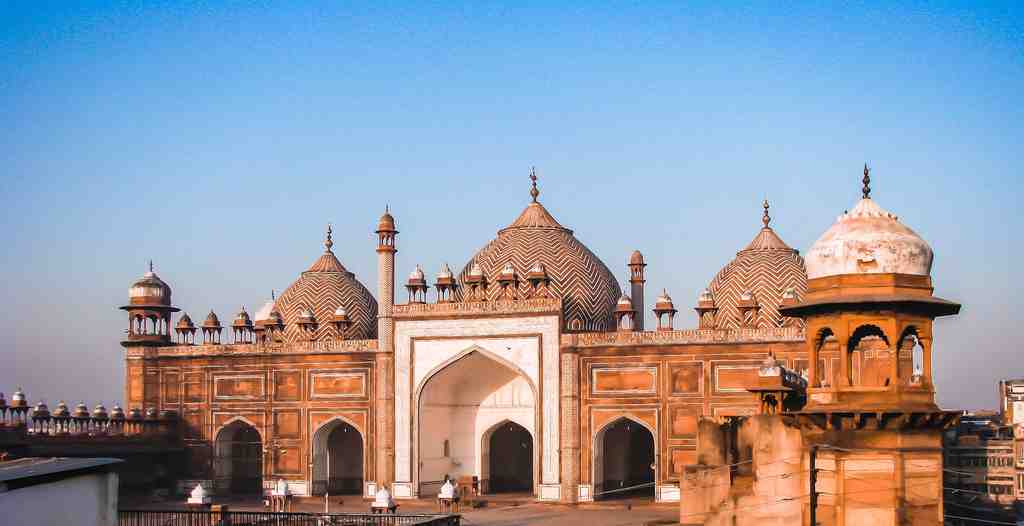
Królewski pałac nad rzeką skrywa podziemny labirynt. W cieniu potężnych czerwonych murów koronowano cesarzy, a więźniowie planowali ucieczkę. Pod wirującymi kopułami władza zmieniała się z każdą wyszeptaną modlitwą. Ta wycieczka audio z przewodnikiem prowadzi przez burzliwe serce Agry, odkrywając epickie rywalizacje i tajne cuda architektury, których większość nigdy nie zauważa. Dlaczego zakazana miłość omal nie zniszczyła Shah Jahani Mahal? Jaki spisek rozegrał się pod łukami z piaskowca w Forcie w Agrze, zagrażając dynastii z dnia na dzień? Co jest tak niezwykłego w marmurowym basenie pośrodku starożytnego dziedzińca Meczetu Jama? Przejdź od strzelistych bram do cichych dziedzińców i bujnych arkad. Podążaj śladami zagubionych kroków przez bitwy, zdrady i królewskie ambicje, które wciąż odbijają się echem w każdym kamieniu. Zobacz Agrę nie jak pocztówkę, ale jak żywą epopeję ukształtowaną przez intrygi i zapomniane sny. Rozpocznij swoją podróż tam, gdzie sekrety kryją się pod bielonymi salami. Prawdziwa historia Agry czeka tuż za rogiem.
Podgląd trasy
O tej trasie
- scheduleCzas trwania 30–50 minsIdź we własnym tempie
- straighten3.0 km trasy pieszejPodążaj wyznaczoną trasą
- location_on
- wifi_offDziała offlinePobierz raz, korzystaj gdziekolwiek
- all_inclusiveDożywotni dostępOdtwarzaj ponownie w dowolnym momencie
- location_onStart przy Shah Jahani Mahal
Przystanki na tej trasie
You see, the Mughal Emperor Shah Jahan wanted to put his own stamp on this redstone building, so he decided to spruce it up with some of his pizazz! He transformed the existing…Czytaj więcejPokaż mniej
You see, the Mughal Emperor Shah Jahan wanted to put his own stamp on this redstone building, so he decided to spruce it up with some of his pizazz! He transformed the existing structure, adding a large hall, side rooms, and even an octagonal tower that faces the beautiful river. Now, let me tell you, this palace used to be quite the sight! The walls were a spectacular combination of brick masonry and red stone, but they were all covered in a thick, white plaster. And to top it off, they painted the plaster with vibrant floral designs. It was like a giant coloring book! From where we stand, you can spot a lovely white marble dalan, which has five arches with nine cusps each. It's supported by double pillars and protected by a Chhajja, which is like an extended roof. Oh, and don't forget to check out the western bay, where they used to have a gate called Ghaznin. But there's more! Beneath our feet, there's a whole underground world. Yep, this palace has subterranean apartments in multiple stories. They're like hidden gems waiting to be explored! So, my friend, let's take a moment to appreciate the Shah Jahan Mahal for what it once was - a dazzling blend of red stone, white plaster, and colorful paintings. Now, let's head to our next stop and keep this adventure going!
Otwórz dedykowaną stronę →Ah, the Jama Mosque in Agra, what a beauty! This 17th-century mosque is a real gem in the heart of the city. It was built by Jahanara Begum, the daughter of none other than the…Czytaj więcejPokaż mniej
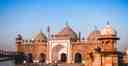
Ah, the Jama Mosque in Agra, what a beauty! This 17th-century mosque is a real gem in the heart of the city. It was built by Jahanara Begum, the daughter of none other than the legendary Mughal Emperor Shah Jahan. And let me tell you, when it comes to architecture, the Mughals really knew how to make a statement! Now, picture this: As Shah Jahan was ruling the empire, he decided that Agra needed a brand new mosque. But not just any mosque, mind you. This one had to be grand and magnificent. So, he gave the order for construction to begin in the year 1637. The princess Jahanara Begum, being the amazing daughter that she was, asked her father if she could personally fund the mosque. And you know what? The emperor granted her wish! What a daddy-daughter team, right? Now, here's the interesting part. Originally, the mosque was supposed to be built alongside the Yamuna River. But you know how things sometimes change? Well, attention was diverted towards completing another little masterpiece you might have heard of - the Taj Mahal. So, the plan shifted, and the Jama Mosque found its new home near the Agra Fort. We don't know if it was because the riverfront area was deemed more residential or if they were worried the mosque would overshadow the Taj's own mosque. Who knows? Regardless of the change in location, the construction finally began in 1643, and after a little delay caused by the land purchase, the mosque was finally completed in 1648. Phew! Five lakh rupees and a lot of hard work later, the Jama Mosque stood proudly in all its glory. Now, let's talk about the mosque itself. It's primarily made of stunning red sandstone, with hints of white marble adding that extra touch of elegance. The mosque covers an area of 1200 square meters, and let me tell you, it's quite a sight to behold. The prayer chamber, my friend, is a true masterpiece. It has five entrance archways, and the central one, well, let's just say it's something special. It's set within a high pishtaq, which features those beautiful Persian inscriptions praising the rule of Shah Jahan. Sound familiar? Yep, just like the Taj Mahal! The prayer chamber is crowned by not one, not two, but three bulbous domes. And believe me, these domes are no ordinary domes. They're decorated in a stunning herringbone pattern with red and white stone, and topped with lotus-flower finials. Talk about attention to detail! And hold on, there's more! The sahn, the courtyard, is enclosed on two sides, featuring these beautiful arcades with axial gates. In the center, you'll find a cool little pool for ritual ablutions. Gotta cleanse the soul, right? Well, my friend, that's the Jama Mosque in a nutshell. A true testament to the Mughal architecture and a place that will leave you in awe. So, shall we move on to our next stop, the Agra Fort? Just keep following me, and we'll make our way there in no time!
Otwórz dedykowaną stronę →
Pokaż jeszcze 3 przystankówPokaż mniej przystankówexpand_moreexpand_less
Ah, the Moti Masjid, also known as the Pearl Mosque! This stunning mosque is a real gem within the Agra Fort. Built by the Mughal Emperor Shah Jahan, it's the perfect place to…Czytaj więcejPokaż mniej
Ah, the Moti Masjid, also known as the Pearl Mosque! This stunning mosque is a real gem within the Agra Fort. Built by the Mughal Emperor Shah Jahan, it's the perfect place to show off his love for marble. Now, picture this: a mosque entirely made of white marble. It's like walking into a dream! Shah Jahan wanted to add his personal touch to the Agra Fort, so he went all out with the Moti Masjid. He even went as far as dismantling some structures within the fort just to make room for this beauty. Construction began in 1646 and lasted until 1653, making it a relatively late addition to the Agra Fort. But hey, better late than never, right? And when Shah Jahan saw the finished mosque, he was so impressed that he brought his two sons to see it two years later. Talk about proud parenting! The Moti Masjid is surrounded by high walls and sits on a raised platform. It faces the Yamuna river, providing a picturesque view. Speaking of views, the outside walls are covered in red sandstone, while the inside is adorned with beautiful marble. It's like the mosque has a secret fashion statement going on! Once you step inside, you'll find a courtyard with arcades lining the edges. In the center, there's a tranquil ablution pool - perfect for some peaceful reflection. And on the western side of the courtyard, you'll find the main prayer hall. It's a grand structure with seven entryways and a roof boasting three domes and some chhatri. Now, what's a mosque without a little bit of shimmer? The front of the hall is shaded by a deep chhajja (eave) and adorned with stunning Persian inscriptions in black marble. Shah Jahan sure knew how to make a statement! But that's not all. The interior of the prayer hall is a sight to behold as well. Shah Jahan kept things elegant and simple with undecorated marble. And the design of the Moti Masjid was heavily influenced by another marble mosque he built at the Ajmer Sharif Dargah. Clearly, he had a thing for marble! So, step into this architectural masterpiece and experience the tranquility and beauty of the Moti Masjid. It's definitely a shining pearl within the Agra Fort!
Otwórz dedykowaną stronę →This architectural beauty was built by none other than Shah Jahan, who had quite the knack for building stunning structures. The Nagina Masjid is made of pure white marble, giving…Czytaj więcejPokaż mniej
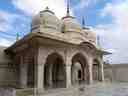
This architectural beauty was built by none other than Shah Jahan, who had quite the knack for building stunning structures. The Nagina Masjid is made of pure white marble, giving it an irresistible charm. Now, here's a fun fact for you - "Nagina" means "gem" in Hindi. So, you could say that this mosque is a real gem in Agra Fort. See what I did there? One of the interesting things about Nagina Masjid is its simplicity. It doesn't go overboard with excessive decorations, but rather focuses on a clean and elegant design. Inside, you'll find three bays separated by simple pillars, with arches above. The central arch is the star of the show, with its nine cusps. This private mosque was actually built for the ladies of the Royal family. Talk about exclusive! They could enjoy a stunning view of the road from the balcony, which runs towards the Hathi Pol on the northern side of the Masjid. Now, let me tell you a little secret. Down the road from the Nagina Masjid, there used to be a luxurious bazaar known as Mina Bazar. It was a shopping paradise for the royal ladies, who could stand in the balcony and shop to their heart's content. What a convenient shopping experience, right? So, as you explore this wonderful mosque, take a moment to imagine the royal ladies strolling through the bazaar, all while basking in the beauty of the Nagina Masjid.
Otwórz dedykowaną stronę →

Najczęściej zadawane pytania
Jak rozpocząć trasę?
Po zakupie pobierz aplikację AudaTours i wpisz kod realizacji. Trasa będzie gotowa do natychmiastowego rozpoczęcia – po prostu dotknij \"Play\" i podążaj trasą z nawigacją GPS.
Czy potrzebuję internetu podczas trasy?
Nie! Pobierz trasę przed rozpoczęciem i korzystaj z niej w pełni offline. Jedynie funkcja czatu wymaga internetu. Zalecamy pobieranie przez WiFi, aby oszczędzać dane mobilne.
Czy to wycieczka grupowa z przewodnikiem?
Nie – to samodzielny audioprzewodnik. Zwiedzasz niezależnie, we własnym tempie, z narracją audio odtwarzaną przez telefon. Bez przewodnika, bez grupy, bez harmonogramu.
Ile trwa trasa?
Większość tras zajmuje 60–90 minut, ale to Ty kontrolujesz tempo. Wstrzymuj, pomijaj przystanki lub rób przerwy, kiedy chcesz.
Co jeśli nie zdążę ukończyć trasy dzisiaj?
Żaden problem! Trasy mają dożywotni dostęp. Wstrzymaj i wznów, kiedy chcesz – jutro, za tydzień lub za rok. Twój postęp jest zapisywany.
W jakich językach są dostępne trasy?
Wszystkie trasy są dostępne w ponad 50 językach. Wybierz preferowany język podczas realizacji kodu. Uwaga: języka nie można zmienić po wygenerowaniu trasy.
Gdzie znajdę trasę po zakupie?
Pobierz darmową aplikację AudaTours z App Store lub Google Play. Wpisz kod realizacji (wysłany e-mailem), a trasa pojawi się w Twojej bibliotece, gotowa do pobrania i rozpoczęcia.
Jeśli trasa Ci się nie spodoba, zwrócimy Ci pieniądze. Skontaktuj się z nami pod adresem [email protected]
Bezpieczna płatność przez 


