
Wycieczka audio po Dinslaken: Zamki, sądy i odkryte święte historie
Zapomniany bunt odbił się echem wśród starożytnych kamieni zamku w Dinslaken, podczas gdy tajne stowarzyszenia szeptały w cieniu kościoła św. Wincentego. Pod cichymi ulicami tego miasta kryje się zawiła przeszłość, której większość nigdy nie dostrzega. Ta wycieczka audio z przewodnikiem zaprasza do zajrzenia za codzienne fasady Dinslaken i odkrycia historii, którymi rzadko dzielą się nawet miejscowi. Ukryte zaułki zamieniają się w wehikuły czasu, a stare mury ujawniają niegdyś skrywane skandale. Dlaczego pewnej burzliwej nocy przez zamek przetoczyła się fala paniki? Kto zostawił w kaplicy św. Wincentego tajemnicze rzeźbienia, co do których historycy nie są zgodni? I jakie psoty miały miejsce na rynku miejskim, prowadząc do nieprawdopodobnego nocnego sojuszu? Przejdź przez serce Dinslaken i poczuj historię pulsującą pod twoimi stopami. Odkryj dramaty, intrygi i sekrety, które zmieniają znane miejsca w ekscytujące odkrycia. Pozwól, by szepty Dinslaken poprowadziły twój pierwszy krok.
Podgląd trasy
O tej trasie
- scheduleCzas trwania 40–60 minsIdź we własnym tempie
- straighten3.7 km trasy pieszejPodążaj wyznaczoną trasą
- location_on
- wifi_offDziała offlinePobierz raz, korzystaj gdziekolwiek
- all_inclusiveDożywotni dostępOdtwarzaj ponownie w dowolnym momencie
- location_onStart przy Powiat Dinslaken
Przystanki na tej trasie
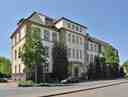
To spot the District Court of Dinslaken, just look for the stately, cream-colored building with lots of tall windows and a stone entrance, located right along the main…Czytaj więcejPokaż mniej
To spot the District Court of Dinslaken, just look for the stately, cream-colored building with lots of tall windows and a stone entrance, located right along the main road. Welcome to the District Court of Dinslaken! Imagine standing here a hundred years ago, feeling the sun warm your face as you gaze at this proud courthouse, its stone facade echoing the footsteps of countless citizens seeking justice. Today, it serves over 100,000 people from both Dinslaken and Voerde, making it the local epicenter of truth, drama, and maybe a little bit of courtroom suspense. Inside, you’d picture judges and lawyers bustling, the murmur of anticipation before a verdict is announced. But the courthouse doesn’t stand alone-it’s part of a bigger legal story. If a case is too tricky or someone disagrees, the decisions climb up to Duisburg’s Regional Court and can even reach the mighty Higher Regional Court in Düsseldorf! Just think, somewhere upstairs, a nervous lawyer could be rehearsing a passionate speech, or maybe a judge is sipping coffee, bracing for the next case. So next time you see someone entering with a stack of papers-give them a nod. They might just be in the middle of a real-life courtroom drama!
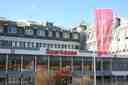
Otwórz dedykowaną stronę →Look up ahead for a large, modern building with a bold red “Sparkasse” sign on the front and a big red flag fluttering nearby-no way you can miss it! Welcome to the Sparkasse…Czytaj więcejPokaż mniej
Look up ahead for a large, modern building with a bold red “Sparkasse” sign on the front and a big red flag fluttering nearby-no way you can miss it! Welcome to the Sparkasse Dinslaken-Voerde-Hünxe, where money has quite literally changed hands-and sometimes changed names! Imagine, it all started way back in 1856 with a much humbler little savings bank right here in Dinslaken. Over time, this local “piggy bank” kept growing, and in 1975 it welcomed the folks from Voerde, then Hünxe in 1991, turning into the Sparkasse you see before you today. Just picture the hustle and bustle here in its heyday: the clack of calculators, the chatter of customers, and nervous coins jingling in pockets, waiting to begin their banking adventure. This bank was truly the neighborhood’s heart-serving everyone from small business owners to families depositing birthday money. It wasn’t just about saving; they did it all: loans, investments, insurance, and they had partners like LBS West and DekaBank to make sure no one left empty-handed. Even the local soccer teams and animal shelters felt the love-over 670,000 euros in 2013 alone went to clubs, charities, even environmental projects. Maybe you thought banks were all about cold cash, but here? There was real warmth, like a financial grandmother with deep pockets! But the story had a twist. After some rocky times, and maybe a few sleepless board meetings, in 2016 the Sparkasse Dinslaken-Voerde-Hünxe merged with its neighbor from Wesel. The name may have changed, but the legacy of generosity, community spirit, and the echo of countless saved pennies… well, that lives on.
Otwórz dedykowaną stronę →
Pokaż jeszcze 10 przystankówPokaż mniej przystankówexpand_moreexpand_less
In front of you is Neutorplatz, a wide, open plaza edged with modern glass-and-brick buildings, easy to spot by its shiny paved ground, scattered benches, and the eye-catching…Czytaj więcejPokaż mniej
In front of you is Neutorplatz, a wide, open plaza edged with modern glass-and-brick buildings, easy to spot by its shiny paved ground, scattered benches, and the eye-catching glass facade of the Neutor Galerie on your left. Imagine standing here more than a hundred years ago-this wasn’t a sleek shopping and meeting spot, but the busy hub of Dinslaken’s animal market. Cattle and traders filled the air with a medley of muzzled mooing, haggling voices, and, if we’re honest, some unforgettable farmyard aromas. Back then, Neutorplatz was essential for local farmers, but strict hygiene laws forced the town to build a proper hall nearby on Hünxer Straße. Sadly, even the best-laid plans couldn’t save the market from decline, especially as families-many of them Jewish traders who were once the heartbeat of the market-were expelled, deported, or worse during some of Germany’s darkest days. After the war, the era of cattle faded and the space changed once again, morphing into a parking lot and home to the department store Hertie, where you could buy everything from socks to sandwiches. Yet, it wasn’t the most inviting place to stay-let’s just say you were more likely to lose your car keys here than to lose track of time with friends. Then, in 2014, Neutorplatz got a modern makeover with the opening of the Neutor Galerie. Now its open layout, stylish glass pavilion with a bakery and café, and inviting benches make it the lively centerpiece of Dinslaken’s city life-a place fitted for markets, town fairs, and all sorts of gatherings. No tripping over cows here anymore, unless, of course, you’re out shopping for a ceramic one! Bus lines zip by, making it easy for everyone to join. This is a spot where old memories meet new moments-and today, you’re part of its ongoing story.
Otwórz dedykowaną stronę →To spot the Jewish cemetery on the Doelen, look for a small bronze sculpture beside a patch of green grass and bright yellow flowers-it's a cluster of trees and gravestones with a…Czytaj więcejPokaż mniej
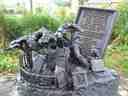
To spot the Jewish cemetery on the Doelen, look for a small bronze sculpture beside a patch of green grass and bright yellow flowers-it's a cluster of trees and gravestones with a plaque, almost like a tiny haunted forest frozen in metal. Now, let’s take you back-imagine yourself in Dinslaken nearly 300 years ago, standing on a quiet hill known as “Doelen.” Here, after 1722, the Jewish community laid their loved ones to rest in this humble cemetery, surrounded by murmuring trees and, I suspect, the world’s slowest squirrels. Over the years, generations watched as life in Dinslaken changed around this spot. But, at the turn of the 20th century, road construction threatened the old cemetery. In a twist worthy of a dramatic movie, about 60 gravestones were carefully moved to the new Jewish section at the Parkfriedhof, where they now stand in a somber row, keeping stories alive. This marker before you isn’t just a memorial; it’s a storyteller, whispering about Dinslaken’s Jewish families, bustling markets, and the traditions that shaped the city. As you stand here, dive into the echoes-a little mystery, a pinch of sorrow, but mostly, an unbreakable thread of memory tying past to present.
Otwórz dedykowaną stronę →To spot Dinslaken Castle, look just beyond the round pond and the spraying fountain-there you’ll see the castle’s sturdy walls trimmed with ivy and a tall, slanted roof peeking…Czytaj więcejPokaż mniej
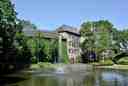
To spot Dinslaken Castle, look just beyond the round pond and the spraying fountain-there you’ll see the castle’s sturdy walls trimmed with ivy and a tall, slanted roof peeking above the lush trees. Now, take a good look at this spot, because you’re standing where centuries of drama, intrigue, and, believe it or not, several cases of very inconvenient fires have unfolded! Picture yourself on a small rise, surrounded by marshy lands and waterways, just like it was almost a thousand years ago. The castle you see before you might look neat and quiet, but it has seen more than its fair share of excitement-some of it literally up in smoke! Back in the Middle Ages, this place was one of the most important fortresses in the Duchy of Cleves. In those days, if you wanted to stay dry, you’d better have good boots-this castle once rose up like an island in a swamp, protected by broad moats filled by the Rotbach. Its beginnings are shrouded in a little mystery because the first written mention of someone living here, a certain Antonius de Dincelachen, comes from a document dated 1163-a document that just might be a fake. But historians agree that the original castle was probably a motte: a wooden fortress on a mound, built to withstand attacks, wild animals, and maybe even the odd tax collector. Jump ahead to the 13th century, and powerful families, including the counts and later dukes of Cleves, fought fiercely to control Dinslaken. There were tales of noble widows taking over the complex, favorites of the duke moving in, and the castle occasionally being pawned off like a family heirloom nobody could quite agree on. By the 1400s, the mighty round tower-once rising 40 meters-loomed over the scene, acting as both a symbol of power and, for less fortunate visitors, a prison tower. People were locked up here for witchcraft, heresy, or simply being a bit too chatty. As the centuries rolled by, the castle traded intrigue for paperwork, becoming the seat for administrators and judges. Occasionally, things heated up-sometimes quite literally. Fires repeatedly damaged the castle, so much so that, in 1909, on the very night before a grand reopening, flames roared through the place yet again. Talk about bad timing! But, just as often, the people of Dinslaken rebuilt-reshaping the castle again and again, sometimes in grand style, sometimes in more practical form. During the Thirty Years’ War, the castle faced threats but mostly just suffered from being old and a bit neglected. By the 18th and 19th centuries, it was used for everything from offices to a schnapps distillery-because, honestly, who doesn’t want a castle with a secret stash of booze? There were even plans for a mental asylum and a training school, but those never quite worked out. World War II brought devastation here, with the castle nearly leveled in 1945. What rose from the ruins in the 1950s was a castle with a modern twist-look for the chunkier stone base, evidence of its medieval muscle, and the more contemporary upper floors. Only the southeast side holds original medieval features: stubby towers, a rectangular block, and a gate that looks like it could still handle a drawbridge or a battering ram. Today, Dinslaken Castle stands as the city’s town hall, registry office, and archive-a place where people now argue over wedding cakes, not wars. And while the original moats are mostly gone, the pond before you is a playful echo of the former waters that once protected this fortress. So, next time someone says “keep your home safe,” just know you’re standing in front of a place where that meant ramparts, moats, and a tower that doubled as a prison. Before you leave, take in the peaceful scene-don’t worry, the only siege happening today is probably someone trying to find better parking!
Otwórz dedykowaną stronę →Right in front of you, you'll see rows of semicircular seats facing a sunken sandy stage, all nestled next to a rugged old stone wall covered by leafy trees - just look for those…Czytaj więcejPokaż mniej
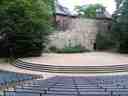
Right in front of you, you'll see rows of semicircular seats facing a sunken sandy stage, all nestled next to a rugged old stone wall covered by leafy trees - just look for those castle-like stones and you can’t miss it! Welcome to the Burgtheater Dinslaken, where drama, laughter, and maybe the odd squeaky seat fill the air! Let yourself imagine 1934, the grand opening night - the scent of anticipation, the breeze tickling your face as Carl Maria von Weber’s opera wove music through the evening. Back then, this outdoor stage drew crowds with its magic, only to be shattered during a World War II air raid - but like a true show-stealer, the theater bounced back in 1946, rebuilt almost overnight. For years, actors from Essen and Neuss spun tales here, and by 1955, local theater folk around Kathrin Türks brought new energy to the Burgtheater. Ever resourceful, in 1998 for the city’s 725th birthday, the council decided to spruce things up - and they paid for it with something fun: “culture shares” sold to the community! Today, the air buzzes with open-air concerts, comic nights, or the roar during city festivals like “DIN-Tage” and the “Fantastival.” So, if you listen closely, you might catch a faint echo of applause rolling across those ancient stones.
Otwórz dedykowaną stronę →Look for a bright white church with large arched windows, a distinctive octagonal choir at the back, and a small steeple with a golden angel perched proudly at the very top - you…Czytaj więcejPokaż mniej
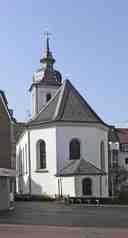
Look for a bright white church with large arched windows, a distinctive octagonal choir at the back, and a small steeple with a golden angel perched proudly at the very top - you can spot it standing out between the nearby buildings. Welcome to the Evangelical City Church of Dinslaken! As you stand here, step back in time to 1648, when locals finally gained the right to build their own churches after many years of religious struggles. Now, don’t forget to crane your neck and look up - at the highest point, you’ll see an angel with a trumpet, known as "Geusendaniel," standing instead of the usual weathercock. This little fellow was placed as a cheeky nod to the hard-earned right to worship and the unity of the community. The first church on this spot, built in 1653, didn’t have the best luck. One night in 1717, it was lost in a dramatic blaze along with ten houses nearby - talk about needing better insurance! But the plucky townspeople quickly revived their sanctuary, and by 1722, the legendary architect Bartolomeo Salla, always on the move, oversaw the elegant, bright-white hall you see now. The church is simple yet striking in its Baroque charm, though the builders tried to save some coins by ignoring Salla’s advice - which, predictably, ended with the tower collapsing before the job was even finished. Oops! Since then, it has needed plenty of repairs and care, a bit like a cherished but clumsy old family heirloom. Step inside in your mind: imagine sunlight pouring in through vibrant stained glass windows, their current designs added in 1980 after Pastor Ronny Schneider pushed for new art to replace those lost in World War II. There’s also an organ with a long, musical lineage and two heavy steel bells up in the tower, inscribed with messages of peace and glory. Through centuries, from fire and war to music and art, this church has continued to welcome everyone, inviting visitors to pause, reflect, and perhaps marvel at the angel keeping watch up above.
Otwórz dedykowaną stronę →Look for a tall, reddish-brick church building with a steep greenish copper spire poking above the trees directly ahead-it stands out clearly with its pointed roofline and large…Czytaj więcejPokaż mniej
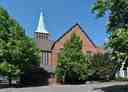
Look for a tall, reddish-brick church building with a steep greenish copper spire poking above the trees directly ahead-it stands out clearly with its pointed roofline and large gothic windows. Ah, you made it to St. Vincentius Church! Take a moment to notice the sturdy red brick exterior-they say it’s so solid that even the wind gets tired blowing against it. Picture yourself centuries ago, when this site was just a small chapel in 1390, little more than a quiet stop on the spiritual map. Then, in 1436, excitement buzzed in the air as Dinslaken was granted its very own parish status. By the mid-1400s, a brand new church stood here, boasting gothic arches and tall halls-I'm sure the neighbors wondered if they’d need a taller ladder just to hang up laundry. As you stand here, imagine the clatter and chatter of late medieval builders hammering away, each stone telling a story of hope and ambition. In 1492, a mighty tower sprang up and, by 1661, the choir was raised even higher-almost like the church felt compelled to reach closer to heaven for better acoustics! In its nearly 600 years, St. Vincentius has survived destruction and rebirth: war damage in 1945 left it battered, but like a stubborn old oak, the building survived. The rebuilding from 1950-1951 kept much of the original eastern gothic structure, blending new ideas with steeped tradition. Don’t let the rather modern exterior fool you-inside, you’d encounter treasures that have weathered centuries. Take the high altar, for instance, which might win the “Best Drama” award for its detailed depiction of the Passion story. Crafted in Brussels around 1460, its carved and painted scenes unfold the story from the Last Supper right up to the Resurrection-the kind of story-telling Netflix can only envy. But here’s a bit of mystery: no one knows the artist’s name! Some believe the altar was painted by a Brussels master known for works displayed in the Louvre. The lineup of scenes even finishes with a grand medieval Calvary, so full of characters you’ll wonder if the carver ever took a lunch break. A special mention goes to the giant Triumph Cross-more than 700 years old, it has survived journeying from the famous monastery in Kamp (where, rumor has it, monks could out-bake anyone in town)-to find its home here. Inside its wooden body rest over 30 little bundles, each containing labeled relics, the medieval version of a spiritual first-aid kit. For years, their origins remained uncertain, but detective work with relics and a wooden date placed its roots firmly in the early 1300s-so if you feel goosebumps, maybe you’re just in the company of history’s best-traveled cross. And of course, this church enjoyed a soundtrack longer than the Beatles’ discography. The newest organ, built in 1999, features 33 registers, and with its thousands of tone possibilities, it could easily drown out even the most dedicated church gossip. Six bells swing in the tower, their history stretching from the 18th century up to modern day-so whether you hear a faint chime or a ringing chorus, know you’re hearing centuries at work. Near the tower, you’ll also find three weathered stone crosses-migrants from Wesel-as tough as the sandstone they’re made from. Once, pilgrims would finish their long walk here, perhaps just as tired as you might feel after this tour. From gothic stone to baroque towers and stories swapped over centuries, St. Vincentius stands as living proof that Dinslaken doesn’t just remember its history-it lets you walk right through it.
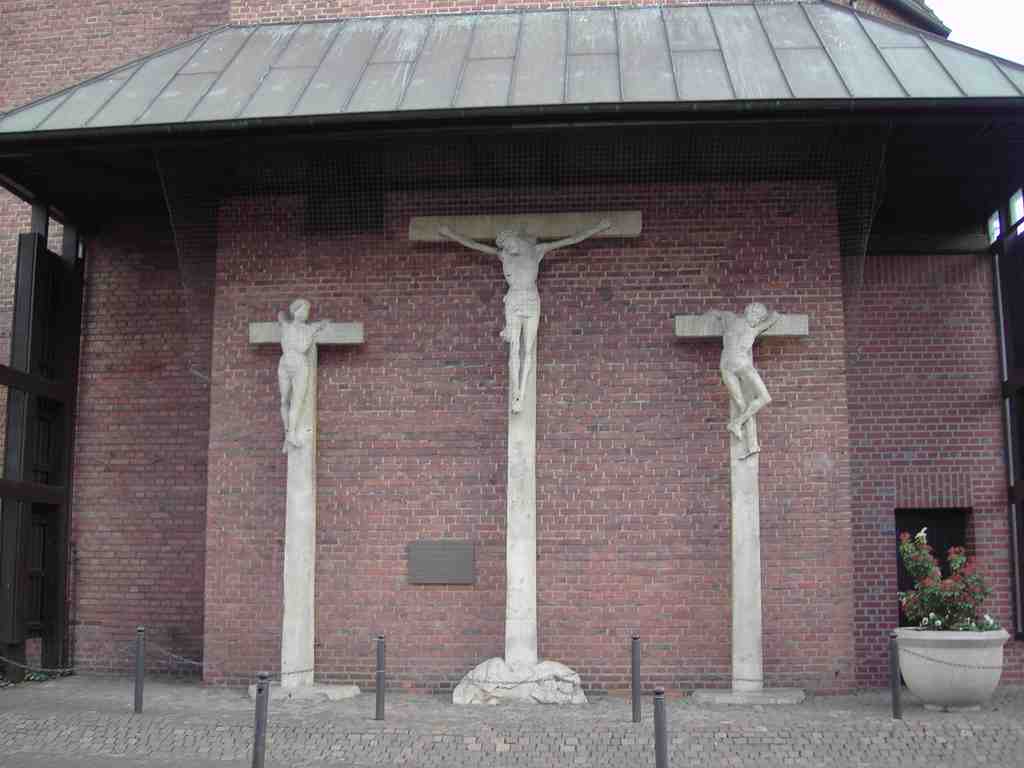
Otwórz dedykowaną stronę →Directly in front of you, you'll spot three large, pale stone crosses standing majestically against a red brick wall-just look for the life-sized figures upon each cross, with the…Czytaj więcejPokaż mniej
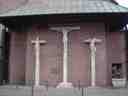
Directly in front of you, you'll spot three large, pale stone crosses standing majestically against a red brick wall-just look for the life-sized figures upon each cross, with the central one raised slightly higher than the others and capped by a sheltering roof. Now that you’ve found the Crucifixion Group-also known by locals as “The Three Crosses”-let’s unfold its dramatic and emotional tale. Picture the year 1501. Artists from a bustling workshop in Wesel have just finished carving these striking sculptures from sturdy Baumberg sandstone. The crosses are impressively tall-almost five meters high-and each figure looks about the size of a real person, so don’t worry, you’re not suddenly shrinking! Take a moment to see the artistry: T-shaped crosses, the central one holding the sculpted figure of Christ, rising out of a rock decorated with a skull and bones-a little medieval detail to remind you, in case you forgot, that life back then could be pretty intense. To Christ’s left and right, you’ll find the two thieves-each with a different pose, one turning toward Christ in hope, the other turning sadly away. This isn’t just good drama-it’s top-quality medieval storytelling! These crosses originally stood not in Dinslaken but just outside the city walls of Wesel, where they completed a path meant to echo the steps of weary pilgrims who’d trekked to the Holy Land. Imagine the footsteps-muddy, tired, hopeful-filing past this very scene. But then, the Eighty Years’ War rages in the late 1500s. Spain, Parma, sieges, cannons-a bit more excitement than a quiet town usually wants! The small chapel that housed these crosses was torn down in 1588, with city defenders fearing a siege and looking to prevent enemies from getting too comfy. The crosses, not wanting to become war loot, were whisked away to Dinslaken and placed near the city gate, where they became a signpost for locals and travelers alike. Since then, the stones have endured-weather, wars, the odd renovation (like a new French limestone head for Christ in the early 1900s-talk about a long wait for a makeover!), even being lovingly relocated and protected as the city grew. The middle cross still bears an inscription from their first big restoration in 1652. Today, you see replicas here at their historic spot, while the originals are preserved nearby and finally safe from the chaos of history. So, as you stand before these three weathered but resolute crosses, remember the journeys, battles, and peaceful moments they’ve witnessed. And hey, at least now, they don’t have to worry about unexpected sieges-just the occasional curious visitor like you.
Otwórz dedykowaną stronę →
Najczęściej zadawane pytania
Jak rozpocząć trasę?
Po zakupie pobierz aplikację AudaTours i wpisz kod realizacji. Trasa będzie gotowa do natychmiastowego rozpoczęcia – po prostu dotknij \"Play\" i podążaj trasą z nawigacją GPS.
Czy potrzebuję internetu podczas trasy?
Nie! Pobierz trasę przed rozpoczęciem i korzystaj z niej w pełni offline. Jedynie funkcja czatu wymaga internetu. Zalecamy pobieranie przez WiFi, aby oszczędzać dane mobilne.
Czy to wycieczka grupowa z przewodnikiem?
Nie – to samodzielny audioprzewodnik. Zwiedzasz niezależnie, we własnym tempie, z narracją audio odtwarzaną przez telefon. Bez przewodnika, bez grupy, bez harmonogramu.
Ile trwa trasa?
Większość tras zajmuje 60–90 minut, ale to Ty kontrolujesz tempo. Wstrzymuj, pomijaj przystanki lub rób przerwy, kiedy chcesz.
Co jeśli nie zdążę ukończyć trasy dzisiaj?
Żaden problem! Trasy mają dożywotni dostęp. Wstrzymaj i wznów, kiedy chcesz – jutro, za tydzień lub za rok. Twój postęp jest zapisywany.
W jakich językach są dostępne trasy?
Wszystkie trasy są dostępne w ponad 50 językach. Wybierz preferowany język podczas realizacji kodu. Uwaga: języka nie można zmienić po wygenerowaniu trasy.
Gdzie znajdę trasę po zakupie?
Pobierz darmową aplikację AudaTours z App Store lub Google Play. Wpisz kod realizacji (wysłany e-mailem), a trasa pojawi się w Twojej bibliotece, gotowa do pobrania i rozpoczęcia.
Jeśli trasa Ci się nie spodoba, zwrócimy Ci pieniądze. Skontaktuj się z nami pod adresem [email protected]
Bezpieczna płatność przez 


