AudaTours logoAudaTours

Wycieczka audio po Carpentras: Trufle, strażnicy czasu i święte kamienie

Audioprzewodnik13 przystanków

Pod cichymi kamieniami Carpentras echa sekretów rozbrzmiewają w rzymskich akweduktach i cieniach synagog starszych niż Rewolucja Francuska. Ta wycieczka audio z przewodnikiem prowadzi przez Roseraie-Aqueduc i dalej, zapraszając do odkrycia historii i skandali, o których większość turystów nawet nie śni. Dlaczego szepty o politycznym spisku nawiedzały niegdyś schody katedry Saint-Siffrein? Jaki zaginiony skarb leży ukryty pod płytkami Synagogi w Carpentras, schowany przez wieki? Który cichy zakątek Biblioteki Inguimbertine wciąż kryje ducha zakazanego pisarza? Podążaj krętymi uliczkami, gdzie spiskowali rebelianci, a zapomniane dramaty rozgrywały się pod skąpanymi w słońcu łukami. Zobacz, jak Carpentras ożywa, gdy legendy wyłaniają się z zakurzonych rękopisów, a prawda migocze za wielowiekowymi fasadami. Poczuj ukryty puls miasta. Twoja przygoda w sekretnym sercu Carpentras zaczyna się tutaj.

Podgląd trasy

map

O tej trasie

  • schedule
    Czas trwania 40–60 minsIdź we własnym tempie
  • straighten
    2.3 km trasy pieszejPodążaj wyznaczoną trasą
  • location_on
    LokalizacjaCarpentras, Francja
  • wifi_off
    Działa offlinePobierz raz, korzystaj gdziekolwiek
  • all_inclusive
    Dożywotni dostępOdtwarzaj ponownie w dowolnym momencie
  • location_on
    Start przy Targ trufli w Carpentras

Przystanki na tej trasie

  1. To spot the famous Carpentras Truffle Market, just look for a grand, cream-colored stone building with a beautiful balustraded terrace and ornate statues on its roof, right beside…Czytaj więcejPokaż mniej

    To spot the famous Carpentras Truffle Market, just look for a grand, cream-colored stone building with a beautiful balustraded terrace and ornate statues on its roof, right beside the statue in the small square. Ah, take a deep breath! Imagine the heady, earthy scent of truffles swirling in the air, and welcome to the heart of Carpentras’ most mouthwatering tradition: the truffle market. Every Friday, right in front of this stately building, the city transforms into a bustling theater of flavor where, for centuries, fortune and fungi have danced hand in hand. It’s not just vendors and buyers here-it’s restaurateurs, brokers, negotiators, and home cooks, all drawn by one thing: the hunt for the elusive Tuber melanosporum, the famous black truffle. Now, contrary to what some old-timers might tell you, this market doesn’t stretch back to the dawn of time. Dig into the dusty tomes of local history, and you’ll find that ancient edicts from the 12th, 15th, and 16th centuries regulated the market-but truffles weren’t even mentioned! It took until the extravagant court of François I for truffles to win a place on royal tables. The real turning point for Carpentras came on December 19, 1781, when a police ordinance officially began organizing this fragrant free-for-all. Before you could say “truffle omelet,” Carpentras was becoming legendary. Flash forward to the 19th century. Henri Bonnet, a proud local, might grumble that Apt’s market was king back then, bringing in more truffles-up to 1,600 kilos at a time. But here’s the twist: nearly all those fungi ended up in Carpentras anyway, whisked off by clever merchants whose skills in buying, preparing, and selling made Carpentras the real truffle powerhouse. Apt was the stage, but Carpentras was pulling the strings! And just to make things more French, truffles from all over were often sold under fancy names like “Truffles of Périgord” rather than their true home in Comtat Venaissin-think of it as the gourmet version of putting on sunglasses and a fake mustache. By the mid-1800s, local trader Auguste Rousseau was exporting nine tons of truffles from the Friday market each year. Fast forward again to the 20th century, and you’d find the market square bustling with life every November to March. Sellers lined up along chalked lines, deals whispered from under heavy coats, and baskets upon baskets weighing as much as eight thousand kilos brimming with the “black diamonds” of the earth. The Café and restaurants nearby would be filled with debates over price, provenance, and sometimes, whose dog dug up the best fungi that season. Times have changed, and so has the market location. In 2008, the event moved to the elegant courtyard of the Hôtel-Dieu, just behind you-right where you’re standing! Today, you’ll find two markets: one for pros, where restaurateurs and brokers run their fingers over truffles, expertly checking for fakes, and another for everyday shoppers tempted by the aroma. The truffle-laden tables here aren’t just about drama-they’re strictly regulated. Want to impress your friends? Toss out a bit of market trivia: only whole, clean truffles weighing at least five grams and free of pests get past the check. The crème de la crème-truffles over twenty grams-are classified as Extra. If you sneak a peek at the negotiations, you might see a local eyeing the lumps and bumps, brushing off soil, and performing their own little symphony of sniffs and squeezes. Prices? They can swing faster than a truffle pig on a sugar rush. Sometimes the market climbs up to 1,200 euros a kilo, sometimes it tumbles to 80. The optimum moment, the “truffle gold rush,” is late December. And while the world watches the ticker, here in Carpentras, everyone just enjoys the fact that their winter harvest is setting the standards for all of France. So stand still a moment. Imagine the excitement, the mouthwatering anticipation, maybe a little friendly rivalry. And remember: out of all the truffles on the grand tables of Paris, odds are, most began their journey right here-a star turn for a humble fungus, and a market that’s made Carpentras taste like nowhere else on earth. If you listen closely, you might just hear the faint echo of dealers haggling, baskets clinking, and someone celebrating with a sniffly “ah, magnifique!” If you're curious about the historical, event or the interfel standard, the chat section below is the perfect place to seek clarification.

    Otwórz dedykowaną stronę →
  2. To spot the Convent of the Dominicans, look right ahead for a grand, pale cream-colored building with a tall façade, rows of simple windows, and a distinctive angular tower on the…Czytaj więcejPokaż mniej

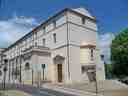
    To spot the Convent of the Dominicans, look right ahead for a grand, pale cream-colored building with a tall façade, rows of simple windows, and a distinctive angular tower on the corner, standing proudly at the intersection just beside the trees. Now, let me paint a vivid picture for you! Imagine it’s the year 1312. Instead of cars and parking signs, you’d hear the gentle footsteps of robed Dominican friars echoing on old stone as they moved from their convent to the nearby chapel, carrying the secrets of faith and perhaps the latest town gossip-though I suppose confessions kept most of that under wraps! This convent you’re standing in front of was once just outside Carpentras’ city walls, a place of prayer and silence, close to the Notre-Dame-du Grès gate. Through the years, major families and friars wanted to stay close, even in the afterlife-so they were buried right here in the church, which was so popular it got rebuilt and consecrated by 1499. The beautiful cloister, which you might be surprised to learn now serves as a parking lot, was once redesigned by a real heavyweight: Henri de Sourdis, Archbishop of Bordeaux. But don’t worry-today’s residents parking their cars have no idea they’re driving over centuries of footsteps and whispers. During the French Revolution, things took a dramatic-or maybe comedic-turn. The holy halls echoed instead with marching boots as the convent turned into a barracks for artillerymen and sharpshooters, who probably swapped prayers for parade drills. By the time peace returned, the convent lived many new lives: a church, barracks, a center for culture with theater and cinema lights flickering where candles once glowed. Today, it’s the city’s Tourism Office, buzzing with excited travelers, and even houses local heritage and flavors. Not bad for a 700-year-old building that’s survived burials, battles, and blockbusters, wouldn't you say?

    Otwórz dedykowaną stronę →
  3. Picture yourself in the late 1700s-Carpentras is bustling, and knowledge is the new fashion. At the heart of this intellectual bloom is Joseph-Dominique d’Inguimbert, a local…Czytaj więcejPokaż mniej

    Picture yourself in the late 1700s-Carpentras is bustling, and knowledge is the new fashion. At the heart of this intellectual bloom is Joseph-Dominique d’Inguimbert, a local superstar who collected everything from ancient stones to exotic paintings. People say his library was like a treasure chest where you could find rare books sitting right next to curious masks and silvery scientific gadgets. If only library fines were paid in artwork, right? But let’s fast-forward to 1847, when Inguimbert’s growing collection needed a new home. The city’s answer? Move everything into the Hôtel d’Allemand. Apparently, real estate issues have always been around! Books, paintings, fossils-they all cozied up together. Then, thanks to the deep pockets of Antoine Eysséric and Casimir Pascal, a shiny new museum building blossomed next to the library in 1888. Imagine the clang and clatter of workers, the echo of hammers, the creak of wooden beams as architect Jean Camille Formigé’s grand vision rose from the ground. As you’re staring at the facade, imagine the thrill of opening day: a parade of locals in their Sunday best, everyone craning to catch a glimpse of the masterpieces moving into their new home. Upstairs, the wide galleries groaned under the weight of fine art-French, Italian, Northern European works, plus sculptures that make you wonder how anyone ever had the patience for marble! Downstairs bustled the city’s school of drawing, so you can bet this place buzzed with the furious scratch of charcoal and the occasional “Oops!” from beginner artists. In 1913, a new spirit arrived-the Museon Countadin, inspired by that wild Provençal poet Frédéric Mistral. Suddenly, the ground floor was home to the customs and crafts of Comtat Venaissin. Picture those display cases: delicate lace bonnets, hand-carved Christmas nativity scenes, and local curios like odd musical birdcalls made by the Raymond family, or the heavy, clinking bells from the Simon factory. They even had artifacts from the Mont-de-Piété-the local pawnshop-so maybe people’s lost umbrellas ended up as museum pieces! You might be wondering, “Alright, but why’s it named Duplessis?” The folks here wanted to honor Joseph Siffrein Duplessis, a painter from Carpentras who wowed the world with his elegant portraits. His paintings could make even the serious abbés and dignified cardinals look like they’d just heard a really good joke. But the museum wasn’t just about dusty memories-its collection became a hotspot in the art world. In fact, it held an absolute jewel: “Gamines” by Louise Catherine Breslau, a playful masterpiece bought by the French state after the painter Puvis de Chavannes himself cheered for it. Not bad for a small-town museum! And while we’re at it, you could wander past treasures by Joseph Vernet, scenes of moonlit storms and summer hayfields, or get lost in wild Persian art from the Qajar dynasty. Don’t forget the Northern European paintings: duck heads by Pieter Boel, raucous tavern games by David Teniers the Younger, and enough French landscapes to make you wonder if Impressionists ever slept. Here’s a fun twist-the museum’s story doesn’t end here. In 2022, the collection picked up and journeyed across town to live with its old friend, the Inguimbertine Library at the Hôtel-Dieu. So, while the building may be quieter these days, you can almost still hear echoes of excited visitors and the whispers of history. So next time someone asks you what makes Carpentras special, you can say it’s a place where paintings make friends with books, where the stories never run out, and where museum magic is always just around the corner. Who knew standing in front of a quiet building could reveal such a riot of color and character?

    Otwórz dedykowaną stronę →
Pokaż jeszcze 10 przystankówPokaż mniej przystankówexpand_moreexpand_less
  1. Right in front of you, the Sobirats Museum sits inside an elegant 18th-century mansion, so keep an eye out for a sophisticated building tucked between a street and a peaceful…Czytaj więcejPokaż mniej

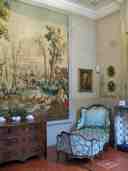
    Right in front of you, the Sobirats Museum sits inside an elegant 18th-century mansion, so keep an eye out for a sophisticated building tucked between a street and a peaceful garden, with stately windows and hints of classical charm. Now, let’s time travel-imagine walking into this mansion when it was brand new, its rooms brimming with stunning Louis XV and Empire furniture, the air tinged with the scent of polished wood and old leather-bound books! The home belonged to noble families, then landed in the hands of Isidore Moricelly, who gifted it to Carpentras. By 1948, the city decided this would be the perfect showcase for treasures from the nearby library: gold-framed portraits, Aubusson tapestries showing lively hunts and countryside scenes, impressive wrought-iron staircases, and eye-catching faïence ceramics from Marseille and Moustiers that looked almost too lovely to use for your breakfast. In 1957, after a generous count named Victor de Sobirats left behind a bundle of fancy furniture and rare books, the museum took on his name. Today, the building is quieter, as its collections have shifted to the grand Inguimbertine Library, but if you listen carefully, you might just catch the footsteps of admirers marveling at the artistry that once filled every room. And if you’re here to practice your best noble pose or dream of grand balls, I promise-nobody’s judging!

    Otwórz dedykowaną stronę →
  2. To spot the Former Thomas-de-la-Valette hotel, look for a grand creamy stone façade standing elegantly along the street, with tall blue shutters and delicate wrought iron…Czytaj więcejPokaż mniej

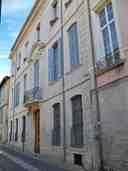
    To spot the Former Thomas-de-la-Valette hotel, look for a grand creamy stone façade standing elegantly along the street, with tall blue shutters and delicate wrought iron balconies waving to everyone who walks by. Alright, close your eyes for just a second and imagine yourself whisked back to the 18th century. This stately mansion you’re admiring was first dreamed up by the Count of Modène-a man with a taste for grand entrances and, I suspect, a penchant for dramatic cloak flourishes on those balconies. In 1750, the building caught the eye of another nobleman, the Count of Thomas-de-la-Valette, and it’s his name that stuck to these walls like the aroma of a rich Provençal stew. These very stones have seen secret whispers between counts, moments of triumph over tea, and maybe even the odd family squabble about wallpaper choices. Fast forward to 1995, and the building’s stunning charm earned it a spot as a protected historic monument. So go ahead-imagine footsteps echoing down marble halls lined with candlelight, the rustle of silk, and the secret pride of a house that’s outlasted centuries of Carpentras stories. I hope you packed your imagination, because this place still hums with historical mischief!

    Otwórz dedykowaną stronę →
  3. Looking ahead, you’ll spot the towering Saint-Siffrein Cathedral with its pale stone façade, pointed gothic arches, and an impressive spire that rises above the entrance-just…Czytaj więcejPokaż mniej

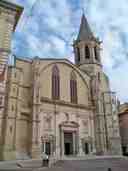
    Looking ahead, you’ll spot the towering Saint-Siffrein Cathedral with its pale stone façade, pointed gothic arches, and an impressive spire that rises above the entrance-just follow the steps leading up to those grand green doors! Let me paint a picture for your senses: Imagine yourself here, centuries ago. Dust from stonecutters hangs in the air, mingling with the ringing of hammers and voices murmuring prayers. This spot is the beating heart of Carpentras; you’re standing where history and mystery have mixed for about a thousand years! The original cathedral began as a simple, single nave around the 6th century, built by Bishop Siffrein himself-yes, he put his own saintly stamp right here alongside Saint Anthony. The old Romanesque cathedral, with its rounded arches, was worn and weary by the 1300s; its roof finally collapsed one fateful night in 1399 with a noise that surely sent every pigeon in town flying for cover. Picture the people’s shock: no cathedral meant no place to gather, no place to sing, and no shelter from the fierce Provençal sun. Enter Pope Benedict XIII of Avignon-a man who didn’t let a little thing like the Western Schism or a ruined roof hold him back. In 1404, he ordered a new building to rise, and by 1405 the first stone was in place. Builders journeyed from as far as Cologne, Lyon, and Angers; they quarried, carved, and hammered under the guidance of Thomas Colin, then Jean Laurent “the Burgundian,” and finally Antoine Omède, who oversaw the work through decades of slow, steady progress. Take a closer look at those intricate pinnacles and the impressive door-finished at the dawn of the 16th century by Blaise Lécuyer, and nicknamed the “Jewish Door.” Carved with nine empty niches, it once sheltered saints and, on top, the peculiar “ball of rats”-symbolizing the world gnawed at by sin and heresy. Imagine the murmurs through the city as people debated just how many rats could fit on that ball, and whether they might scamper across at night. Sound scary? Don’t worry, the only thing sneaking around these days is the occasional cat. By 1531, after plenty of drama and a few more architectural debates than a family holiday dinner, the gothic cathedral was finally consecrated. Yet the story didn’t end there: in the 17th and 18th centuries, Bishop Bufy ordered a creative makeover, hiring Jacques Bernus to carve angels in wood and marble, make altars gleam, and even sculpt his own tomb. Still, as the centuries rolled by, the old Romanesque bell tower crumbled away, replaced in the early 1900s by the neo-gothic spire you see above, now piercing the sky with stern determination. Now, if you listen closely-or just use your imagination-you might hear the gentle echo of the cathedral’s five bells: from the massive “Siffrède” to the lighter tones above. These bells have marked every wedding, funeral, and revolution, ringing out news to the city for generations. Step inside (when you have a chance!) and you’ll find chapels stuffed with history: a marble font for baptisms, vivid stained glass, memorials to the fallen, and even a reliquary said to contain a nail from the True Cross, brought here via a wild tale involving Saint Helena, Constantinople, and adventurous crusaders. Between the gothic vaults above and the sweet sound of organ music played by masters like Elzéar Genet and Louis Archimbaud, this is no ordinary church-it’s a living storybook, carved in stone, music, and legend. So, as you gaze up at those ancient arches and ornate doors, know you are part of a very long line of visitors-pilgrims, townsfolk, and the occasionally confused medieval cat-who’ve all paused in this spot, awed by the grand old Saint-Siffrein.

    Otwórz dedykowaną stronę →
  4. To spot the Hôtel de Camaret, look for an elegant pale stone mansion right in front of you, with rows of tall windows draped in French flags and a grand wooden door topped by a…Czytaj więcejPokaż mniej

    To spot the Hôtel de Camaret, look for an elegant pale stone mansion right in front of you, with rows of tall windows draped in French flags and a grand wooden door topped by a charming balcony. Here you are, standing before the Hôtel de Camaret-a slice of 18th-century glamour in the heart of Carpentras! Just imagine the rattling of carriages pulling up to this grand mansion, with gentlemen in powdered wigs and ladies rustling in silk gowns, all ready for a night of candlelight and gossip. Nowadays, though, you’re much more likely to find serious faces rushing inside with paperwork; this stately home is the seat of the sous-prefecture for the whole Vaucluse area! If you listen closely, maybe you’ll hear whispers of government secrets echoing off the stone walls, or possibly just the sighs of civil servants facing another mountain of forms. But don’t let the modern hustle fool you-this building has survived centuries of storms and history, standing so proud that the French government made it a listed historic monument back in 1987. So next time you see all those flags waving, picture the Hôtel de Camaret as it once was: the place to see and be seen, and now, the guardian of Carpentras’ civic life!

    Otwórz dedykowaną stronę →
  5. Here you are, standing before the Synagogue of Carpentras-one of the oldest synagogues still in use in all of France. Its plain facade today might fool you into thinking it was…Czytaj więcejPokaż mniej

    Here you are, standing before the Synagogue of Carpentras-one of the oldest synagogues still in use in all of France. Its plain facade today might fool you into thinking it was just another town building, but trust me: what’s inside has seen centuries of secrets, celebrations, and struggles. Let’s wind the clock all the way back to 1367. Imagine narrow medieval streets, townsfolk bustling about, the scent of bread and spices hanging in the air, and a little community with big dreams. The Jews of Carpentras, having weathered expulsions, suspicion, and plague, finally got approval to build this synagogue. The bishop limited its size-no longer than 10 meters, no taller than 8-but their spirits? Not so easily contained. At first, Jewish families worshipped in a rented house. But after much persistence (and, frankly, some papal flip-flopping-religious politics, you know how it goes), they were allowed to build. The location had to be discreet: synagogues needed to blend into the cityscape, so no grand domes or towers. Just a sturdy, somewhat anonymous building, with only a heavy wooden door at street level. This community traced its roots back to Roman times-some even say as far as the 1st century. But things weren’t always easy. By the 13th century, they faced tough segregation: special badges, limited jobs, and strict rules about where they could live and what they could wear-a yellow hat for men, a bright yellow rosette for women. I suppose fashion has always been political! When the Black Death struck in 1348, tensions ran high. The town population thinned, anger sometimes spilled into violence, and people looked for someone to blame. Yet, with the empty houses and tragedies, the community started to rebuild. By the Renaissance, Carpentras’ Jewish quarter-known as the "carrière"-was bursting with life, so much so that the medieval synagogue was too small for everyone. Picture whole families crammed into narrow alleys, some buildings rising up to nine floors, as space became the most prized commodity after, well, kosher wine. As time pressed on, the synagogue grew in clever ways-stacking prayer rooms, squeezing spaces wherever possible. There were places for ritual baths (the famed mikvé, believe it or not, dives almost ten meters down!) and even a bakery just for Sabbath bread and Passover matzah. You could say the smell of fresh challah was the real secret to keeping the peace. If you could peer inside, you’d see the prayer hall, decked in intricate woodwork, with Doric columns and a frieze of triglyphs and metopes-all that fancy talk for “it’s really pretty.” Even the Torah scroll cabinet, a gift from a grateful community member in 1807, and the blue ceiling sprinkled with golden stars, restored lovingly to its original shimmer. Whether you entered from 1380 or 1880, you’d know: this place beats with history. But every superhero has an origin story…and a renovation montage! Over the centuries, rulers changed, restrictions tightened, the community shrank and swelled. In tough times, the synagogue became a revolutionary club meeting point, its treasures confiscated and sold. But each time life returned-furniture restored, prayers whispered once more, laughter echoing through the halls. Oh, and did you know? In 2017, this synagogue turned 650 years old. Quite impressive! Not every building gets to celebrate a birthday with rabbis, priests, imams, and the entire town turning up. Today, the synagogue stands as a living museum-silent witness to medieval dramas, whispered prayers, and enough matzah to feed a small army. So, the next time you pass that sturdy door, think about the resilience, the wit, and the faith it took to protect this sacred place for so many centuries. As for ghost stories? Well, the only spirits here are those who baked bread, defended their right to worship, and filled the night air with songs of hope. Ready for the next stop? I promise, there are fewer yellow hats required!

    Otwórz dedykowaną stronę →
  6. Look straight ahead and spot a tall, pale cream building with wide windows and a decorative stone niche featuring a statue nestled between two large windows on the first…Czytaj więcejPokaż mniej

    Look straight ahead and spot a tall, pale cream building with wide windows and a decorative stone niche featuring a statue nestled between two large windows on the first floor-this is the grand Hotel de Vento des Pennes. Take a deep breath and imagine Carpentras in the 1700s, the air buzzing with carriage wheels on cobblestones and elegant gossip swirling in the narrow streets. Right where you’re standing, the Vento des Pennes family once rebuilt their majestic home-this very mansion-turning it into one of the most dazzling jewels of the old city. Picture the walls fresh with plaster, sunlight bouncing off the new façade, and craftsmen hurrying in and out, vying for perfection on every detail. Now, let’s step through the doors of time. The story begins with the Rafélis family, owners of the original plot beneath your feet. Nobility isn’t just a job description in this tale-it’s hereditary, and it changes hands like a game of musical chairs. Picture François de Rafélis, straight out of Milan, marrying into the Carpentras elite in the early 1600s. His descendants, through marriages that would make even modern soap operas jealous, passed the estate all the way to Angélique, who tied the family fortunes to Henri de Vento, marquis des Pennes-or as I like to call him, “the Musketeer with property problems.” By the 18th century, the mansion gets a major glow-up thanks to Louis-Nicolas de Vento des Pennes and his wife Denise Borely. Denise had some pretty famous family of her own-her brother was off building the grand Château Borély in Marseille. Could you imagine family reunions with estates like these as conversation starters? The Vento family, with their Italian roots and Provençal ties, often split their time between Aix-en-Provence, Marseille, Pennes-Mirabeau, and Carpentras. It’s a wonder they ever remembered where they left their keys! As you look up, you’ll see the building neatly organized around a central courtyard. In your mind’s eye, step past wrought iron gates into that courtyard and spot an ornate stone fountain, teeming with carved angelic faces and mythical grotesques. It’s as if the gods of ancient Rome themselves have taken up residence, and every windowsill stares back with a different masquerading deity. See the niche on the wall before you? Around 1750, a beautiful stone Madonna and Child was placed right there as a watchful, gentle presence above the streets-like a celestial neighborhood watch. Inside, the magic keeps building. A grand staircase with swirling wrought iron railings, crafted by Jean-Baptiste Mille-whose work can also be found in the city’s cathedral-leads you from one stately floor to the next. If these stairs could talk, I bet they’d have stories of rustling silk dresses, hurried footsteps, and secret whispered intrigues. The interior is a treasure trove too! Imagine painted trims, original paneled windows catching the mid-18th-century light, and doors gleaming with gilded decor-meticulously restored as recently as 2008, so every decorative detail sparkles with history. But that’s not the end: after the last of the Vento lineage, Émilie, the mansion passed to the local Nouvene family and, later, the Fortunet and de Joybert clans. It wasn’t all grandeur-through revolutions and changes of hands, the house even saw collections of portraits and drawings gifted to museums by distant relatives, like Alice de Laincel-Vento, a muse to Rodin and a writer in her own right. Eventually, the Hotel de Vento des Pennes earned a spot on the inventory of cultural treasures, and in 2015, its exquisite restoration won an award for heritage-proving that even in a world full of change, beauty and history can be lovingly preserved. So, here you are, standing where centuries of elegance, intrigue, and a dash of Mediterranean drama have unfolded-no need for a time machine, just a good pair of walking shoes and a strong sense of wonder!

    Otwórz dedykowaną stronę →
  7. You’re standing before the grand Inguimbertine Library, one of Carpentras’s proudest treasures-a true palace for book lovers and curious minds. Let’s set the scene: Imagine the…Czytaj więcejPokaż mniej

    You’re standing before the grand Inguimbertine Library, one of Carpentras’s proudest treasures-a true palace for book lovers and curious minds. Let’s set the scene: Imagine the gentle morning sun filtering through the plane trees, casting dancing shadows across the building’s elegant stone façade. There’s a quiet energy here, but inside, you’re about to discover a collection with a wilder backstory than most adventure novels. Long before the Inguimbertine existed, Carpentras tried-twice!-to start a public library. The first attempt, back in the 1400s, was almost sabotaged before it began. Bishop Georges d'Ornos wanted his books sold to fund the towering cathedral nearby. But city leaders, fans of the written word, halted the sale and laid out the volumes inside the cathedral itself. Picture weary monks organizing dusty tomes by candlelight. Sadly, the library’s existence fizzled for mysterious reasons-rumor has it they may have filed their books under "M" for "Misplaced." The second attempt at a city library was even more disastrous, thanks to some seriously bad luck. Jacopo Sadoleto, another bishop, packed up his prized books and sent them from Italy to France in 1527. But…the plague cursed the ship, and local ports refused to let the collection dock. The books drifted away into history-possibly the world’s saddest shipwreck, at least for bibliophiles. Now, enter our hero: Joseph-Dominique d’Inguimbert, bishop, book fanatic, and part-time Italian library wrangler. Having cut his teeth organizing priceless collections in Rome, he took over as bishop of Carpentras in 1735-and brought with him thousands of books, paintings, and everything from rare medals to scientific trinkets. D’Inguimbert didn’t just pile his treasures in a corner and call it a day. He purchased, renovated, and filled the Hôtel de Grandis-Pomerol-which is right here-with his growing collection. When he secured approval straight from Rome for his “house of the muses,” he even marked the entrance with a visual pun-a reed between two mice: mus-arondo-mus, or “musarum domus.” Only in France can a joke in Latin become a library’s logo. By the time Inguimbert was done shopping and collecting, Carpentras had a library with 15,000 volumes, 4,000 medals, and a reputation that would make any Renaissance collector jealous. He also managed to snag original correspondence from the famous Nicolas-Claude Fabri de Peiresc, a big name in science and letters. If Inguimbert had lived today, he’d be that guy who takes “one item” to the checkout and comes back with the whole store. But the library’s adventures didn’t end there. Unlike other French libraries, the Inguimbertine didn’t grow from seized church collections after the Revolution. Its treasures mostly came from donations or careful purchases over centuries. Locals and dignitaries kept pouring in gifts, including 10,000 volumes from Casimir François Henri Barjavel. Open the doors and you’ll find more than 250,000 works-100,000 of them ancient books, 3,000 manuscripts, 4,000 journals, 1,000 paintings (including Breslau’s stunning Gamines), 300 sculptures, and art objects of every style. There’s even an original manuscript by Johann Sebastian Bach lurking among the stacks. Don’t worry, it doesn’t come with built-in organ music…yet. Since 1847, these treasures have moved into this remarkable estate. Recent decades brought huge changes, including the move to the former Hôtel-Dieu, turning this space into a multimedia and museum wonderland. The ground floor now blends paintings, scientific instruments, and books side by side, while the upper level offers rotating exhibitions and even peeks into the cabinets of the library’s legendary donors. All of this is thanks to generous donors, passionate friends, and the tireless efforts of library staff and the community-plus a budget that’s proof people in Carpentras take their libraries very, very seriously. There are stories of grand inaugurations, painstaking restorations, and, I suspect, at least a few tense debates about who gets to carry the biggest stack of rare books. The Inguimbertine is more than a library: it’s a museum, a living archive, and a testament to the wild, wonderful world of collecting knowledge. So as you stand here, remember: you’re not just outside a building full of books. You’re witnessing centuries of ambition, odd luck, daring collecting, and the magic of curiosity-a house of muses, mouse puns included. Now, which section do you suppose holds France’s best joke books? To expand your understanding of the before the inguimbertine, the library of the bishop of inguimbert or the from the french revolution to the evolution of libraries, feel free to engage with me in the chat section below.

    Otwórz dedykowaną stronę →
  8. To spot the Belfry of Carpentras, look above the rooftops and you’ll see a tall, heptagonal stone tower crowned with an intricate iron bell cage, peeking up above the…Czytaj więcejPokaż mniej

    To spot the Belfry of Carpentras, look above the rooftops and you’ll see a tall, heptagonal stone tower crowned with an intricate iron bell cage, peeking up above the square. Now, let’s time travel together! You’re standing before the last survivor of Carpentras’ very first town hall-built in 1470, when three powerful consuls managed the city. Back then, the consuls each thought their hat was the fanciest, but today, it’s the Belfry showing off its crown of ironwork high above the Place de l’Horloge. Imagine the town buzzing with excitement and the sharp clack of tools as architect Blaise Lescuyer, who had already left his mark on the local cathedral, directed the workers raising this seven-sided tower. This Belfry was more than just a fancy lookout-it once had a spiral staircase inside, leading up from the ground floor, where flour was weighed and stored, right up to the highest level where the city’s arsenal waited, ready for action. On the first floor, you’d find bustling council meetings, secret archives, and maybe a few heated arguments about taxes-sounds familiar, doesn’t it? But in 1572, the city’s cathedral tower collapsed-no bells to ring! So, the solution? Add a new campanile on top and, in 1576, a huge bell sounded across the rooftops. Disaster struck again in 1713, when a roaring fire tore through the old town hall-but some of the city’s precious documents were saved, rushed out in a legendary Gothic chest with four locks that you can still admire in Carpentras’ museum. After the fire, the Belfry stood alone, a silent witness to the city’s stories, its tower stretching through time and the changes of the Renaissance all the way to the 20th century. Since 1987, it’s been a protected historical monument-a reminder that sometimes, even in a city of change, stubborn stone and a good strong bell can keep history ringing on.

    Otwórz dedykowaną stronę →
  9. In front of you, you’ll spot a stone fountain rising proudly from a circular basin, its sculpted form and spraying waters making it the centerpiece right at the edge of the…Czytaj więcejPokaż mniej

    In front of you, you’ll spot a stone fountain rising proudly from a circular basin, its sculpted form and spraying waters making it the centerpiece right at the edge of the boulevard. Step right up and let your imagination travel back in time, because this isn’t just any old fountain-it’s the historic mascaron fountain of the Boulevard du Nord, a true Carpentras treasure! Feel the cool mist on your face? The same refreshing droplets have delighted townsfolk for centuries. This fountain is such a local celebrity, it was officially declared a historic monument all the way back in 1949. Imagine the bustle of horse-drawn carts rumbling by, travelers pausing for a drink, and children daring each other to dip a toe in the water. Locals say, if you listen closely, you might hear ancient whispers echoing from its mascaron’s mouth. Every stone has seen laughter, markets, arguments, and even the odd bit of mischief-legend has it, more than one hat has floated away in its basin! Here on the boulevard, under the watchful gaze of the fountain, generations have passed stories and secrets, all while the gentle sound of running water continues its timeless chorus. So take a moment, enjoy the view, and remember you’re standing in the very heart of Carpentras’ history!

    Otwórz dedykowaną stronę →
  10. Directly in front of you, look for a cream-colored stone building with green shutters, an arched roofline, and a statue of the Virgin Mary and Child up top-its humble façade marks…Czytaj więcejPokaż mniej

    Directly in front of you, look for a cream-colored stone building with green shutters, an arched roofline, and a statue of the Virgin Mary and Child up top-its humble façade marks the Chapel of Notre-Dame-de-Santé. Let’s spin a tale-imagine yourself at the edge of Carpentras, centuries ago, where the banks of the Auzon river ran quietly and a simple stone post kept watch. This spot started as just a guardhouse to protect the town bridge, but around 1401, it transformed into a tiny oratory, welcoming traveling soldiers-and likely offering shelter from rain, rogue bandits, or maybe just some grumpy ducks. By the 16th century, an abbé named Méry, not content with small beginnings, built a proper chapel from his own purse, blessing it under the gaze of the “Virgin of the Serres Bridge.” Each stone here could tell of drama: in the 1500s, Carpentras was abuzz, its new walls complete, the papacy ruling nearby Avignon, and everyone fortifying for the turbulent French Wars of Religion. In 1562, the chapel itself saw action-the pont’s guards (maybe with sweaty palms) held off the fierce Baron des Adrets and his Huguenot troops, as prayers to Mary floated over the river. But perhaps the most mysterious night came in July 1629, when plague choked the city, and no one dared cross the bridge. As Carpentras wept, legend says the chapel’s bell began ringing on its own at three in the morning. Villagers rushed with fear and hope, and soon after, the grip of the deadly plague loosened-people called it a miracle. By 1630, the townspeople officially dedicated this place to “Our Lady of Mercy and Health,” promising daily prayers. Fast-forward to the 18th century, when Carpentras decided their beloved chapel deserved a glow-up: new walls, a new look, but they preserved every ounce of its humble beginnings, a gift from Bishop Inguimbert and the hands of architect d’Allemans. Standing here now, you’re in front of a monument inseparably woven into the courage, hope, and sometimes supernatural happenings of Carpentras itself. And you’ve reached the end of our journey-no miracle required, just two good feet and a taste for adventure!

    Otwórz dedykowaną stronę →

Najczęściej zadawane pytania

Jak rozpocząć trasę?

Po zakupie pobierz aplikację AudaTours i wpisz kod realizacji. Trasa będzie gotowa do natychmiastowego rozpoczęcia – po prostu dotknij \"Play\" i podążaj trasą z nawigacją GPS.

Czy potrzebuję internetu podczas trasy?

Nie! Pobierz trasę przed rozpoczęciem i korzystaj z niej w pełni offline. Jedynie funkcja czatu wymaga internetu. Zalecamy pobieranie przez WiFi, aby oszczędzać dane mobilne.

Czy to wycieczka grupowa z przewodnikiem?

Nie – to samodzielny audioprzewodnik. Zwiedzasz niezależnie, we własnym tempie, z narracją audio odtwarzaną przez telefon. Bez przewodnika, bez grupy, bez harmonogramu.

Ile trwa trasa?

Większość tras zajmuje 60–90 minut, ale to Ty kontrolujesz tempo. Wstrzymuj, pomijaj przystanki lub rób przerwy, kiedy chcesz.

Co jeśli nie zdążę ukończyć trasy dzisiaj?

Żaden problem! Trasy mają dożywotni dostęp. Wstrzymaj i wznów, kiedy chcesz – jutro, za tydzień lub za rok. Twój postęp jest zapisywany.

W jakich językach są dostępne trasy?

Wszystkie trasy są dostępne w ponad 50 językach. Wybierz preferowany język podczas realizacji kodu. Uwaga: języka nie można zmienić po wygenerowaniu trasy.

Gdzie znajdę trasę po zakupie?

Pobierz darmową aplikację AudaTours z App Store lub Google Play. Wpisz kod realizacji (wysłany e-mailem), a trasa pojawi się w Twojej bibliotece, gotowa do pobrania i rozpoczęcia.

verified_user
Gwarancja satysfakcji

Jeśli trasa Ci się nie spodoba, zwrócimy Ci pieniądze. Skontaktuj się z nami pod adresem [email protected]

Bezpieczna płatność przez

Apple PayGoogle PayVisaMastercardPayPal

AudaTours: Audioprzewodniki

Rozrywkowe, niedrogie, samodzielne piesze trasy

Wypróbuj aplikację arrow_forward

Uwielbiany przez podróżników na całym świecie

format_quote Ta trasa była świetnym sposobem na poznanie miasta. Historie były ciekawe, bez przesadnego scenariusza, i uwielbiałam możliwość zwiedzania we własnym tempie.
Jess
Jess
starstarstarstarstar
Trasa po Tbilisi arrow_forward
format_quote To był solidny sposób na poznanie Brighton bez poczucia bycia turystą. Narracja miała głębię i kontekst, ale nie przesadzała.
Christoph
Christoph
starstarstarstarstar
Trasa po Brighton arrow_forward
format_quote Zacząłem tę trasę z croissantem w jednej ręce i zerowymi oczekiwaniami. Aplikacja po prostu idzie z Tobą, bez presji, tylko Ty, Twoje słuchawki i fajne historie.
John
John
starstarstarstarstar
Trasa po Marseille arrow_forward

Nieograniczone audioprzewodniki

Odblokuj dostęp do KAŻDEJ trasy na świecie

0 tras·0 miast·0 krajów
all_inclusive Odkryj Bez Limitu